Riley’s emotions
And imaginary friend
Made you cry a bit.
Category / Cinema

Film review – Zinnia Flower (Tom Shu-Yu Lin, 2015)
I’m going to kick-off before I say anything else and let you know that if you’re looking for a film that will make you feel immediately happy, then Tom Shu-Yu Lin’s latest isn’t for you. If, however, you’re willing to invest the smallest amount of emotional sympathy with the characters then you’ll find yourself on a deeply effective journey as two characters deal with the mourning process of losing their loved-ones.
The film opens with a devastating multi-car crash. Yu Wei (Stone) loses his heavily-pregnant wife and their unborn child but escapes with just a broken arm. Shin Min (Karena Lam) also loses her fiancé in the same incident. They begin their traditional Buddhist mourning period of 100 days. Shin Min goes on the honeymoon to Okinawa she will never be able to have with her fiancé and Yu Wei turns to alcohol and anger to forget his sorrow.

The film is boldly intimate in its portrayal of grief, and its success is secured by two excellent performances from the lead actors, whose lives are intertwined but yet are dealing with almost identical situations in entirely different ways.
It is painful to watch at times, though I was unaware on first viewing that director Lin was drawing on personal experiences as inspiration for the story – he lost his wife in a car accident in 2012. Had I known this I would have viewed it through entirely different eyes.
Indeed, the film itself is representative of Lin’s journey through grief. Just as the two leads take their journey through the internal resolution of their losses, it appears as though Lin has used this to rationalise the pain he went through. I summise that each character represents a different part of his journey, neither of which is portrayed as a correct or incorrect way to deal with the death of a loved one. Simply, how can you possibly say what’s a right or wrong way to cope in such devastating circumstances? Lin intelligently doesn’t make that decision for us either; the film he is made is provocative enough to not need to spoon-feed its viewers on such a complex issue.
There is also a starkness in the portrayal of the juxtaposition between the pair attending their Buddhist mourning ceremonies and their mindset behind closed doors. In my opinion, this was done to underline the façade that those in the throes of grief assume in public, perhaps indicating that this defined method of grief is wholly outdated. I certainly didn’t feel like they were at the end of their grieving process by the end of the film. Perhaps Lin is in the same place?
This is essential viewing for anyone coping with grief and loss. A beautiful but heartbreaking picture that deserves wider coverage.

Film review – The Peanuts Movie (Steve Martino, 2015)
Before I start, I must confess that I’m a closet Peanuts fan. The comic strip wasn’t something I grew up with and outside the odd Snoopy t-shirt or pencil case, I wasn’t particularly affectionate towards the series.
Sometime during my university years, I discovered the brilliance of the comic strips first, then the films and TV specials. I don’t think it was something I was particularly vocal about, but I was secretly picking up compendiums of the originals strips and box sets of the films that I still watch to this day.
There is something wholly endearing about the characters that has somehow stood the test of time. I’m sure studies could be conducted on why it remains so popular despite most definitely being most definitely of the era it was created in.

I wasn’t overly thrilled when I saw the trailer for this franchise reboot, with the brilliant colours and perfectly rendered faces seemingly betraying the source material. However, I was willing to give it a chance and see what direction the estate was happy for it to go in in 2015, some fifteen years after the death of its creator Charles M. Schulz.
Thankfully, for the most part, the film is a success. The use of modern graphics doesn’t really detract from the fact that it genuinely sits well next to any other instalment. Indeed, the storyline could well be a rehash of an older film, with Charlie Brown spending the entire film trying to win the affections of the Little Red-Haired Girl whilst Snoopy lives in his imaginary world as a fighter pilot in World War II. This is a smart move – taking these familiar characters out of their comfort zone and attempting something unusual can be saved for another time.
When efforts are made to openly appeal to the younger demographics, the film does lose its way somewhat. When Meghan Trainor’s ‘Better When I’m Dancing’ kicked in and the kids started dancing away, the sudden urge to turn off came over me. Heck, even Snoopy! The Musical didn’t stoop this low.
Peanuts aficionados will also berate the fact that Charlie Brown talks to the Little Red-Haired Girl. Then they will be positively irate when she responds and we hear her speak for the first time ever. Or was it just me?
There have been better interpretations of Peanuts in moving pictures and there have been worse, but this should place the characters in the minds of at least a few children for the next few years and, in that sense, the film has achieved what it likely set out to. Just don’t watch it expecting it to wow you.

Film review – Victoria (Sebastian Schipper, 2015)
The latest film from director Sebastian Schipper is Victoria, a one-shot bank heist film set in modern day Berlin. When I say one-shot, I mean one-shot: no trickery, no cut-aways, no cheating. That’s 138 minutes of film in one continuous take – a bold move that took three attempts to get right. It’s a glorious achievement and a wonder to behold, even though the film is perhaps flawed as a result of its own triumph.
The story centres around the titular Victoria (Laia Costa), a girl we first join in a nightclub in the Kreuzberg district of Berlin. She’s alone but when she leaves the club she has a conversation with four men: Sonne (Frederick Lau), Boxer (Frank Rogowski), Blinker (Burak Yigit) and Fuss (Max Mauff). Getting embroiled in their night and swept away with the chemistry between herself and Sonne, she suddenly finds herself agreeing to take part in an early-morning bank heist that puts all of their lives at risk.
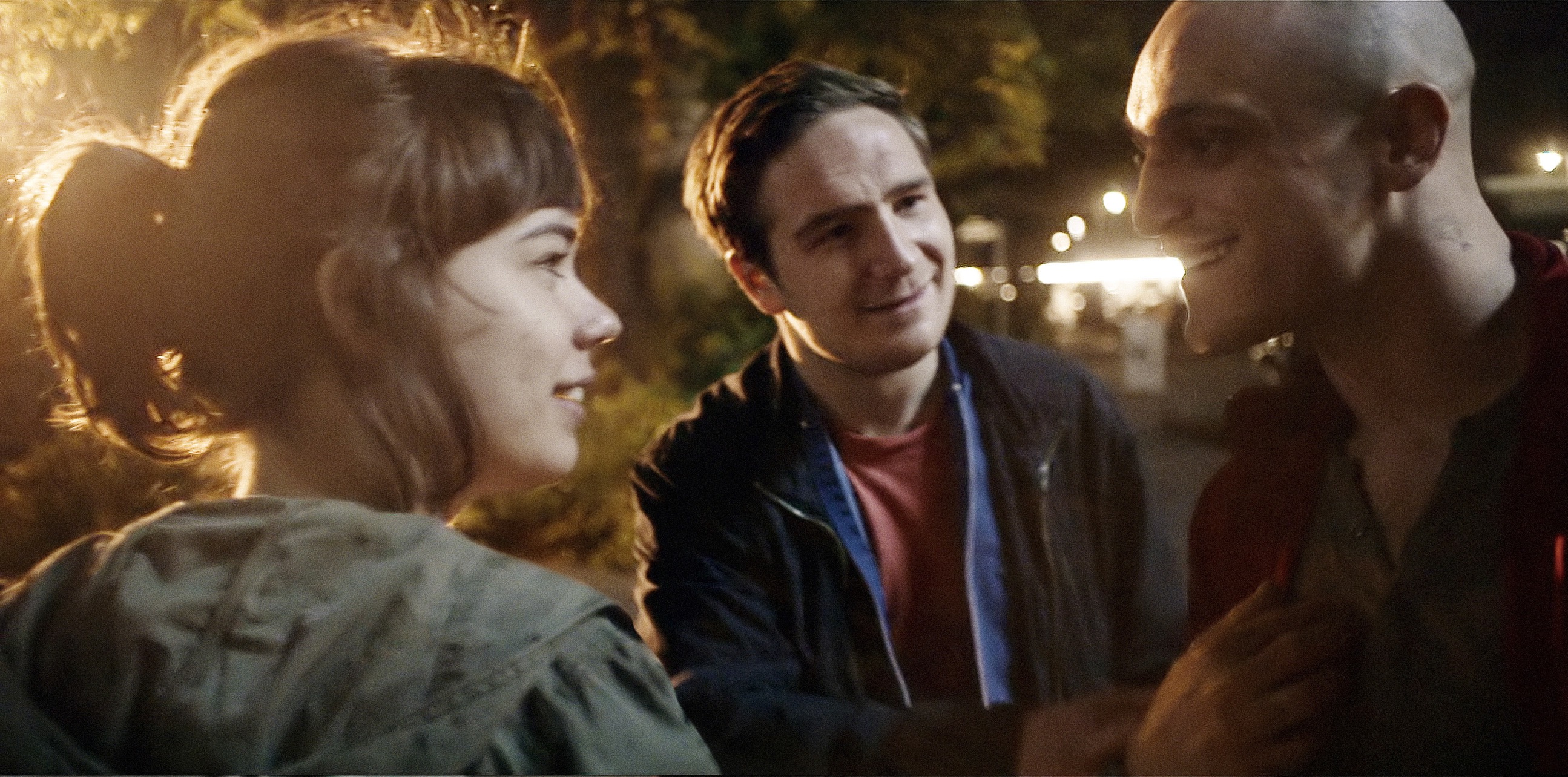
One of the greatest achievements involved with this film is the way that the single shot doesn’t get in the way of a well-told story. This is achieved by having five central actors that are focused and well-briefed. Any slip up at any point and the whole thing would fall down. Helping this was the fact the script was only twelve pages long, which meant the cast could improvise their scenes.
What is lost, however, is the ability to maintain the pace by cutting sections that on reflection didn’t work. There are two instances where I felt they had faded out the audio and brought in the musical soundtrack from Nils Frahm solely to cover up a mess-up in dialogue. I may have been trying too hard to spot the errors knowing editing wasn’t a possibility, but with more freedom the film could have been chopped down to about 100 minutes to deliver a fast-paced action film.
So what would that achieve? Well, perhaps the film would be more accessible by being a faster tempo with no down time. Would I have seen it in an edited form? It’s doubtful. I’m a huge fan of the skill of acting, and thousands of actors achieve wondrous things night after night in theatres across the planet. It’s such a shame that directors and editors don’t have the balls to let them act for more than five seconds at a time in most Hollywood films.
Watching Victoria may require a bit of effort from the viewer, but seeing a group of actors achieve greatness with minimal scripting is worth it. Throw in the fact you are watching a director trying something technically astounding – and succeeding – and you have a film most worthy of your consumption.
A must see!

Film review – Mistress America (Noah Baumbach, 2015)
Mistress America tells the story of two sisters-to-be: college freshman Tracy Fishco (Lola Kirke) and aspiring entrepreneur Brooke (Greta Gerwig). Their respective mother and father are soon to be wed so Tracy contacts Brooke to get to know her and is immediately taken into the whirlwind of her seemingly colourful lifestyle.
The characters portrayed in Mistress America are the self-indulged types with delusions of grandeur that inspired me when I was a late teenager going into my early 20s. Watching the story play out and seeing remnants of me in a earlier life was a cringeworthy experience.
On the rare occasion that they respond directly to someone talking to them, it is usually to spin the conversation back to focus on themselves. There is little or no consideration for anyone around them, flaws that are a result of not really having any likeable personality traits nor tangible skill to offer the world.
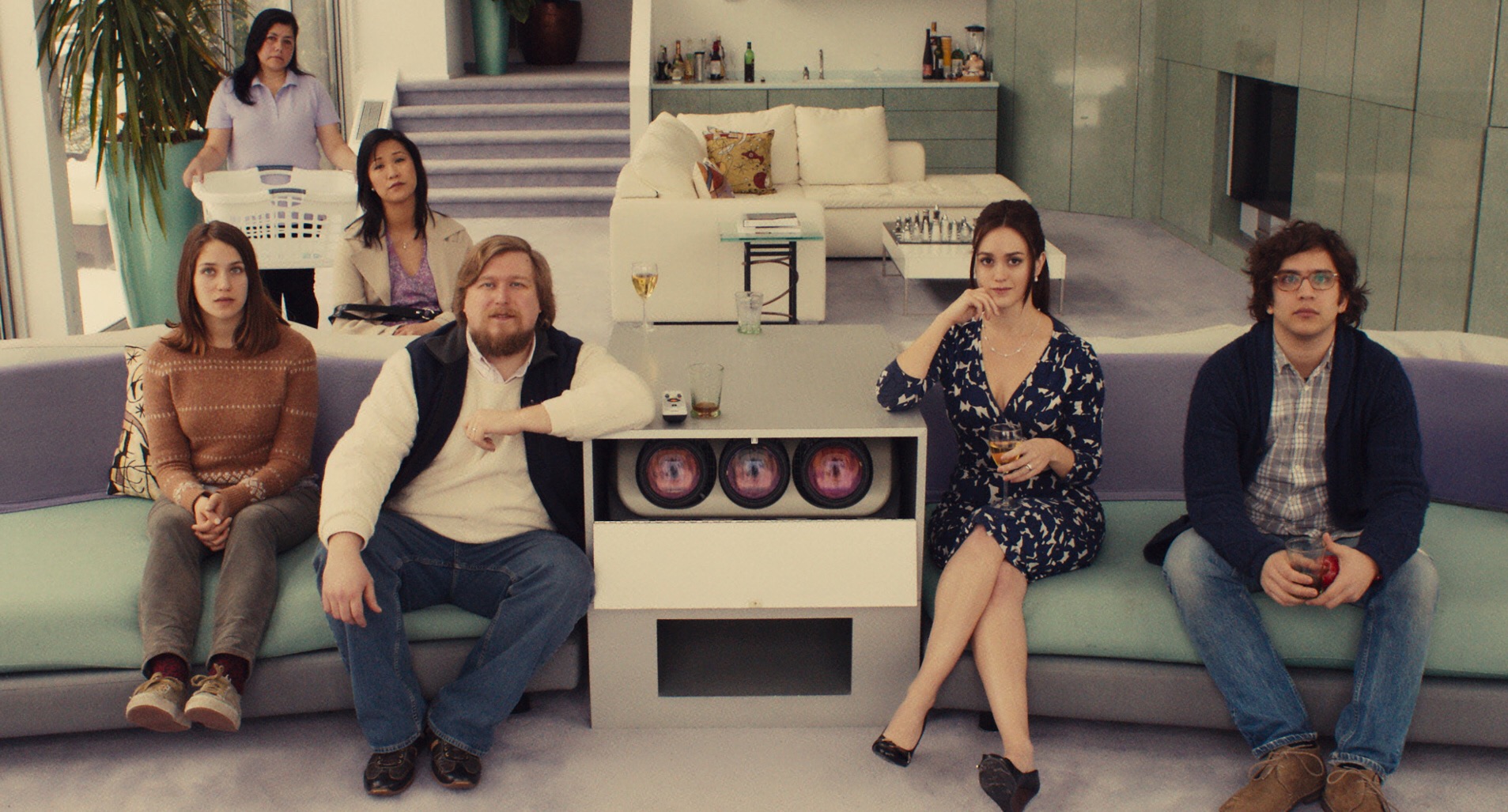
It makes for some snappy and quirky exchanges but shortly becomes highly irritating as you realise how shallow and lacking in the fundamental characteristics of life these people are. They are typically lonely and disparate people struggling to find their way, perhaps because they are so self-indulgent beyond reproach that they have been ignored by anyone they have come into contact with.
In one almost triumphant scene, Brooke is put on the spot to pitch her new business idea to her ex-boyfriend in an attempt to gain financial backing for a conceptual café that sounds like a mess of non-ideas. It was the only scene in the film that I derived any enjoyment from as her lack of business acumen and a basic idea concept resulted in an embarrassment of a presentation. When sister Tracy stepped in to save the day, the triumphant music belied the fact that she also didn’t add anything to the pitch, just spurted more idealistic jargon with no real substance. My real enjoyment came when the whole room erupted in applause. Why were they clapping. A raised voice and some positive music doth not a business idea make.
I don’t think I’ve ever checked the progress of a film so much as when watching this, and it was making painfully slow progress. I certainly don’t think it’s the worst film I’ve ever seen, but it comes close and it isn’t something I could ever recommend to anyone.
Avoid.

Star Wars: The Force Awakens – Bonus Features
I received my copy of The Force Awakens in the post earlier today and have busied myself watching a handful of the bonus features.
For fans of the film, or of Star Wars in general, there is plenty on offer to warrant a purchase. All the things imaginable are covered and have details galore far beyond what you’d have heard before.
The deleted scenes are largely disappointing. There’s no Constanble Zuvio and Chewbacca doesn’t rip anyone’s arms out of their sockets. There is a nice little scene with a chase on a snowspeeder, complete with Phantom Menace-level CGI. There’s also a cool clip featuring Kylo Ren searching the Falcon and sensing Han Solo.
Watching them and their limited nature makes me feel like there are some more completed scenes out there that might surface as an Extended Edition at a later date.
The centre point of the disc is by far the one titled ‘Secrets of The Force Awakens: A Cinematic Journey’. It’s a four part, hour-long documentary feature that takes you on the journey from concept to final product. Do yourself a favour and make sure you watch this. Treat it like a proper film.
The first read-through feature is a little disappointing. It’s nice enough but with a title like that you might be forgiven for expecting video footage of the whole script read. It is less than five minutes and is just the cast reminiscing on that special first day.
Elsewhere, there’s a mini feature on BB-8 and another on the creatures from the film, plus ones covering the music and ILM.
Overall a disc worthy of your time if you’re the type of person who wants to learn as much as possible about such a fantastic film.

Why AMC allowing mobile phone usage is short-sighted
The news of the AMC chain of multiplex cinemas in USA announcing plans to allow cinema-goers to text during films is probably the worst film-related news I’ve heard in a long time. AMC chief executive Adam Aron has shown himself to be completely out-of-touch with the paying cinema-goers to a level that is beyond my comprehension.
There are still many great reasons to go to the cinema. Watching the latest films on the best available format is an experience that continues to be unrivalled in the home cinema market. No matter how much you spend on your setup at home, you can’t replicate sitting down and watching at a huge 4K huge screening with Dolby surround sound in a perfectly dark cinema. Being transported into a different world with no distractions for a couple of hours is the whole point of going to the cinema.
Whilst it is an almost perfect experience for me, there are a number of things that have crept in in recent times that have marred my experience as a cinema-goer. The primary things I get infuriated about going to the cinema are as follows:
· People talking
· People eating overly-pungent or crunchy food
· People using their mobile phones
· The cinema management and employees doing nothing to prevent any of the above
I think most or all of the above issues are annoyances shared with all other cinephiles around the world. They are also wholly avoidable by having strict policies at the cinema.
The generalisation from Aron that he wants to allow texting to encourage millennials is a short-sighted statement that indicates he hasn’t actually been to the cinema recently. A 50-year-old man who has just left his office is just as likely to text as a 16-year-old out with their friends.
One generalisation I will make is that the kinds of people who text during films are the kinds of people who will also be happy to talk through films. Neither group really care about the film they’re supposed to be watching, they’re just going through the motions. Let’s face it, if you’re on your phone, you aren’t watching a film.
If Aron is happy to drive away a large amount of AMC’s market share with this tactic then that’s fine, as long as other cinemas don’t follow suit. Unfortunately, for cinema purists seeing this kind of attitude just encourages us to stay away.
The only solution is to have a blanket ban on texting and phone use during films. If anyone uses their phone, they should be ejected with no second chances. Doing this and guaranteeing the purity of a trip to the cinema will protect the current revenue in cinemas. If tickets are being charged at £8 or more for a standard ticket then a trip to the cinema is a luxury night out and this should be reflected on the experience.
Guaranteeing a good and hassle free experience will encourage the current customers to go back again after the slow decline due to this very issue.
Allowing mobile phone usage will just be another nail in the coffin for cinemas.
Visit to Fruit Candy Café in Akihabara, Tokyo
When people visit Japan, it is often the case that they do so to find “the real Japan”. This is a great phrase that means something different to everyone who visits. For some this means going to as many Buddhist shrines and temples as possible (regardless of their religious persuasions), for others it means eating only Japanese food and only with chopsticks. For a select few, the weird and wonderful side of Japan is the place to be. You know – the places where you’ll be able to start your anecdotes with the words “You’ll never guess what they have in Japan…”.
This is how we found ourselves in the Akihabara district of Tokyo. Akihabara is the perfect location if you’re partial to manga, anime, maid cafés, robots and the like. A typical otaku hangout.
Fruit Candy Café is an igaru café in Akihabara. Igaru cafés are places you go to and pay to enjoy your drinks with the added novelty of being able to play with extremely well-groomed and adorable rabbits as you do so.
It costs 1300¥ per person for thirty minutes of all-you-can-drink coffee and tea and as much play as you can manage with the huge selection of rabbits available to choose from. A set of rules is provided that includes no shoes in the café, no photos of the staff and no cuddling the rabbits (a weird one but really it just meant no aggressive man-handling of the rabbits). We managed to spend time with four different rabbits of different breeds, some more friendly than others, but all extremely cute.

One tip: if you are going to go, make sure you spend 200¥ more to get the rabbit feed. Some of our rabbits weren’t interested until we could offer them some nibbles.
Another tip: it’s actually really difficult to find. Luckily a wonderful guide has been provided here. It was actually a lifesaver for us as we had been wandering around for about 30 minutes before jumping on the local wi-fi and stumbling across that website. We couldn’t have done it without you!
It was a bizarre experience, but that’s what you expect when you come to this part of Tokyo. A unique, bizarre, very Japanese experience.
Theatre Review – ‘Hikosan Gongen Chikai No Sukedachi’ at the Kabukiza Theatre in Tokyo,02/04/2016
The Kabukiza Theatre in Tokyo is the primary theatre in Tokyo to watch traditional kabuki theatre. The theatre is stunning both inside and out, designed in a traditional manner despite the many reconstructions over the years. Seeing a show there is a must for anyone visiting Tokyo wanting to see traditional Japanese theatre done properly.
What is kabuki theatre?
Kabuki is a traditional form of Japanese entertainment. The name literally means sing-dance-skill. It was allegedly first performed in the 17th century and has continued to be popular throughout the intervening period.
Theatrical productions in the kabuki style tend to be in five acts. They are typified by stark make-up and fanciful costumes, with performers striking “mie” (kabuki-style picturesque poses) as they deliver their lines. Audience members will shout out the actors’ Yagō (house name) to show their appreciation.
The stage consists of a typical framed stage as you’d expect in any Western-style play. Uniquely, however, kabuki theatre stages have a hanamichi – a walkway protruding out of the stage on which performers make dramatic entrances and exits from the stage.
How do I get tickets?
Each month a new programme of single act shows is performed, making up approximately four hours of performances in the afternoon and four hours of performances in the evening. Multi-act tickets for either the afternoon or evening performances can be bought in advance either at the box office or online, though those only wanting to see a single act can turn up at pre-determined time slots to buy cheap single-act tickets from the box office. This is the option we chose.
A word of warning on this – they operate a queuing system and only 150 tickets are available for each act, with only the first 90 getting seats. The remaining 60 stand behind the seats. It is also almost impossible to get tickets in this way for consecutive acts as the timeslot for the next set of tickets usually lands in the middle of the prior performance. Basically, if you want to see the whole show you need to buy in advance, though for newcomers one act is usually enough.
For 1000 JPY you can also rent an English subtitle box. This is essential for your enjoyment of the show and can’t be recommended enough.
Where is it?
The Kabukiza Theatre is located in the Ginza area of Tokyo. The best subway stop to reach it is at Higashi-Ginza station on the Toei Asakusa Line. The main box-office is located in the subway station along with a small market and several coffee shops and restaurants. Single-act tickets must be purchased upstairs at the dedicated box office outside the theatre.
Review – ‘Hikosan Gongen Chikai No Sukedachi’
‘Hikosan Gongen Chikai No Sukedachi’ is a single-act play that is showing at the Kabukiza Theatre throughout April. It makes up half of the evening performance, with a second unrelated story following.
The storyline centres around Keyamura Rokusuke (Kataoka Nizaemon), a farmer and master swordsman living at the base of Mt. Hiko, who we are introduced to shortly after the death of his mother. A proclamation has been made that any man who can defeat Rokusuke in a sword fight will be put into immediate employment by the ruler of Kokura. One night, when Rokusuke is praying for his mother, Mijin Danjo (Nakamura Karoku) a masterless samurai passes by with his old mother. Danjo asks Rokusuke to let him win the sword match under the premise that it will show him to be a good son to his mother, who is close to death. Rokusuke is touched by this suggestion and immediately promises to throw the fight. However, once the fight is thrown, Rokusuke discovers that Danjo isn’t as trustworthy and honorable as he first thought.
At one hour and thirty-five minutes, the play was a perfect length for someone new to kabuki theatre. As an English speaker who couldn’t really pick up most of what was being said in Japanese, the subtitles worked perfectly well.
It is a uniquely Japanese experience that doesn’t, in truth, compare to anything I’ve seen anywhere else. However, that doesn’t mean it’s difficult to access and within a few minutes I was completely engrossed in what was going on on stage.
Kataoka Nizaemon XV is a popular kabuki actor and his nuances were well received by the audience. He was recently awarded with the title of National Living Treasure in Japan. This is really a one-man-show and he carries it perfectly, utilising moments of real sorrow for a man missing his mother and juxtoposing them with tremendous comedy as he deals with the various women residing at his home as well as an adopted son.
If you enjoy surprises it is advised that you don’t read the synopsis before you go in as it very much reveals everything you will see performed, including the conclusion of the final act. Indeed, this is a play that ends on a cliffhanger without playing out the story to a defined conclusion, leaving the audience to take the story on in their own heads to wonder and assume what happens to the featured characters further down the line. This may come as a surprise to those expecting a satisfyingly concise ending, but this is a performance that sticks to the original script rather than tinkering to please modern audiences.
As an art form, kabuki is more accessible than most would expect and the opportunity to see it in Japan should be seized, especially with great seats available at such reasonable prices. It’s something I hope to enjoy again in the future and hope you do too.
Haiku film review #020 – Seven Samurai
So I’ve just got back from an amazing trip to Japan. We were lucky enough to be there during cherry blossom season. So, on a slightly overcast afternoon at Ueno Park in Tokyo I enjoyed the festivities and spent some time under the sakura writing haiku poems about Japanese films.
The second one I wrote was for Seven Samurai:
These samurai rule.
Let’s steal and change the story
For our cowboy film.
 Cinema, etc.