Film review – Chicken Run: Dawn of the Nugget

It has been twenty-three years since we first saw the original Chicken Run on the big screen. A lot has happened since then. Upon its release in Britain, Tony Blair was the Prime Minister, the country was congratulating itself on avoiding the millennium bug, but we were still wondering what to do with the big dome we’d built in London. The biggest film at the box office was Gladiator, Kylie Minogue hadn’t made her golden-hot panted comeback yet and we were hotly awaiting the release of PlayStation 2. Oh, and Erling Haaland was about to be born.

Basically, it was a while ago.

So how does bringing back such an old film feel, after all this time? Honestly… like a huge big warm hug.

This is not a departure in style. Indeed, it picks up right where we left the clucky gang of misfits – on the idyllic island they’d found at the end of the first film. The opening act is something of a scene setter, introducing us to the new lead character in the film. Molly, played by Bella Ramsey, longs for everything her mum and dad ran away from in the first film. From her island, the outside world is full of wonder, delight and mystery. Frustrated by a feeling of suffocation, she escapes the island and looks for a new adventure with the first chicken she finds, a zesty Liverpudlian called Frizzle (played playfully by Josie Sedgwick-Davies).

Much speculation has been made about the refreshed voice acting cast. Only a few of the original cast have maintained their spots in the cast, with high profile names such as Phil Daniels, Timothy Spall and Julia Sawalha being recast. In their case, it was a simple move to ensure the voices sounded as youthful as the characters they were playing. It’s a distraction when the voice doesn’t match what you’re seeing, and you only need to see the first 20 minutes of Indiana Jones and the Dial of Destiny to know how skin-crawlingly dreadful it is for your brain to have to work overtime to live with it. There may be more reasons at play for some of the cast, but there’s a whole additional essay that could be written about that…

I loved the film, and the small screening I was lucky enough to attend with all agreed. The audience was a mix of older fans revisiting a childhood memory, and younger people who were being introduced to the chickens for the first time. My four-year-old daughter, well-versed in Aardman, had a fantastic time and was annoyed she couldn’t watch it again any time soon. She was restless during the first 10 minutes but a swift bribe with a Curly-Wurly and she was golden. My only concern is how many sheltered children will be asking questions about their chicken nuggets next time they eat them.

This isn’t groundbreaking material, but nor does it need to be. As the film plays out, it does feel familiar. There’s an evil plot, the protagonists need to club together to stop them. But that’s children’s animation. It’s a formula that might feel tired to some, but sometimes what you need is exactly this. A big huge warm hug. And when hugs are this good, I don’t think you need much more.
Film review – Love in Pawn (Charles Saunders, 1953)

The year is 1953. November. Britain is still bouncing from the coronation of Queen Elizabeth II. Winston Churchill was halfway through his second stint as British Prime Minister. Frankie Laine was the undisputed king of the musical landscape, topping the singles charts for well over half the year with three different songs. And, somewhere amongst it all, Charles Saunders crafted one of the most bizarre British comedy films I’ve ever seen.

Love in Pawn stars Bernard Braden and Barbara Kelly as Roger and Jean Fox, a married couple in dire need of financial help. After a fairly slow opening act, they come to the only logical conclusion: to pawn Roger for a then-considerable £5. However, when Jean loses the ticket, Roger is stuck in the pawn shop for longer than expected. This gives him just enough time to begin a flirtatious kinship with the pawnbroker’s daughter Amber, played brilliantly by Jeannie Carson.

That the daughter is not of age (it’s suggested she’s 17) is not even the most unusual part of this strange plot. The main confusion for this viewer was that nobody seems to greatly question why Roger is allowed to be pawned. Even when they get to court the judge has a little confused look and then proceeds as normal.

For such a wild premise, the film itself isn’t particularly hilarious. Plenty of films, across all genres, stand up to the test of time after 70 years, but this doesn’t really hit the mark. Charles Saunders was on the fringes of television and cinema throughout his career, and this does lack the grandeur of a big-screen story. Indeed, it would sit much better as a TV movie with some of the fat cut out of the first twenty minutes.

Perhaps his creativity had reached saturation. Between 1952 and 1954, he rushed through no fewer than eight films and nine episodes of anthology series Douglas Fairbanks Presents. Such a prolific career tends to lead to a formulaic output.

There is a good story here but it feels rushed and unbalanced.

Film review – Your Place Or Mine (Aline Brosh McKenna, 2023)

Listen. Schmalzy romcoms are totally not my bag, okay? The whole premise does nothing for me. I don’t think I’ve enjoyed one for years. But there was something about Aline Brosh McKenna’s film that made me want to keep watching. And – whisper it very quietly – I quite enjoyed it.

The film stars Reece Witherspoon as Debbie and Ashton Kutcher as Peter. It opens with them having a one-night stand together in the early 00s. A jump forwards in time reveals that they didn’t end up married, but that they did end up very close friends, despite living on opposite sides of the USA.

So, where is the story taken and how does it end? Well, very similarly to most other rom-coms. There are a few bumps along the way and everyone ends up quite happy at the end.

The beauty in the film comes with its simplicity and charm. The leads have never looked better and make a perfect match. They add life to a solid storyline that feels snappy and well baked. There’s no laziness in the character realisation, especially in Theo (Jesse Williams), for whom it would have been easier to paint as more sinister and manipulative.

It isn’t groundbreaking cinema but it does a very good job of what it set out to do. Sometimes that is enough.

Maybe it is my bag after all.

Film review – Two Way Stretch (Robert Day, 1960)

There is something immediately joyous about Two Way Stretch. The score, supplied by Ken Jones, plays beautifully over some whimsical title cards, typical of British films at the time, and it sets up the tale perfectly.

Set in a British prison, Robert Day’s 1960 comedy tells the tale of a group of three prisoners – Peter Sellers, Bernard Cribbins and David Lodge – who operate their cell like a homely bed and breakfast, with contraband food and drink, a radio, daily newspapers and even a pet cat called Strangeways. They receive a visit from a man purporting to be a vicar (played by Wilfrid Hyde-White), but who is actually a conman who has hatched a plan to use the three prisoners to carry out a large-scale diamond theft. They’ll be broken out of prison, steal the diamonds, then broken back in. A classic farce.

Sellers is brilliant throughout, providing natural comedy at every moment. In 1960, his film career had just taken off with a BAFTA win for his leading role in another British comedy, I’m All Right Jack. By 1962, he was starring in Kubrick’s Lolita before being cast in Pink Panther. This is a perfect opportunity to see Sellers in his prime, fresh from radio, making his way on the big screen. A comedy legend at his best.

There are some moments of real hilarity. A visit from some elderly ladies provides Sellers with the opportunity to play a few tricks, whilst the smuggling of contraband into the prison on visit day is a shambolic hoot. The real gold starts with the arrival of Lionel Jeffries as the officious Chief “Sour” Crout, who brings a real counterpoint for the trio of protagonists. The comedy is all underpinned by a solid plot that keeps things moving forwards.

Two Way Stretch is a pure joy from start to finish and a perfect snapshot of British cinema at the start of the 1960s.

Golden Globes – Full list of winners

Best film – drama

Avatar: The Way of Water
Elvis
The Fabelmans – WINNER
Tár
Top Gun: Maverick

Best film – musical or comedy

Babylon
The Banshees of Inisherin – WINNER
Everything Everywhere All at Once
Glass Onion: A Knives Out Mystery
Triangle of Sadness

Best TV series – drama

Better Call Saul
The Crown
House of the Dragon – WINNER
Ozark
Severance

Best TV series – musical or comedy

Abbott Elementary – WINNER
The Bear
Hacks
Only Murders in the Building
Wednesday

Best limited series, anthology series or TV movie

Black Bird
Monster: The Jeffrey Dahmer Story
Pam and Tommy
The Dropout
The White Lotus: Sicily – WINNER

Best actor in a TV series – drama

Jeff Bridges, The Old Man
Kevin Costner, Yellowstone – WINNER
Diego Luna, Andor
Bob Odenkirk, Better Call Saul
Adam Scott, Severance

Best actor in a limited series or TV movie

Taron Egerton, Black Bird
Colin Firth, The Staircase
Andrew Garfield, Under the Banner of Heaven
Evan Peters, Monster: The Jeffrey Dahmer Story – WINNER
Sebastian Stan, Pam and Tommy

Best actress in a limited series or TV movie

Jessica Chastain, George and Tammy
Julia Garner, Inventing Anna
Lily James, Pam and Tommy
Julia Roberts, Gaslit
Amanda Seyfried, The Dropout – WINNER

Best supporting actress in a limited series or TV movie

Jennifer Coolidge, The White Lotus – WINNER
Claire Danes, Fleishman Is in Trouble
Daisy Edgar-Jones, Under the Banner of Heaven
Niecy Nash-Betts, Monster: The Jeffrey Dahmer Story
Aubrey Plaza, The White Lotus

Best supporting actor in a limited series or TV movie

F Murray Abraham, The White Lotus
Domhnall Gleeson, The Patient
Paul Walter Hauser, Black Bird – WINNER
Richard Jenkins, Monster: The Jeffrey Dahmer Story
Seth Rogen, Pam and Tommy

Best screenplay

Todd Field, Tár
Tony Kushner & Steven Spielberg, The Fabelmans
Daniel Kwan, Daniel Scheinert, Everything Everywhere All at Once
Martin McDonagh, The Banshees of Inisherin – WINNER
Sarah Polley, Women Talking

Best director

James Cameron, Avatar: The Way of Water
Daniel Kwan and Daniel Scheinert, Everything Everywhere All at Once
Baz Luhrmann, Elvis
Martin McDonagh, The Banshees of Inisherin
Steven Spielberg, The Fabelmans – WINNER

Best non-English language film

RRR (India)
All Quiet on the Western Front (Germany)
Argentina, 1985 (Argentina) – WINNER
Close (Belgium)
Decision to Leave (South Korea)

Best actress – drama

Cate Blanchett, Tár – WINNER
Olivia Colman, Empire of Light
Viola Davis, The Woman King
Ana de Armas, Blonde
Michelle Williams, The Fabelmans

Best supporting actress in a TV series

Elizabeth Debicki, The Crown
Hannah Einbinder, Hacks
Julia Garner, Ozark – WINNER
Janelle James, Abbott Elementary
Sheryl Lee Ralph, Abbott Elementary

Best supporting actor

Brendan Gleeson, The Banshees of Inisherin
Ke Huy Quan, Everything Everywhere All at Once – WINNER
Barry Keoghan, The Banshees of Inisherin
Brad Pitt, Babylon
Eddie Redmayne, The Good Nurse

Best supporting actress

Angela Bassett, Black Panther: Wakanda Forever – WINNER
Kerry Condon, The Banshees of Inisherin
Jamie Lee Curtis, Everything Everywhere All at Once
Dolly De Leon, Triangle of Sadness
Carey Mulligan, She Said

Best supporting actor in a TV series

John Lithgow, The Old Man
Jonathan Pryce, The Crown
John Turturro, Severance
Tyler James Williams, Abbott Elementary – WINNER

Henry Winkler, Barry

Best original score

Alexandre Desplat, Guillermo del Toro’s Pinocchio
Hildur Guðnadóttir, Women Talking
Justin Hurwitz, Babylon – WINNER
John Williams, The Fabelmans
Carter Burwell, The Banshees of Inisherin

Best original song

Carolina, Taylor Swift (Where the Crawdads Sing)
Ciao Papa, Guillermo del Toro & Roeban Katz (Guillermo del Toro’s Pinocchio)
Hold My Hand, Lady Gaga and Bloodpop (Top Gun: Maverick)
Lift Me Up, Tems, Ludwig Göransson, Rihanna and Ryan Coogler (Black Panther: Wakanda Forever)
Naatu Naatu, Kala Bhairava, M. M. Keeravani, Rahul Sipligunj (RRR) – WINNER

Best actor in a TV series – musical or comedy

Donald Glover, Atlanta
Bill Hader, Barry
Steve Martin, Only Murders in the Building
Martin Short, Only Murders in the Building
Jeremy Allen White, The Bear – WINNER

Best actress in a TV series – musical or comedy

Quinta Brunson, Abbott Elementary – WINNER
Kaley Cuoco, The Flight Attendant
Selena Gomez, Only Murders in the Building
Jenna Ortega, Wednesday
Jean Smart, Hacks

Best actor – musical or comedy

Diego Calva, Babylon
Daniel Craig, Glass Onion: A Knives Out Mystery
Adam Driver, White Noise
Colin Farrell, The Banshees of Inisherin – WINNER
Ralph Fiennes, The Menu

Best actress – musical or comedy

Margot Robbie, Babylon
Anya Taylor-Joy, The Menu
Emma Thompson, Good Luck to You, Leo Grande
Lesley Manville, Mrs. Harris Goes to Paris
Michelle Yeoh, Everything Everywhere All at Once – WINNER

Best animated film

Guillermo del Toro’s Pinocchio – WINNER
Inu-Oh
Marcel the Shell With Shoes On
Puss in Boots: The Last Wish
Turning Red

Best actor – drama

Austin Butler, Elvis – WINNER
Brendan Fraser, The Whale
Hugh Jackman, The Son
Bill Nighy, Living
Jeremy Pope, The Inspection

Best actress in a TV series – drama

Emma D’Arcy, House of the Dragon
Laura Linney, Ozark
Imelda Staunton, The Crown
Hilary Swank, Alaska Daily
Zendaya, Euphoria – WINNER

Benedetta (Paul Verhoeven, 2021)

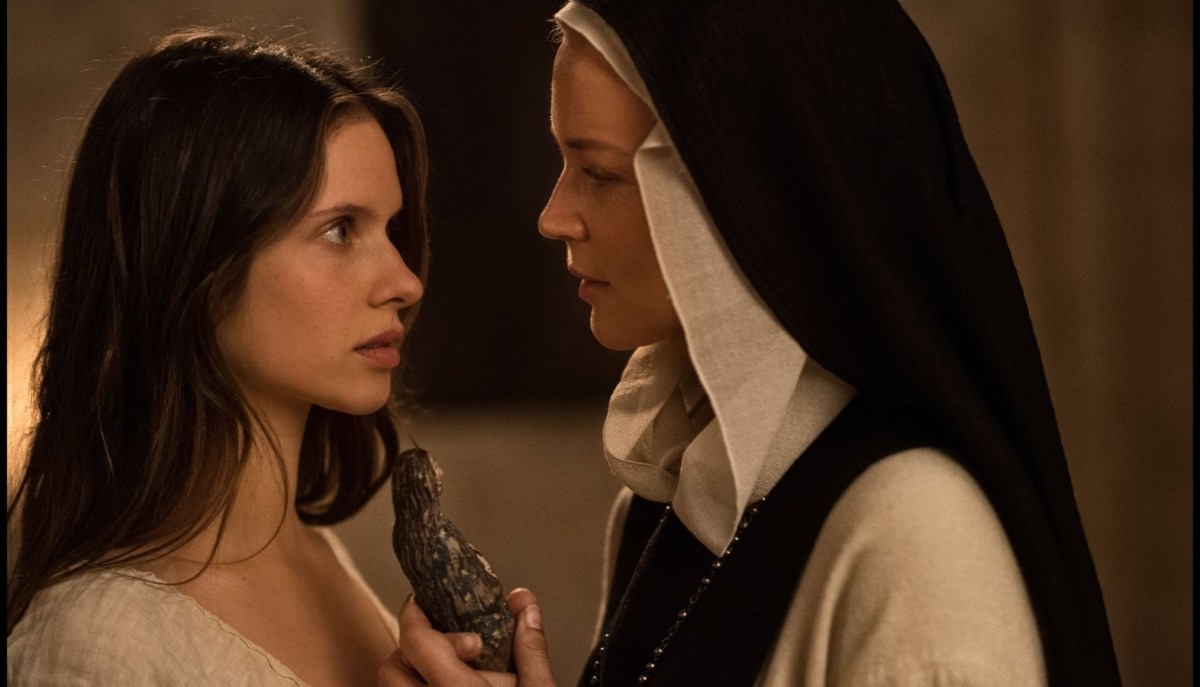
Paul Verhoeven’s retelling of the story of Benedetta Carlini may surprise fans of his most mainstream English-language work (for example, Robocop, Total Recall and Starship Troopers), but it is deftly executed and performed to perfection by a strong cast, all of whom raise the bar of a smartly-written tale.

The film is set in 17th century Italy, where the titular Benedetta is taken to Pescia to become a nun. After a humorous but important opening scene of Benedetta as a child, we are transported to her in adulthood, as she begins to have visions of Jesus that raise her standing amongst her fellow sisters in the convent, belying her secret desires to start a lesbian relationship with a younger nun, the illiterate Bartolomea.

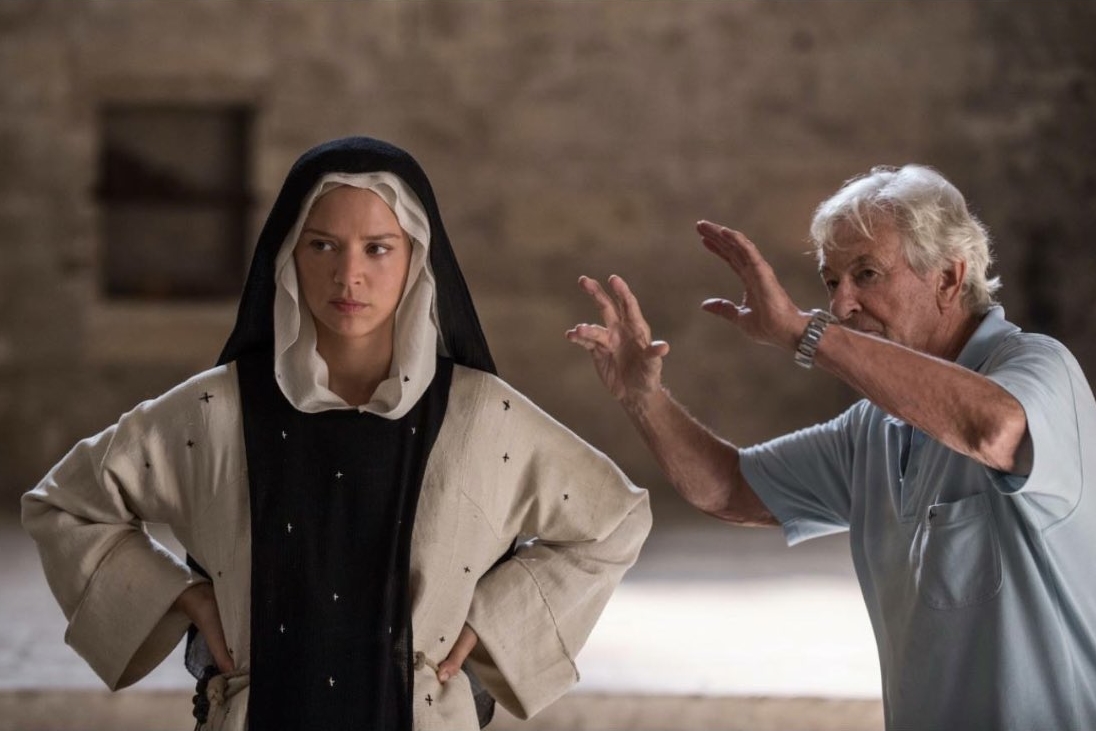
Virginie Efra on the set of Benedetta with Paul Verhoeven

Virginie Efira is in electric form in the lead role here. She is an experienced actress who has flourished in popularity in recent years with the likes of In Bed With Victoria and An Impossible Love, as well as Verhoeven’s last film Elle.

Charlotte Rampling also puts in a powerful supporting performance as Abbess Felicita, with Daphné Patakia completing the trio of female key players in a promising early role.

If there are any criticisms for the film, it’s that it feels a little slow and saggy at the start of the film proper, although viewers are more than rewarded as the film builds to a tremendous crescendo at the end of the film. Indeed, as a comet looms over the convent and the sky lights up in red hues, the action on the ground seems to offer a bigger threat to those in Pescia.

It never feels overblown or rushed, nor overly simple. I am seldom excited by a period piece, less so one set in a convent, but this had me gripped to the end. It is highly recommended.

Firebird (Peeter Rebane, 2022)

Peter Rebane’s wartime romance Firebird courted controversy in the run up to the release, with Russian attempts to silence the film in the country. It is also being released into a market with little or no interest in a story showing any aspect of the Russian military, given the recent invasion of Ukraine. 

Watching it objectively is, therefore, an art in itself. 

It stars Tom Prior and Oleg Zagorodnii as two military men – Sergey and Roman – who develop a secret romance, in spite of its illegality in Soviet Russia at the time. It’s a beautifully written piece of romantic drama, with the two leads doing well to portray the kind of electricity only found in such forbidden passions.

I won’t be looking into how much of the film is true to life and how much has been fabricated for the film. Doing that usually makes it far less enjoyable!

I did fail to deal with my utter dislike of any English-language film that sets itself in a foreign country, but then asks the actors and actresses to speak in English but with a hint of an accent. Tom Prior sounded close enough in the more placid scenes but as soon as there was any intense emotion in his wording, you could hear his Dorchester accent much clearer. In fairness to the wider film, the cast is primarily made up of Estonian actors and actresses, with a handful of the lead roles being taken by British actors.

Russian actress Diana Pozharskaya puts in a powerhouse performance as Luisa, a friend and lover caught in the middle of the two men. She turns in a particularly impactful scene at the end, which I can’t discuss without spoilers!

This is a film worth seeking out, even if you’re put off by the Russian/Soviet setting. Romance done well is always a joy to watch and this is no exception.