The Beatles – The 1971 album that could have been

The Beatles remain one of the most celebrated and influential bands of all time, with one of the most prolific outputs the music world has ever seen. This didn’t slow down in the immediate aftermath of the break-up of the band in 1969, with the final studio album and accompanying film Let It Be not seeing the light of day until May 1970. Fans of the Fab Four were also able to enjoy their stars individually as they released a flurry of solo material they had perhaps been saving up for release in the knowledge their days in the band were over.

There were a few experimental items that make the second half of The White Album feel positively mainstream (see John Lennon’s Unfinished Music Vol. 1 and 2, George Harrison’s Wonderwall Music and Paul McCartney’s The Family Way soundtrack, amongst others), but their first forays into mainstream music didn’t take too long to surface.

What if they’d not fallen out for another year and managed to squeeze out a final album? What songs that made it onto these first solo efforts would have sounded great alongside each other?

I’ve tried to create a balanced tracklisting that ruthlessly selects twelve songs from their creative output of 1970 and early 1971 and gives priority to McCartney, who was writing most of the material by the end. Abbey Road was essentially all of them working apart from each other, so the tracklisting below isn’t far off what could have been.

The result is The Beatles at their most conflicting and hateful best, the rift between Paul and the other members plain to see. However, if they’d managed to squeeze this out and gone through the cathartic experience of working on the songs together, we might have seen a whole different ending to the story.

SIDE A

1. Maybe I’m Amazed (Paul McCCartney, 1970)

A standout track from McCartney’s debut album and perhaps one of the finest love songs ever written, it is nonetheless underrated due to the fact the studio version was never issued as a single.

2. My Sweet Lord (George Harrison, 1970)

This is a bit of a no brainer. It’s the highlight of George’s first album proper and it’s hard to think of a better way to follow the opening track. Despite the obvious religious connotations, I doubt John and Paul would have been able to resist the temptation to include such a high-quality song on the next Beatles album. Indeed, Ringo Starr and John Lennon both reportedly appeared on the international smash single.

3. Cold Turkey (John Lennon, 1969)

This is a song that John presented to the band in 1969 for inclusion on Abbey Road, but it was ultimately decided that it didn’t fit and put out as a solo single. If they were still together and John wasn’t thinking about a solo album, then this would have been a prime candidate for inclusion. To increase the connection to The Beatles, Lennon’s version features Ringo Starr on drums.

4. Instant Karma! (We All Shine On) (John Lennon, 1970)

A song as anthemic as this would be a clear candidate for inclusion. Indeed, the version Lennon released in 1970 – prior to the release of the final Beatles album Let It Be – featured George Harrison on electric guitar and Phil Spector on production duties, so if it had been part of a Beatles release it’s unlikely it would have sounded much different.

The John Lennon double-header of Dig A Pony and Across The Universe had served Let It Be well and the same thinking works here for a riotious kick-start to the album.

5. Every Night (Paul McCartney, 1970)

This song was included on McCartney’s debut album but had been thrown around during the final Beatles recording sessions. It’s the first hint on this album that we hear McCartney’s anger seeping into his lyrics. It would have undoubtedly sounded a lot different had all four been working on it.

6. Too Many People (Paul McCartney, 1971)

A hate-filled Paul wrote this song as a dig at John and Yoko. In a 1984 edition of Playboy, he said, “He’d been doing a lot of preaching, and it got up my nose a little bit. In one song, I wrote, ‘Too many people preaching practices’. I think is the line. I mean, that was a little dig at John and Yoko.” It kicked off Paul’s debut-proper ‘Ram’ but works better as a closer to the first side.

SIDE B

1. How Do You Sleep? (John Lennon, 1971)

John’s in the studio, probably by this point no longer talking to Paul, and he’s just listened to the final take for Side A closer ‘Too Many People’. In a fit of rage he calls up George and pretty quickly they bash out the song that opens Side B, setting the tone for the fans who are about to hear the falling apart of their favourite band.

2. What Is Life? (George Harrison, 1970)

“Tell me, what is my life without your love?”

Many could dismiss this as schmulzy pop but the killer riff and memorable hook is enough to warrant a place on the next Beatles long player. It’s a soulful rock masterpiece, and a track that had been in Harrison’s back pocket during the Abbey Road session.

3. Junk (Paul McCartney, 1970)
Any speak of what might have come to pass on their next album has to feature both ‘Junk’ and ‘Teddy Boy’, songs Paul had rehearsed with The Beatles in January 1969. Here Paul is hinting about moving on to his next project, getting rid of the old and bringing in the new. It’s also a wild reduction in pace to lead into the final section of the album.

4. Teddy Boy (Paul McCartney, 1970)

A composite version of several takes of this track featured on Anthology 3 after being recorded in the 1969 Savile Row sessions for Let It Be, and is an indication of what else The Beatles had left in them. A no-brainer for inclusion here.

5. Mother (John Lennon, 1970)

One of Lennon’s most powerful songs was written in response to some therapy sessions he had been having to deal with the underlying grief of the loss of his mother to a car accident as a child. The version included on Plastic Ono Band featured Ringo on drums and shows a different side to Lennon than is on show on his two tracks on Side A.

6. All Things Must Pass (George Harrison, 1970)

This track is a beautiful and honest song that would have served The Beatles well as a final farewell on their last album.

As George sings “None of life’s strings can last, so I must be on my way”, the feeling is pretty strong that the troubled songwriter was already done with the band when he presented this track to them during the sessions that became Let It Be. It was rejected by Lennon and McCartney, but eventually appeared on George’s debut album (with Ringo and Eric Clapton amongst the backing band), and was also a hit for Billy Preston.

And there you have it, an alternate take on the end of The Beatles and their desire to break away, but managing to hold it together for one last release.

What do you think of the track listing? Did I miss anything out that has made you supremely angry? Let me know in the comments.
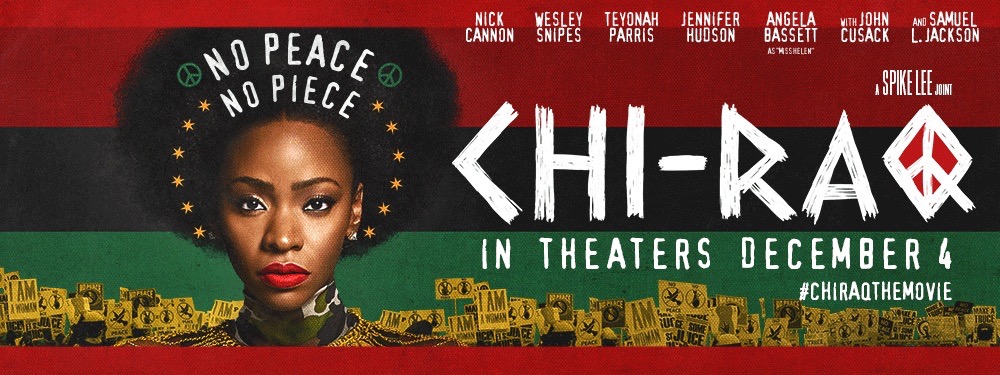

Film review – Chi-Raq (Spike Lee, 2016)

Spike Lee’s latest satirical drama is based on Aristophanes’ Classical Greek comedy Lysistrata, in which women withhold sex from their husbands as a punishment for fighting in the Peloponnesian War. Anyone hoping for a faithful adaptation is probably unaware of Lee’s output, which consistently challenge the audience to think about black lives, making its release as timely as ever given the BFI’s Black Star season is currently in full swing.

To label the film as a satirical drama only tells the half of it, which strong elements of comedy and crime. However, it is the hip-hop musical storytelling method that could hamper this film’s accessibility to the wider audience. When the words aren’t being sung or rapped, they are spoken in rhyme or at the very least rhythmical.

If anyone chooses not to see Chi-raq because they don’t like hip-hop is going to miss out on an extremely powerful work of art. There is a heap of controversies surrounding the film, from the statistics that are listed through the opening to the name of the film itself, but the relevance to the current population of Chicago is clear. The phrase Chi-raq is a name given by members of the drill-rap community to a city that, due to the prevalence of gun and gang crime, has led to the death of more people than both the war in Iraq and the war in Afghanistan.


The most outspoken criticism of the film is from this very community, who are displeased with the use of the phrase in the name against a film that highly stylises what is happening in Chicago. Lee has responded to the backlash, stating “We need to focus on what’s important. The whole shit about the film’s title was a needless distraction… People didn’t have the understanding that satire does not belittle serious subject matter.”

It’s a fair point. The most important thing is that the film itself is brilliantly written and acted, with a standout turn from lead actress Teyonah Parris as Lysistrata, the woman leading the revolt against their horny and battle-ready partners.

If you like your musicals challenging, wrapped in the genre of hip-hop, and with a strong ensemble cast, then Chi-raq is a must.

Chi-raq is in cinemas now and is also available on VOD.

Film review – 君の名は。/ Your Name (Makoto Shinkai, 2016)

It is very unusual for a Japanese animated film to make it beyond the smaller art house cinemas littered around the country. Most don’t make it that far. Even the most recent Studio Ghibli releases – When Marnie Was There and The Tale of the Princess Kaguya – failed to ignite the chain multiplexes, despite a global popularity that is unrivalled for world cinema.

It is strange then that Your Name has found itself in amongst the blockbusters at Showcase Cinemas in the UK this week, alongside the likes of Strange Beasts and Where to Find Them and Doctor Strange. No doubt many cinema goers will be nonplused that a weird Japanese film is taking up one of the screens, blissfully unaware that neither Cumberbatch nor Redmayne stand a chance of usurping Makoto Shinkai’s romantic fantasy anime to top the annual box office charts this year in Japan. As of 21st November it has taken 189.8m USD, making it Japan’s seventh highest grossing film of all time.

Films that are popular in Japan, of course, don’t always transfer to the global market, as exemplified by the rest of the all-time top ten films in terms of box office takings. Five are Japanese (of which only one is live action). No Japanese film bothers the equivalent top 100 list for global takings.

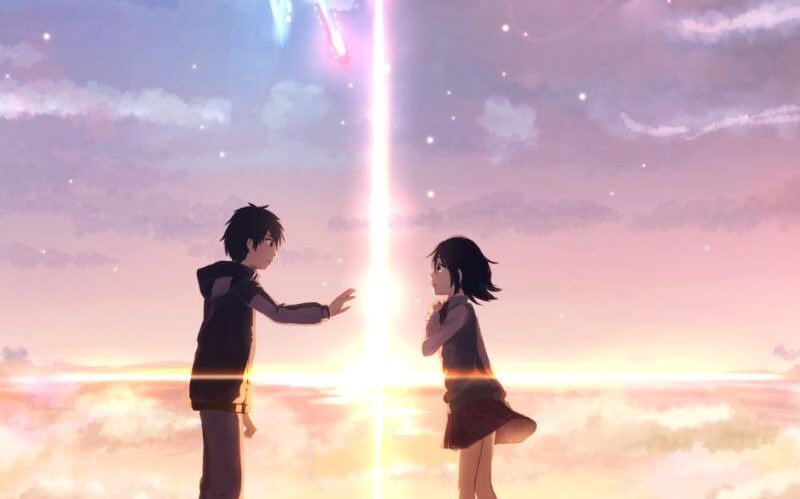
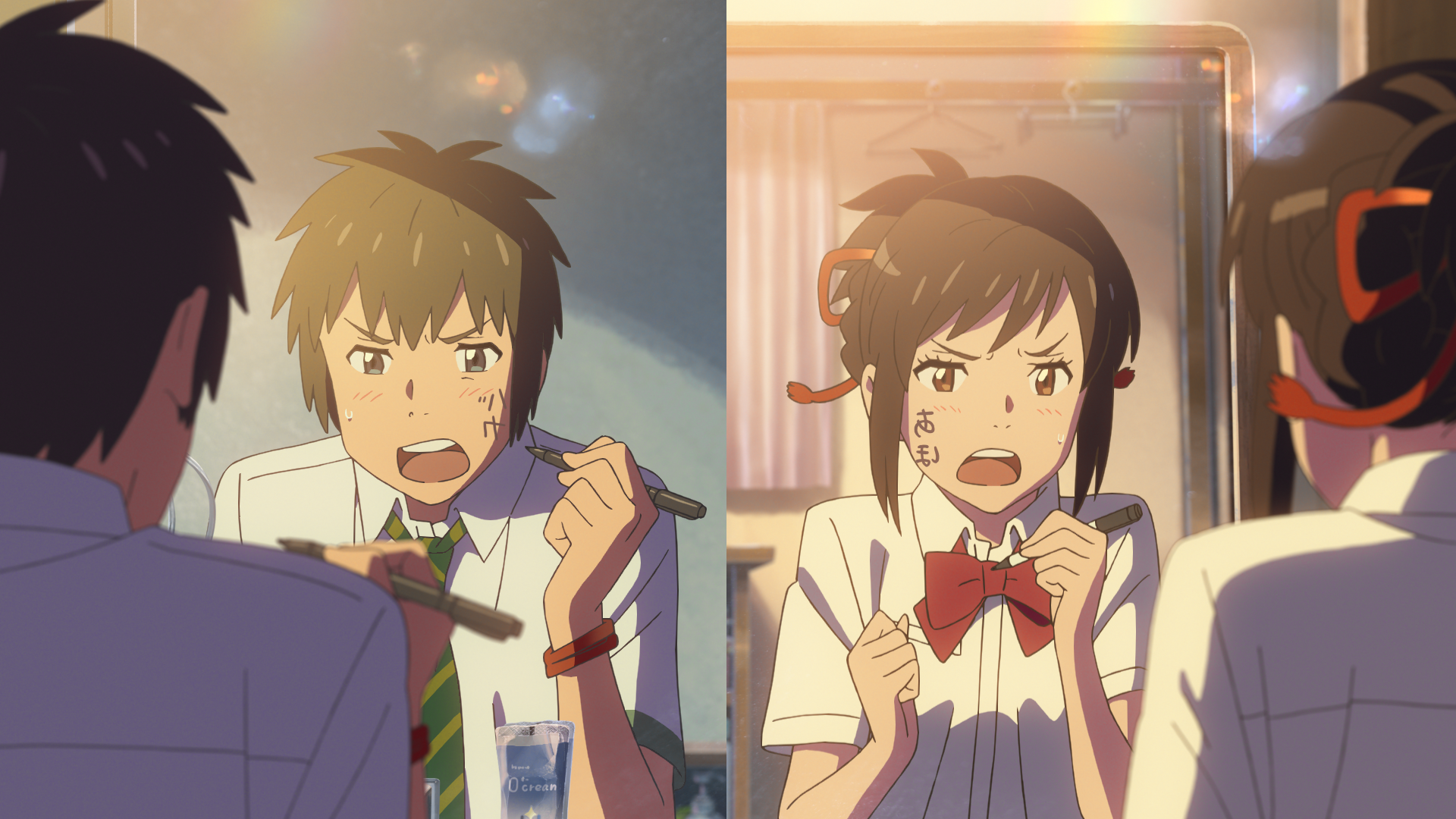
So what’s Your Name about and why is it so popular? It tells the story of Mitsuha, a high school girl living in the isolated countryside of Itomori, who makes a wish to be brought back as a handsome Tokyo high school boy in a future life. The next morning Taki, a high school boy living in Tokyo, wakes up in Mitsuha’s body, whilst she is now living in his body. It’s a classic body-swap setup that has served many good (and bad) films well in the past.

Or as it’s known by the poorly educated, You’re Name

The film may start in the most simple of ways, but as Mikota Shinkai throws a couple of devastating curveballs into the robust script to juxtapose the well-balanced comedic elements, it quickly becomes apparent where the success has come from. It’s a story driven by two characters that develop at a perfect rate to drive the plot forwards, and a serendipitous romance that is easy to get engrossed in.

Visually, the quality of the animation is very reminiscent of the best work of Studio Ghibli, particularly in the Itomori countryside scenes, away from the bright city lights of Tokyo. It’s such a relief to see something like this being released as Ghibli are finished as a motion picture production house, or at least going on a prolonged hiatus. Shinkai is being hailed as the new Hiyao Miyazaki, which seems far fetched on paper but in reality may not be so unrealistic. Unsurprisingly, he sites Miyazaki’s Castle in the Sky as his favourite film. His passion and dedication to follow in Miyazaki’s footsteps is abundantly on show here, from the beautifully-realised backdrops to the organic growth of the lead characters as the story progresses.

Put simply, it’s a beautiful film with a lot of heart and an engrossing story. What more could you ask for?

Film review – キングスグレイブ ファイナルファンタジーXV / Kingsglaive: Final Fantasy XV (Takeshi Nozue)

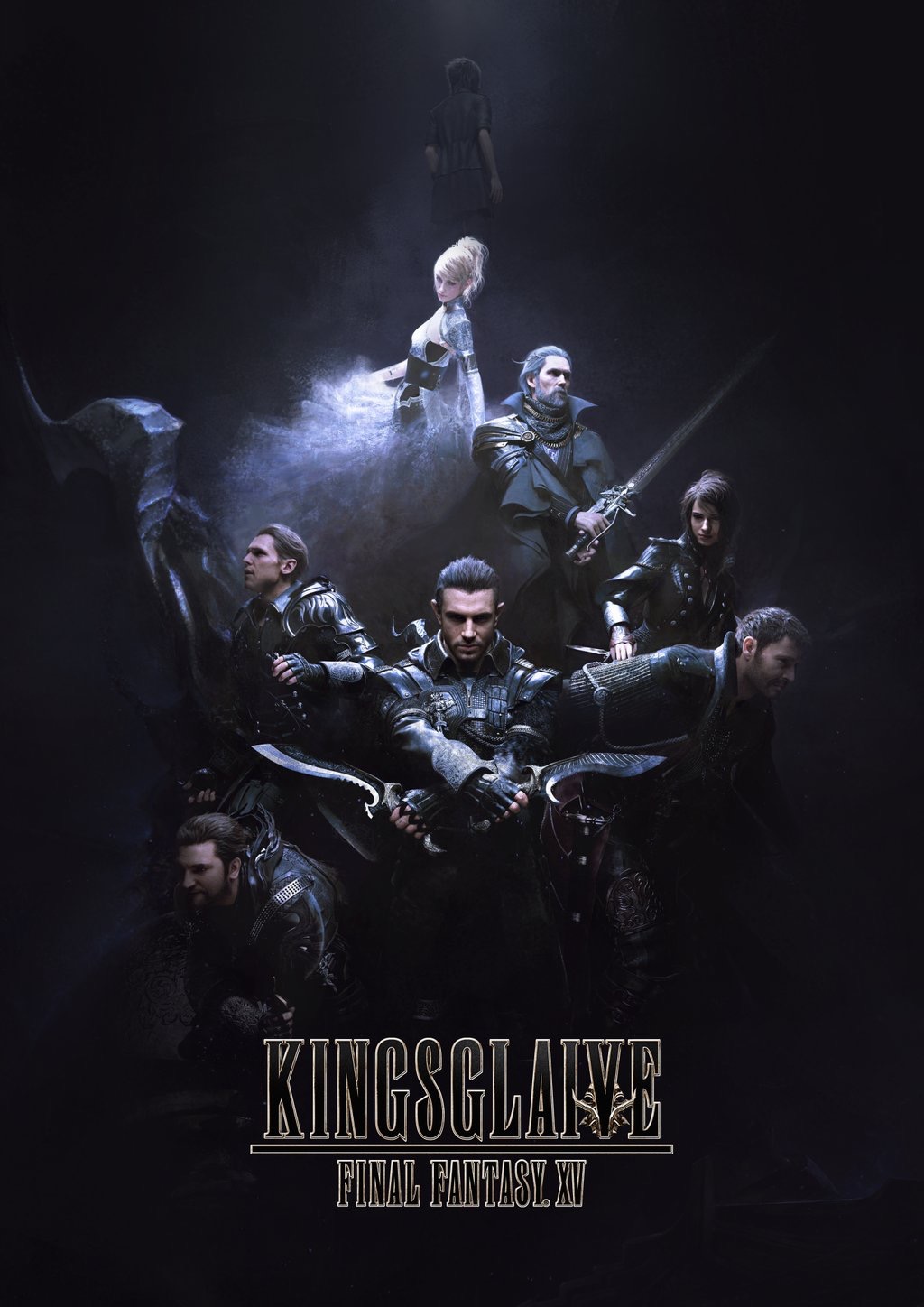
The latest Final Fantasy cinematic release, titled rather awkwardly Kingsglaive: Final Fantasy XV, sits in the Fabula Nova Crystallis universe first explored in 2009’s Final Fantasy XIII. If that opening sentence doesn’t float your boat, I’m afraid things are about to get a lot worse.

The storyline concentrates on characters we’ve previously seen in animated web series Brotherhood, and who will be the main stars of the upcoming Final Fantasy XV games that will hit the shelves in just under a week from now. It is set on Eos, an earth-like planet divided into six regions based on their historical ownership of various crystals. Central to the plot is Nyx Ulric (Aaron Paul), the main protagonist in this film but only a bit-part in the upcoming game. He is a member of the Kingsglaive, an elite guard that channel the mythical powers bestowed on them by the ruler of Regis Lucis Caelum CXIII (Sean Bean), ruler of Lucis. The military-rich Niflheim are at war with Lucis but a treaty is offered that includes as part of the bargain the marriage of Regis’s daughter to Lunafreya Nox Fleuret (Lena Headey) to Noctis Lucis Caelum (Ray Chase), the main protagonist of the upcoming game but scantly featured here.

Huh?


Still with me? It sounds complex on paper but in reality the film’s pace and tendency towards action ensures it isn’t another fantasy bore fest. With a rich cast of individuals that do their best to pepper the script with flavour, it is actually a surprisingly enjoyable experience.

One aspect that is particularly impressive is the match up of the audio to the movement of the mouth, which is usually a huge problem with foreign films being dubbed into English. CGI motion capture is perhaps the only medium where this is possible and it makes for a much less distracting experience.

With all films like this, the market is very niche. A single screening in the East Midlands in a small screen and reduced price still didn’t lead to a sell-out, though this could be blamed on the fact it has been on available on Blu-ray for the last month or so.

If you get chance to see this before playing the upcoming game then it will definitely provide an engrossing way to get used to the background to the plot. If you’re not a fan of the series and don’t plan the 100-hour slog that will inevitably be demanded by the RPG, then it probably won’t give you much enjoyment. 

Film review – Sully: The Miracle on the Hudson (Clint Eastwood, 2016)

“No one told us. No one said you are going to lose both engines at a lower altitude than any jet in history.”

A defiantly memorable line from a triumphant film, delivered with all the finesse of one of the greatest living actors being directed by another. It is a coming together to be cherished, especially with results this good.

Clint Eastwood’s latest film has all the vigour of his heyday performances, despite the fact he has now reached the grand age of 86. Whilst many would have been thinking about retirement decades earlier – nobody would have blamed him for waving goodbye after what would have been a fitting farewell in 2009’s Gran Torino – he continues to surprise film lovers with yet more tremendous creative flourishes. In a year that has been tarnished by far too many deaths of icons of film, music, television and beyond, Sully is a much-welcomed gift from one of the greats.

Hanks and Eckhart are in fine form

Tom Hanks is in fine form as the titular Chelsey “Sully” Sullenberger, a former US Air Force pilot turned passenger plane captain who literally bet 155 lives on his own instinct when a flock of Canada geese destroyed both engines of US Airline Flight 1549 as it departed from LaGuardia Airport. Sully’s instinct led him to successfully land the plane in the Hudson River. Heralded by the media, along with his copilot First Officer Jeffrey Skiles (Aaron Eckhart), as a hero, the National Transport Safety Bord (NTSB) weren’t as happy, opening up an investigation into what happened with a pre-determined plan to pin the damage to the aircraft on Sully due to pilot error, which would end his career. Their argument pivoted on the feasibility that the aircraft could have been landed at any of the nearby runways, the best option of which was nearby Teterboro Airport.

The film’s story plays out in a non-linear fashion, flitting between the aftermath of the landing and build up to the court hearing, Sully’s recollection of the incident (and bouts of post-traumatic stress) and some flashbacks to his pilot training in his youth.

There is little in the way of artistic licensing from Eastwood, largely sticking to a realistic and human story. Indeed, where it really makes an impact is that it never simplifies the technicalities of the aircraft or the arguments of either side for the benefit of those who aren’t paying attention. This is an intellectual film that respects its audience. The only worrying thing is that it felt so fresh – a matter that is simply indicative of the state of Hollywood in the present day.

This film may not make great waves at the box office as it battles out against Fantastic Beasts, Doctor Strange and Rogue One, but in years to come it will stand up alongside any of the films that Eastwood and Hanks have been involved with and will be seen as a work of art.