Film review – Jackie (Pablo Larraín, 2016)

One of the most shocking moments of the 20th Century was the assassination of U.S. President John F. Kennedy on 22nd November 1963. Driving along Dealy Plaza in the early afternoon, two shots were fired by a single assassin. The enduring image is that of his wife, First Lady Jackie Kennedy, as she scrambles to protect her husband, head in lap, striving to comprehend what had just happened to her. It was a tragedy.

Portman delivers a stunning performance


Central to Pablo Larraín’s biopic of Jackie Kennedy is a stunningly affecting performance from Natalie Portman. She’s capable of being both isolating and isolated within moments, in one of the most complex performances you could ever wish to take on as an actor. Portman doesn’t need to remind us of her capabilities, which we’ve known about since her debut as a 13-year-old in Luc Besson’s Léon: The Professional. 

The film is delivered in the form of Jackie Kennedy in an open interview to a nameless Time Magazine reporter (Billy Crudup). She reminisces about her television programme “Inside the White House with Mrs John F. Kennedy”, in which she effused about her collection of presidential memorabilia (as well as her abilities as an interior designer) though the story predominantly focuses on the fateful day in Dallas and the immediate aftermath as she reinvents herself as the director of her husband’s funeral, an event she hopes will rival – or at least evoke the memory of – Abraham Lincoln.

There are some solid supporting roles from the likes of Richard E. Grant, Peter Sarsgaard and the late John Hurt. Greta Gerwig also appears, though I can’t say she is in the same category.

One jarring aspect of the film is the unusual score, provided by the usually brilliant Mica Levi. It’s surprisingly sinister and usually doesn’t match the onscreen visuals, tonally or stylistically. This isn’t Levi’s fault. She’s just doing what she does best (see Under the Skin for her best scoring work). It’s jarring and made me long for something a little more conforming. I’m amazed that it has been nominated for an Academy Award for Best Score.

Portman, though, is very much deserving of her nomination. It’s a strong year of competition, but she has every chance of taking home her second statue at the 89th Academy Awards.

A must see.

Film review – Moonlight (Barry Jenkins, 2017)

Barry Jenkins’s cinematic tryptich, which serves as a revealing cross-analysis of homosexuality in the black America community, is a film that will do nothing if not leave a lasting mark on your memory. It’s complex. It’s provocative. It’s beautiful. It’s absolutely brilliant.

Split into three equal sections, the film comprises extended vignettes based around Miami-based Chiron. As a child he is portrayed by Alex Hibber at a time in his life where he is a loner, lacking support from his drug-addict mother (Naomie Harris) and feeling isolated at school. As a college student he is portrayed by Ashton Sanders as he struggles to cope with his mother’s growing addiction but also has his first sexual encounter with a childhood friend. The third section of the film covers a late-20s Chiron (Trevante Rhodes), now much hardened to life and living away from his home city in Atlanta, but returning to visit his mother and that same childhood friend.

Much like Lion earlier this year, Moonlight is a triumph due to several actors portraying its central character at different stages of his life. Each of the performances is well nuanced, but build up a complex picture of Chiron, the pay-off being in the final third as we realise what he has become is every bit influenced by what we’ve seen of him as a child.

Moonlight

Where Moonlight really excels though is its ability to steer away from the stereotypes almost every mainstream film portrays these types of characters as. This is a tale about a homosexual black American which allows neither the colour of his skin nor his sexuality to define him.

Aside from the lead character, there is an exceptional contribution from Mahershala Ali as Juan, a drug-dealer who comes across a young Chiron hiding from some bullies in a property he owns. Rather than what we’d have come to expect, which would probably involve some amount of grooming and exploitation, instead we see him become a father figure for the child, teaching him how to swim and offering him a place to sleep and food to eat. It’s refreshing to see a character exist in this manner and hopefully this is a sign of things to come at cinemas. It’s no surprise that it has earned Ali an Oscar nomination.

It’s a personal film that deserves all the plaudits it has received. With a timely release during Black History Month, a film that challenges the status quo has to be welcomed with open arms by the forward thinkers of the world, even if it seems like backwards thinking is taking over the world.

Film review – I, Daniel Blake (Ken Loach, 2016)

Of the many great films released in 2016, few left their mark on my conscience quite as much as Ken Loach’s “I, Daniel Blake”. I held off from reviewing it at the time, but decided to revisit it recently for a second time to make an honest attempt at reviewing it.

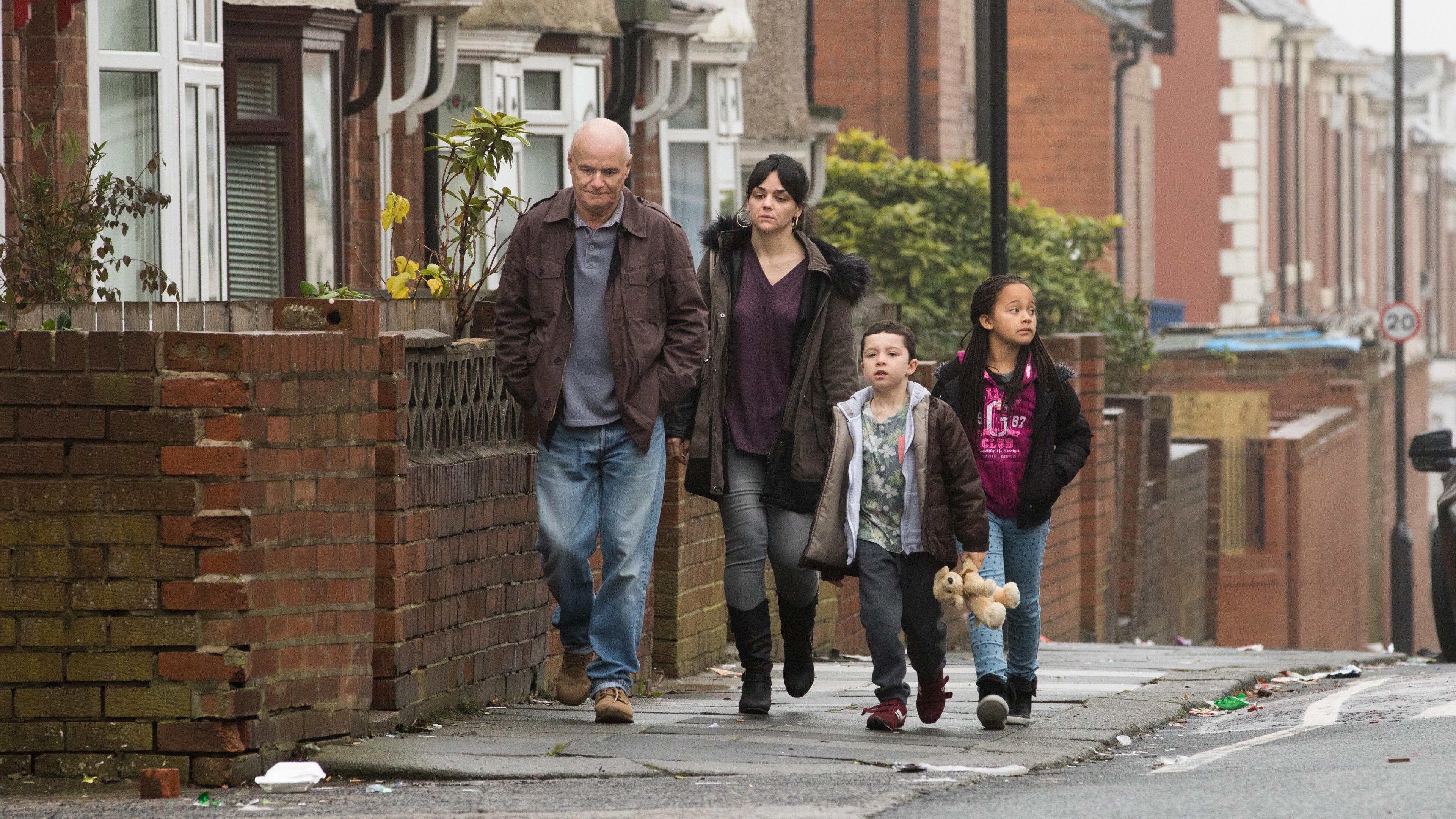
The film follows Daniel Blake (Dave Johns), a 59-year-old joiner on the living in Newcastle. He finds himself out of work after an suffering a heart attack has forced him to take a break, with his doctor telling him he cannot return for fear of another attack. He is navigating Britain’s complex benefits system in search of Employment and Support Allowance, for which he needs a Work Capability Assessment (undertaken by government workers and is completely separate from his own doctor’s assessment). Whilst at the job centre, he notices single-mother-of-two Daisy (Hayley Squires) having an argument in the job centre. They soon strike up an unlikely friendship as they continue to come up against brick walls that force them to make increasingly tough decisions.

I, Daniel Blake is social commentary at its absolute best

Typical of Loach’s output, many of the actors involved in the film are amateurs. This might give the film a rough-around-the-edges quality but equally provides a realism as the story develops. Knowing this prior to watching the film allowed me to give it some leeway on the performances.

The plot developments as the two characters get embroiled in complication after complication are akin to a horror film. Our lead character is behind on his bills and struggles to use computers, meaning he can’t navigate the government websites to retrieve the correct forms to fill in to access the benefits he’s entitled to. It’s overwhelmingly frustrating and will be familiar to anyone who has ever found themselves in a similar situation.

Squires’s performance is absolutely striking. The most harrowing memory of the film for most viewers will inevitably be a highly memorable scene at the local food bank. Rightly so – it’s a performance something taken to an entirely different level by her delivery. It’s unsettling, which is obviously its intention. She’s a great find in her debut role and will undoubtedly go on to even greater roles.

But the film isn’t about the actors, or about delivery of certain lines. It is solely a commentary on the broken support systems provided for the many 1000s of people in Britain who they should be helping. There are a small few people who endeavour to exploit a system, but in doing so they provide an excuse for those in charge to make the processes overly complicated for everyone.

Far more disturbing than this, the small few that do successfully exploit the system are handing media outlets the ammunition to criticise the rest, tarring them all with the same brush. Shamefully, most of Britain believe what is written in the media and assume the worst of people who are in dire need of assistance.

For all its shortcomings, this film shines a light on some of the most pressing issues facing a country that is supposed to be in a fantastic state. Whether you like it or not, the message is one that simply can’t be ignored.

Film review – Silence (Martin Scorsese, 2017)

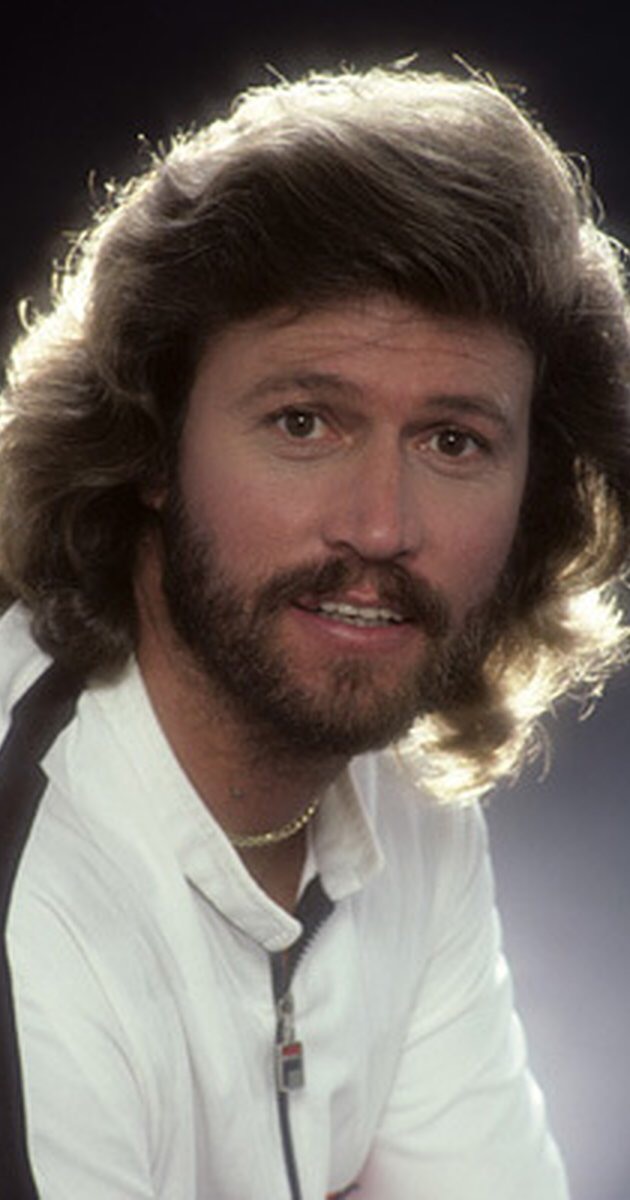
For much of Silence, Martin Scorsese’s Japan-set epic about Christian missionaries in the 1600s, I was desperately trying to enjoy myself. Eventually I did, but that was only when I realised how much Andrew Garfield looked like a young Barry Gibb and I started to re-imagine the plot as a bizarre Bee Gees origin story.

Andrew Garfield stars as Barry Gibb

The film maps the journey of two young Portuguese Jesuit Christian missionaries: Father Sebastian Rodrigues (Garfield) and Father Francisco Garupe (Adam Driver). In 1640 they travel to Japan in the hope of finding Father Ferreira (Liam Neeson), their teacher and mentor that they have learned has apostatised and converted to the Japanese way of life and assumed a Japanese identity.

The first thing that will disappoint you when you watch the film is the ridiculous decision to have the actors speaking in English throughout. It makes no sense. Why get English-speaking actors in and have them speak with a decreasingly dedicated accent? Why not just get a Brazilian or Portuguese actor to take the role? What we end up with is a couple of  vaguely Spanish voices, that slowly drift in and out of authenticity.

It eventually comes to a head with a hilarious low point when Garfield shares a scene with translator Tadanobu Asano, who is of course speaking in English but with a Japanese accent. If you’ve got two characters deciding to speak in Portuguese but doing so in English before carrying on in English, then you’ve got a problem. It’s simply crazy. I’d much rather the filmmakers have some faith in their viewers and play to the story’s authenticity rather than this lacklustre compromise. At least Liam Neeson had the guts to “pull a Connery” and stick to his own accent.

The other letdown is the overall pacing, which felt like it was deliberately slow. I put this down to Scorsese’s closeness to the project (he originally acquired the rights to Endo Shusaku’s book in 1989 during the making of Goodfellas). At 161 minutes long, there must have been some scope to reduce the total running time. Arguably this is an expansive story that needs time to breathe and the slow pace as Rodrigues gets drawn away from his faith is perfect for the story. It’s just not all that enjoyable.

It is a film of juxtapositions. The beautiful cinematography captures the landscapes of rural Japan in a way that transports you straight backwards 400 years, but there are some suspicious CGI moments that felt out of place. The wonderful costumes aren’t matched by some of the hair and make-up efforts. The quality acting is lost amongst the tangled web of accent approximations.

It feels epic, but the reality is nothing but a disappointment.

Film review – Le Fille Inconnue / The Unknown Girl (Jean-Pierre Dardenne and Luc Dardenne, 2016)

It may have an interesting premise, but a dislikeable lead and a plot that lacks the sort of understated excitement that has won the Dardenne Brothers two Palme d’Or awards make The Unknown Girl a difficult watch.

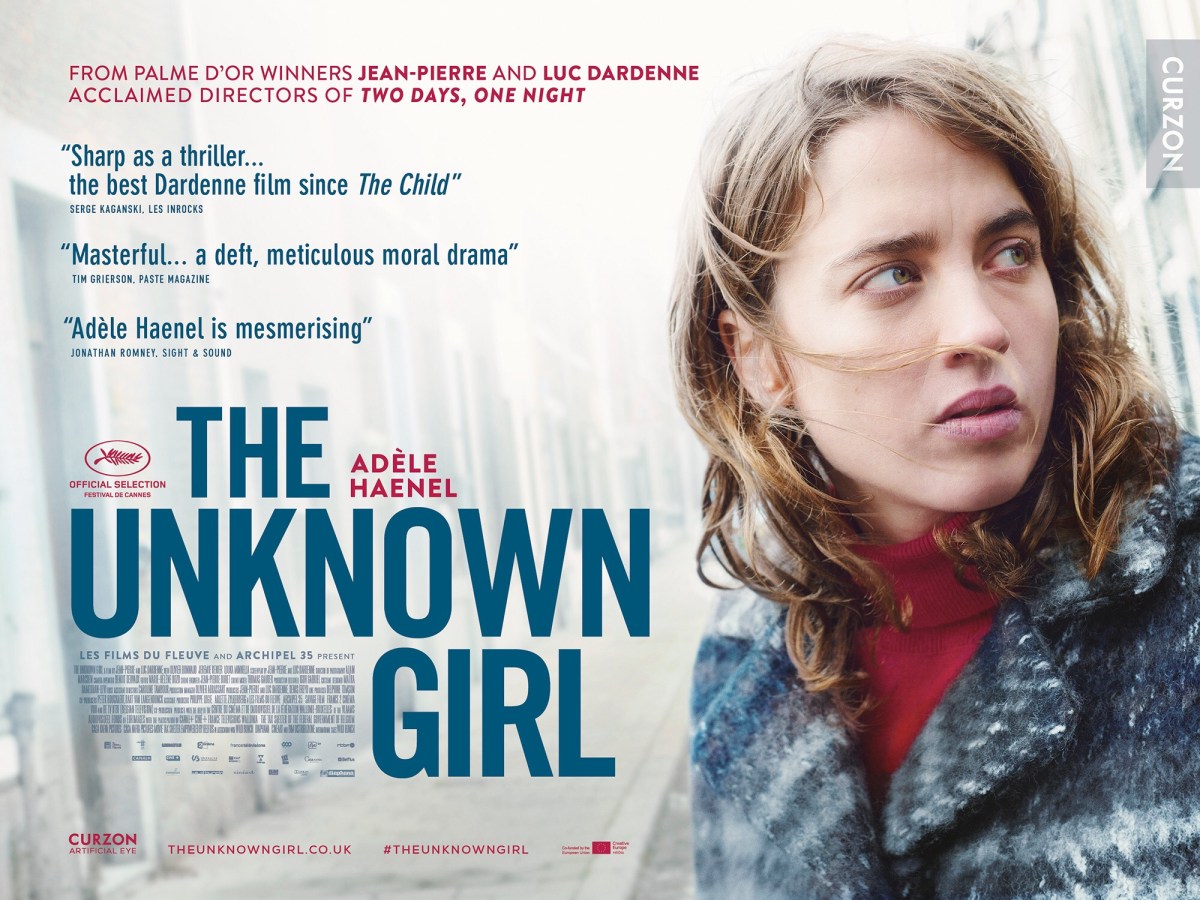
Adèle Haenel stars as Dr Jenny Davin, a promising young doctor excelling at her job as a GP. However, one night she chooses to ignore a call at her practice’s door, assuming it is a late caller with some minor ailment. However, when she later finds out that it was a young girl in desperate need of help who shortly after was seemingly murdered, she becomes obsessed with finding out the truth behind the incident to atone for her mistake.

Adèle Haenel


I desperately wanted to like this film. I like the director duo and have been impressed by their previous output, but there was so little to work with on this one. 

Haenel fails to deliver any depth to a role that is a doozy for someone wanting to prove themselves to the world. Perhaps the fact she has already done this with an extraordinary body of work is one of the reasons she seems to lack passion in her delivery.

As a follow-up to the Oscar-nominated ‘Two Days, One Night‘, this can only be seen as a disappointment for the Dardenne Brothers.

Film review – Passengers (Morten Tyldum, 2016)

It’s fun to slam a bad film, isn’t it? Hand us a terrible film and we’re all there ready with our sticks to beat it down. It’s funny, because the filmmakers have no control over it and we get away with having a good laugh at their expense.

Passengers has been that film for the last couple of weeks.

I’ve had an article shared to me with some photos that prove how creepy Chris Pratt is in it. I had another one sent over about how it had failed at the box office after poor reviews. Generally the early reviews were positive, then the consensus changed and everyone has now decided it’s a poor film, so that’s the stance everyone has taken. Even positive reviews have misleadingly negative titles to ensure they don’t buck the trend (News.com.auhad a favourable review but they titled it “What was Jennifer Lawrence thinking?”).

The three people who sent me the above articles have no intention of watching Passengers. That is entirely their loss.

Passengers is an excellent film.

There’s more to this than the reviews have suggested

Spoilers now follow.

At its heart, it is a romantic drama that explores the relationship ship between James Preston (Chris Pratt) and Aurora Lane (Jennifer Lawrence), who are trapped in space on the Avalon spaceship, en route to the planet Homestead II. To make the 120-year journey, the crew and passengers are in hibernation pods, but Preston’s pod opens early and he is forced to fend for himself, physically and mentally.

Trapped in space alone, he eventually starts to consider waking up fellow passengers. As an electrician and mechanic, he can navigate the user manuals of the hibernation pods and is able to select who he wakes up based on video messages left on their personal profiles onboard the ship’s communication devices. He chooses writer Lane, a woman he has fallen in love with, and makes the unforgivable choice to wake her up, sentencing her to the same fate as him – certain death before anyone else wakes up.

The critics have centred on this decision as a blocker to any enjoyment. That is truly unfair. If they were handed the film to edit, presumably it would finish after forty minutes and we’d have a shot of Pratt’s character dying alone as an old man, trapped and miserable, yet having made the morally correct decision. 

In Mark Kermode’s book Hatchet Job, there’s a brilliant passage on how Casablanca would have turned out if it had been shown to test screenings, with one of the greatest love stories of all time likely being changed to a happier yet implausible conclusion. 

The same applies here.

This is a plot that is deliberately divisive, meant to create discussion. Some will argue that Preston was insane, on the cusp of suicide, and his relationship with Lane sustained him long enough to figure out there was a critical error with the ship, this saving the entire ship (with her help – it was a two-person job). Others will side with Lane’s stance immediately after she realises the truth; also quite justifiable due to the fact their entire relationship is based on a fundamental lie.

Either way, director Morten Tyldum fully explores every possible line of thought enough to allow the viewers to make their minds up, with enough space in the pace of the film for those thought processes to go to fruition during the film.

Pair this complex romance with some beuatiful visuals and some stellar performances from the two leads, and you get a film much better than the critics will have you believe.

You will be robbing yourself if you believe the negativity and don’t see this film for yourself.

Film review – Arrival (Denis Villeneuve, 2016)

For many cinema-goers, Arrival may have been one of the worst films of the year. For all its big-budget sci-fi overtones and its positioning alongside other space-based 2016 blockbusters such as Independence Day: Resurgence, Passengers and Rogue One, if you sought out Arrival expecting more of the same you may have been disappointed. Indeed, you will have been tricked into that much-elusive cinematic experience: thinking.

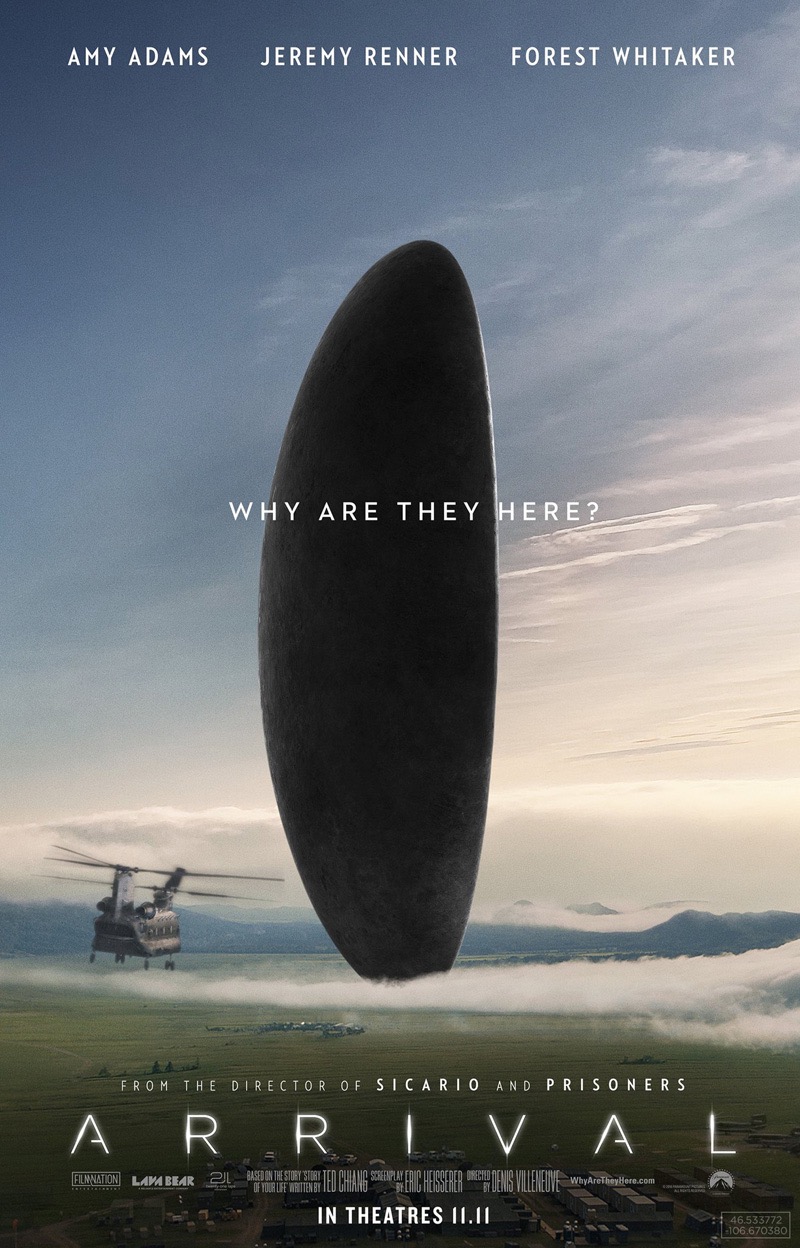
Set in modern-day USA, it stars Amy Adams as renowned linguist Louise Banks, brought in by the government to help humanity communicate with extra-terrestrial life forms that have mysteriously landed throughout Earth. She teams up with physicist Ian Donnelly (Jeremy Renner) to begin to decipher their language and understand why they have chosen now to begin communication.

Amy Adams as linguist Louise

It is anything but a full-blown rollercoaster of action, instead concentrating its efforts on an elegant storyline with some seriously unsubtle political messaging. Or should that be serious and unsubtle?

What screenwriter Eric Heisserer has set out to do – and succeeded – is position the viewers in the shoes of alien lifeforms understanding Earth for the first time. In that sense, we are asked to consider the absurdity of the fact that so many countries have ongoing conflicts, unable to get along with one-another.

It may be set in the USA but you would be mistaken in thinking this was a lazy choice in making the Americans the saviours. The decision was more likely financial. Sure, the hero could have been from Pakistan or Chile, but this would have seriously hindered sales in the USA and all other countries where English is either a first or second language.

Amy Adams, as always, puts in a brilliant turn as the determined linguist Louise. She’s a likeable and versatile actress, perhaps at the top of her game right now, and it is a crime that not one of her five Academy Award nominations has thus far earned her a win. Perhaps this year, with a potential double-nomination for this and Nocturnal Animals, we’ll see her rightly rewarded.

Arrival is one of the best films of the year. Gripping, intelligent, thought-provoking and stylish. A must see.

Film review – Chi-Raq (Spike Lee, 2016)

Spike Lee’s latest satirical drama is based on Aristophanes’ Classical Greek comedy Lysistrata, in which women withhold sex from their husbands as a punishment for fighting in the Peloponnesian War. Anyone hoping for a faithful adaptation is probably unaware of Lee’s output, which consistently challenge the audience to think about black lives, making its release as timely as ever given the BFI’s Black Star season is currently in full swing.

To label the film as a satirical drama only tells the half of it, which strong elements of comedy and crime. However, it is the hip-hop musical storytelling method that could hamper this film’s accessibility to the wider audience. When the words aren’t being sung or rapped, they are spoken in rhyme or at the very least rhythmical.

If anyone chooses not to see Chi-raq because they don’t like hip-hop is going to miss out on an extremely powerful work of art. There is a heap of controversies surrounding the film, from the statistics that are listed through the opening to the name of the film itself, but the relevance to the current population of Chicago is clear. The phrase Chi-raq is a name given by members of the drill-rap community to a city that, due to the prevalence of gun and gang crime, has led to the death of more people than both the war in Iraq and the war in Afghanistan.


The most outspoken criticism of the film is from this very community, who are displeased with the use of the phrase in the name against a film that highly stylises what is happening in Chicago. Lee has responded to the backlash, stating “We need to focus on what’s important. The whole shit about the film’s title was a needless distraction… People didn’t have the understanding that satire does not belittle serious subject matter.”

It’s a fair point. The most important thing is that the film itself is brilliantly written and acted, with a standout turn from lead actress Teyonah Parris as Lysistrata, the woman leading the revolt against their horny and battle-ready partners.

If you like your musicals challenging, wrapped in the genre of hip-hop, and with a strong ensemble cast, then Chi-raq is a must.

Chi-raq is in cinemas now and is also available on VOD.

Film review – Sully: The Miracle on the Hudson (Clint Eastwood, 2016)

“No one told us. No one said you are going to lose both engines at a lower altitude than any jet in history.”

A defiantly memorable line from a triumphant film, delivered with all the finesse of one of the greatest living actors being directed by another. It is a coming together to be cherished, especially with results this good.

Clint Eastwood’s latest film has all the vigour of his heyday performances, despite the fact he has now reached the grand age of 86. Whilst many would have been thinking about retirement decades earlier – nobody would have blamed him for waving goodbye after what would have been a fitting farewell in 2009’s Gran Torino – he continues to surprise film lovers with yet more tremendous creative flourishes. In a year that has been tarnished by far too many deaths of icons of film, music, television and beyond, Sully is a much-welcomed gift from one of the greats.

Hanks and Eckhart are in fine form

Tom Hanks is in fine form as the titular Chelsey “Sully” Sullenberger, a former US Air Force pilot turned passenger plane captain who literally bet 155 lives on his own instinct when a flock of Canada geese destroyed both engines of US Airline Flight 1549 as it departed from LaGuardia Airport. Sully’s instinct led him to successfully land the plane in the Hudson River. Heralded by the media, along with his copilot First Officer Jeffrey Skiles (Aaron Eckhart), as a hero, the National Transport Safety Bord (NTSB) weren’t as happy, opening up an investigation into what happened with a pre-determined plan to pin the damage to the aircraft on Sully due to pilot error, which would end his career. Their argument pivoted on the feasibility that the aircraft could have been landed at any of the nearby runways, the best option of which was nearby Teterboro Airport.

The film’s story plays out in a non-linear fashion, flitting between the aftermath of the landing and build up to the court hearing, Sully’s recollection of the incident (and bouts of post-traumatic stress) and some flashbacks to his pilot training in his youth.

There is little in the way of artistic licensing from Eastwood, largely sticking to a realistic and human story. Indeed, where it really makes an impact is that it never simplifies the technicalities of the aircraft or the arguments of either side for the benefit of those who aren’t paying attention. This is an intellectual film that respects its audience. The only worrying thing is that it felt so fresh – a matter that is simply indicative of the state of Hollywood in the present day.

This film may not make great waves at the box office as it battles out against Fantastic Beasts, Doctor Strange and Rogue One, but in years to come it will stand up alongside any of the films that Eastwood and Hanks have been involved with and will be seen as a work of art.

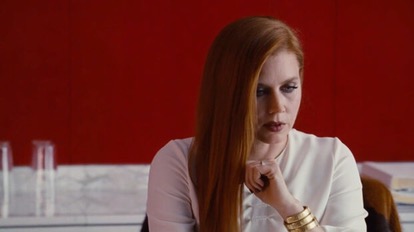
Film review – Nocturnal Animals (Tom Ford, 2016)

Whilst Nocturnal Animals may be one of the most stylish and effecting pieces of cinematic art released in 2016, it may also suffer from being the second biggest Amy Adams film released in the month of November (Arrival is set to hit cinemas later this month). The films are targeted at a completely different audience, and if you’re interested in seeing Tom Ford’s latest then you need to know what you’re getting yourself in for. It’s a veritable misery-fest. And it’s absolutely breathtaking.

The film stars Adams as Susan Morrow, a hugely successful art gallery curator married to a handsome but unrelatable husband (Armie Hammer). Feeling like her life is unfulfilled, she unexpectedly receives a manuscript for a novel through the post from her ex-husband Eddie Sheffield (Jake Gyllenhaal). The book, titled ‘Nocturnal Animals’, is dedicated to her. As she delves deeper into the grippingly horrific story – which plays out for the viewers with fabulous turns from Gyllenhaal, Aaron Taylor-Johnson and Michael Shannon – we come to discover the history between Susan and Eddie and the inspiration for the story.

There were long periods of the film where I was so absolutely gripped by the fictional tale Gyllenhaal’s character was spinning – the film within a film – that I almost dated to forget that we were reading it with Adams’s Susan as she struggles with her insomnia. The meta-tale is brutally horrific, with the male central character experiencing the some of the worst experiences imaginable in life. It takes until quite near the end of the film to realise why he has written this story, and at this point we also remember the times Susan has thrown the book down in disgust. It’s easy enough to play out a story and leave a reveal until the very end. It’s quite something else to leave the audience so gripped in the journey.

Tom Ford executes every moment of the film with an unrivalled stylishness that was evident in his debut feature ‘A Single Man’. It is in the L.A. art scene that we see the characters inhabit the sort of regal living spaces most people can only dream of, despite their thin veneers here only acting as a cover for a desperately hollow existence.

The resoundingly successful final scene is an absolutely devestating act by Eddie. Susan is left emotionally drained following the reading of the manuscript that finally reveals his potential as a brilliant writer. It is also laced with accusations at Susan. She is left with no resolution. This is a clearly a reflection of how he felt after their relationship originally broke down. The answer is never clearly spelled out, with the audience left as smartly frustrated as Susan. This is a really intelligent move that epitomises the ability of Ford to sit the viewers firmly in the position of the people on the screen and ask themselves how they really feel.

It is a wonderful piece of cinema that I’ll be recommending to anyone who will listen.