The second day at Glastonbury is when the fun starts to get interesting. A few familiar acts start to pop up and by and by and nobody has a 50 minute pilgrimage with a 40kg weight strapped to their back to kick off the day.
Our first act of the day was Wilko Johnson on the William’s Green Stage. It was a short set (about 30 minutes) followed by a long interview (about 30 minutes) followed by an exclusive screening of the new Julien Temple documentary The Ecstasy of Wilko Johnson, ostensibly about Wilko’s battle with cancer as he was given ten months to live. It covers this period, then goes on to what he describes as “extra time” and then his miraculous recovery following some radical treatment. The film was a fantastic introduction to Wilko’s music (admittedly I’m not overly familiar with it) and a fascinating insight into people battling with terminal illness. Well worth watching when it appears later this year.
Later on we caught a bit of Elle and the Pocket Belles at Avalon Café. Their set was the perfect way to see in the sunny evening as they nailed a series of popular tunes with their own style of blended vocals and punchy brass backing. I think they’re playing elsewhere over the weekend so I’m hoping to bump into them again.
Beans on Toast was next on the Hell Stage in Shangri-La. It was heaving and it was obviously a hot ticket but it didn’t really resonate with me. It’s and act that has become a frequent performer at festivals though and if you like political statements in humorous song form then maybe you’ll be more inspired.
The evening became a bit of a blur after this, though I do recall dancing to Prince’s “Raspberry Beret” in the Park Silent Disco in the early hours of the morning. It would have been rude not to.
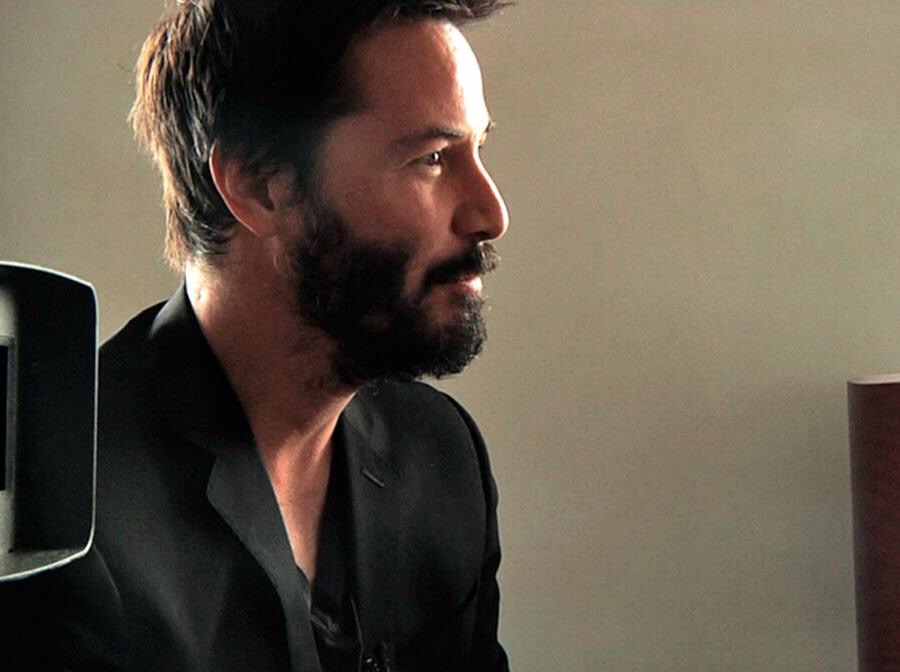
Keanu Reeves acts as the face for this documentary, which explores the argument of which offers a richer viewing experience in cinema: traditional photochemical methods of recording on film or modern digital methods.
The people interviewed to build up what results in a pretty varied and balanced argument is exhaustive and includes directors, cinematographers, colourists, scientists, artists and other people associated with films. George Lucas unsurprisingly falls on the side of digital as he was the first to release a wholly-digital film in the now-cheap-looking Star Wars Episode II: Attack of the Clones. Robert Rodriguez, also a digital advocate who uses his inspired methods to post-produce the graphic-novel-stylised Sin City as a springboard for his contributions, is an interesting contributor. Christopher Nolan comes across as a battle-hardened traditionalist who fights for every film he makes to not be done on digital film recorders. Danny Boyle offers an insightful discussion on the creative techniques used in 28 Days Later. Lara von Trier also discusses the Dogme 95 movement, which is so interesting it deserves its own film. Other interviewees include Phil Meheux, Martin Scorcese, Charles Herzfeld, Joel Schumacher and Alec Shapiro.
The documentary itself is rich in shots of masterpieces in cinema. It offers a great history of film and digital film, and a balanced opinion of which is better.
Keanu Reeves, in his role as the interviewer, is obviously very anti-digital. I couldn’t help wondering whether his passion for one side of the argument perhaps influenced everyone’s thought process on the subject matter when discussing, but it lifts it from a simple soundbite-style documentary by letting us know the creator actually has an opinion and wants to discuss the details with a host of interesting industry experts.
It’s a documentary that explores its subject thoroughly and in my opinion isn’t just for fans of the technical side of films. Each person has clearly been encouraged to be passionate about their anecdotes and the result is a highly entertaining documentary.
Orson Welles film F For Fake (also known as Fake or simply “?”) is a brilliantly bizarre piece of cinema that shows off the art of deception in storytelling. The purpose of the film isn’t to reveal a scandal, despite its superficial attempts to make the viewer think it’s a straightforward documentary. Rather, the ultimate goal is to tie us up in knots, frustrate us and lead us down as many blind alleys as possible in a relatively short running time (85 minutes for this version). In this respect the film is a glowing success and if you keep this in mind the whole thing is absolutely hilarious.
The purported premise of the film involves Welles revealing a huge visual art scandal involving professional forgery at the hands of Elmyr de Hory. A second man, hoax-biographer, reveals all in the role of hoax-biographer Clifford Irving, whilst Oja Kodar also appears in a few critical scenes.
The story it creates is almost believable but for the handful of telltale signs of fakery. The deliberate continuity errors throughout (see “practioners” and Don Amiche); the overuse of the phrases like “of course our story really starts with…”; the ridiculous conversational tone Welles uses when engaging the viewer (or disengaging them by ordering dinner halfway through a scene); swapping out Oja Kodar with her sister for one scene for no reason. There’s a lot going on besides this and I felt it was designed to deliberately deceive. I was on board. I got it. That it succeeds in this is indicative that the film was a huge success, though I’m fairly confident if I wasn’t aware it was itself a hoax I might have found the whole thing a little self-indulgent.
F For Fake is available on Masters of Cinema DVD only, but there are no plans to release it on Blu-Ray so you may as well go for that version.
The Video Game E.T. the Extra Terrestrial is an infamous piece of video gaming history. Everyone knows how it went: in 1983 Howard Scott Warshaw (Yars’ Revenge, Raiders of the Lost Ark) was given five weeks to produce a game for the Atari 2600 system alongside the release of the film and in time for the Christmas market. An over-confident board pushed to produce a market-saturating amount of cartridges based on the game being a best-seller, but when the reviews came in and everyone discovered that the game was terrible, the sales dried up. Atari started getting large amounts of returns of the cartridge and realised they were haemorrhaging money, so (the legend has it) they decided to dump some 700,000 cartridges in a landfill in New Mexico.
This film covers the history of the gaming industry, specifically Atari, the background to the game’s release and Howard Scott Warshaw’s part in the game. The main point of interest, though, was built around the highly anticipated excavation of the landfill to uncover the truth behind the cover-up and see if the burial really happened. I won’t ruin the result of the excavation, though it was a huge news story when it happened.
A happy treasure hunter. I guess he could now “go home”.
The film was of huge interest to me and the subject matter was something I was happy to dedicate an hour of my life to. The director, as the film clearly lays out, is of great stock, having recently help screenwrite several huge Marvel films (including The Avengers). However, in comparison to Blackfish (which I watched in the same sitting), the storytelling failed to get me hooked. It has a short running time so there was no padding, but it just lacked the emotional power that is so evident in the great documentaries or modern cinema. There was nothing terrible about it – there was some good analysis of Atari in their booming year, a great side-story with Ernest Cline (author of the excellent Ready Player One) and a very brief cameo from George R.R. Martin. I just didn’t make the connection I hoped I would.
I perhaps wonder whether the short running time wasn’t enough. there was easily a further ten minutes on each of the two main topics: the history of Atari as a company being the first and the excavation of the landfill site being the second. I left wanting to find out more and though the information is available on the internet I don’t think there was a better platform than this to tell the whole story.
For a more engaging and humorous take on the excavation, check out Angry Video Game Nerd: The Movie, which pays no attention to the facts and spends its time trying to keep us entertained instead. Atari: Game Over counts as a near miss for me.
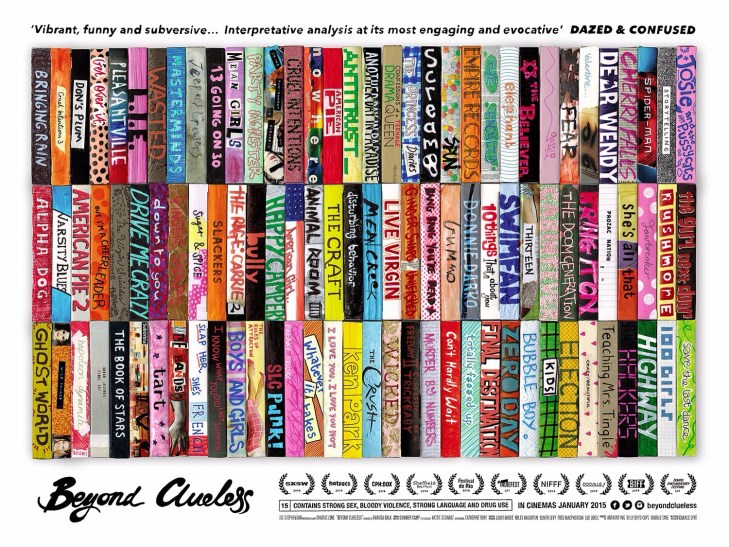
I previously talked about this essay film in a preview last October, and I finally managed to see it this week after it was added to Netflix. I had backed it in a Kickstarter campaign so I’ve had loads of updates from the engine that is Charlie Lyne, a man who has filled the project with as much man hours as he has passion.
Lyne covers the recurring themes we see in teen movies, taking an in-depth look at some key films on each topic. It takes the form of a long essay split into five sections: “Fitting In”, which deals with characters attempting to fit in and conform to their stereotypes (Mean Girls, Cruel Intentions); “Acting Out”, which looks at characters rebelling against suppression and leaving their comfort zones to break the status quo (Bubble Boy, Idle Hands); “Losing Yourself”, a discussion on characters who are keen to explore the wider world (Euro Trip, Jeepers Creepers); “Toeing The Line”, about characters having to conform to stereotypes or trying to break the brainwashed mould (The Faculty, Josie and the Pussycats); and “Moving On”, which explores themes of characters either needing to grow up or not wanting to (13 Going On 30, Drive Me Crazy). These are neatly bookended by a prologue and an epilogue, which tie the themes together nicely.
The film received criticism on its release, perhaps due to the fact it is an essay film and that is a slightly unusual format. Don’t get me wrong, this would have worked perfectly well as an essay, but the content lends itself to being delivered in this visual medium. There aren’t any topics that fall outside the content of teen films and the production team has meticulously sourced footage from every film discussed, which aids the digestion of the discussion points. The concept seems so obvious it’s a surprise it hasn’t been done more often.
Fairuza Balk’s powerful voiceover further endorses the content of the film, and this is further enhanced by an excellent soundtrack by Summer Camp. The script shows a passion for the subject matter that can sometimes lead to the content being given a little too much gravitas. This is never more prominent than the section discussing Euro Trip, which is one of my least favourite films of all time. I found it banal and tacky, but here it sounds like one of the greatest films ever made – I actually want to re-watch it to make sure I haven’t missed anything. In many ways, this is just testament to the passion of the scriptwriters, particularly Lyne, and can hardly be a justifiable criticism.
It’s a film that won’t do much for people who don’t like teen films and will also be lost on anyone unfamiliar with most of the films discussed. It’s a celebration of the genre and works as a great boost to go and re-watch a heap of teen films.
Beyond Clueless is available to stream on Netflix now in the UK.
Gabriela Cowperthwaite’s 2013 documentary is an investigation into the life of Tilikum, a bull orca living in SeaWorld in Orlando, Florida. Tilikum has been involved in the deaths of three trainers: Keitie Byrne in 1991, Daniel Dukes in 1999 and Dawn Brancheau in 2010. It is the third of these that is given the most coverage in the film, which is understandable as it was the starting point around which the rest of the investigation grew. The film also explores the cruel living conditions of orcas once in captivity when being used in waterpark entertainment shows, also touching on the hunting of Tilikum in the early 1980s and discussions on a psychological level on his mental condition after being mistreated for so long.
The contents of the film have been vehemently discredited by SeaWorld, who have distanced themselves from the final product. In the aftermath of its release, the company published an open letter to refute a number of the claims in the film and created a dedicated section of their website titled “Truth About Blackfish”. Despite this, a number of high profile musicians (including The Beach Boys and Barenaked Ladies) dropped out of an annual festival at the Orlando park and they also saw a drop in park attendance, though these two facts are likely closely linked. Furthermore, Pixar altered a section of the upcoming Finding Dory film that featured a depiction of a water park. It is clear that the message contained in Blackfish has resonated around the world and it’s significant that the general attitude has changed.
The reason for this is the huge power in both the content of the film and the expert manner in which it is told. Cowperthwaite is understandably very passionate about the subject matter and clearly open a can of worms in the journey she went on in the creation of the film. Like any great documentary, that passion is transferred directly to the viewer.
Regardless of any bias included in order to help tell the story, any other details would be mere branches of excuses and extenuating circumstances. The bottom line here is that the capture and holding of orcas in order to get them to perform in shows is a travesty. The saddening thing for me is that I have been to the Orlando park and enjoyed the show there, just before the film was released in the UK. Had I known about it my attitude would certainly have been completely different. Like the thousands of people who have seen this film and also attended the shows, I’m embarrassed by the fact I saw the show as a fun experience. Now I can see it more clearly: it’s plainly a form of cruelty to animals and should be stopped.
Blackfish is available on Netflix and can also be bought on Blu-Ray and DVD.
In 2004, Zidane: A 21st Century Portrait, the much-celebrated documentary following footballer Zinedene Zidane throughout a 90-minute match, was released. The film featured a cracking soundtrack from Scottish band Mogwai and was overlaid with a one-on-one interview with the man himself. It was eye-opening and served as a fantastic snapshot of one of the greatest sportsmen of the modern era, providing an intriguing insight into a man many consider to be a genius.
33 years prior to this, however, there was made a now-long-forgotten German film called Fußball, Wie Noch Nie. The premise is so similar to Zidane that it really undermines what I thought at the time was a unique concept. In this film, we follow footballer George Best over a 90-minute match against Coventry City, which took place on 12th September 1970. There is no soundtrack and no interview overlaid, just Best doing what he did best – playing football.
George Best was at the back-end of the peak of his career when this film was released.
Of course, it wasn’t the only thing he did well. For a full picture of the footballing legend you’ve got to include women, drinking and drugs in that list. As a Manchester United fan it can be frustrating that nowadays this overshadows what was a fantastic career, even though it was cut tragically short through his alcoholism (he essentially hit decline at the age of 26 in 1972 and spent the next decade never quite achieving the dizzy heights he’d already reached in the early parts of his career, playing in Scotland, Ireland, USA and Australia before retiring). This documentary serves an excellent purpose in that it gives us a chance to remind ourselves just how good he was on a game-by-game basis, and was taken during the back-end of the peak of his career: the 1970-71 season finished with Best as top-scorer and United finishing a respectable 8th; his team-mates included Brian Kidd, Bobby Charlton, Denis Law and Alan Gowling; Sir Matt Busby was eventually back in charge (though not in time for this game); memories of the European Cup victory were still fresh in the mind of the players and the fans. Manchester United were in transition, but for Best this season would prove to be one of his last memorable ones.
In case you’re wondering (spoiler alert), the game finishes 2-0 to Manchester United, with Best scoring one of the goals. Charlton scored the other. It perhaps wasn’t the most interesting game to select for this subject, but it’s nice to see a United victory and you get to experience what it was like to be in Old Trafford in the early 1970s.
It is by all accounts an experimental film. The half-time whistle goes and we are treated to a bizarre experience of staring directly into Best’s eyes whilst some hypnotic visuals serve as a backdrop. I suppose the aim is to challenge the viewer to try to imagine what goes through a player’s mind during the half-time interval, but it certainly doesn’t feel like that. Essentially, aside from this half-time segment, the film is more of an artefact than anything else.
It’s not particularly easy to get hold of. I had to import my copy from the German Amazon store, though as it’s PAL it will work perfectly well on your UK DVD players. Was it worth the effort? Well, I’m still undecided. It certainly isn’t for everyone, but I got a level of enjoyment out of it. For fans of both foreign, experimental cinema and Manchester United then I’d recommend it. Otherwise, you might be better suited to one of the highlight videos on YouTube.
Fussball, Wie Noch Nie is available from Amazon UK, though it will be cheaper to get from Amazon DE via import. No Blu-ray is available.
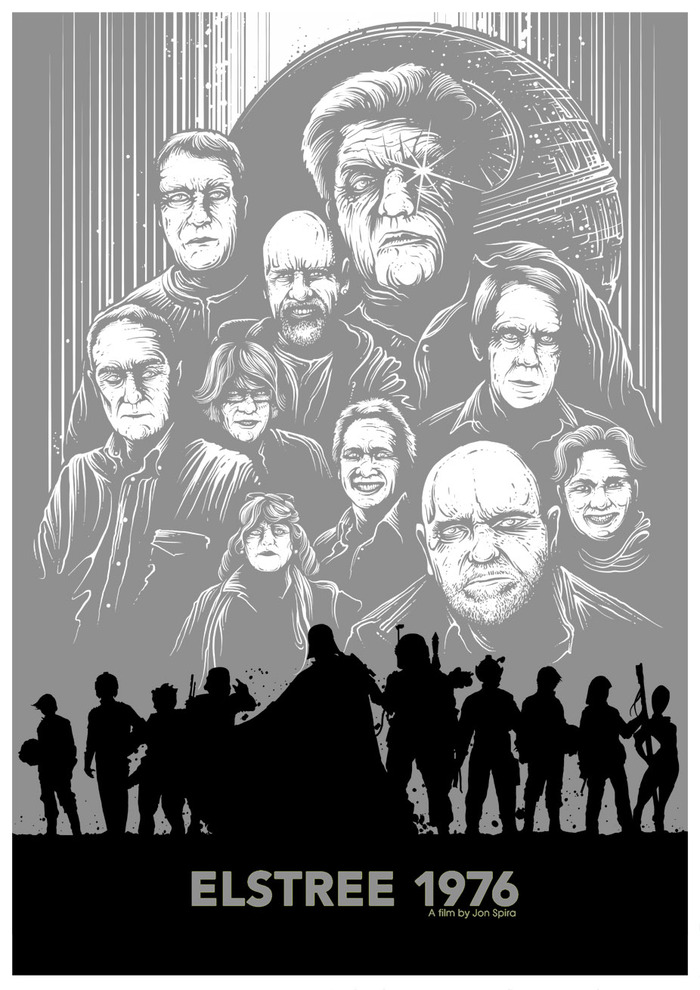
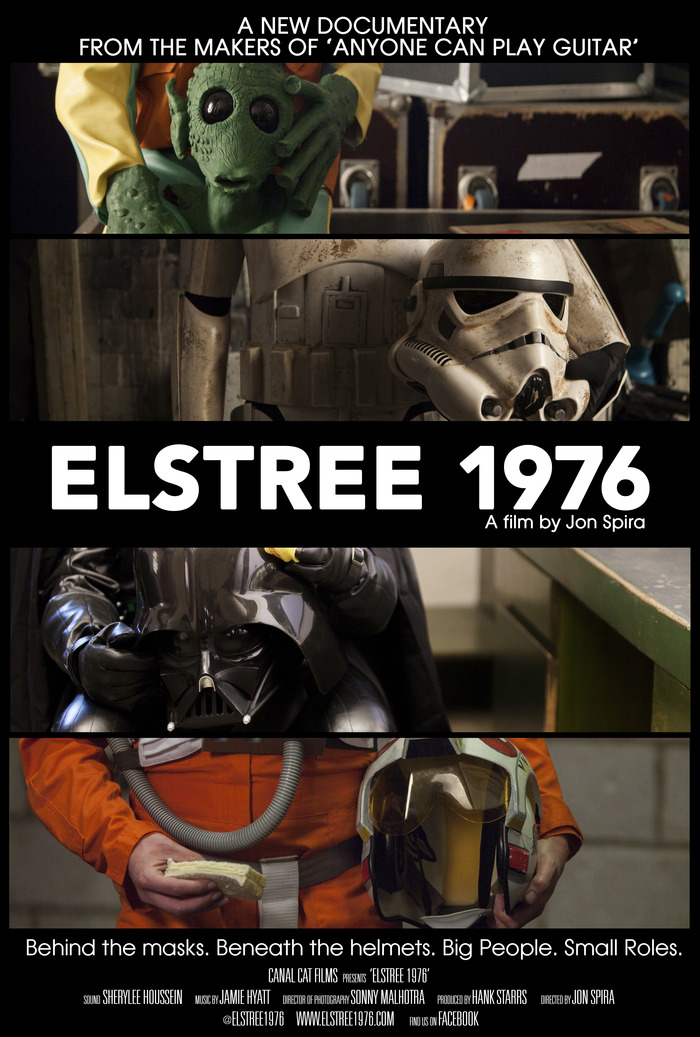
Elstree 1976 charts the lives of ten people who were featured in some way in the original Star Wars film. This includes people we know already: David Prowse (the body of Darth Vader), Jeremy Bulloch (Boba Fett) and Paul Blake (Greedo) are all involved. There are also a few people who were extras only, including one who was in the film for less than a second. They didn’t realise at the time but their involvement with the film would come to define their lives, something that they have forever been associated with and can’t get away from, whether they like it or not.
This film promises to find out their side of the story, through a series of interviews with all of them and footage of them at conventions, giving a side of the story never seen before. The filmmakers are keen to stress that this is not just a film to provide Star Wars fans with loads of new stories about the making of the film. I think this is a wise move – the stories have been told so many times and if you’re really interested in that side of things you probably have all of the various DVDs and Blu-rays with their respective bonus features.
It will instead fell the stories of the forgotten men, those whose lives are now ruled by a seemingly inconsequential decision to take up a lowly paid job as an extra. Judging by the trailer, some clearly enjoy it whilst others detest the fact that their best way to earn money is to play into the hands of the geeks who desire their autographs.
It doesn’t promise to be a laugh-a-minute, but rather a humorous and sometimes painful look at the lives of people who otherwise never get any attention. Jon Spira – who has already proven himself as an excellent filmmaker with the much celebrated 2011 music documentary Anyone Can Play Guitar – has spent months and months getting deep into interviews with his ten subjects and judging by the updates there’s plenty to go on, with editing and post-production beginning in earnest in February 2015. As documentaries go, this is bound to be quirky but I predict it will find a wide audience if the momentum can keep building, especially with its release schedule set to coincide with Star Wars VII: The Force Awakens next year.
I’ve been following the foul-mouthed ranting reviews of terrible old video games by the Angry Video Game Nerd (portrayed by James Rolfe) for many years. They’re one of my go-to videos on the net when I have 10 minutes to kill and want a sure-fire way to give myself a shot of humour. For someone who grew up with these infuriating games, seeing him struggle to play through Silver Surfer or Wayne’s World is a hilarious blast from the past and if you’ve not seen them I heartily recommend you check them out.
One thing you will pick up on if you watch his videos is just how much he knows about his subject matter, and it doesn’t stop at video games. I remember being blown away by his cross-referencing of the original Teenage Mutant Ninja Turtles TV series with the classic horror films they were paying homage to. There is no way he could have looked any of these up; he just knows his stuff.
So when he announced he was doing a movie based on The Nerd, I was immediately excited. The subject matter – his quest to unearth the legendary hidden ET Atari cartridges in a landfill in New Mexico – is ideal. At the time the film started production, these cartridges were one of the biggest myths of the video game industry and the story had taken on a life of its own. Some believed it was a complete fabrication, whilst others were convinced they were buried somewhere. Nobody knew how many would be found if they were ever located, and many doubted the increasingly renowned story.
What has been frustrating is the recent unearthing of the Atari cartridges, itself documented a the Zack Penn film to be released later this year. I personally thought it was a shame the myth was proven to be correct (to some extent), as it meant the speculation was over. It was terrible timing when the AVGN film was so closed to completion, but it hasn’t deterred Rolfe from powering through and completing his first big-budget feature film. Indeed, he posted a blog post on the week the cartridges were unearthed discussing how he felt about the excavation and he raises some interesting points.
It has been released in the USA already and has been receiving solid reviews. It looks like it’s aimed directly at his already vast fanbase. For newcomers it might be a little alienating, but staying true to his character is the most important thing here. The effects were something he has poured over and the team have done an excellent job with a comparatively low budget. So much love and care has gone into the film already and I can’t wait for the UK Blu-Ray release early next year [1].
[1] I’m a complete snob when it comes to picture quality and resolution. I know how much effort has gone into this film and I’m not about to short-change myself and the filmmakers by streaming over the internet. My connection is so bad (thanks BT!) that I know it would wipe out a whole evening waiting for it to load. I’d rather just wait. In the meantime, I’ve noticed he’s uploaded a new AVGN review (an increasingly rare event). In fact, this one (Tagin’ Dragon) is part of a series of reviews called “The Twelve Days of Shitsmas”, which promises twelve AVGN reviews over the next twelve days. Clocking in at over one hour of running time, Christmas really has come early!
There are a three crowd-funded films I’m pretty excited about: Beyond Clueless from Charlie Lyne; Elstree 1976 from Jon Spira; and The Angry Video Game Nerd Movie from James Rolfe. All three are extremely talented people who opted to crowd-fund their projects, and succeeded way ahead of their target dates.
Crowd-funding is a double-edged sword. In an ideal scenario, you get the money you need to complete your project and ensure you have an audience of backers who are all on board from the start, getting e-mails on a regular basis updating them with all the latest progress as it happens. It also gives you a bit of impetus to finish it on time as you have 100s or 1000s of people to keep happy.
The negative side of crowd funding is that you can end up highly embarrassed if you fail to get enough backers and your project falls flat on its face. There have been some big-name stars who’ve fallen foul of this for a variety of reasons, usually because they set their target too high (see Bjork’s failed Biophilia app campaign) or they didn’t come up with enough interesting rewards at appropriately-pitched prices.
These boys have got it right so I thought I’d write about them and give them the attention they deserve. I’ll start with Beyond Clueless, with the other two covered over the next week.
I’ve been a backer of this campaign for almost two years now and thus feel wholeheartedly part of the journey that all backers have gone on with writer and director Charlie Lyne, who makes a living as a columnist to The Guardian and as the editor of film blog Ultra Culture. With regular updates to all the backers and exclusive videos and artwork sent out to us all (and preview screenings), this was a crowd-funding campaign that has been executed perfectly by Lyne and maintained my interest throughout, and this in turn has evidently generated a lot of buzz around the project.
The film is essentially a review and dissection of the teen movie genre narrated by Fairuza Balk (American History X, Almost Famous). The press release states “Beyond Clueless is a dizzying journey into the mind, body and soul of the teen movie, as seen through the eyes of over 200 modern teen classics”. I’m a big fan of many of the films covered, including Mean Girls, Clueless, Ferris Bueller’s Day Off and The Breakfast Club (to name but a few). The film promises to draw comparisons by interlinking scenes of different films and commenting on the themes and critically analysing all the films it covers – no easy achievement considering the breadth of the subject. Judging by the backer updates, Lyne is clearly very passionate about the subject matter and so everything will be dealt with the utmost respect.
The soundtrack is provided by the excellent Summer Camp and I’ve been listening to bits of it already and it’s absolutely perfect for this film. Plenty of it is available online and it’s well worth a listen. This is complimented by the highly stylised illustrations surrounding the film, provided by Hattie Stewart. She has done wonders to create a brand for the film and help nurture the buzz, and this can’t be underestimated.
Having read some reviews, there has been some criticism of Balk’s narrative and also of the cutting techniques used by Lyne to produce the final edit. This all remains to be seen when the film arrives locally – I’ll be at the QUAD screening in Derby when tickets and times are released. On a side note, there is a mini tour going on to promote the film and if you get chance to drop in to one of these screenings there’s quite a lot on offer, including Q+A sessions with Lyne and live soundtrack accompaniment from the aforementioned Summer Camp. They start on 13th January and go pretty much until the general release later in the month.
When it is finally released across the UK, I hope it gets the audience the team behind it deserve.
Beyond Clueless is on a promotional tour, with dates across the UK leading up to a wider release on 29th January 2015. All dates for the tour are on the official website.











 Cinema, etc.