Documentary filmmaker Steven Cantor’s latest cross-examination comes in the form of Dancer, which tells the story of Ukrainian ballet dancer Sergei Polunin, who in 2010 became the youngest man to become the British Royal Ballet’s leading principal.
Sergei Polunin dances to Hozier
The film uses talking heads interviews blended with some exclusive home video footage to creature a portrait of a fragile artist. Polunin is shown as a man who knows little outside his art and is desperate to change the future for upcoming ballet dancers who he fears will make the same mistakes as he did. These mistakes led to him quitting the British Royal Ballet Feeling at the tender age of twenty-two, shocking the ballet world and disappointing his fans.
Most insightful are the interviews with his mother and father. Clearly huge sacrifices were made throughout his life to get him to where he is now. The film leaves it open as to whether either of them regret putting him through it, and it’s not something that ever really needs an answer. He certainly has a different life to the one he would have had if he’d stayed in Khersan, Ukraine.
The focal point of the film comes in the form of the Dave LaChapelle-directed video that went viral earlier this year. I urge you to stop reading and watch the video below on the largest screen you can find.
This video has, at last count, been viewed 16.3m times in the last eight months. That is an astonishing amount, but then it is an astonishing piece of art. It was choreographed by Jade Hale-Christophi, a ballet dancer with Polunin met at the British Royal Ballet and one of his closest friends. The purpose of the film was to announce his retirement and have that as his “final dance”, but the response was so great he decided to change tact, and instead wants to do guest appearances and one-off pieces of art.
This is a crucial thing for him. The reason he has struggled throughout his career is a lack of time to step back, ask himself what he really wants, and make an informed decision about the next career choice.
He also spoke after the screening about where ballet’s David Beckham is. I suspect after that video and this film, he need only look in the mirror to find him.
A fascinating examination of a tortured artist now seemingly on the straight and narrow.
There is a single reason why The Beatles hitherto remain a subject largely untouched by documentarians. Quite simply, the story has been told to death. It is a well-reasoned argument that stems from the fact that a story is far more interesting if we don’t know the ending; even less so if we know the beginning, middle, end and every conversation along the way.
As a result, we have been treated to a flurry of fascinating documentary films in recent times on artists relatively unheard of to the general public: Rodriguez (Searching for Sugar Man), Anvil (Anvil! The Story of Anvil), under-celebrated back-up singers (20 Feet from Stardom); Phil Ochs (There But For Fortune). All excellent films that manage to capture the imagination of cinema-goers precisely because they tell a story as fresh as any fictional tale in the same media.
The Beatles are, however, one of the greatest bands of all time, taking over the world as clean-living heart-throbs that made radio-friendly sounds that were loved over the world. Their live performances were legendary and, at the time, revolutionary as they proved that rock bands could turn massive profits by putting in performances in large stadia.
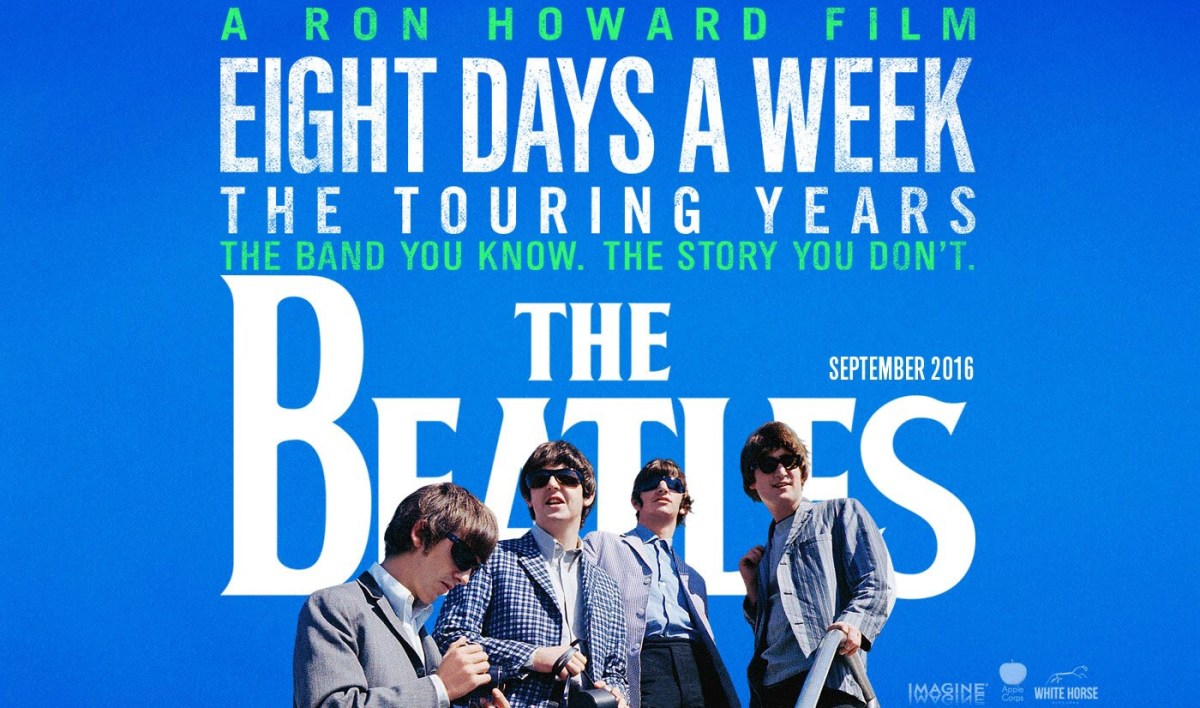
It’s a story that has been told many times over and it would take a brave director to try to tell it in an interesting way that didn’t feel like retreading old ground. Fortunately, the man at the helm on the clumsily titled The Beatles: Eight Days a Week – The Touring Years is the one and only Ron Howard, the genius behind the likes of Cocoon, Apollo 13, A Beautiful Mind and Frost/Nixon.
It is a truly brilliant piece of documentary film-making, managing to tell the familiar story with a flurry of individual memories that bring to life again a rise to stardom that has not and will not ever be replicated. There are wonderful talking head contributions from the likes of Howard Goodall, Dr Kitty Oliver, Sigourney Weaver (who the editors managed to pick out from the crowd footage of the 1965 Hollywood Bowl performances) and Elvis Costello. It is Whoopi Goldberg’s retelling of her mother surprising her with a ticket to the Shea Stadium performance that really stuck out and showed the positive effect they were having on both small and large scales throughout their tours.
The real stars are The Fab Four themselves, and with hours and hours of footage recorded by a press hungry for a piece of them (a point touched on in the film by Paul McCartney), we are lucky enough to be able to build up a truthful story of what was happening to a level impossible for all other artists in the charts at the time. As Eddie Izzard points out, their ability to respond to heckling in press conferences puts them all up at the same level as professional comedians.
The film is centred around their live performances rather than their time in the studio and as such it was essential the largely bootlegged sound recordings from their gigs were remastered to a usable state. Up steps Giles Martin, son of the late George Martin, to ensure everything hits the mark. Audible for the first time in such high quality, these sound recordings are evidence that despite them not being able to hear themselves or each other play they still functioned as a wholly tight musical four-piece. All that hard work out in Hamburg seemed to have paid off, then.
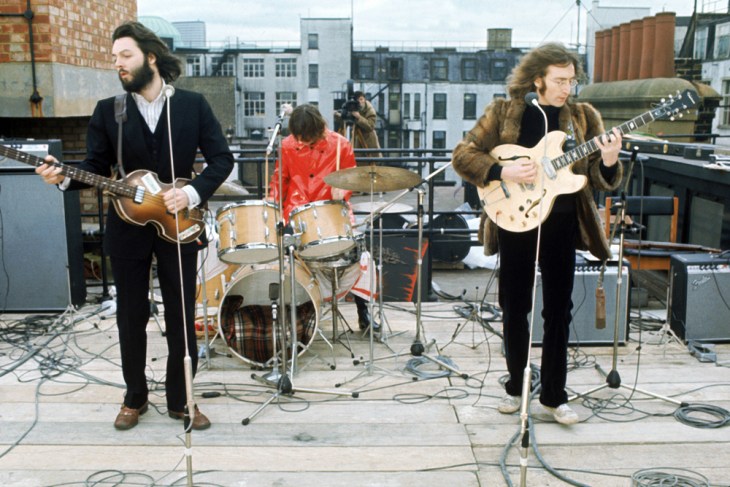
It is a shame that the film cuts off in the middle of 1966 as the band released Revolver. They wound up their US tour in California, and it was a tour they were glad to see the back of. John Lennon had to painfully respond to the “bigger than Jesus” comments, there were death threats from the Ku Klux Klan and ticket sales were in decline (a point unsurprisingly missed out of the film). As a result, whilst Sgt. Pepper’s Lonely Hearts Club Band gets partial coverage, the albums Magical Mystery Tour, The Beatles (a.k.a. The White Album), Yellow Submarine, Abbey Road and Let It Be are covered in about 30 seconds, before a welcomed clip of their Abbey Road rooftop performance rounds thing off with them revisiting their glory days just before bowing out.
The film is genuinely crying out for a sequel to do justice to these missing years and perhaps beyond, though many of this is covered by the much-celebrated Anthology series released in 1995 but sadly still awaiting a Blu-ray release.
If you’re a fan of The Beatles then put this straight on your Christmas list as it will be a perfect trip down memory lane to revisit the greatest band of all time.
The worst thing about watching the political equivalent of a car crash is that politicians never seem to learn from their predecessors’ mistakes. Wars keep happening, smear campaigns take precedent over actual policies in the run up to elections, mayoral campaigners Tweet pictures of their erect penises to strangers.
Wait, what?!
Okay, that last one is a new one on the political landscape. Anthony Weiner is a great sport though. He lived up to his name whilst figuratively – though thankfully not literally – taking one for the team by playing out the lesson twice, first in 2011 and then again in 2013. That the second one happened during under the prying eyes of documentary filmmaking duo Kriegman and Steinberg, at the time trying to capture the rebuilding of a shattered political empire, makes it all the more fascinating.
The film left me a little split on my opinion of him. On the one hand, he is clearly a driven man who is good at his job, galvanising public opinion and canvassing support for what he truly believes is right for his city.
What I can’t deny though, and I think we can all agree on this, is that the mayor of New York shouldn’t have an alter ego on the dark web called Carlos Danger tweeting pictures of his dick to women behind his wife’s back.
His wife, Huma Abedin, leaves the film with her head left relatively high. She is a woman of unbelievable strength in the face of a continuously catastrophic husband who laughs in the face of public opinion, even though his livelihood depends on being popular with his public. The only question is why she sticks around when he is clearly a huge damage to her political career (she has been an aide to Hilary Clinton throughout the two scandals and leading into the presidential election later this year).
As a documentary, Weiner is about as good as it gets. It isn’t putting the pieces together after an event, instead getting lucky and being able to present a truly spectacular political scandal from the inside of the bubble. The characters are their interactions are as captivating as any fictional story.
It might not be a comfortable watch, but there’s something about Anthony Weiner that’s hard to not get addicted to. He’s an almost great political swamped by his own ability to ruin his own chances of achieving anything other than the total humiliation of himself and everyone associated with him.
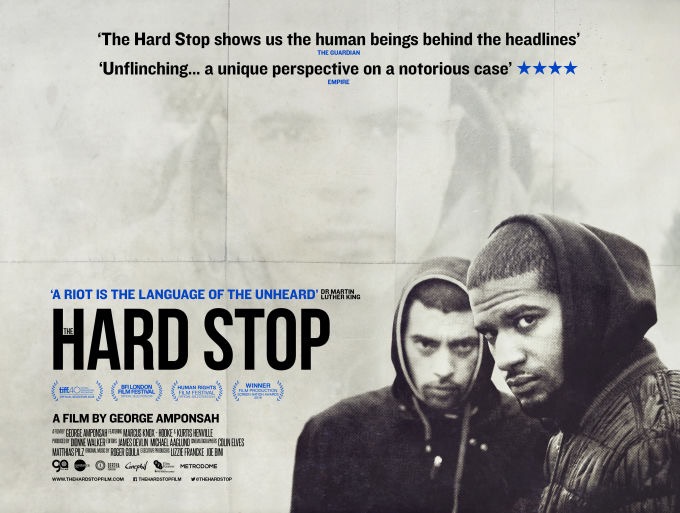
‘The Hard Stop’ documents the 2011 London riots that erupted in the aftermath of the police shooting of Mark Duggan, a 29-year-old black British man. Given the current events in Dallas, Texas, the release of the film couldn’t have been more relevant.
The film concentrates on Marcus Knox-Hooke and Kurtis Henville. Both were close friends of Duggan for many years prior to his death, and both were members of the Tottenham Man Dem, a gang formed out of the Broadwater Farm housing estate in Tottenham. Broadwater Farm was the setting for a brutal riot in 1985 that was believed to be caused by the police raiding a home and causing the heart attack of resident Cynthia Barrett. The main reason it is remembered across the UK is the death of PC Keith Blakelock, the first policeman to die in a riot in the UK since 1833.
The film paints a balanced view of both Marcus and Kurtis. Growing up in the aftermath of the 1985 riots, the two are family-oriented men with their home community at the centre of their make-up. Their upbringing – and that of Mark Duggan – has clearly been one overshadowed by suspicion and resentment for a police force that should be there to protect them, but instead seem to constantly be at odds with their community.
It is an unsettling film for a number of reasons. The media portrayal of the 2011 riots (that quickly spread around the country) seldom touched on the root cause, instead focusing on the looters and chancers that saw it as an opportunity to make some money out of the pandemonium. The anger from the black community in London at the injustice of what happened to Duggan was completely suppressed. I am sorry to say that as a white man, the underlying cause of the riots was not apparent to me and none of the many news outlets I have touch-points with exposed me to the full picture.
The reveal of the eventual findings of the inquest into his death was the most shocking moment of the film. The inquest found that, whilst it was unlikely that Duggan was carrying a gun, the killing was unfathomably still deemed lawful. The emotional response of the community in which Duggan lived was one of absolute devastation and was captured in a moment of brilliant documentary film-making by director Amponsah. This is not a community that wants to fight, but as the opening quote of the film states, “A riot is the language of the unheard.”
‘The Hard Stop’ is one of the most important documentary films to hit the big screens this year. Out of necessity, it is rough around the edges. It has, at the heart of it, some of the greatest social themes facing Britain today. A riveting watch.
ORION: The Man Who Would Be King (12A), the latest feature documentary from award-winning director Jeanie Finlay (Glimmer Films) is released into UK cinemas from Friday 25 September and has received distribution support to enhance this theatrical release from Creative England and Ffilm Cymru Wales.
Orion tells the story of Jimmy Ellis, an American singer with a natural voice that drew unavoidable similarities to Elvis Presley. In the aftermath of Elvis’s death in 1977, music producer Shelby Singleton of Sun Records played on the conspiracy theories about Elvis having faked his own death and created Orion – a masked singer with a mysterious past who had the look and sound of Elvis whilst never laying claim to being the man himself. For four years success lay in the hands of Ellis as he toured and rode the waves of popularity, but frustrations crept in about the public perception of him and the deals he had signed and he finally broke away from his deal in some style.
This documentary was spawned by a chance purchase at a Nottingham market, where director Jeanie Finlay picked up a copy of the Reborn album on 12″ vinyl, Orion’s debut release. That was where the interest in him started, and between then and now the director has visited almost everyone closely involved in his life to discuss their experience of a man driven by a desire to sing on his own terms. It is excellently put together. It is a story that threatens to be either not very interesting or flawed due to lack of decent source material (the Presley estate provide little footage for these kinds of films and many of the key people in the film were unavailable for interview). Fortunately, neither of these things threaten to creep in and the end product is fascinating.
Oh Ryan.
It goes a long way into intimately portraying a man torn between being forced to hide behind a mask and enjoying the limited success he was achieving. It is balanced and as such avoids over-celebrating Ellis, concentrating on his personality rather than his success. As with most music documentaries, many of the anecdotes bring huge amounts of comedy to the table and Finlay has been careful to interview as many people as were available, no easy task when on such a tight budget.
Keith Richards: Under The Influence is a documentary film by Morgan Neville, the man responsible for the excellent Academy Award-winning 20 Feet From Stardom. Richards has a new album out – Crosseyed Heart – and the timing of this film gives it the feel of being a bit of an extended promotional interview.
Indeed, that’s exactly what it is. Bringing in a few musical friends to offer further insight, the film is actually a series of interview filmed in various locations across the USA. The fact it is just a talking heads film is not to say this is a disappointment as a documentary. Fans of the band and/or the individual will find a lot of joy from watching the series of interviews with a man who knows how to tell a tale. Most avid fans have probably already read his autobiography “Life” and an 80 minute film is never going to cover the depths of a 500-page book.
Keith Richards: Under The Influence is available excusively on Netflix now.
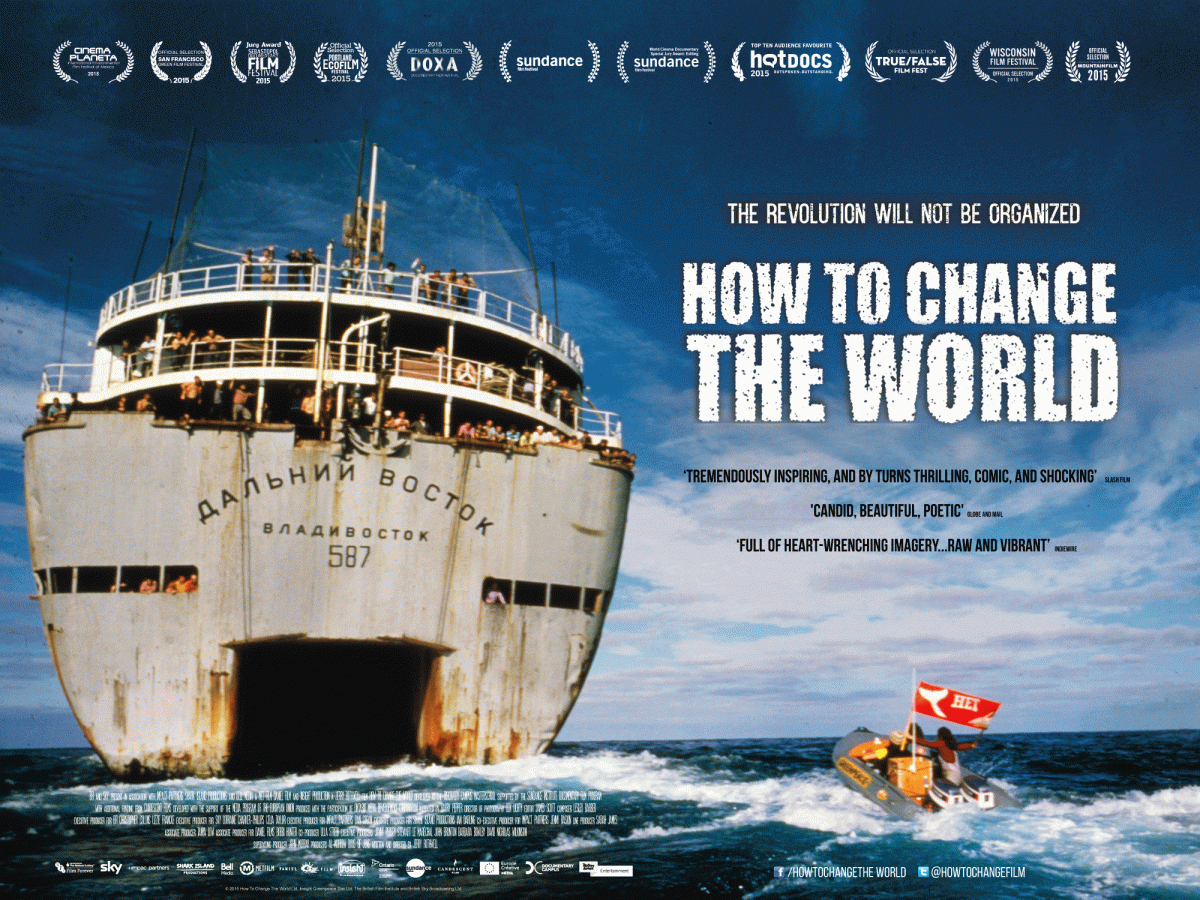
How To Change The World is a documentary film from director Jerry Rothwell that charts the history of the company Greenpeace, from its humble beginnings as a group of activists in 1971 to the internationally recognised brand it has become today.
The film concentrates on several key moments in the early history of Greenpeace: the attempts to prevent the detonation of nuclear bombs in Amchitka in 1971 (essentially the birth point of Greenpeace); the anti-whaling campaign of 1975 in which Russians fired harpoons over the heads of a boat of Greenpeace activists to kill a whale; and the organisation-dividing seal-dying campaign of 1982, which aimed to prevent the skinning of baby seals for their fur and led to a confrontation with Canadian hunters and a public standoff.
One of the cornerstones of the film is the evolving dynamics of the group. As the Greenpeace movement grows in stature the original members become celebrities and uncontrolled splinter groups popped up globally. Director Jerry Rothwell has clearly decided that the best way to hold the film together is to use Bob Hunter’s writings as the narrative. As he explains, “Greenpeace has a contested history because of what happened to them, this maelstrom of fame. I’ve tried to bring that out in the film. Bob Hunter’s writing had to be the central voice of the film. It is poetic. That needed to be the heart of the story.”
The film is presented stylishly with a great soundtrack of artists that have supported the cause over the years. Indeed, a 1970 Joni Mitchell and James Taylor concert funded the first whaling trip, but that is footage that doesn’t feature here. Instead, she features only over the end credits as Big Yellow Taxi aptly brings the film to a close. “There was a recording of that concert”, Hunter concedes, “but from a narrative point of view we needed to get them out to sea as soon as possible.”
It is a film that almost never existed, because the footage was unknown and ready to be destroyed. It was only when Rothwell had a chance encounter with the footage that he realised there was a film to be made out of it: “I realised there was 1000 canisters of film in Amsterdam. I happened to be in that archive for another project. There were some extraordinary images. For Greenpeace at the time the function of the films was to make campaign films for seals and whales. The cut offs were in a way what I was interested in, as it showed a glimpse of the dilemmas they had faced.”
As documentaries go, the content of the film is fascinating. It doesn’t force the current agendas down the viewers’ throats (there is plenty of information on their website should you care to take a look), instead taking the stance that the history of the organisation is a story interesting enough in itself. The way it is presented is also extremely polished and easy to digest. I’d be surprised if it isn’t at least being mentioned when the awards season kicks off in earnest next year.
How To Change The a World will be released at cinemas worldwide on 11th September 2015.
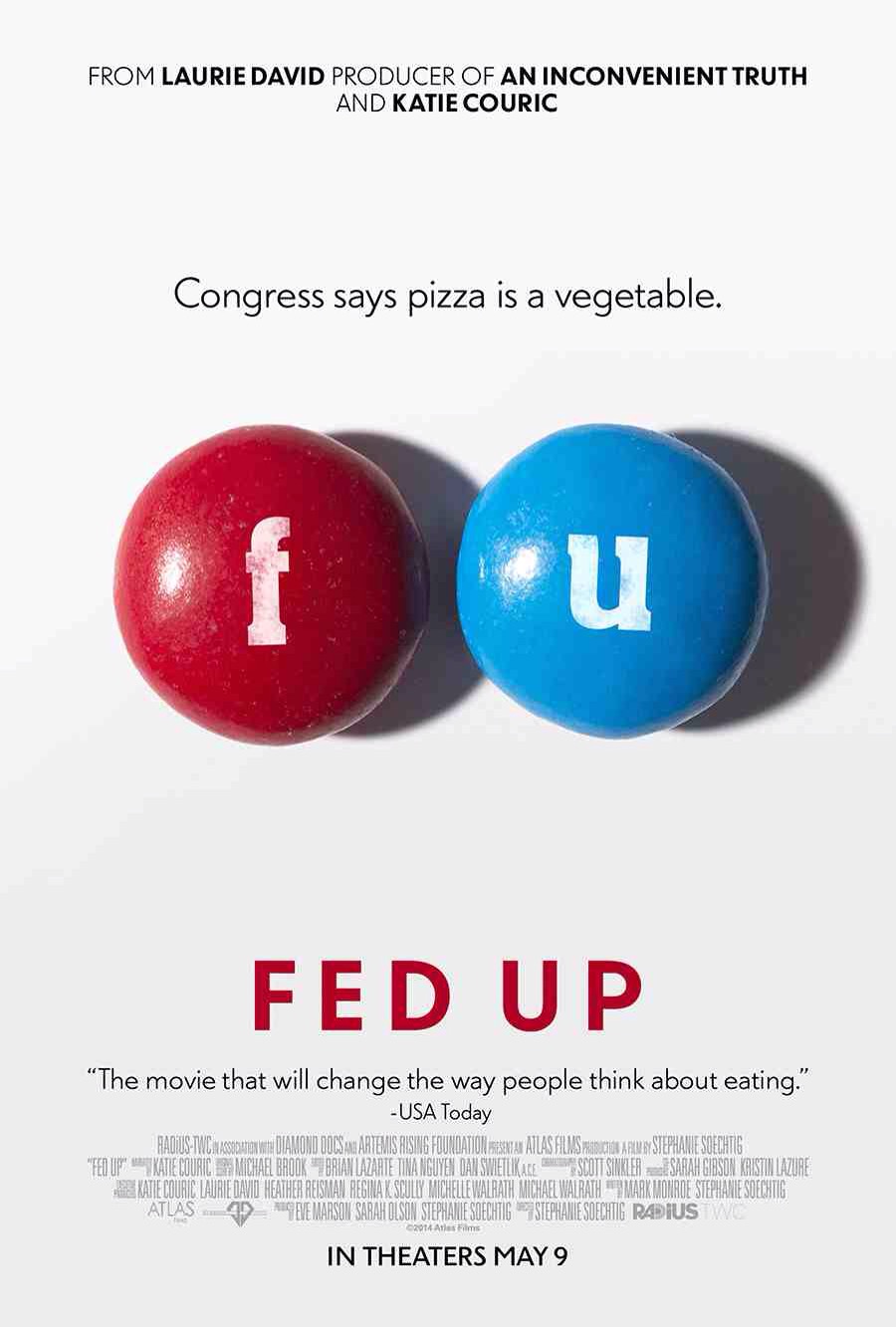
A lazy and by-the-numbers approach to modern-day documentary making threatened to undermine the message of Fed Up, though the overall result is somewhat satisfying.
It tells the story of the food industry of North America, focusing on the diets many believe are good for them and the root-causes of the misinformation they base their knowledge on. Several teenagers are used as central figures in the obesity epidemic to add a personal touch to what would otherwise be a rather statistical-based story.
The obesity problems weigh heavy on the scales of America.
As cross-examinations of entire industries go, there have been worse. However, it lays its message down early on and doesn’t really allow any competing points-of-view to be treated with any credibility. The result is that for the undescerning viewer their opinion may be altered quite quickly, though anyone used to this technique (Michael Moore does it very well) it immediately makes anything offered a potential falsety. That’s a shame because the message is one of the most important facing the developed world today.
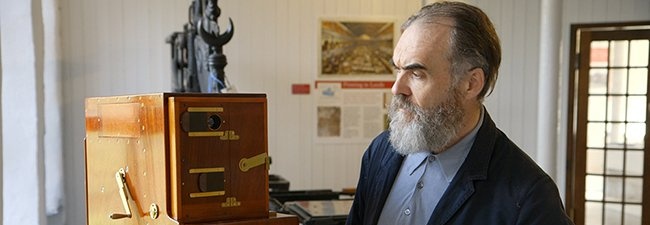
The First Film is an explorative documentary film that follows writer, producer, director and presenter David Nicholas Wilkinson in his quest to determine whether or not the first film footage ever recorded was done so in Leeds on 14th October 1888. The footage at the centre of the film is titled Roundhay Garden Scene, filmed by the Frenchman Louis Le Prince. It lasts only a few seconds but is possibly one of the most important breakthroughs in cinematic history.
Wilkinson explores the background of this footage and its claim to being either the first ever recorded film footage or simply the earliest surviving film footage. He also looks into the strange disappearance of Le Prince on 16th September 1890 on a train from Dijon to Paris, a disappearance that meant the argument of Le Prince being the inventor of the moving image cameras had lost its most important voice, paving the way for Thomas Edison to go down in the history books as the inventor of the movie camera. Things get very suspicious when the death of his son Adolphe in an unusual hunting incident in July 1901 lays his argument to rest.
A groundbreaking piece of cinematic history
When I caught up with David Nicholas Wilkinson to discuss the film, he reflected on the underwhelming appearance of the location as it stands today, a discovery that produces one of the most memorable scenes in the film.
“One of the first shots we filmed was of me finding the original location of the scene. I had to laugh. I had no idea what to expect but a cul-de-sac is about as banal a setting as I could imagine.” His presenting style is infectious even when he encounters disappointments like these, such is his passion for the subject matter. He remains upbeat despite such adversity: “I had hoped for something to be left, even if it was a tree.”
A key fact that the film explores is whether or not a photograph in a French morgue is that of Le Prince. It shows only the face of a deceased man who looks remarkably like the groundbreaking filmmaker, but David is not convinced. “I don’t really think it’s him. In 1890 the average height of a man in France was around 5ft 6in. Le Prince was actually 6ft 4in. In the accompanying notes for the photograph, anything unusual or out of the ordinary had been recorded for each person, though it was very scant in general. If it was definitely him it would have been recorded.”
Only one shot that had to be re-filmed, which meant both David and his co-writer Irfan Shan had to try their hand at acting surprised at discovering Le Prince’s grave. “He never wanted to be in it, but he knew most of the answers and stopped me making mistakes.”
The last-minute curveball
As we come to the end of the film, a late revelation throws the argument up in the air again through a discovery by Laurie Schneider. As David explains, “We had to delay. Everyone wanted me to cut it but once I knew what I’d found out about it I knew it was vital to the story.” The fact David’s discoveries are captured on camera means the audience goes on the journey with him, leaving the story open to these kinds of curveballs throughout.
Whilst the film explores the three most plausible explanations for the disappearance of Le Prince, David explains that there are many more doing the rounds. “There are around ten theories about what happened. One theory is that he was a spy for both Britain and USA during a time when there was a threat of a second French Revolution. Another is that he was filming snuff films with Jack The Ripper…” As he tails off there is something in his voice that gives the impression he doesn’t quite believe these avenues of thought.
It is clearly a labour of love and he has produced a compelling argument on what was likely a relatively small budget. One source of frustration for him came from the British Film Institution. “I went for a BFI distribution loan, which would allow me to visit colleges and universities around the UK. I had agreements with thirty out of a planned fifty and saw it as a great way to get the truth around. I was turned down because it was deemed “too educational”. I’m sure their remit is to promote the British film industry. I can’t come up with a tangible reason for it. Maybe they don’t believe me.”
David’s relentless passion for the project is infectious.
The driving force is Wilkinson himself and it becomes very easy to get wrapped up in his determined narrative. This determination comes despite concerns about the film’s viability. “It was a big worry because it had been rejected so many times. I’d been advised not to do it, but I knew people would be interested in this story.” It appears he is correct in this thought given the amount of coverage it is now getting in national newspapers. “It’s a forgotten story and an important part of our history as a film-making nation. People will now know the Le Prince name. In fact, the widespread coverage means the story is getting out even to people who haven’t seen the film.”
“The film has been thirty-three years in the making”, he states, referring to that point being the first time he pitched it to the BBC in 1982. “I’ve laid it to rest now though. Now that it’s out there I can move on. It’s often the case with filmmakers that the one project we’re really passionate about is the one that never gets made. People go decades without making a project and I often believe that they don’t really want it to get made.” It’s lucky that David’s one project was this one and we’re lucky to be able to hear the story, albeit 125 years late. The story deserved to be told and now it deserves to be seen.
The First Film is on limited release now, with the following cinemas offering screenings over the next month.
July
03.07.15 – Regent Street Cinema London
04.07.15 – Regent Street Cinema London
08.07.15 – Gate Cinema London
11.07.15 – Galway Film Fleadh – Ireland
14.07.15 – Triskel Arts Centre, Cork – Ireland
15.07.15 – IFI, Dublin – Ireland
16.07.15 – Queens Film Theatre, Belfast
20.07.15 – Greenwich Picturehouse London
23.07.15 – Ritzy, Brixton, London
26.07.15 – Cambridge Picturehouse
28.07.15 – Norden Farm, Maidenhead
30.07.15 – Kingston Arts Centre
August
01.08.15 – Bath Picturehouse
03.08.15 – Home Manchester
05.08.15 – Vue Leeds
06.08.15 – City Screen, York
07.08.15 – Sheffield Showroom
09:08:15 – Hebden Bridge Picture House
13.08.15 – Electric Palace, Hastings
18:08:15 – Picture House, Uckfield
1. All Right
2. Barbed Wire Blues
3. Unknown
4. Unknown
5. Unknown [1]
The second day at Glastonbury is when the fun starts to get interesting. A few familiar acts start to pop up and by and large nobody has a 50 minute pilgrimage with a 40kg weight strapped to their back to kick-off the day.
Our first act of the day was Wilko Johnson on the William’s Green Stage. It was a short set (about 30 minutes) followed by a long interview (about 30 minutes) followed by an exclusive screening of the new Julien Temple documentary The Ecstasy of Wilko Johnson.
I’m largely unfamiliar with Wilko’s music but the set gave me a flavour of what he’s about. I’ve seen many bad versions of this band in pubs across the country on a Friday night, playing vintage 12-bar-blues to an older audience. We drink ale, they play music. It’s a great night even though the band aren’t always great. Well, imagine how much fun you’d have if the band were actually really top quality. This is what you get from Wilko Johnson.
The first thing you notice when watching Wilko Johnson is that he has thunderously focused eyes. It brings an intensity to the music I can’t quite describe. Whilst doing that, he’s also carrying his Fender Telecaster like it’s a machine gun. It’s wholly intimidating. [2]
Those unfamiliar with his music might be more familiar with his role in Game of Thrones as the executioner Ilyn Payne. He wasn’t in many episodes but when you see his eyes on stage it instantly brings it back. You can see why he was cast.
So there you have it. Instead of reviewing his gig all I’ve done is talk about his eyes, the machine gun guitar technique and Game of Thrones. Oh how the true Wilko fans will be fuming. It was a brilliant gig though, it has to be said. I’m hoping I get to see the band in a full set soon.
Wilko and Julien speak in the pre-screening Q&A
Film + Q&A
Prior to the film was an extended interview with Wilko, Julien Temple and Dorian Lynskey of The Guardian. Wilko stated early on that he isn’t a fan of seeing footage of himself, so seeing a film based entirely on himself would be hard work to watch.
The film is ostensibly about Wilko’s battle with cancer as he was given ten months to live. It covers this period, then goes on to what he describes as “extra time” and then his miraculous recovery following some radical treatment.
He talked in the Q&A about the difference between being told you have cancer and being told you have the all-clear. “You go and see the doctor and he says you have cancer and, like that, the universe changes. You go back after a year and they give you the all-clear and it’s not instant at all. I had an 11-hour operation to remove a 3.5kg tumour from my stomach… and then weeks of recuperation with post-operative-infections. So I had time to feel sorry for myself.” Of course, when he announces he’s all-clear, the crowd erupts in joy and applause.
Speaking on the album he did with The Who’s Roger Daltrey, Wilko was in a reflective mood: “I think of all the things I did that year. I was in a bubble. Doing the record with Roger was just one of the many strange things that happened to me that year. It was the first thing I’d done in “extra time”. I was walking around outside the studio thinking ‘this is going to be the last thing I do, this is freaky, I’m going to die soon'”.
He also spoke humorously about the fact he never got his coffee from a backstage assistant, and reflected that he was looking forward to the end but now has to keep gigging because people keep coming back for more.
This mixture of lighthearted humour with honest reflection is indicative of the tone of the film, which is far more than just a rockumentary on a band’s final tour. It is in fact a hugely emotional journey and a fascinating insight into people battling with terminal illness. It’s well worth watching when it appears later this year.
[1] Can anyone help me with these?
[2] After you’ve finished absorbing the awesomeness of Wilko himself, you may find yourself drawn to the equally bizarre bassist Norman Watt-Roy. He’s unique.
[Note] Massive thanks to Scott Wetherill for the video. Hope you’re okay with me using it! Let me know if not.










 Cinema, etc.