Kronk’s New Groove (Elliot M. Bour, Saul Andrew Blinkoff, 2005)

Having recently watched The Emporer’s New Groove, Disney’s 2000 animated film that failed to light up the box office but did go some way to maintaining their credibility amongst an otherwise troubled period, I decided to watch the sequel. Inevitably, Kronk’s New Groove was a direct-to-video release and it also has many of the hallmarks of most of the other Disney films that bypassed the cinema: short running time, sub-par animation and almost none of the magic of the original release.

One thing that is retained is the talented voice cast, including David Cross as Emperor Kuzco (cameo only), John Goodman as Pacha (cameo only), Eartha Kitt as Yzma (cameo only) and, of course, Patrick Warburton as the titular Kronk. It’s quite impressive that everyone was convinced back based on the premise of a flimsy sequel to a five-year-old film, though the fact they were probably only in the studio for a day may have helped.

We do, however, lose Sting’s excellent songs and score that were present in the original (though many of his songs missed out on the original, as fully explained in the excellent documentary film The Sweatbox). Indeed, there are only a couple of songs in the film and they’re pretty forgettable.
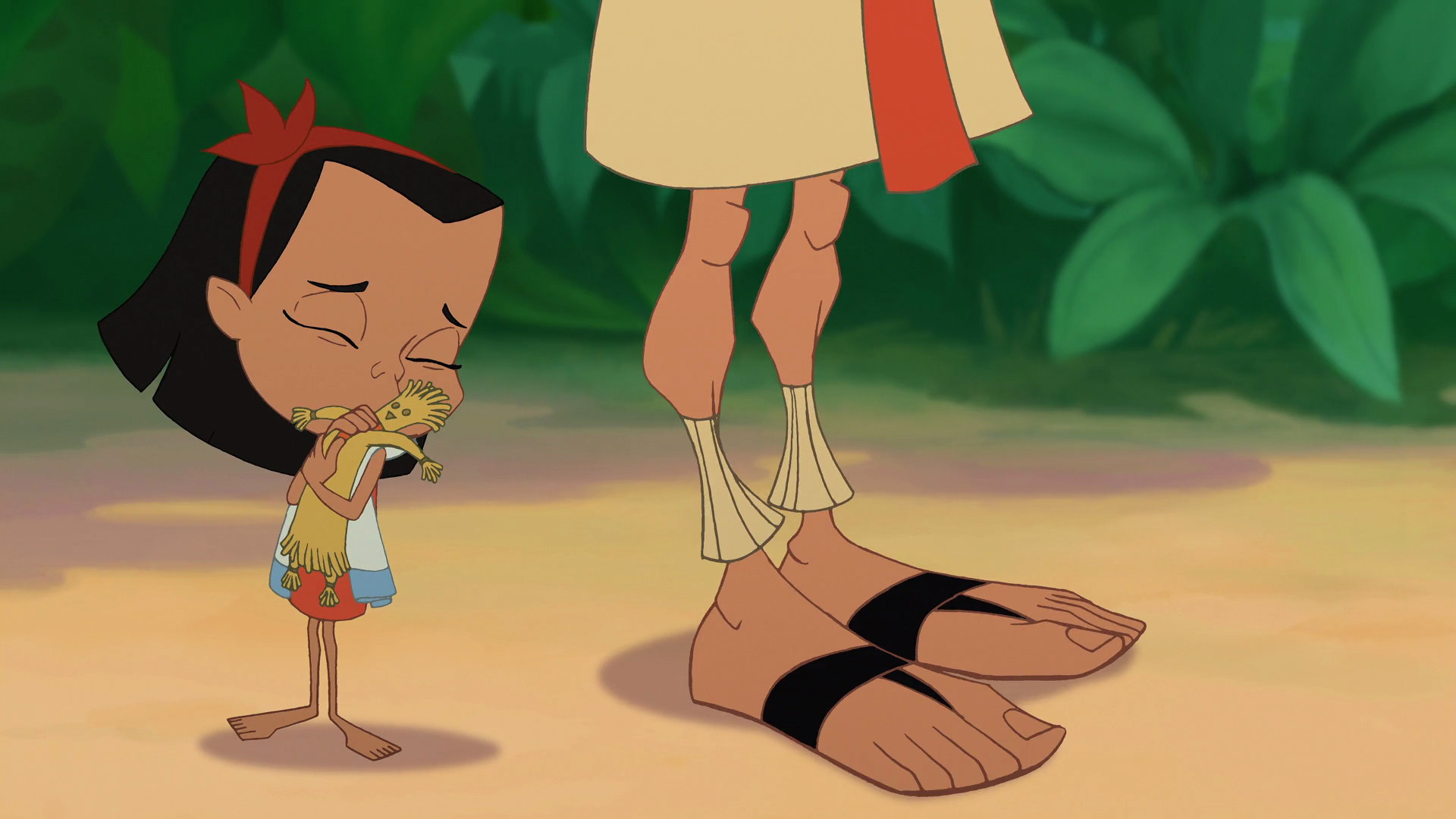
The film was so bad it brought some viewers to tears.

The film was so bad it brought some viewers to tears.

Many criticisms on this film centre on the lack of storyline. In truth, the basic premise isn’t even half as off-the-wall as the first film. In this one, Kronk tries to achieve the lifelong ambition of winning the approval of his father (“the big thumbs up from Papi”), trying to hide the fact he is a chef in a restaurant and pretend he has been more of a success. He takes on a scout team (of sorts), falls in love, rips off some old people with an elixir of life. It isn’t too bad, though it is a bit straightforward. It isn’t the storyline itself that causes the issues, but rather the pacing and lack of imagination therein. There’s obviously been a strict budget applied that goes beyond the poor animation and this certainly goes for the lack of time spent on the script and the fact that nobody realised it was completely lacking in humour.

In my opinion, this last point is the over-arching issue. Whilst the first film is full of huge laughs, most of which were memorable and quotable, there is nothing on that level this time around. Most of the gags are parodies of other films but they themselves are outdated: The Matrix and Titanic were both almost a decade old by the time of release, meaning the jokes were no doubt lost on the children at which this is aimed. Not only that, but they would have also failed to ignite any laughter in the parents sitting through it with them.

I don’t think this is quite as bad as the majority of reviews would have us believe (it holds a 0% rating on Rotten Tomatoes). It isn’t a classic, and I can’t recommend you watch it unless you’re a hugely keen fan of the original, but it isn’t a film with out any redeeming qualities.

Kronk’s New Groove is available now on DVD. Strangely a standalone Blu-Ray hasn’t appeared yet.
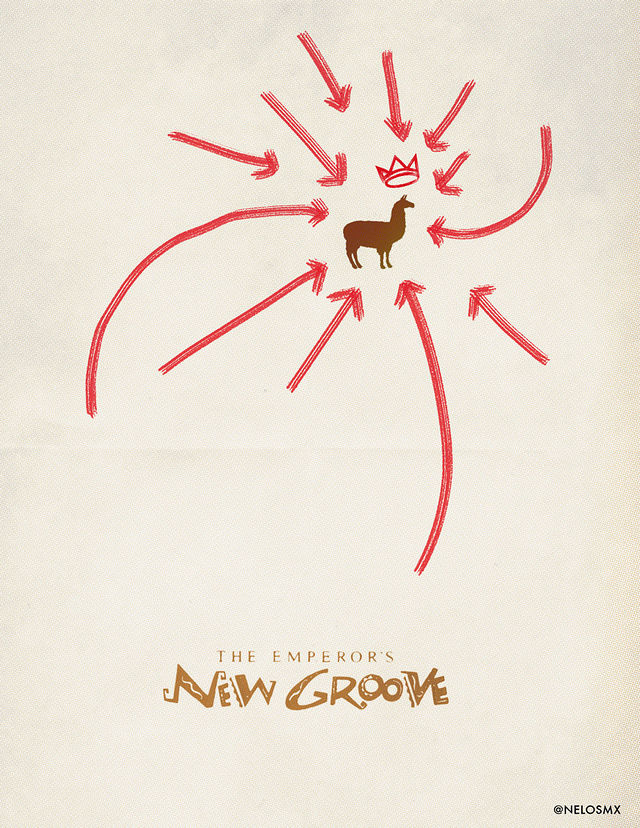
Film review – The Emperor’s New Groove (Mark Dindal, 2000)

The Emperor’s New Groove is widely regarded as the first post-Renaissance-period Disney animated film, the studio having seen huge successes with the ten Renaissance-period films bookended by The Little Mermaid in 1989 and Tarzan in 1999. That The Emperor’s New Groove was not part of this is down to an element of production hell, which caused a more serious and epic romantic comedy titled Kingdom of the Sun – in the same vein as The Lion King – to be thrown away before it evolved into the film we know today. [1]

Central to the original film were six new songs written and performed by Sting. Having seen close friends Phil Collins and Elton John experience huge successes with their films Tarzan and The Lion King respectively, Sting was able to approach the project confident that he would have a success on his hands. The songs themselves reveal a lot about the romantic-comedy themes of the film-that-never-was and help us construct what we missed out on.

Kingdom of the Sun concept art

Kingdom of the Sun concept art

One song we did get to hear was “One Day She’ll Love Me”, a duet with Grammy Award-winning folk-rock singer Shawn Colvin. This appeared on the soundtrack and would have fitted with the original storyline of the pauper (voiced by Owen Wilson) switching places with the emperor and slowly falling in love with his wife-to-be Nina. It was apparently due to appear in a palace party scene and is similar in many ways to “Can You Feel The Love” from The Lion King.

Another couple that appeared on the soundtrack but not in the film were “Snuff Out The Light”, a song to be sung by the villain Yzma (Eartha Kitt); and “Walk The Llama Llama”, a fun song to show the importance of llamas to Incan societies.

Three additional songs that were written by Sting remain unreleased and unidentified. I often wonder whether or not “After The Rain Has Fallen” was one of these songs. The song appeared a year after this film on the album “Brand New Day”, and has a few references that fit (a palace, princess betrothed to a man she doesn’t love) and a few that don’t, but could have been changed to distance it from the film. 

Two further songs were written for the new version of the film: “My Funny Friend and Me” and “Perfect World”. The latter was sung by Tom Jones.

So, whilst we were robbed of a film that could have been up there with some of the best Disney films of the 90s, we instead got a delayed film in a completely different mood but is actually a huge success story considering its journey. The plot makes no sense whatsoever – an emperor is turned into a llama by an evil power-hungry adviser, though he is rescued by a local farmer and the two form a buddy relationship to find the potion to turn him back to a human despite the fact he wanted to build a holiday home over the top of farmer’s house. Somehow, though, it works and we end up with a fast-paced, hilarious and beautifully animated feature film that was one of the last successes for Disney 2D animation before they gave up completely on it with the release of the lackluster 3D animated picture Chicken Little in 2005.

There is a generation of children who grew up loving animated films but for the first time in over a decade these were not Disney films. Instead, there were the excellent Pixar films such as Monsters Inc., Finding Nemo and The Incredibles and the successful Dreamworks films like the Shrek series, Shark Tale and Madagascar. Of the Walt Disney Studios films released in this period, which also includes Atlantis: The Lost Empire, Lilo and Stitch, Treasure Planet, Brother Bear and Home on the Range, The Emperor’s New Groove certainly stands out as the best of an admittedly mediocre bunch.

The Emperor’s New Groove is available to buy on DVD and Blu-Ray now. [2]

[1] The documentary film title The Sweatbox, which remains largely unreleased but for a few appearances online every now and then (it is owned by Disney), follows the problematic production closely and is worth seeking out. It isn’t the fantastic tell-all story people believe it to be but it is extremely interesting and has a few glimpses of how the original film was shaping up.

[2] I found the alternative poster for The Emperor’s New Groove on a site called Deviant Art, and it was done by an artist called Alejandro Cisneros. I don’t know much about the artist but his other artwork is really incredible. Check out his site!

Film review – Lava (James Ford Murphy, 2014)

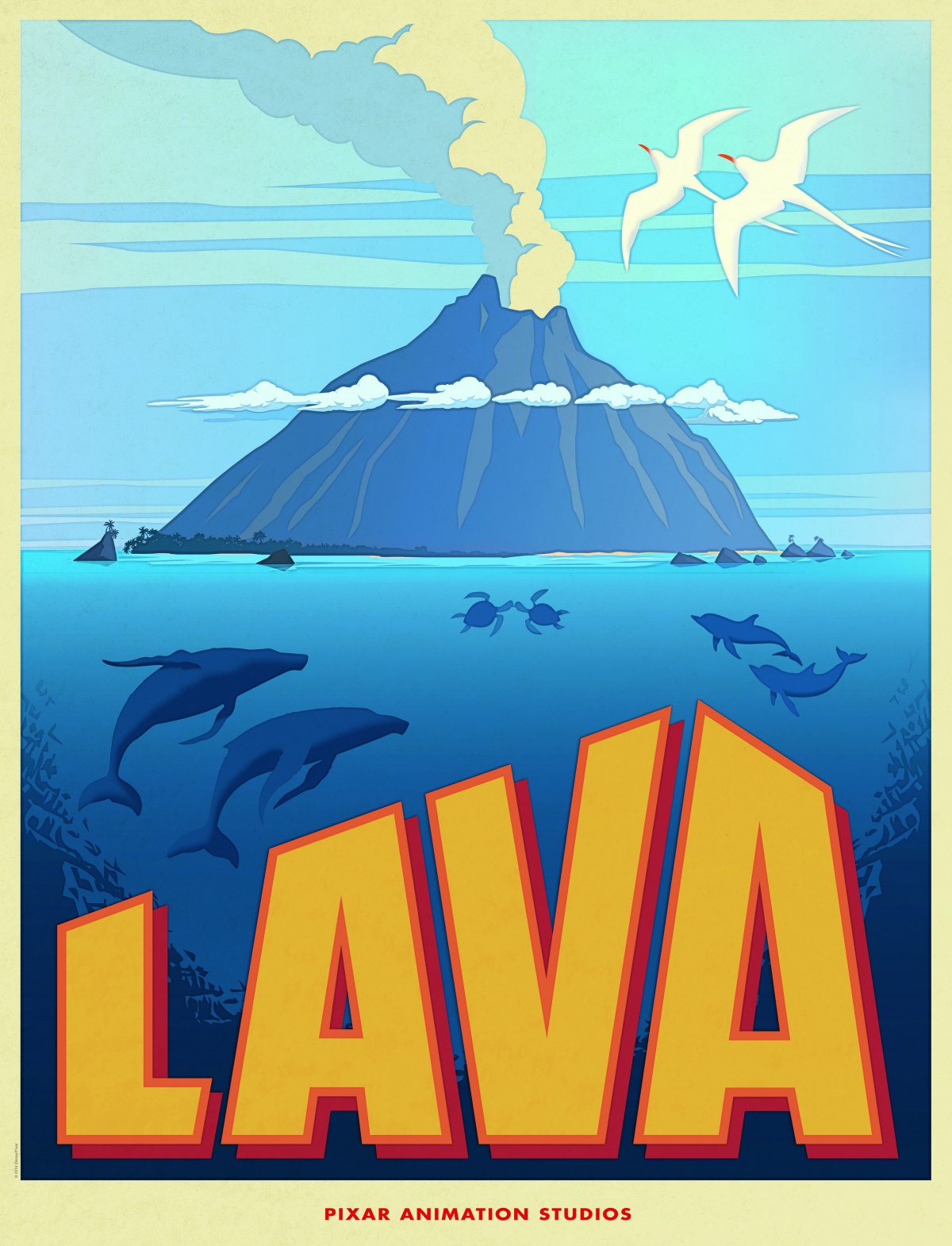
The opening short film you will see before Inside Out later this summer is a sweet film called Lava, probably the first musical love story to take place over millions of years. It involves two volcanoes and is set to a beautiful song sung by Kuana Torres Kahele.

This volcano is in lava.

This volcano is in lava.

It was met with audible gasps, sighs and whoops in the screening I saw at this year’s Glastonbury Festival. Please make sure you get there in time to see this volcano’s story!

Film review – Inside Out (Pete Docter, 2015)

The latest film from Pixar Animation Studios is one I approached with considerable anticipation. There has been a reluctant feeling amongst close followers of Pixar’s output that they are now running low on original ideas as we are seeing a shift towards sequels rather than original storylines. Of the first ten Pixar motion pictures, only Toy Story 2 was a sequel. Of the following four films, only the poorly received (but excellent) Brave was an original concept. Monsters University was an enjoyable film but not a patch on the original; Cars 2 was on a par with the first installment but that just means neither are good. Only the two Toy Story sequels were both a critical and commercial success and the first of these started life as a direct-to-video sequel.

So when the next few films were announced and they included Toy Story 4 and Finding Dory a lot of questions focused on how many original ideas were left in the tank. It’s cruel to be concerned in many ways, but after such a frantic amount of original ideas pumped so much life into the animation industry it was sad to think it might be slowing down.

However, seeing they were releasing two new franchises was a cause for hope. The Good Dinosaur will be seen in cinemas later this year, but first up is the film set to be a summer blockbuster – Inside Out.

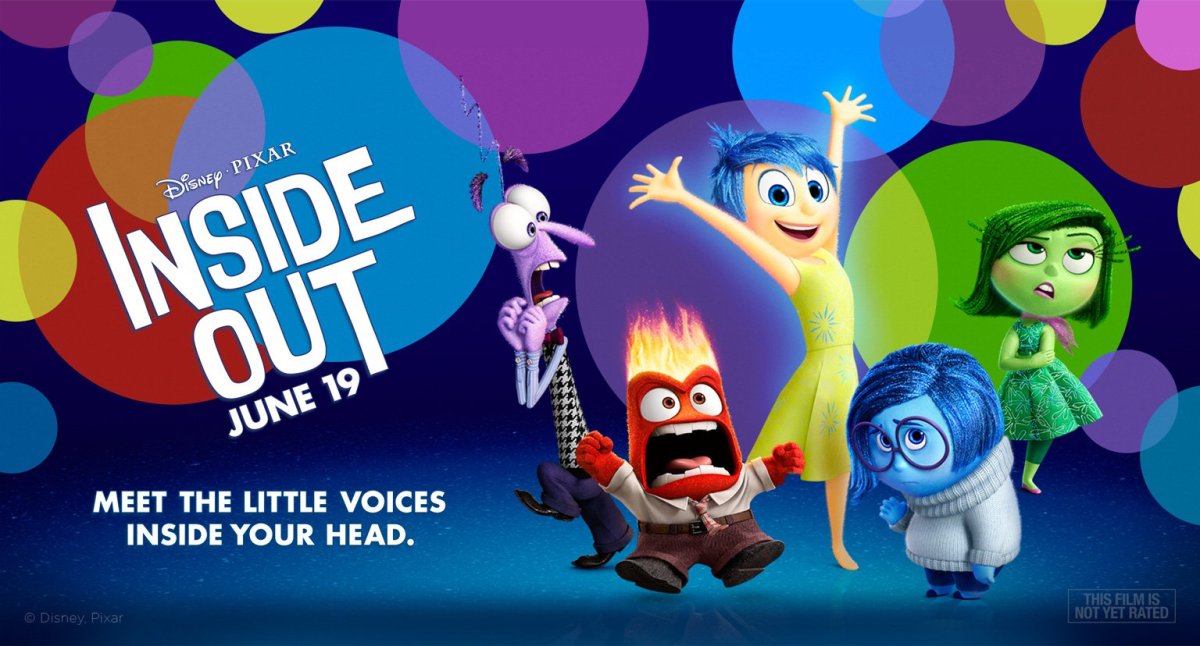
L-R: Joy, Fear, Anger, Disgust and Sadness

L-R: Joy, Fear, Anger, Disgust and Sadness

The story is an unusual but simple one, much like all the best Pixar films. It is set inside the brain of a young girl named Riley Anderson (Kaitlyn Dias) as she is forced to move house with her parents from icy Minnesota to the slightly milder San Francisco, leaving behind her friends, beautiful house and successful ice hockey team. Her five emotions are represented by five distinctly hilarious characters: Joy (Amy Poehler), Anger (Lewis Black), Disgust (Mindy Kaling), Fear (Bill Hader) and Sadness (Phyllis Smith). Each one controls her emotional response based on how they interpret what she is experiencing, and these are converted into memories in the form of tiny glass orbs, rich in one or more type of emotion, which are stored in her mind for her to recall later.

This concept is highly original and is a brilliant platform for some hilarious cutaway scenes where we see what Riley is seeing and the reaction shots of what to do with our five emotional manifestations. The most memorable case of this was a very typical family meal, into which a lot of careful consideration was evidently given to get the perfect balance between heartfelt and humour.

I won’t ruin any specifics of the plot but I would recommend taking a tissue if you are liable to cry. They reach first-eight-minutes-of-Up levels of emotions.

The real-life characters are highly realistic and the world in which they live is very believable. However, the one place the film lets itself down is with the character design of the five emotions. Whilst they are cutely colourful and well animated, the actual design doesn’t seem up to the standard expected from Pixar and I wonder how it got this far down the line without someone saying it needs to be improved. A couple of other characters – Richard Kind’s Bing Bong and a particularly scary clown – inhabit a wholly different world and have more in common stylistically with Aardman Animation. I can’t help think they were designed with merchandising in mind.

This is truly up there with the best Pixar films, no easy achievement given they have been responsible for so many of the best animated films over the last twenty years. It’s the perfect emotional rollercoaster to ride on whilst celebrating reaching the start of their third decade in the motion picture business.

Inside-Out was previewed at Glastonbury Festival on Sunday 28th June and is set for release in late July in the UK. It is preceded by the short film Lava.

Destino (Dominique Monféry, 2003)

I recently saw the news that there will be a special exhibition opening at the Walt Disney Family Museum in San Francisco on 10th July. Running into January 2016, the exhibition will cover the bond between Walt Disney and surrealist painter Salvador Dali, two men whose creative outputs couldn’t seem further from one another, despite the fact they were good friends who remained in close contact throughout their lives.

destino3

You could take every frame of animation and hang it on your wall.

Were you to create a Venn diagram of the creative output of the two artists, the small ellipse in the middle would be represented by the bizarrely brilliant Destino. First conceptualised in 1946, the film was eventually released in 2003 to the general public as an unusual opening short for Calendar Girls.

Destino may have been realised and released 57 years after it was started, but it was worth the wait. It’s a beautiful, dream-like short that has been lovingly created by a team of Parisian artists based on the original storyboards by Dali and studio artists John Hench. I’ve watched it so many times. I won’t explain the storyline – it’s less than 7 minutes long so you don’t have much to lose.

The film can be watched online at YouTube here:

As a resolution snob, the very best way to watch this excellent work of art is to purchase Fantasia 2000 on Blu-ray“>. For some reason the fact it is included on this disc is barely mentioned anywhere other than on the boxart, with Amazon choosing to just describe the somewhat lacklustre film instead. I feel this is an injustice as something as important as this should be brought to the attention of anyone who might be looking. It really ought to show up when you search “Disney Destino” or “Dali Destino”. It’s a no-brainer.

It was nominated for an Academy Award for Best Animated Short in 2004, though both this and the extremely memorable Boundin’ from Pixar were beaten by a short called Harvey Krumpet, which you can watch here.

Melody Time (Jack Kinney, Clyde Geronimi, Hamilton Luske and Wilfred Jackson, 1948)

Walt Disney Studios had a glorious start to the production of full-length motion pictures. The first five releases are still considered to be up there with the best animated films ever released: Snow White and the Seven Dwarves (1939), Pinocchio (1940), Fantasia (1940) Dumbo (1941) and Bambi (1942). However, the early 1940s brought a fresh set of problems to the company. First, a union strike led to a mass exodus of staff (around 40% left). Then, when the US and Canada entered World War II, almost all of the animators and production team were either signed up as soldiers or drafted in to produce propaganda cartoons for the war effort. The main production studio was occupied by US military for various reasons. A disinterested public meant that Bambi sold less than expected. 

With a skeleton staff still in place, Disney opted to produce several of what would become known as package films. The first two – Saludos Amigos (1942) and The Three Caballeros (1944) – gave Walt an excuse to leave his normal settings and escape for a few months to South and Central America. Make Mine Music (1946), Fun and Fancy Free (1947), Melody Time (1948) and The Adventures of Ichabod and Mr Toad (1949) followed, though they were approached from a position of compromise. Their sole purpose was to recoup money lost in various venture so, including the production of war propaganda films for cost only. 

Whilst these films have their own merits, they were mainly box-office flops and over the years clearly haven’t been as well regarded as the films released before of after this spell. [1]

The films tended to feature several short films on an associated theme (with the exception of The Adventures of Ichabod and Mr Toad, which was simply two unrelated stories fixed together), often based around some kind of musical accompaniment in the same vain as Fantasia, which was a huge success and is a classic film rich in experimentation and ideas. Melody Time, unfortunately, cannot be classed in the same league.

Melody Time features seven mini-musicals. Of note is the reappearance of The Three Caballeros in the short Blame It On The Samba, which gives us another chance to enjoy some crowd-pleasing characters. Another highlight is Bumble Boogie, which is essentially a cut from Fantasia that never made it near to full production at that point. If you’re a huge fan of both Fantasia and Fantasia 2000 then this is another good place to see similar styles. A personal favourite is Once Upon A Wintertime, which features a classic Disney tale backed by a perfectly chosen piece of music.

This film is a curiosity more than anything. It’s not the best of the package movies but stands alongside the Fables releases as something worth checking out to build up a full picture of the company during the late 1940s and early 1950s.

Melody Time is available on DVD but currently there are no plans to bring it tk Blu-ray.

[1] The five films released after the return to full-length motion pictures were Cinderella (1950), Alice in Wonderland (1951), Peter Pan (1953), Lady and the Tramp (1955) and Sleeping Beauty (1959). Some return to form!

かぐや姫の物語 / The Tale of Princess Kaguya (Isao Takahata, 2013)

The Tale of Princess Kaguya is a faithful interpretation of the classic Japanese fable The Tale of the Bamboo Cutter, one of the oldest folklore tales in the history of the country. It is also Isao Takahata’s fifth film as director for Studio Ghibli, following the dark Grave of the Fireflies, the fun ecological adventure Pom Poko, the episodic comic strip interpretation My Neighbours the Yamadas and romantic drama Only Yesterday.

It tells the story of Princess Kaguya, a tiny girl found inside a stalk of bamboo by an aging bamboo cutter and his wife. She rapidly grows in size into a beautiful young lady, though she hides a secret for which she must, eventually, face the consequences.

The first thing that hits you when watching this film is the breathtaking quality of the animation techniques. Putting aside the great storyline, the film is worth watching just for the fact it is so beautiful to view. It really serves to remind us how effective 2D animation can be and we’re lucky that Studio Ghibli is yet to embrace 3D animation in the same way as Disney has, all but throwing away their heritage (though nontheless still churning out mostly excellent films).

My favourite scene involved the princess running away from her adopted home in panic and fear. At this point the art style subtly changed and became more expressive and less controlled, with darker greats and blacks filling the screen, and it was an intelligent way to channel her emotions into the visuals.

There is an immediacy of beauty in the animation style.

There is an immediacy of beauty in the animation style.

The film arrives in North America and Europe with a lot of endorsements, not least the nomination at this year’s Adademy Awards in the category of Best Animated Feature (it lost out to Big Hero 6). I usually prefer the Japanese voice-overs with subtitles and was lucky to find a screening with this option, but the English-language cast is nothing if not star-studded (including Chloë Grace Moretz, James Caan, Lucy Liu, Mary Steenburgen and Beau Bridges). I look forward to being able to hear this version once it reaches home media later this year.

At 137 minutes it might be too long for most children but if youre looking for an intelligent way to entertain your family this weekend I heartily recommend this film.

The Tale of Princess Kaguya is out now at selected cinemas across the UK.

Films I’m Excited About – Autumn/Winter 2014

There are quite a few films in dying to see at the moment. Here are a handful of them: Big Hero 6, Bayonetta: Bloody Fate, Interstellar, The Hobbit: The Battle of the Five Enemies and Shoah.

Big Hero 6 (Don Hall and Chris Williams, 2014)
Release date: 7th November 2014
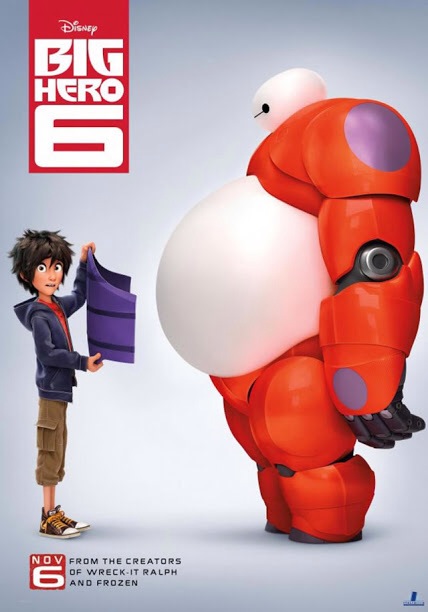
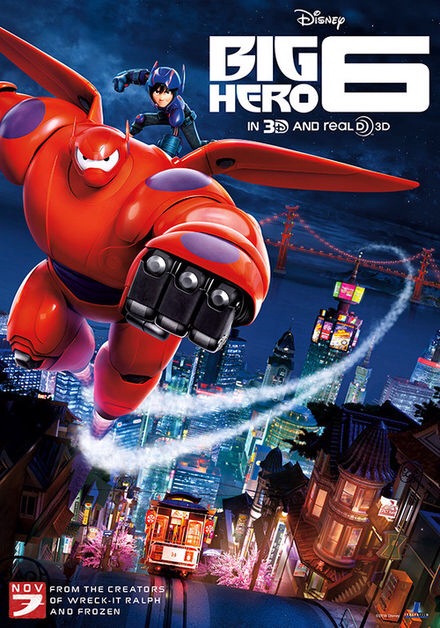
This came out in Japan earlier this week. It’s an interesting prospect. Disney have capitalised on their purchase of Marvel Studios and raided their vaults for untapped stories and potential franchises. The first one, Big Hero 6, concerns a child genius Hiro, his self-designed personal robot Baymax, their team of crime fighters and a sinister plot they fight to get to the bottom of. So not really classic Disney. This will enter as 54th on the list of Walt Disney Animated Classics, and I suppose Disney are hoping it will do well both at the cinema and in merchandising. For me, I’m really excited about it. I am, however, cautious. There is a huge risk that it pitches itself right in the middle of everyone who could like it, alienating all of them in the progress. It certainly won’t be as successful as Tangled or Frozen, and films traditionally aimed at boys (gender stereotyping alert but you know what I mean) tend to be less successful – even excellent films like Meet The Robinsons often get overlooked and then forgotten. However, with solid reviews and a hilarious trailer it could hit the ground running next month.

IMG_9356.JPG

Bayonetta: Bloody Fate / ベヨネッタ ブラッディフェイト (Fuminori Kizaki, 2013)
Release date: 24th November 2014
Okay so it has been out for over a year in the Asian markets, but Bloody Fate will finally see an English-language release next month courtesy of Funimation. It has received mixed reviews so far, but the trailer shows off just how over the top it is and it promises to be of a similar tone to the games. Unfortunately we’ll have to settle for a Blu-ray release as I don’t know any cinemas that will show it.

IMG_9357.PNG

Interstellar (Christopher Nolan, 2014)
Release date: 7th November 2014
Because… Have you seen the trailer?! Christopher Nolan is one of the greatest filmmakers of out generation and keeps turning out films in new genres that challenge and excite audiences the world over. Having been linked for a long time with the upcoming Star Wars trilogy, it’s almost intentional that he has made a film set in outer space, like he’s pointing out the downside of getting involved with an already established franchise whilst making a mind-blowing one-off that is sure to be a huge success. This is one that has to be seen at an IMAX, apparently. To be fair, I wholeheartedly believe this is the case with Gravity, so I can fully see why people are saying the same about this one.

IMG_9358.JPG

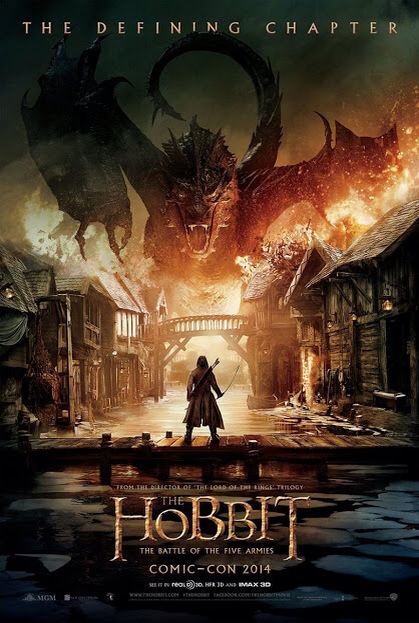
The Hobbit: The Battle of the Five Enemies
Release date: 12th December 2014
I think by now we’re all in agreement that this trilogy should have been a maximum of two films. There has been a thorough exploration of everything in the book, but perhaps this came at the expense of a faster pace and a set of films that grips viewers from start to finish. That said, they have been a visual spectacle and I’ve enjoyed seeing a great collection of fine British actors uniting on the big screen to tell such a fantastical story. I’ll be there on opening weekend making sure I don’t miss out on the fun.

IMG_9360.JPG

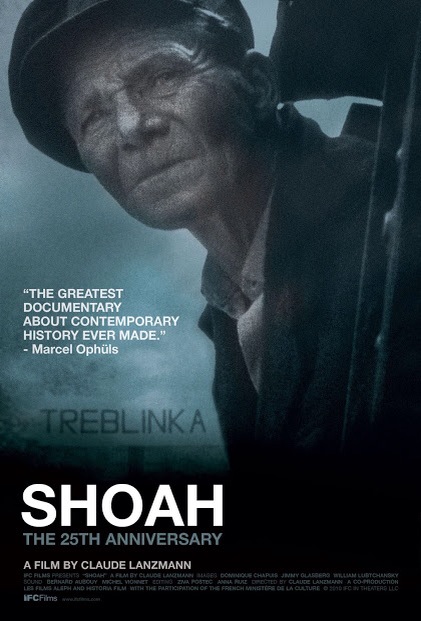
Shoah (Claude Lanzmann, 1985)
Release date: January 2015
Released in the middle of the 1980s and clocking at a huge nine hours and twenty-three minutes long, Shoah is not a documentary to be entered into lightly. It has a controversial reputation but on a critical level the film has always been highly rated. Now seeing an HD release courtesy of the Masters of Cinema, now is your chance to see this masterpiece in the comfort of your own home – crucially with ultimate control over when you take a break from the action.

IMG_9361.JPG

Giovanni’s Island / ジョバンニの島 (Mizuho Nishikubo, 2014)

Back in July when I initially viewed Miyazaki’s final film The Wind Rises, I commented that it was a story that would have been better told in live action. The subject matter was very serious, there was nothing magical required of the story. It was simply an animation that didn’t need to be an animation.

IMG_9276-0.JPG

Giovanni’s Island, the new anime release from Mizuho Nishikubo, could have had a similar issue. It is a film set on Shikotan, a small Japanese island in 1945, which tells most of the premise in itself. We follow Young brothers Junpei and Kanya Senō as they deal with the island’s occupation by Russian soldiers, the upheaval of life as they know it, their integration with Russian culture at their school and Junpei’s romantic interest with Tanya, a Russian schoolgirl with a high-level military father.

It is overall a very depressing subject matter. By this I’m talking Grave of the Fireflies sort of level of depressing. There were many teary eyes as the film reached its conclusion, and that is testament to what a fantastic job Nishikubo has done here.

The animation style was actually quite intelligent and as the film went on there was a clear reason why animation was the medium of choice to tell this tale. There are three distinct styles on show: very realistic imagery is used for all the modern-day portions of the work; a more childlike design with juxtaposing dull greys are used for the sections covering 1945; and Junpei’s dreams and fantasies are more varied, with styles ranging from basic sketches to star-filled neon visual fireworks. The decision to use all three styles to represent a now much older Junpei’s memory of the events is a smart move, especially when we see the childlike times he spends with his brother overlaying a truly grim memory of the surrounding landscapes.

IMG_9234.JPG

One key theme throughout is the children’s obsessions with trains and railways, inspired by the brothers’ favourite book Night of the Galactic Railroad. According to the director this book used to be extremely popular but has since become just a phrase that is used. In fact, only 10 out of approximately 100 children who auditioned for the film were aware of the contents of the book. Perhaps the choice of this particular book was a comment that the younger generations of Japan are trying to move on from the painful memories suffered by their grandparents. Or perhaps it was just a happy coincidence and I’m reading too much into it.

Nishikubo has come in for criticism for the content of the film. Some Japanese critics thought he should have used the film to make more of a political statement. I tend to disagree. It really is an important and compelling story to simply tell the experience these two young children went through, without being judgemental of any of the parties. Neither the islanders nor the Russians are particularly singled out as being in the wrong. This allows us as viewers to make up our own minds, and it’s a much more balanced approach to allow the story to gain popularity and recognition in the world markets. In so many ways, this does a far better job than being highly favourable to the Japanese islanders, who went through terrible treatment no matter which way you look at it, and I’m sure this is the conclusion most will draw.

Giovanni’s Island has a limited release in UK cinemas in 2014, including the London Film Festival (10th October onwards), Scotland Loves Anime 2014 in Glasgow (12th October), Leeds Vue in the Night (12th October) and Edinburgh Filmhouse (18th October). It will subsequently be released on Ultimate Edition Blu-ray (limited to 1000 copies) and DVD on 8th December, and standard Blu-ray on 26th January 2015. More information on all these releases can be found on the official Giovanni’s Island website.

A Short Vision (Joan and Peter Foldes, 1956)

Wild creatures flee in terror as a strange missile flies overhead. As it passes over the sleeping city, the world’s leaders and wise men look upwards. The missile explodes, destroying humans, wild creatures and the Earth itself.

A curiosity available via the BFI YouTube channel or in any of the BFI Mediatheques, A Short Vision is a short animated film that captured the imagination of a world obsessed with nuclear war and a fear-induced impending apocalypse. I discovered it during my latest visit to the BFI Mediatheque (a cracking service by the way) and found it completely captivating.

The animation style is jarring, with very little actual moving imagery. Instead, highly detailed paintings are used. Equally the score, provided by Mátyás Seiber, sounds overly eerie and fits perfectly with the visuals.

I don’t know what the purpose of the film was. It was originally funded by the BFI Experimental Film Fund. It’s incredibly depressing to say the least. The James McKechnie voice-over work doesn’t help either, his British voice relaying an almost biblical retelling of a horrible story.

To be honest, by the end of the film I couldn’t help but laugh. It seems so out of convention now that it would have aired on prime time US television as part of The Ed Sullivan Show. No wonder it sparked the biggest reaction since HG Wells’ “War of the Worlds” (presumably in terms of complaints).

Anyway, just watch it and see what you think. The perfect way to get you in the mood for the upcoming Hallowe’en season, or just to bring mood down if you feel in any way positive.