Academy Awards 2016 – Nominations in Full

BEST PICTURE
The Big Short
Bridge of Spies
Brooklyn
Mad Max: Fury Road
The Martian
The Revenant
Room
Spotlight

BEST ACTOR
Bryan Cranston, Trumbo
Matt Damon, The Martian
Leonardo DiCaprio, The Revenant
Michael Fassbender, Steve Jobs
Eddie Redmayne, The Danish Girl

BEST ACTRESS
Cate Blanchett, Carol
Brie Larson, Room
Jennifer Lawrence, Joy
Charlotte Rampling, 45 Years
Saoirse Ronan, Brooklyn

BEST SUPPORTING ACTOR
Christian Bale, The Big Short
Tom Hardy, The Revenant
Mark Ruffalo, Spotlight
Mark Rylance, Bridge of Spies
Sylvester Stallone, Creed

BEST SUPPORTING ACTRESS
Jennifer Jason Leigh, The Hateful Eight
Rooney Mara, Carol
Rachel McAdams, Spotlight
Alicia Vikander, The Danish Girl
Kate Winslet, Steve Jobs

DIRECTING
Adam McKay – The Big Short
George Miller – Mad Max: Fury Road
Alejandro G. Iñárritu – The Revenant
Lenny Abrahamson – Room
Tom McCarthy – Spotlight

ADAPTED SCREENPLAY
The Big Short
Brooklyn
Carol
The Martian
Room

ORIGINAL SCREENPLAY
Bridge of Spies
Ex Machina
Inside Out
Spotlight
Straight Outta Compton

ANIMATED FEATURE FILM
Anomalisa
Boy and the World
Inside Out
Shaun the Sheep Movie
When Marnie Was There

ANIMATED SHORT
Bear Story
Prologue
Sanjay’s Super Team
We Can’t Live Without Cosmos
World of Tomorrow

DOCUMENTARY FEATURE
Amy
Cartel Land
The Look of Silence
What Happened, Miss Simone?
Winter on Fire

DOCUMENTARY SHORT
Body Team
Chau, Beyond the Lines
Claude Lanzmann
A Girl in the River: The Price of Forgiveness
Last Day of Freedom

MAKEUP AND HAIR STYLING
Mad Max: Fury Road
The Hundred-Year-Old Man Who Climbed Out the Window and Disappeared
The Revenant

ORIGINAL SONG
The Weeknd’s “Earned It” (from the film Fifty Shades of Grey)
J. Ralph and Antony’s “Manta Ray” (from the film Racing Extinction)
David Lang’s “Simple Song #3” (from the film Youth)
Lady Gaga’s “Til It Happens to You” (from the film The Hunting Ground)
Sam Smith’s “Writing’s on the Wall” (from the film Spectre)

SOUND EDITING
Mad Max: Fury Road
Sicario
Star Wars: The Force Awakens
The Martian
The Revenant

FILM EDITING
The Big Short
Mad Max: Fury Road
The Revenant
Spotlight
Star Wars: The Force Awakens

FOREIGN LANGUAGE FILM
Embrace of the Serpent
Mustang
Son of Saul
Theeb
A War

ORIGINAL SCORE
Bridge of Spies
Carol
The Hateful Eight
Sicario
Star Wars: The Force Awakens

PRODUCTION DESIGN
Bridge of Spies
The Danish Girl
Mad Max: Fury Road
The Martian
The Revenant

VISUAL EFFECTS
Ex Machina
Mad Max: Fury Road
The Martian
The Revenant
Star Wars: The Force Awakens

COSTUME DESIGN
Carol
Cinderella
The Danish Girl
Mad Max: Fury Road
The Revenant

Film review – Begin Again (John Carney, 2013)

If Inside Llewyn Davis is the poisonous view of the hardest and most demoralising sides of the music industry, with all its rejection, squalor and misery, then Begin Again is the antidote. They are from different sides of the tracks and share nothing but a basic premise and the same city (New York) in common.

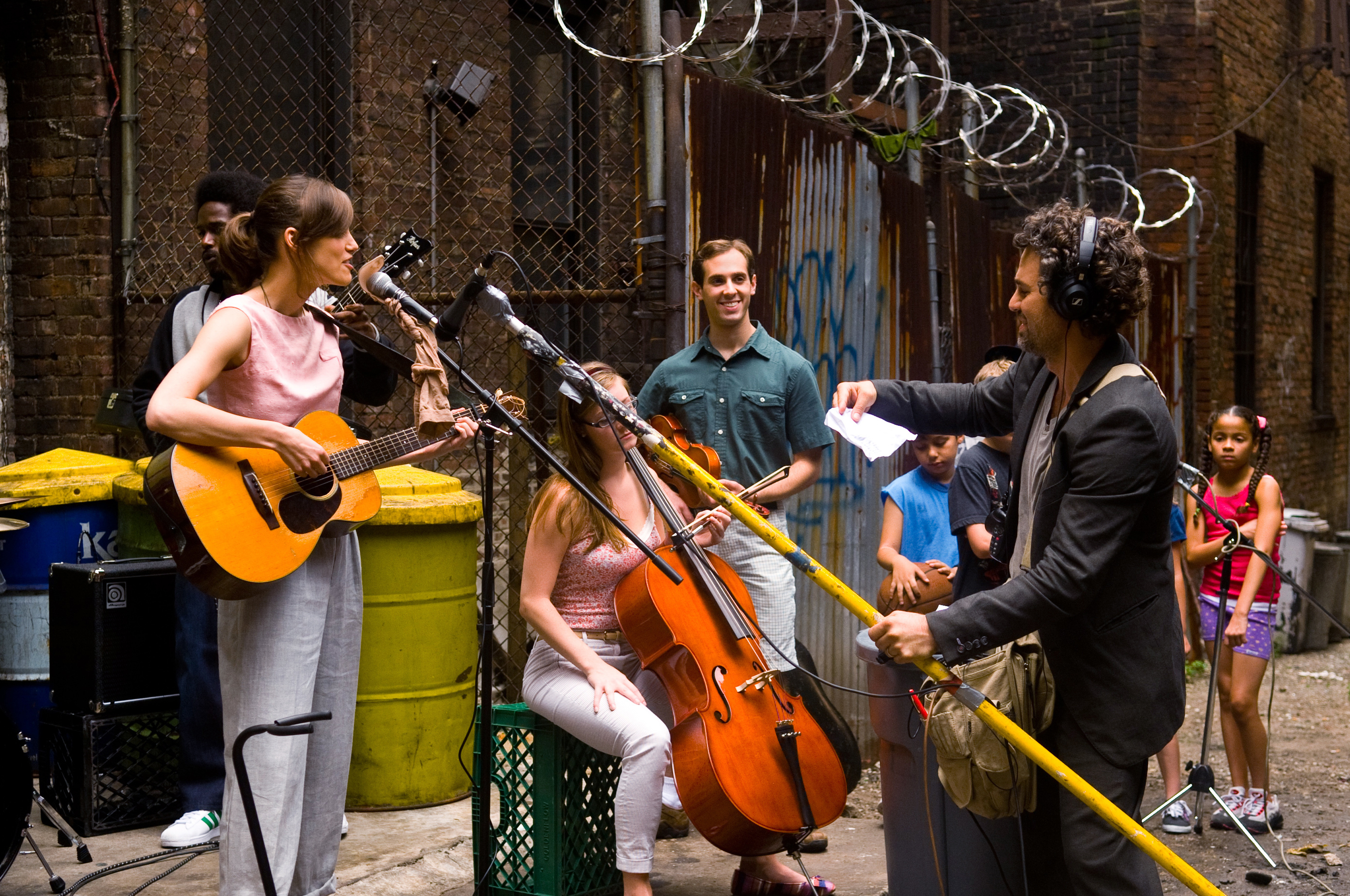
Begin Again tells the intertwining stories of two people whose lives have been ruined by the music industry. Dan Mulligan (Mark Ruffalo) has been sacked from his own record company by co-founder Saul (Mos Def) and has taken to the bottle to avoid finding focus in his life, much to the detriment of his relationship with daughter Violet (Hailee Steinfeld). He has a chance meeting in a bar with Gretta James (Keira Knightley), who has plenty of talent but no stage presence or confidence. He decides she has enough potential to turn into something more than just a singer at an open mic night, though her reluctance is powered by the recent breakdown of her relationship with Dave Kohl (Adam Levine), now seemingly destined for stardom.

Everything falls into place perfectly easily. Hurray.

Everything falls into place perfectly easily. Hurray.

Begin Again falls down where films like Inside Llewyn Davis or Carney’s last film Once succeeded for the simple reason that the songs and performances simply aren’t as good. Keira Knightley has found herself in an awkward situation. Her fame ultimately puts her as an a-lister actress and celebrity, with the ability to elevate an average film to blockbuster status due to her past successes. As a viewer, subconsciously there is an expectation that her ability as a musical performer should match that. Sadly, the studio has had this well in mind and ensured, through post-production, that her voice and entire backing track is polished to perfection, removing the intimacy seen in Glen Hansard and Markéta Irglová’s raw but powerful performances in Once. It’s an inevitable source of frustration as it is evident she has some talent, though what that is feels hard to decipher.

Ruffalo’s performance lacks conviction and the feeling that he has been really scorned by the music industry never fully materialises. Adam Levine plays his part coolly, almost as an exaggeration of his real-life personality (or what it is perceived to be). Steinfeld provides another assured performance in her supporting role, even though she doesn’t look like she’s ever picked up a guitar before. James Corden makes the most of his limited screen time.

It’s disappointing that overall this film fails to deliver on so many levels. The one thing it will be remembered for is the track “Lost Stars”, which was nominated for the Academy Award for Best Song in 2015. It is the one song here that stands up to those around which Once was built. However, one song does not a musical make; it is very unlikely this will follow its predecessor onto the West End and thus it is destined to be forgotten.

Begin Again is available for purchase now, or can be streamed on Netflix.

Paper Moon (Peter Bogdanovich, 1973)

One of the most sure-fire ways of making an enjoyable and effective film is to ensure the chemistry between the two lead characters is strong. What better way to achieve this than by casting a father and daughter in what is essentially a buddy film?

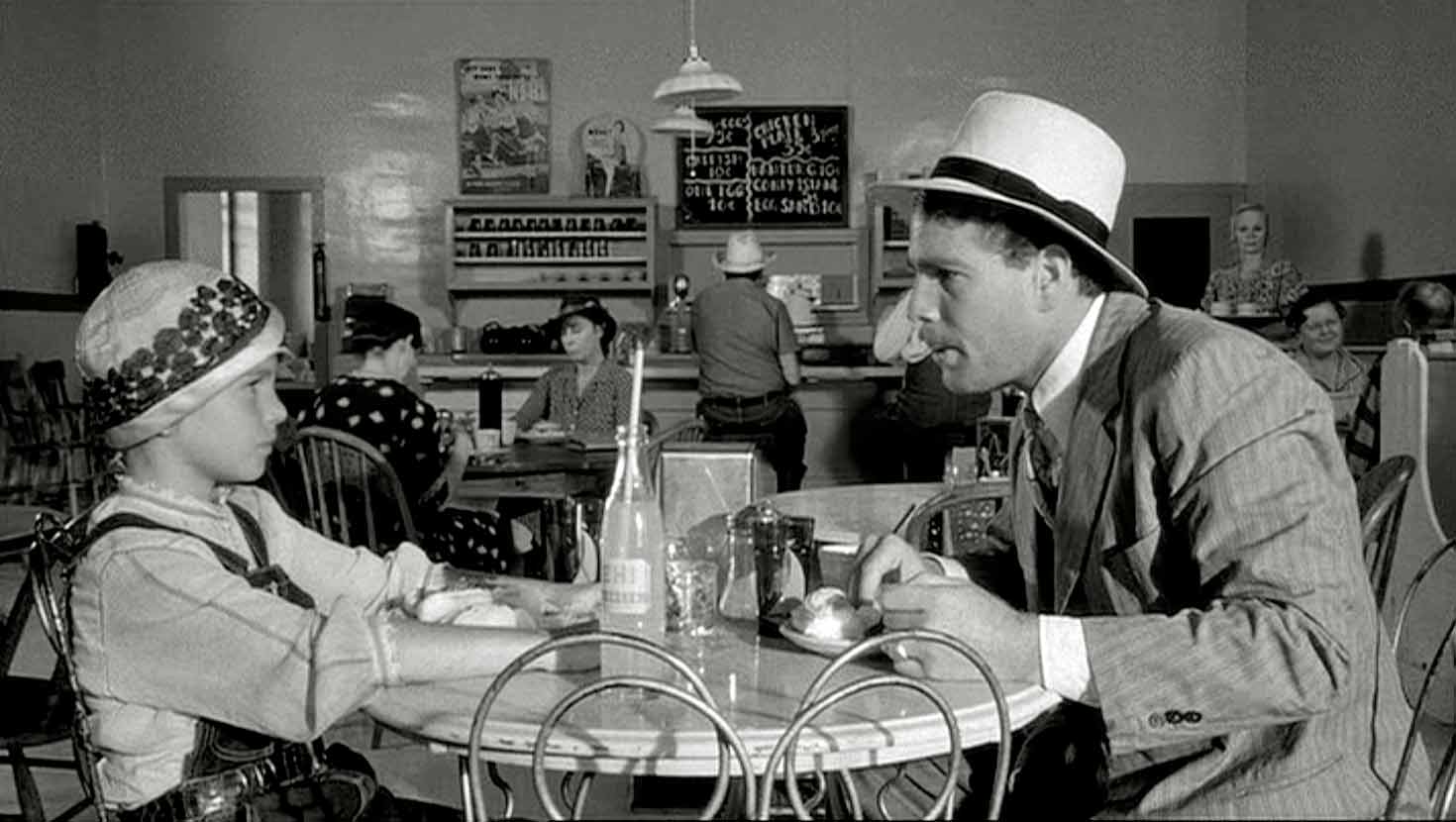
In Paper Moon, we follow the story of tomboy orphan Addie Loggins (Tatum O’Neal) as she is taken under the wing of con-man Moses Pray as he agrees to take her from her mother’s funeral to her aunt’s house in Missouri. She is convinced he is her real father, a point that is hinted at throughout, despite his continued denial of the fact. One thing that they’re both convinced of, however, is that they make a great pair as a scamming duo, going door-to-door convincing recent widows that their recently deceased husbands had ordered them a personalised bible. This serves as an excuse for them to go on a prolonged adventure of dishonesty, an adventure that seems far more appealing than their other limited options.

The chemistry between the O'Neals is excellent.

The chemistry between the O’Neals is excellent.

Much was made at the time – and has been since – of Tatum O’Neal’s performance. Indeed, she remains to this day the youngest person to win an Academy Award for Acting. At 1 hour, 6 minutes and 58 seconds, it is also the longest performance to receive a Supporting Actor/Actress Academy Award. It is playful and at times unintentionally comedic, but the playoffs with father Ryan are brilliant to watch. One memorable scene involves a long one-shot as they drive and argue, both livid at each other before turning it around to agree despite their tones still being that of an argument. It’s almost so good it doesn’t feel like they’re acting, although it allegedly took 39 takes over two days to get right.

One thing the film never answers is the question of whether the two are really father and daughter. The decision is made instead to leave it open as they head off into the sunset, presumably to continue much as they did in this film (a relationship explored in a panned TV sitcom spin-off series starring Jodie Foster). It is a nice decision – the fact they need each other, either as a father figure or as a driver to act responsibly, is to them more important than finding out this truth, at least at this stage in their relationship.

The bonus features are worth watching and provide a valuable insight into the making of the picture. The highlight is an anecdote involving Tatum repeatedly fluffing a line, resulting in her father having to eat countless amounts of waffles, much to the delight of Tatum. In fact, this was deemed so important as an example of their chemistry that the outtake was incorporated into the original trailer.

The cinematography by the Hungarian László Kovács adds a great deal to the authenticity of the film and its success in recreating 1935 Kansas. Coupled with a timeless soundtrack and a great attention to detail in the scenery and costumes, the result is that it transports the viewer completely into the environment, adding further embellishment to the excellent performances of both stars and their supporting cast.

A unique film with a lot to offer even the most ambivalent of viewers, this is one of the best re-releases of the year.

Paper Moon is available on Masters of Cinema Blu-ray now.

Masters of Cinema Cast – Episode 42: The Lost Weekend (Billy Wilder, 1945)

I had the pleasure this week of recording an episode of the hugely popular and entertaining podcast Masters of Cinema Cast with Joakim Thiesen. We talked at great length about the 1945 Billy Wilder film The Lost Weekend.

Here’s the link.

Give it a listen! Hope you enjoy it!

Sabrina (Billy Wilder, 1954)

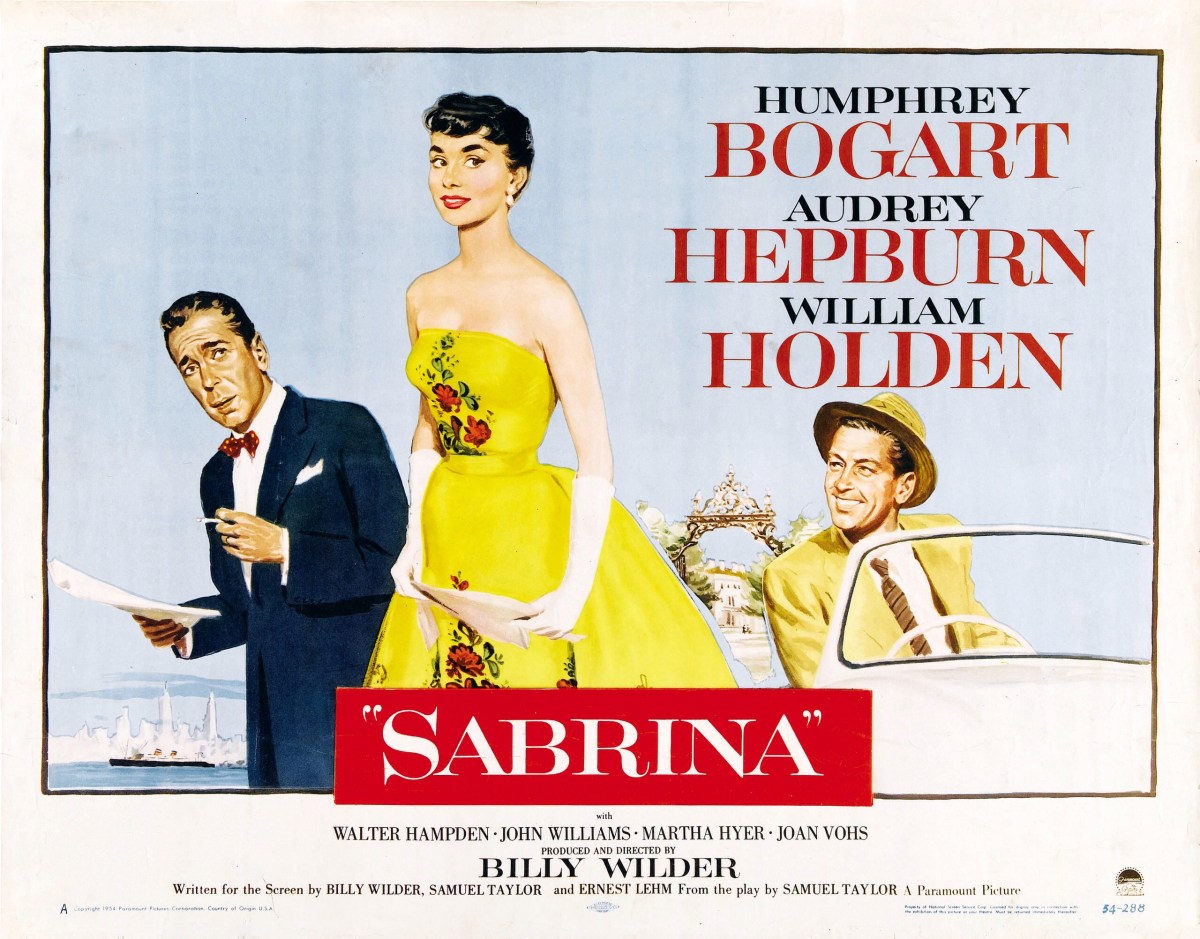
In 1954, Audrey Hepburn was at the start of a run that saw some of her most popular roles, having been nominated for an Academy Award for her role in Funny Face the year before and also winning a Tony Award for her title role in the stage production of Ondine in 1954. Sabrina’s release saw her cement her position as a global star, providing an Academy Award nomination for her role, a win for the costume design for Edith Head [1] and garnering critical and commercial success worldwide. 

[SPOILER ALERT] 

The following paragraph summarises the synopsis, but potentially has spoilers for the first fifty minutes of the film. I’ve not seen the trailer, but I imagine it reveals more. Also, the film was released 61 years ago, so it’s hard to complain about spoilers. Skip it if you’re concerned. 

Audrey Hepburn stars as title character Sabrina Fairchild, the young daughter of the chauffer to the Larrabee family. Sabrina has been in love with the playboy David Larrabee (William Holden) all her life, despite the fact he barely notices her. Sabrina begrudgingly agrees to go to Paris to attend a culinary school, but on her return two years later she is a completely changed woman, full of style, charm and sophistication. Inevitably, David immediately takes notice, and his attraction to Sabrina jeopardises a pre-arranged marriage that has been organised to benefit the family business, much to the dismay of workaholic older brother Linus (Humphrey Bogart), who formulates a plan to get the deal back on track.

[SPOILERS DONE]

It marked the first time Hepburn had worked with Billy Wilder, who was one of the most prominent film directors at the time. By this point he’d already notched up Double Indemnity (1944), The Lost Weekend (1945), Sunset Boulevard (1950), Ace In The Hole (1951) and Stalag 17 (1953), amongst others. His films had by this time won 8 Academy Awards and been nominated an additional 28 times. Ultimately, Sabrina would prove to be equally popular, adding an additional win and three further nominations to his belt.

The successes were completely justified. Wilder may be on comfortable territory with a fairly standard love triangle, but few director-screenwriters could inject so much life into the script. If you want to see Wilder capturing Hepburn at her most playfully charming, there are few finer examples than her journey back from the airport with Holden’s David. It’s perfectly written and delivered and is one of the film’s many highlights.

Much has been made of Bogart’s awkwardness on set. He was one of the most established actors in Hollywood and at the time was still one of the biggest box office draws. He frequently had disagreements with Wilder and Holden, and later publicly denounced Audrey Hepburn’s acting ability. The friction doesn’t really transfer to the screen, with all the actors apparently on top of their game. 

The only thing that stands out is the age of the actors in the love triangle. William Holden was 36, Hepburn 24 and Bogart 54. I agree to the much-discussed theory that Holden would have been better as the older brother Linus, with a younger actor appearing as David. Holden had proved to Wilder his depth as an actor in both Sunset Boulevard and Stalag 17 and by comparison the character of David seems a little shallow. He handles it well, but age-wise having Sabrina fall in love with a man 30 years her senior seems unusual.

Sabrina has been remembered as one of Audrey Hepburn’s finest moments. It’s a quintessential part of her filmography: she was in the process of becoming a star, was able to show off her acting ability, had one of the greatest directors of all time directing her and was wearing de Givenchy’s costumes for the first time. If you’ve seen Breakfast at Tiffany’s and My Fair Lady, then this is your next stop.

Sabrina can be purchased as part of the Hepburn Collection Blu-Ray boxset.

[1] The costumes that Audrey Hepburn wears are absolutely beautiful, much like the actress herself. Edith Head was credited with the Academy Award for Best Costumes, but there is an ongoing suggestion that they were mainly created by Hubert de Givenchy. Both were adamant that they were responsible for the costume design until their deaths, though the fact that de Givenchy became Hepburn’s go-to costume designer for much of her career suggests it is more than likely that Head had little involvement with her clothing. Whilst there were many other characters to dress, the Oscar was clearly given as a merit to Hepburn’s memorable costumes.

Destino (Dominique Monféry, 2003)

I recently saw the news that there will be a special exhibition opening at the Walt Disney Family Museum in San Francisco on 10th July. Running into January 2016, the exhibition will cover the bond between Walt Disney and surrealist painter Salvador Dali, two men whose creative outputs couldn’t seem further from one another, despite the fact they were good friends who remained in close contact throughout their lives.

destino3

You could take every frame of animation and hang it on your wall.

Were you to create a Venn diagram of the creative output of the two artists, the small ellipse in the middle would be represented by the bizarrely brilliant Destino. First conceptualised in 1946, the film was eventually released in 2003 to the general public as an unusual opening short for Calendar Girls.

Destino may have been realised and released 57 years after it was started, but it was worth the wait. It’s a beautiful, dream-like short that has been lovingly created by a team of Parisian artists based on the original storyboards by Dali and studio artists John Hench. I’ve watched it so many times. I won’t explain the storyline – it’s less than 7 minutes long so you don’t have much to lose.

The film can be watched online at YouTube here:

As a resolution snob, the very best way to watch this excellent work of art is to purchase Fantasia 2000 on Blu-ray“>. For some reason the fact it is included on this disc is barely mentioned anywhere other than on the boxart, with Amazon choosing to just describe the somewhat lacklustre film instead. I feel this is an injustice as something as important as this should be brought to the attention of anyone who might be looking. It really ought to show up when you search “Disney Destino” or “Dali Destino”. It’s a no-brainer.

It was nominated for an Academy Award for Best Animated Short in 2004, though both this and the extremely memorable Boundin’ from Pixar were beaten by a short called Harvey Krumpet, which you can watch here.

City Girl (F. W. Murnau, 1930)

One of the greatest shames of the history of film is the sheer amount of films directed by F. W. Murnau that have been lost. Dying at the young age of 42 following a car accident a week before the premiere of his final film, Tabu, he left a legacy of just 21 directed films, of which twelve survive. These include: Nosferatu (1922), Faust, (1926), Sunrise (1927), City Girl (1930) and Tabu (1931) – all classics. Without a doubt the most sought after lost film is 4 Devils (1928), one of only four American films he made before his untimely death. So as a result we are left with just three films from this latter period of his life. Sunrise is the most popular, having won the first Best Film Oscar (sort of [1]). The other two are readily available, and it is City Girl that I’d like to discuss today.

City Girl is a silent film released after the advent of talking pictures. The plotline covers a young farmer named Lem (Charles Farrell), who is sent by his father to sell the wheat crop in the city. After panic-selling the wheat as the prices dropped in value, he goes to a coffee shop and falls madly in love with waitress Kate (Mary Duncan). Soon after they get married and they set back to the farm to introduce her to his family. However, his father is bitterly disappointed with the cripplingly low price his son has sold his wheat for and in his anger struggles to accept Kate into the family.

Both leading actors have been captured beautifully in this shot.

Both leading stars have been captured beautifully in this shot.

What I found really unique about this film is the surprisingly modern portrayal of Kate by Duncan. She is certainly not a typical silent leading lady, and in fact throughout the film she is usually the most headstrong character. It works well as the mother of Lem is extremely passive and non-confrontational, further underlining Kate’s strength of character. Perhaps we could attribute this to the fact Katy is from the city and Murnau wished to portray city dwellers as a different beast to those from the country, but I prefer to assume it is because he wanted to show the world one of the first truly strong female lead characters. Indeed, Murnau even has a nod to a previous leading lady of his in the opening scene, with a woman looking suspiciously like Janet Gaynor’s wife from Sunrise trying to flirt with Lem on the train, only for him to give her the cold shoulder. It could be coincidence, but more likely it was a knowing nod to the audience to let them know it won’t be a repeat of his previous work – Lem looks so disinterested in her and this is underlined for the audience.

The whole film works really well, building to a ferocious storm-set climax. It must have been something to do with the pacing, but I was on the edge of my seat by the end hoping things worked out. It was a pleasure to see such a great piece of cinema for the first time and I’m only sad I won’t be able to see it again.

I’m glad I saw this. It’s the first Murnau film I’ve seen that isn’t common to the wider audiences. Whilst Sunrise and Nosferatu are must-sees, if you liked them then you probably should see what else his catalogue has to offer. It won’t take long to see everything that’s available, but City Girl is a great place to start. The next Murnau film I’d love to see Masters of Cinema release is Der Letzte Mann, a 1924 German silent picture that is currently unavailable in the UK. Come on, you know it’s right.

City Girl is available on Masters of Cinema dual-format Blu-ray and DVD now.

[1] The first Academy Award for Best Film is disputed because there were two awards given out on the night that were never again awarded. One for Outstanding Picture went to Wings and the other for Unique and Artistic Production went to Sunrise: A Song of Two Lovers.

[2] Mary Duncan was, incidentally, the last known person to own a copy of the film 4 Devils, which she subsequently lost… but we’ll forgive her for that as she is so good in this film.

Big Hero 6 (Don Hall and Chris Williams, 2014)

As the first Disney-animated motion picture based on Marvel IP, Big Hero 6 was always going to be carefully scrutinised by both extremes of the target audience. At one end you have the die-hard Marvel comics fans, keen to see their beloved heroes done justice on the big screen. At the other end you’ve got fans of Walt Disney Studios, worried that hot on the heels of Frozen, Tangled and Princess and the Frog, Big Hero 6 might not be for them [1].

For the uninitiated (you mean you never read the comics!?), the story focuses on 12-year-old parentless robotics genius Hiro, who is being looked after by his aunt, along with his older brother and sort-of-guardian Tadashi, who also studies robotics at the local university. When further tragedy strikes through the death of his brother, he is left to pick up the pieces with the help of his brother’s greatest work – healthcare-robot Baymax. Banding together with Tadashi’s fellow student friends, Hiro goes on an adventure of vengeance and self-development as he finds taking matters into your own hands can lead to some shocking revelations.

IMG_0420

So the first thing to clarify is that the Big Hero 6 comics were never very popular. Very few people had heard of them before the film was announced, sparking a huge clamber across the internet to find the comics, read them, then form an opinion on why Disney was going to ruin them. They weren’t completely unknown, but they were nowhere near as popular as, say, Spider-man or X-Men. It was interesting to see the negative reaction the series got when it was announced. It’s amazing how many experts on everything we see now that people can form their arguments in one window whilst Google is open in another. I was one of the people who bought post-announcement – I managed to pick up all five of the 2008 comics and I read straight away (the original three-part series was by then already prohibitively expensive, much like the five-parter is now). They were obviously aimed at children, but were reasonably fun and easy to read. I thought they were a good choice for Disney to tackle, with plenty of characters and merchandising opportunities.

Secondly, I don’t know if you’ve seen any of the recent Marvel Animation films, but they are by-and-large terrible. I picked up the Ultimate Avengers steelbook about a year ago and watched one of the films, but couldn’t get through the second. The animation is really poor and the voice acting is clumsy and difficult to listen to. So if you’re a Marvel fanboy and want to square on an animated film that doesn’t do your source material justice, you should start there.

Finally, the recent films have been very successful, and I’m sure Frozen’s enduring popularity caused a delay to the release of Big Hero 6. I mean, it’s now on the West End in sing-along form! They just play the film on loop there all day. It has been out for 18 months! Princess and the Frog and Tangled were very successful too. But so was Wreck It Ralph, and that definitely wasn’t aimed at the female market. Neither was Bolt (directed by Chris Williams, by the way). Nor were half of the Pixar releases. Or, say, How to Train Your Dragon or Despicable Me. What I’m saying is – who knows what is going to capture the imagination of the children. Probably the main thing to go for is a great storyline, great characters and some top-drawer visuals. You get all three in abundance here.

I think the animation is the really mind-blowing element of a film that scores highly across the board. It’s fast-paced without ever feeling like it’s trying to lose you in action. The detail given to the plethora of uniquely designed characters is notable, too, and this serves to make each character feel worthy of your investment. If they’re going to spend that long making Hiro’s hair look so awesome, he must deserve a bit of attention on an emotional level too.

The storyline, to be fair, isn’t particularly original. I didn’t feel it was too detrimental overall. Its target audience is definitely under 12 years of age, and it was pitched perfectly.

There was, of course, a post-credits sequence that gave us some juicy details and opened the door to a sequel. I really hope this becomes a reality. I’m sure there are plenty more storylines to be told about these characters yet.

Big Hero 6 is out in cinemas in the UK now, and it has also just this week been released on Blu-ray and DVD in USA. If you’re quick and keen, you could buy the 3D Blu-ray steelbook from Zavvi.

[1] Anatomy of an unprofessional reviewer – I’ve deliberately put in several sweeping and largely incorrect statements in the first paragraph to allow me to argue against them later in the review. Oh how clever I am.

The Apartment (Billy Wilder, 1960)

I’ve been on something of a Billy Wilder binge recently, having recently sat down and enjoyed Ace in the Hole, The Lost Weekend and Double Indemnity (three excellent Masters of Cinema releases), Oscar-winning Sunset Boulevard and the classic Some Like It Hot. It was just a matter of time before I picked up The Apartment, which is considered to be amongst his best works. When I saw it in my local FOPP for £4 it was an insta-purchase [1].

The story is the perfect basis for a romantic comedy. Jack Lemmon plays “Buddy” Baxter, a lonely man working at an insurance company in New York. However, he has a secret that is allowing him to rise up the corporate ladder much faster than his peers – he is loaning his apartment out to senior members of the company so they can carry out extra-marital affairs. However, when company boss Jeff F. Sheldrake (Fred MacMurray) hears about it, he decides that rather than reprimand Baxter, he is going to make use of his hospitality himself. As bad luck would have it, the woman he is planning to take there is the woman of Baxter’s dreams: Fran Kubelik (Shirley MacLaine). With the next promotion in the bag and his career blooming, Baxter has to make the most difficult choice of his life: is his love life more important than his career?

The 1960 film won the Best Film, Best Director, Best Writing (Original Screenplay), Best Film Editing and Best Art Direction (Set Decoration, Black and White) Oscars, whilst being nominated for a further five. This was in a relatively slow year for films, though there were a couple of highly reputable releases: Psycho (no wins) [2] and Spartacus (four wins). The Apartment was the big winner that year.

Probably the most surprising result on the night was Jack Lemmon missing out to Burt Lancaster (Elmer Gantry) in the Best Actor category, such was the brilliance of his performance. I think there’s a risk when looking back at Lemmon’s career that we now see him as just a comedic actor. That couldn’t be further from the truth and if you want to know why then watch this film. Kevin Spacey dedicated his Best Actor Oscar win in 1999 for American Beauty to Lemmon’s performance in this film, and there are a lot of similarities to both the characters and their characterisations. Baxter is a man used by all those around him, but yet is happy to take his lot in life. There is a dark humour to his actions, knowing they will have negative repercussions on his life but either afraid or unable to say no. There are moments of real hilarity, all centred around Baxter, but by the final third of the film it is way beyond that and as a viewer it was quite distressing seeing how much he was hurting himself.

IMG_0406

There is also a lot to be said for a comedy that is happy to centre a huge period of the plot around a botched suicide attempt by one of the main characters, whilst characterising five of the six leading male characters as adulterers (along with their willing female partners). There is a reason why this Christmas-set romantic comedy isn’t a perennial favourite over the festive season – it’s just too depressing!

So it’s six watched and six enjoyed films in the Billy Wilder back-catalogue. I’ve still got some big guns to go; Sabrina, Stalag 17 and The Seven Year Itch will hopefully be sourced soon at a reasonable price. I doubt I’ll find a bad one any time soon. The Apartment is available to buy now online, though as stated above I doubt you’ll find anything cheaper than the £4 price point in FOPP at the moment.

[1] = FOPP is still an excellent source of films and is still my favoured physical-purchase shop when I need to just have a browse and see what’s available. It’s nice to use my own instincts and memory to recommend a purchase to myself. You know, like the old days when you weren’t force-fed what to buy next by an algorithm.

[2] The letter below is some recomendation, from Hitchcock himself. What a wonderful thing to have been unearthed.

IMG_0405

The Theory of Everything (James Marsh, 2014)

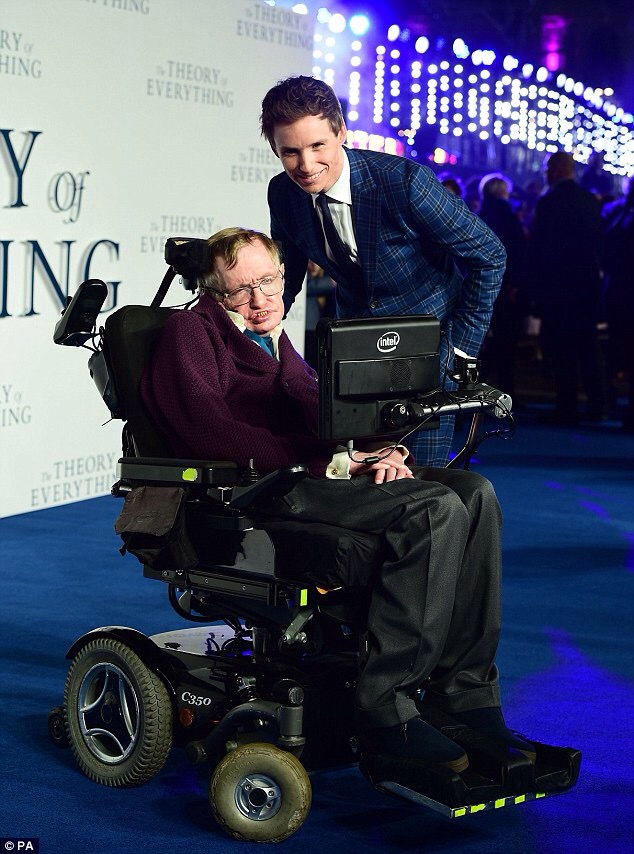
I watched the Stephen Hawking biopic in early February 2015. My challenge was to watch it without influence from the media frenzy surrounding the film and, in particular, Eddie Redmayne’s performance in the lead role. It was fairly easy to block it out, such is the conviction in his performance and the exquisite way it has been captured by director James Marsh and the excellent team of people that helped craft this fantastic film.

In case you’re unaware, Professor Stephen Hawking is a world-renowned theoretical physicist and cosmologist whose book of personal theories A Brief History of Time sold over ten million copies worldwide. He suffers from motor neurone disease (MND), which set in whilst he was still studying at university, and he is now all but completely paralysed. It is a revelation that he is even alive today – he was diagnosed in 1963 and given two years to live. The film tells the story of him reaching university, falling in love with his first wife and mother of his three children Jane Wilde, and becoming the most famous theoretical physicist of the modern world.

2015/02/img_0286.jpg

A little was made in the build up to release of the choice to cast an able-bodied actor as Hawking. Obviously these complaints come from people who haven’t seen the film because you just can’t cast someone with disabilities as Hawking when the first third of the film is spent on his life before his terrible motor neurone disease set in. I think these comments have gone away now as more and more people see the film.

Frankly, Redmayne’s performance was astonishing. He completely nails it, working as both a great piece of acting and an uncanny impersonation. The frustration that must be felt by the thousands of sufferers of MND is channelled directly to the viewer by coupling some intimate close-up camera work with some exceptional acting. If Redmayne wins the Oscar next month it will be because of the latter parts of the film.

Just as important is the characterisation of his wife, whose autobiography this film is based on. It’s a well-balanced treatment, with her choices portrayed honestly but respectfully by Oscar-nominated Felicity Jones. It’s a strong person that sticks around in such testing conditions and nobody can be judged on the choices they make. Just as with Hawking, she is treated with the utmost respect.

2015/02/img_0285.jpg

I’m greatly appreciative that a fantastic film has been made on Hawking as I didn’t think the eponymously titled 2013 documentary quite did his story justice. It too heavily concentrated on his current way-of-life and all the problems that it brings, rather than the works of genius he has brought to the world and the battles he fought to become so popular. It was, for me, a missed opportunity – a story that needs to be told, but one that shouldn’t take precedence over the one told in The Theory of Everything.

I’m not sure how closely the film sticks to the facts, as I’ve not yet read Travelling to Infinity: My Life with Stephen (the book by Jane Wilde Hawking on which this is based). Obviously not every last thing that features in this film will be a perfect account of what happened, but that freedom is allowed in biopics. As with The Imitation Game, the most important thing to do is tell a great story, or it falls short of the mark as a piece of cinematic art. Actually, I think The Imitation Game was a better film in general, and Cumberbatch edges it on the acting front for me, but I doubt the Academy will agree and to be honest that’s far more important.

The Theory of Everything is out now at cinemas worldwide.