Film review – Jackie (Pablo Larraín, 2016)

One of the most shocking moments of the 20th Century was the assassination of U.S. President John F. Kennedy on 22nd November 1963. Driving along Dealy Plaza in the early afternoon, two shots were fired by a single assassin. The enduring image is that of his wife, First Lady Jackie Kennedy, as she scrambles to protect her husband, head in lap, striving to comprehend what had just happened to her. It was a tragedy.

Portman delivers a stunning performance


Central to Pablo Larraín’s biopic of Jackie Kennedy is a stunningly affecting performance from Natalie Portman. She’s capable of being both isolating and isolated within moments, in one of the most complex performances you could ever wish to take on as an actor. Portman doesn’t need to remind us of her capabilities, which we’ve known about since her debut as a 13-year-old in Luc Besson’s Léon: The Professional. 

The film is delivered in the form of Jackie Kennedy in an open interview to a nameless Time Magazine reporter (Billy Crudup). She reminisces about her television programme “Inside the White House with Mrs John F. Kennedy”, in which she effused about her collection of presidential memorabilia (as well as her abilities as an interior designer) though the story predominantly focuses on the fateful day in Dallas and the immediate aftermath as she reinvents herself as the director of her husband’s funeral, an event she hopes will rival – or at least evoke the memory of – Abraham Lincoln.

There are some solid supporting roles from the likes of Richard E. Grant, Peter Sarsgaard and the late John Hurt. Greta Gerwig also appears, though I can’t say she is in the same category.

One jarring aspect of the film is the unusual score, provided by the usually brilliant Mica Levi. It’s surprisingly sinister and usually doesn’t match the onscreen visuals, tonally or stylistically. This isn’t Levi’s fault. She’s just doing what she does best (see Under the Skin for her best scoring work). It’s jarring and made me long for something a little more conforming. I’m amazed that it has been nominated for an Academy Award for Best Score.

Portman, though, is very much deserving of her nomination. It’s a strong year of competition, but she has every chance of taking home her second statue at the 89th Academy Awards.

A must see.

Film review – Moonlight (Barry Jenkins, 2017)

Barry Jenkins’s cinematic tryptich, which serves as a revealing cross-analysis of homosexuality in the black America community, is a film that will do nothing if not leave a lasting mark on your memory. It’s complex. It’s provocative. It’s beautiful. It’s absolutely brilliant.

Split into three equal sections, the film comprises extended vignettes based around Miami-based Chiron. As a child he is portrayed by Alex Hibber at a time in his life where he is a loner, lacking support from his drug-addict mother (Naomie Harris) and feeling isolated at school. As a college student he is portrayed by Ashton Sanders as he struggles to cope with his mother’s growing addiction but also has his first sexual encounter with a childhood friend. The third section of the film covers a late-20s Chiron (Trevante Rhodes), now much hardened to life and living away from his home city in Atlanta, but returning to visit his mother and that same childhood friend.

Much like Lion earlier this year, Moonlight is a triumph due to several actors portraying its central character at different stages of his life. Each of the performances is well nuanced, but build up a complex picture of Chiron, the pay-off being in the final third as we realise what he has become is every bit influenced by what we’ve seen of him as a child.

Moonlight

Where Moonlight really excels though is its ability to steer away from the stereotypes almost every mainstream film portrays these types of characters as. This is a tale about a homosexual black American which allows neither the colour of his skin nor his sexuality to define him.

Aside from the lead character, there is an exceptional contribution from Mahershala Ali as Juan, a drug-dealer who comes across a young Chiron hiding from some bullies in a property he owns. Rather than what we’d have come to expect, which would probably involve some amount of grooming and exploitation, instead we see him become a father figure for the child, teaching him how to swim and offering him a place to sleep and food to eat. It’s refreshing to see a character exist in this manner and hopefully this is a sign of things to come at cinemas. It’s no surprise that it has earned Ali an Oscar nomination.

It’s a personal film that deserves all the plaudits it has received. With a timely release during Black History Month, a film that challenges the status quo has to be welcomed with open arms by the forward thinkers of the world, even if it seems like backwards thinking is taking over the world.

Short film review – The Ugly Duckling (Jack Cutting and Clyde Geronimo, 1939)

This Walt Disney Productions short animation fell under the Silly Symphony banner when it was released in 1939. It went on to win the Academy Award for Best Animated Short, the eighth in a run of eight Walt Disney films to do so.

It’s a fine little episode that tells the tale of a swanling that somehow ends up in a nest of ducklings, and is immediately shunned and ridiculed for being different to his surrogate brothers and sisters. 

A duck? Nah you must be quackers.

It curtails the original Hans Christian Andersen story by removing the whole extended pain of being without a family for around a year, skipping straight to the point where he is found by a swan family, presumably his own. In doing so, they miss out the point where he turns into an adult swan and the ducks are in awe of his beauty.
In its short sub-nine minute running time, it manages to fit in a surprising amount of substance. This is, for the whole part, a tale about an orphan who is unwanted by his new family. This would surely resonate with anyone in any element of this situation, and there is no holding back when the mother and father have a full-blown argument in front of the innocent swanling. Indeed, there’s a suggestion from the drake that since he looks nothing like the swan then perhaps his duck wife has been sleeping around. Or perhaps I’m reading too much into it.

The animation is, inevitably, a thing of beauty. Two of Disney’s Nine Old Men were on animation duty (Milt Kahl and Eric Larson) and it certainly has the feel of one of their classic films (it was released between Snow White and the Seven Dwarves and Pinocchio). There’s a certain amount of warmth you find in these old animations that has never been replicated.

It’s probably not the best short releases around this time from Walt Disney Studios, but it is deserving of all the praise it has received over the years. Why not revisit it? You’re only 78 years late to the party!

Academy Award for Best Song 2017

Here’s a quick look at the songs nominated for Best Song at the 89th Academy Awards.

My money’s on either of the La La Land songs, but could there be an upset on the cards? Surely Sting is out of the running before he discussions have even started.

What do you think?

La La Land – “City of Stars”

La La Land – “Audition”

Moana – “How Far I’ll Go”

Jim – “The Empty Chair”

Trolls – “Can’t Stop The Feeling”

Short film review -Steamboat Willie (Walt Disney, 1928)

If you’ve seen a Disney Animation Studios film recently, then you’ll have noticed a short clip of the beloved Mickey Mouse captaining a boat, whilstling a little tune and looking like the happiest little mouse you’ve ever seen. It’s quintessential Mickey, summing up everything about what we know and love about him, in what were the first moments the world ever shared with him.

The year was 1928 and Walt Disney was reeling from a fall out with his business partners that had left him without his prize asset – the increasingly-popular Oswald the Lucky Rabbit.

Walt Disney was determined that his comeback would be the first cartoon to synchronise pictures and sound, and this determination was rewarded with unprecedented popularity. The rest, for want of a better phrase, is history.

The film itself is a sweet little vignette that sees Mickey get musical on a group of farmyard animals, and is mostly harmless, slapstick fun. Aside from the opening scene, this isn’t really a Mickey we’re used to in the 21st Century, though it is a much more savoury offering than what was just around the corner with the follow up films (the most shocking of which is the smoking and drinking version of Mickey portrayed in The Gallopin’ Gaucho, released later in 1928.

It’s hard to believe that from this point onwards it was built into one of the greatest icons of the 20th Century, but seeing is essential viewing for anyone who sees themself as a fan of Disney.

Film review – Sing (Garth Jennings, 2017)

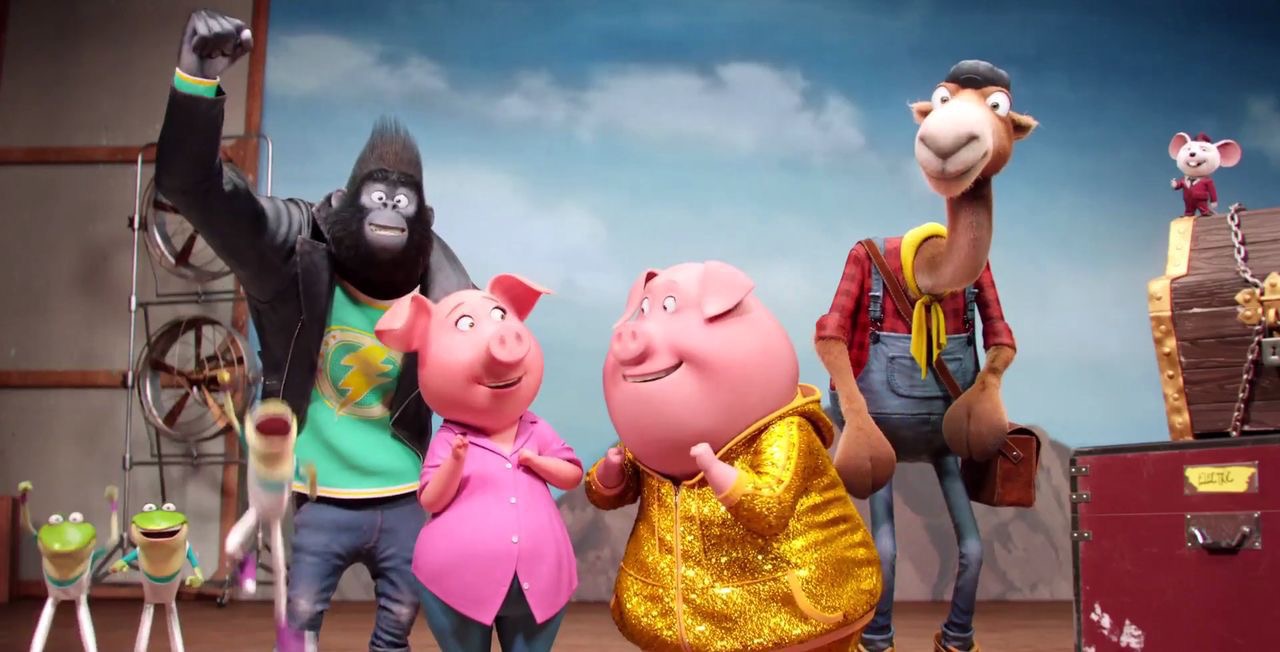
Good, harmless fun is how I’d describe the latest release from Illumination Entertainment. We don’t learn much about ourselves and we don’t get any kind of social commentary. The characters don’t stand out in terms of being inspirational, nor do they have the look of characters that will become favourites in years to come. But that doesn’t mean it’s a bad film and it doesn’t mean that the children it is aimed at won’t have a great couple of hours at the cinema if they see it.

The story follows Buster Moon (Matthew McConaughey), a koala who owns a theatre that is running out of money. As a last ditch effort, he plots to hold a singing competition, but his assistant accidentally advertises a $100,000 prize fund instead of $1,000. This sparks the interest of a range of hopefuls that make up our lead cast: shady mouse Mike (Seth MacFarlane) who specialises in Sinatra-style crooning; shy elephant Meena (Tori Kelly) who suffers from stage-fright and nerves; porcupine Ash (Scarlett Johansson), a goth-teen who is hampered by the fact she is performing in the shadow of her self-centred boyfriend and needs to shine herself; cockney gorilla Johnny (Taron Egerton), stuck in a family of mobster gorillas but wanting to follow his own dreams; and pig Rosita (Reese Witherspoon), a housewife who is so busy looking after 25 children and a hardworking husband that she has no time to pursue her dream of singing on stage. There’s also a group of cute, small Japanese dogs who evoke the worst of J-Pop culture to hilarious effect.


The universe these characters live in is a world of animals that looks like Zootropolis’s lazy and less charismatic younger brother. It’s a shame because if this had been released three years ago, the plethora of ideas would have brought the opening scenes to life, but in the wake of Disney’s triumphant film that is now almost a year old, it just doesn’t quite feel like it’s hitting the mark. It begs the question of which was storyboarded first and was there anyone involved in both projects that might have leaked information one way or the other.

One of the biggest flaws is the casting of McConaughey in the lead role. The character calls for a certain tone of charisma that simply isn’t delivered. This is surprising, because he has developed into a fantastic actor over the last decade, but it does highlight that voice-over acting isn’t something you can simply turn up and expect to be good at.


There are some hilarious moments in the film, which is what we’re looking for. One highlight comes from mouse Mike, who at one point sings Sinatra’s My Way – brilliantly – whilst a helicopter circles above, causing him to lift off the ground and then circle over the audience in a supremely stylish landing. It’s great setpiece, even if the build up is a tad protracted.

But that is what the film is about – big set pieces that will be fondly remembered, even if the overarching plot doesn’t deliver any great payoffs. A solid and enjoyable effort that is quickly slipping from my memory.

Film review – I, Daniel Blake (Ken Loach, 2016)

Of the many great films released in 2016, few left their mark on my conscience quite as much as Ken Loach’s “I, Daniel Blake”. I held off from reviewing it at the time, but decided to revisit it recently for a second time to make an honest attempt at reviewing it.

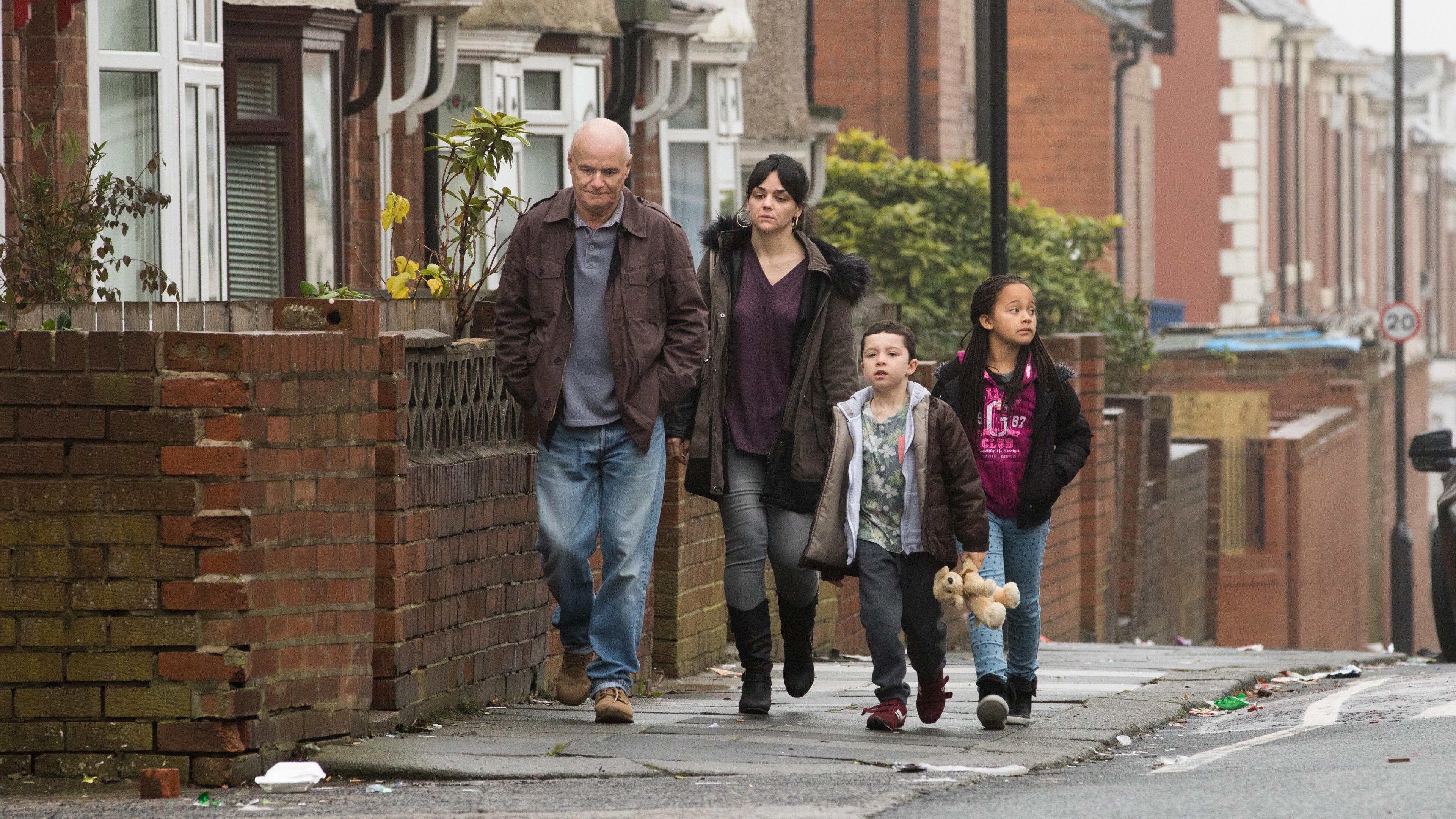
The film follows Daniel Blake (Dave Johns), a 59-year-old joiner on the living in Newcastle. He finds himself out of work after an suffering a heart attack has forced him to take a break, with his doctor telling him he cannot return for fear of another attack. He is navigating Britain’s complex benefits system in search of Employment and Support Allowance, for which he needs a Work Capability Assessment (undertaken by government workers and is completely separate from his own doctor’s assessment). Whilst at the job centre, he notices single-mother-of-two Daisy (Hayley Squires) having an argument in the job centre. They soon strike up an unlikely friendship as they continue to come up against brick walls that force them to make increasingly tough decisions.

I, Daniel Blake is social commentary at its absolute best

Typical of Loach’s output, many of the actors involved in the film are amateurs. This might give the film a rough-around-the-edges quality but equally provides a realism as the story develops. Knowing this prior to watching the film allowed me to give it some leeway on the performances.

The plot developments as the two characters get embroiled in complication after complication are akin to a horror film. Our lead character is behind on his bills and struggles to use computers, meaning he can’t navigate the government websites to retrieve the correct forms to fill in to access the benefits he’s entitled to. It’s overwhelmingly frustrating and will be familiar to anyone who has ever found themselves in a similar situation.

Squires’s performance is absolutely striking. The most harrowing memory of the film for most viewers will inevitably be a highly memorable scene at the local food bank. Rightly so – it’s a performance something taken to an entirely different level by her delivery. It’s unsettling, which is obviously its intention. She’s a great find in her debut role and will undoubtedly go on to even greater roles.

But the film isn’t about the actors, or about delivery of certain lines. It is solely a commentary on the broken support systems provided for the many 1000s of people in Britain who they should be helping. There are a small few people who endeavour to exploit a system, but in doing so they provide an excuse for those in charge to make the processes overly complicated for everyone.

Far more disturbing than this, the small few that do successfully exploit the system are handing media outlets the ammunition to criticise the rest, tarring them all with the same brush. Shamefully, most of Britain believe what is written in the media and assume the worst of people who are in dire need of assistance.

For all its shortcomings, this film shines a light on some of the most pressing issues facing a country that is supposed to be in a fantastic state. Whether you like it or not, the message is one that simply can’t be ignored.

La La Land DOES clean up at the Academy Award nominations

Well, I said it probably wouldn’t happen, but I couldn’t be happier that it did. La La Land has managed a whopping 14 nominations today in the Academy Award nominations, equalling the record held by All About Eve and Titanic.

It should be noted that since two are in the Best Song category, where it will effectively compete against itself, but that still leaves plenty of scope for it to miss out on a couple and still win big.

If you’ve not watched it yet, then make sure you do! Then, once you’ve done that, read my review here.

Academy Awards 2017 – Full list of nominees (text only)

Here’s a full list of the nominees for the 89th Academy Awards, announced earlier today ahead of the awards ceremony on 26th February 2017.

Best picture
“Arrival”
“Fences”
“Hacksaw Ridge”
“Hell or High Water”
“Hidden Figures”
“La La Land”
“Manchester by the Sea”
“Lion”
“Moonlight”

Lead actor
Casey Affleck
Andrew Garfield
Ryan Gosling
Viggo Mortensen
Denzel Washington

Lead actress
Isabelle Huppert
Ruth Negga
Natalie Portman
Emma Stone
Meryl Streep

Supporting actor
Mahershala Ali
Jeff Bridges
Lucas Hedges
Dev Patel
Michael Shannon

Supporting actress
Viola Davis
Naomie Harris
Nicole Kidman
Octavia Spencer
Michelle Williams

Best director
Denis Villeneuve
Mel Gibson
Damien Chazelle
Kenneth Lonergan
Barry Jenkins

Animated feature
“Kubo and the Two Strings”
“Moana”
“My Life as a Zucchini”
“The Red Turtle”
“Zootopia”

Animated short
“Blind Vaysha”
“Borrowed Time”
“Pear Cider and Cigarettes”
“Pearl”
“Piper”

Adapted screenplay
“Arrival”
“Fences”
“Hidden Figures”
“Lion”
“Moonlight”

Original screenplay
“Hell or High Water”
“La La Land”
“The Lobster”
“Manchester by the Sea”
“20th Century Women”

Cinematography
“Arrival”
“La La Land”
“Lion”
“Moonlight”
“Silence”

Best documentary feature
“Fire at Sea”
“I Am Not Your Negro”
“Life Animated”
“OJ: Made in America”
“13th”

Best documentary short subject
“Extremist”
“4.1 Miles”
“Joe’s Violin”
“Watani My Homeland”
“The White Helmets”

Best live-action short film
“Ennemis Interieurs”
“La Femme et le TGV”
“Silent Nights”
“Sing”
“Timecode”

Best foreign language film
“A Man Called Ove”
“Land of Mine”
“Tanna”
“The Salesman”
“Toni Erdmann”

Film editing
“Arrival”
“Hacksaw Ridge”
“Hell or High Water”
“La La Land”
“Moonlight”

Sound editing
“Arrival”
“Deep Water Horizon”
“Hacksaw Ridge”
“La La Land”
“Sully”

Sound mixing
“Arrival”
“Hacksaw Ridge”
“La La Land”
“Rogue One”
“13 Hours”

Production design
“Arrival”
“Fantastic Beasts and Where to Find Them”
“Hail Caesar!”
“La La Land”
“Passengers”

Original score
“Jackie”
“La La Land”
“Lion”
“Moonlight”
“Passengers”

Original song
Audition (La La Land)
Can’t Stop the Feeling (Trolls)
City of Stars (La La Land)
Empty Chair (Jim)
How Far I’ll Go (Moana)

Makeup and hair
“A Man Called Ove”
“Star Trek Beyond”
“Suicide Squad”

Costume design
“Allied”
“Fantastic Beasts”
“Florence Foster Jenkins”
“Jackie”
“La La Land”

Visual effects
“Deepwater Horizon”
“Doctor Strange”
“Jungle Book”
“Kubo”
“Rogue One”

Short film review – Donald in Mathmagic Land (Hamilton Luske, Wolfgang Reitherman, Les Clark, Joshua Meador)

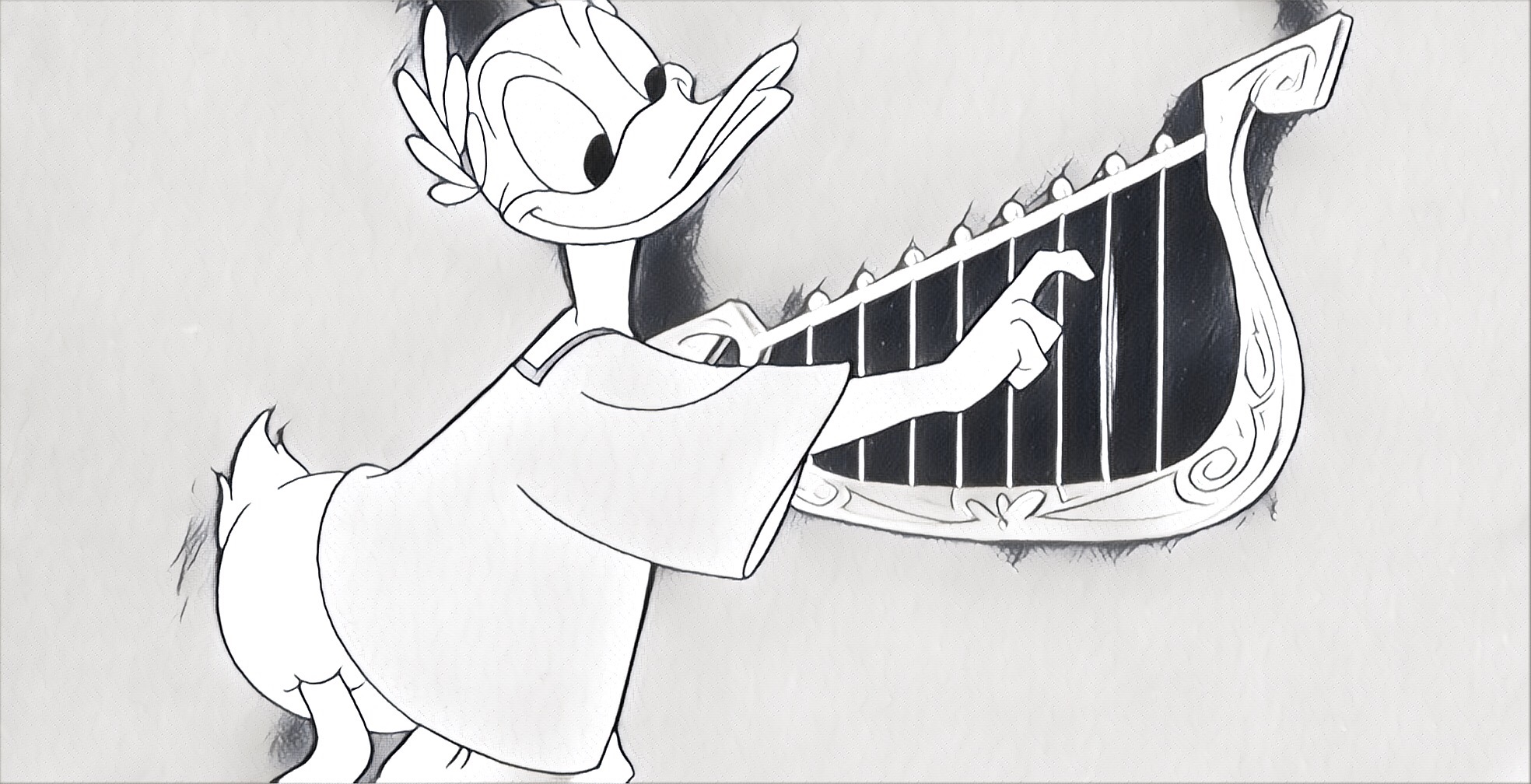
As educational short films go, Disney’s animation about their ever-stressed duck taking a trip through a land filled with mathematical tales, quips and facts is pretty darn entertaining.

Released in 1959 alongside a poorly-remembered live action film called Darby O’Gill and the Little People, the film went on to receive a nomination in the Best Documentary – Short Subject category at the Academy Awards. [1] [2]

It charts Donald’s journey through Mathmagic Land, as guided by the voice of a spirit (Paul Frees). He learns about the origins of maths, starting with Pythagoras in Greece, then the pentogram and the golden section, the appearances of the golden section in nature, architecture and art, the application of maths in music and its relevance to games (especially chess, which features a nice reference to Alice Through The Looking Glass).

That the film covers a relatively thorough history of one of the most important and fundamental basic principals of life and remains interesting is somewhat of a miracle, so much so that the film went on to be used as an educational tool in schools across America. It’s easy to see why. Its relevance endures and it would still be useful in the modern education system.

Admittedly, the style is now somewhat dated but it has a classic feel of 1950s era Disney about it. This is hardly surprising. Two of Disney’s “Nine Old Men” worked as directors on the film. [3]

It is a great shame that so many of these old Disney shorts are hard to locate in a good quality transfer and few are held in high regard, largely due to the lack of knowledge of their existence. Anyone who enjoys watching the early Disney animation films is doing themselves a disservice if they are yet to discover the shorts being released around the same time. These are the same animators, story writers and directors, throwing together ideas and experimenting with animation, perhaps to try something out for a future release, or maybe just finishing ideas that were started with a plan for a full release before ending up as a short instead.

There are so many to choose from, many of which were released in the UK on the Disney Fables series of DVDs. Owning all six of them is a great start – you will have in your possession six hours of short animated films, covering 25 animated films, several of which were Academy Awards nominees and winners. It’s about time that Disney worked out a way to get these out there again so yet another generation can enjoy them.

[1] I can’t imagine people were overly-fond of the film at the cinema.Having paid to see a film that’s 93 minutes long, imagine the dismay when you sat down and realised it had a 26-minute short film about maths tagged at the beginning of it.

[2] Quite why this wasn’t nominated as an animated short is beyond me. I incorrectly assumed that the category didn’t exist at the time but this proved to be an incorrect assumption, having been around for over 25 years in 1959.

[3] Wolfgang Reitherman and Les Clark were two of Disney’s “Nine Old Men”, a group of nine original animators that worked at the Disney company. Many of them went on to direct feature films themselves and every Walt Disney Animation film featured at least one of the nine until 1985’s The Black Cauldron.