The Floorwalker (Charlie Chaplin, 1916)

On 25th February 1916, Charlie Chaplin signed a $670,000 deal with the Mutual Film Corporation to produce a film a month over a one-year period. This made him the highest-paid entertainer in the world. The deal came as a surprise to the film industry; many had expected him to sign with a larger studio and Mutual hadn’t really been considered as an option. However, the money (according to Dollar Times online calculator it was equivalent to $15.2m in 2015) and the creative freedom swayed him and production began in earnest.

The first of these films, all of which were short comedies, was The Floorwalker, released on 15th May 1916. The basic story involves a department store floorwalker (Lloyd Bacon) who is involved with embezzlement of money with the store manager (Eric Campbell). When they receive a letter informing them that detectives are on the way to investigate the finances, they decide to run. However, when the floorwalker spots a near-perfect lookalike in a tramp (Chaplin), he decides to offer to switch personas with him, without realising that the tramp himself is in trouble with the police for property damage in the shop.

The film has a couple of classic Chaplin comedy moments. The first (which is reused throughout to great hilarity) involves the tramp’s inability to go up or down an escalator. It is just pure comedy gold and though it has been imitated many times over, never has it been done so effectively. Another set piece that has had its imitators over the years is the first meeting of the trap and the floorwalker, in which they become intrigued by one-another and begin to mirror the other’s movement. It requires perfect comic timing and is brilliantly executed. It is perhaps more fondly remembered in The Marx Brothers’ comedy Duck Soup, though the gag in that film involved a mirror so isn’t strictly a copy.

All twelve films from the Mutual Film Corporation period are collected in an excellent Blu-ray (and DVD) released by BFI this month. The presentation of each includes two scores (all have one score by Carl Davis and an alternative score by a range of composers), an audio commentary and a brief discussion in the extensive booklet. The restorations are evidently full of care and attention to detail, which I’ve come to expect of BFI releases but will never stop appreciating.

Go out and buy a copy now and support the important restoration projects for classic cinema. You won’t be disappointed with this release.

Charlie Chaplin – The Mutual Comedies is out now on BFI Blu-ray and DVD.

Spy (Paul Feig, 2015)

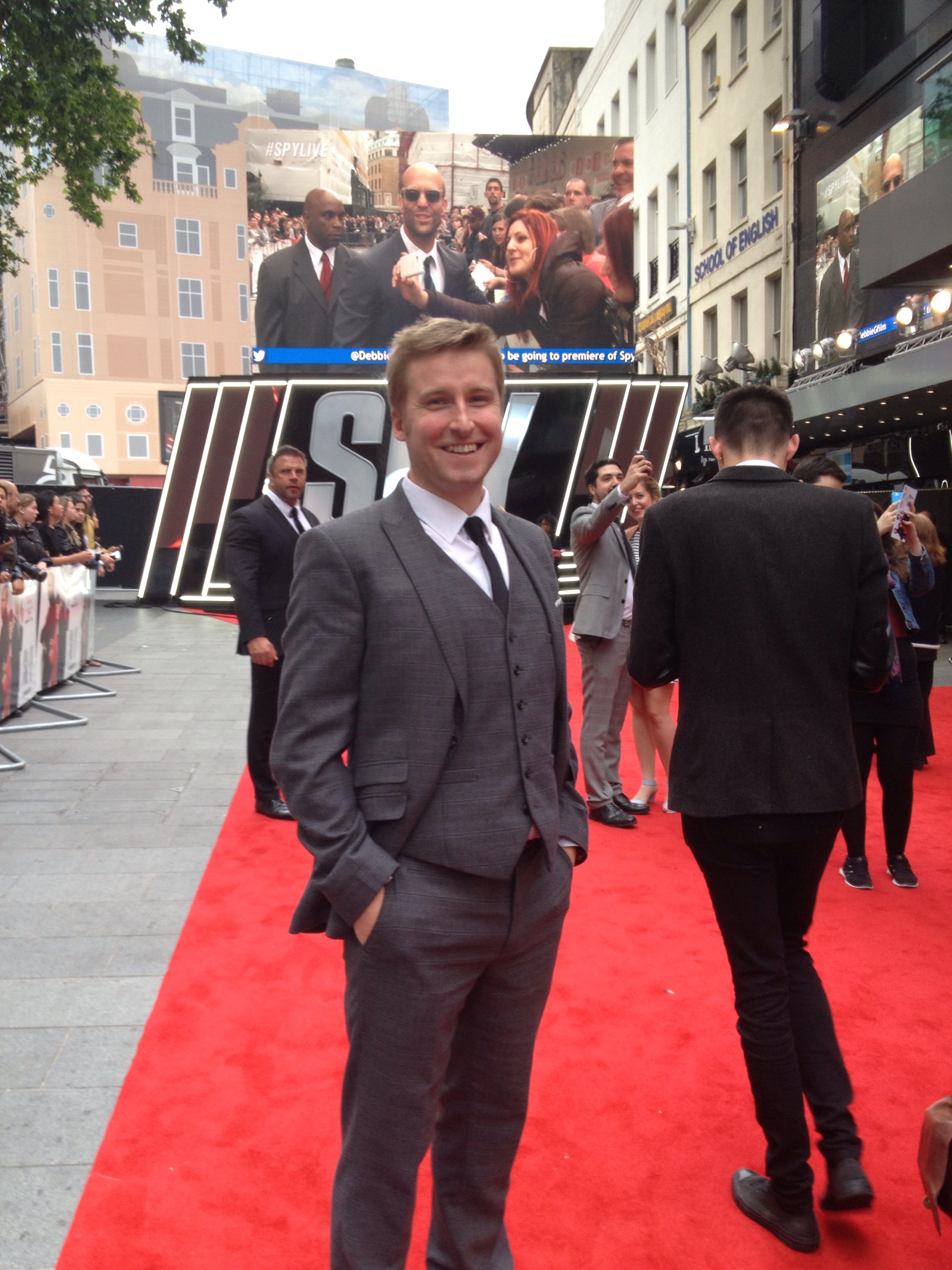
Earlier today, my wife and I found ourselves walking on the red carpet, alongside Melissa McCarthy, Jason Statham, Jude Law, Miranda Hart and Peter Serafinowicz, for the UK premiere of new film Spy. It was at the ODEON on Leicester Square. Here’s a photo of me on the red carpet.

I’ve been on the red carpet a couple of times before and it’s always a lovely experience. Of course, nobody cares who we are, though that doesn’t mean we didn’t ham it up a little. [1]

There’s been quite bit of interest for the film over the last few weeks and the anticipation was well justified. We laughed so much our faces hurt.

spy02

McCarthy and Law are hilarious throughout.

Spy is an action comedy about office-based CIA data analyst Susan Cooper (McCarthy), who is forced to go out onto the field when her partner Bradley Fine (Law) disappears and the identities of other top field agents – including Rick Ford (Statham) – are compromised. Going undercover to attempt to infiltrate arms dealer Rayna Boyanov (Rose Byrne) with the help of her office friend (Hart), the story is the perfect platform for some caper-based hilarity.

I was a little apprehensive going into it as the premise is quite familiar and hasn’t been done well for a long time. I was immediately pleasantly surprised, with an opening scene that sets the story up well, falsely draws us in to a serious film, then slaps us in the face with a huge laugh.

Jason Statham has never been so likeable. His character can best be described as Jay from the Inbetweeners if he somehow became a CIA agent. You can see he’s flexing his comedy muscles and really trying hard to make his co-stars laugh whilst holding back himself. His character is a highlight.

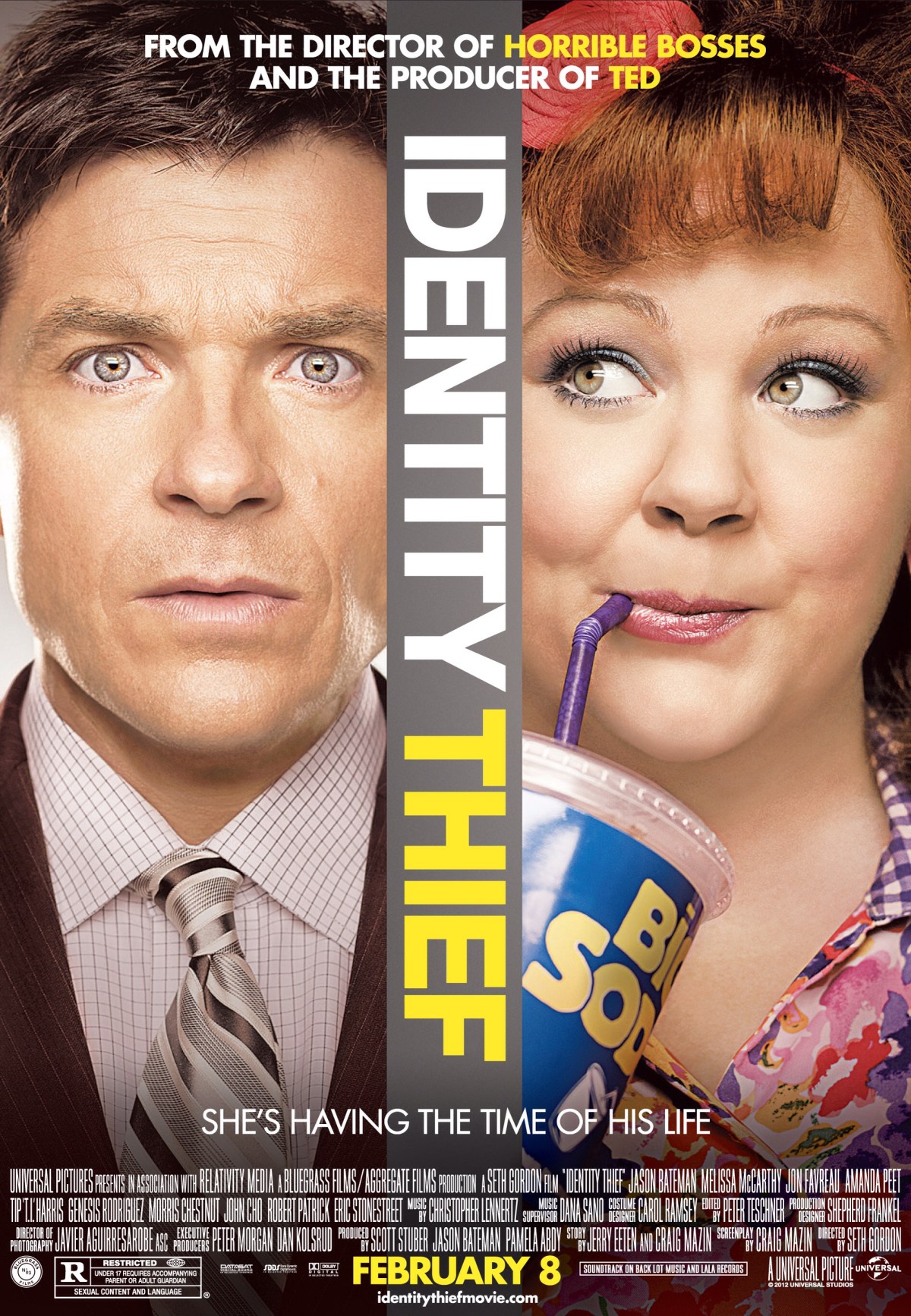
The real star, of course, is Melissa McCarthy. Her comic timing is impeccable and it’s easy to see this film becoming a critical and commercial success with her out front. She has had several opportunities to show us what she’s got, but she has fallen slightly short on several occasions (see Identity Thief). This is a comic actor at the top of her game.

The rest of the cast are excellent, especially Serafinowicz, and you can see they’re enjoying such a fun script. I can’t recommend it enough. I wouldn’t be surprised if this is the start of a franchise.

[1] About a month ago I speculatively tweeted a review of Furious 7 as an entry to a competition run by Stella Artois and Film4. Actually, it was a review of the trailer. I’ve not seen the film, nor have i seen the trailer. Indeed, of all the films in the series I’ve only seen Tokyo Drift. I didn’t think much of it. Anyway, that’s why I’m here. I’ve included the review here, in case you’re interested.

Atari: Game Over (Zak Penn, 2014)

The Video Game E.T. the Extra Terrestrial is an infamous piece of video gaming history. Everyone knows how it went: in 1983 Howard Scott Warshaw (Yars’ Revenge, Raiders of the Lost Ark) was given five weeks to produce a game for the Atari 2600 system alongside the release of the film and in time for the Christmas market. An over-confident board pushed to produce a market-saturating amount of cartridges based on the game being a best-seller, but when the reviews came in and everyone discovered that the game was terrible, the sales dried up. Atari started getting large amounts of returns of the cartridge and realised they were haemorrhaging money, so (the legend has it) they decided to dump some 700,000 cartridges in a landfill in New Mexico.

This film covers the history of the gaming industry, specifically Atari, the background to the game’s release and Howard Scott Warshaw’s part in the game. The main point of interest, though, was built around the highly anticipated excavation of the landfill to uncover the truth behind the cover-up and see if the burial really happened. I won’t ruin the result of the excavation, though it was a huge news story when it happened.

A happy treasure hunter. I guess he could now "go home".

A happy treasure hunter. I guess he could now “go home”.

The film was of huge interest to me and the subject matter was something I was happy to dedicate an hour of my life to. The director, as the film clearly lays out, is of great stock, having recently help screenwrite several huge Marvel films (including The Avengers). However, in comparison to Blackfish (which I watched in the same sitting), the storytelling failed to get me hooked. It has a short running time so there was no padding, but it just lacked the emotional power that is so evident in the great documentaries or modern cinema. There was nothing terrible about it – there was some good analysis of Atari in their booming year, a great side-story with Ernest Cline (author of the excellent Ready Player One) and a very brief cameo from George R.R. Martin. I just didn’t make the connection I hoped I would.

I perhaps wonder whether the short running time wasn’t enough. there was easily a further ten minutes on each of the two main topics: the history of Atari as a company being the first and the excavation of the landfill site being the second. I left wanting to find out more and though the information is available on the internet I don’t think there was a better platform than this to tell the whole story.

For a more engaging and humorous take on the excavation, check out Angry Video Game Nerd: The Movie, which pays no attention to the facts and spends its time trying to keep us entertained instead. Atari: Game Over counts as a near miss for me.

Atari: Game Over is available now on Netflix.

Angry Video Game Nerd: The Movie (James Rolfe, 2014)

I remember a couple of years ago when I saw the queues of young girls stood outside the theatre awaiting the release of the latest One Direction Movie, 1D: This Is Us. I’m pretty sure I passed a snide comment to whoever I was with at the time berating the popularity of the film, which was clearly not aimed at me. I wasn’t the “target audience”. Nonetheless, what a bunch of idiots standing there to watch such a rubbish film.

One for the fans

One for the fans

It took me until last night to realise how wrong I was to do this. My wife was out of the house and so I saw it as a perfect opportunity to finally watch the imported copy of Angry Video Game Nerd: The Movie [1]. Alas, my wife returned home and walked in just as The Nerd threw up over a copy of Eee Tee 2 and the woman holding it. As I looked towards the door, I saw myself reflected back: bemusement, disdain and a lack of willingness to understand. I guess that means that I’m a teenage girl and James Rolfe is Harry Stiles. Maybe.

And that’s the point. This is by no means a film for everyone. It is specifically a film for the fans of James Rolfe’s character The Angry Video Game Nerd, the central character in his webisodic (it’s now a word) series in which he reviews terrible old games in a foul-mouthed and occasionally aggressive manner. It’s a film full of references to the series, made for the fans, and a pet project for Rolfe to flex his big-budget muscles and show exactly what he can do once he leaves his underground lair.

The storyline concerns the release of Eee Tee 2, the sequel to Eee Tee, the biggest flop in video game history (and barely hiding the reference to E.T.). The Nerd has always refused to review this game, but when an opportunity arises to go to New Mexico and dig up the infamous New Mexico Atari landfill as a tie in to the sequel, he agrees. The Nerd and his two assistants start the quest but are pursued by federal agent General Dark Onward, who believes The Nerd is trying to investigate Area 51.

It is quite a convoluted plot but it’s not really there to win any awards for screenplays. It’s a platform on which Rolfe bases some quite hilarious moments and I see the film as a success. Yes, it’s probably a little long but I can forgive Rolfe for this – he was bringing his own dream to life and wanted to make sure his fans got the most out of it. Some of the script feels a little like it’s deliberately trying to aspire to be a cult film, and it gets very silly at times, but it’s delivered with enough charm to be forgiven for a few misfires.

There’s a nice bonus at the end, where he finally reviews E.T. The Extra Terrestrial on the Atari, which he has never previously done. The bonus features on the disc are plentiful and give a bit of insight into the film (though many of the featurettes were previously available during the making of the film on Cinemassacre).

Steer clear if you have never heard of The Nerd before but if you want to see what he’s capable of it’s worth the plunge.

[1] For those in the UK, the best option to see the movie in HD is to import from Amazon.com. Be warned though – you will pay through the nose for the postage and then get slapped with import duty when it arrives. It’s expensive and if you aren’t fussed about the HD then you have an option to stream from Cinemassacre for a small fee.

Beyond Clueless (Charlie Lyne, 2014)

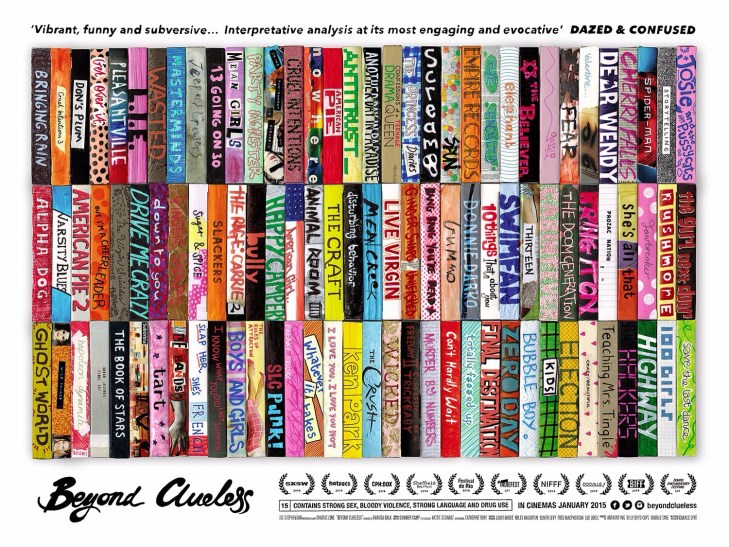
I previously talked about this essay film in a preview last October, and I finally managed to see it this week after it was added to Netflix. I had backed it in a Kickstarter campaign so I’ve had loads of updates from the engine that is Charlie Lyne, a man who has filled the project with as much man hours as he has passion.

Lyne covers the recurring themes we see in teen movies, taking an in-depth look at some key films on each topic. It takes the form of a long essay split into five sections: “Fitting In”, which deals with characters attempting to fit in and conform to their stereotypes (Mean Girls, Cruel Intentions); “Acting Out”, which looks at characters rebelling against suppression and leaving their comfort zones to break the status quo (Bubble Boy, Idle Hands); “Losing Yourself”, a discussion on characters who are keen to explore the wider world (Euro Trip, Jeepers Creepers); “Toeing The Line”, about characters having to conform to stereotypes or trying to break the brainwashed mould (The Faculty, Josie and the Pussycats); and “Moving On”, which explores themes of characters either needing to grow up or not wanting to (13 Going On 30, Drive Me Crazy). These are neatly bookended by a prologue and an epilogue, which tie the themes together nicely.

The film received criticism on its release, perhaps due to the fact it is an essay film and that is a slightly unusual format. Don’t get me wrong, this would have worked perfectly well as an essay, but the content lends itself to being delivered in this visual medium. There aren’t any topics that fall outside the content of teen films and the production team has meticulously sourced footage from every film discussed, which aids the digestion of the discussion points. The concept seems so obvious it’s a surprise it hasn’t been done more often.

Fairuza Balk’s powerful voiceover further endorses the content of the film, and this is further enhanced by an excellent soundtrack by Summer Camp. The script shows a passion for the subject matter that can sometimes lead to the content being given a little too much gravitas. This is never more prominent than the section discussing Euro Trip, which is one of my least favourite films of all time. I found it banal and tacky, but here it sounds like one of the greatest films ever made – I actually want to re-watch it to make sure I haven’t missed anything. In many ways, this is just testament to the passion of the scriptwriters, particularly Lyne, and can hardly be a justifiable criticism.

It’s a film that won’t do much for people who don’t like teen films and will also be lost on anyone unfamiliar with most of the films discussed. It’s a celebration of the genre and works as a great boost to go and re-watch a heap of teen films.

Beyond Clueless is available to stream on Netflix now in the UK.

Pitch Perfect 2 (Elizabeth Banks, 2015)

The sequel to the smash hit musical comedy Pitch Perfect, covering Anna Kendrick, Rebel Wilson et al. as they struggle to break down boundaries and show the world that a capella singing is actually really cool… Wait, what? In their world, a capella is already cool? They just aren’t cool enough to do it because they’re outcasts. Okay…

I have a slight vested interest in this film, on at least one level. I myself am in an a capella group and also take part in local theatrical productions so performing on stage has always been in my life. From memory, though, I don’t ever recall a capella singing being this popular. When there’s a tournament in Pitch Perfect World, the whole town drops everything to show their support for their favourite group. For me, I’m usually pulling in favours just so my closest family members turn up. Maybe I just don’t have the right acca-skills.

Pitch Perfect 2 has plenty of big laughs but you may have already seen them all in the trailer.

Well, this is a chick flick and it doesn’t have to have a watertight storyline. However, despite throwing away any grasp on reality to accept the film for what it is doesn’t necessarily mean it’s a great film. It’s basically a rehash of the first film – pretty much the same cast going through very similar personal struggles but pulling it together because their dedication to their friends supercedes anything else in life. It’s sweet, and I buy into the basic principal.

Unfortunately, outside the handful of really hilarious moments – most of which you’ve already seen in the trailer – the jokes consistently fall flat. Chrissie Fit’s Guatemalan character is just plainly not funny and every line she delivered felt like it was about forty years out of date. Likewise, Cynthia-Rose (portrayed by Ester Dean) is a really throwaway lesbian character that doesn’t really add anything to the storyline other than some cheap gags based on rudimentary stereotyping.

It was nice to see Hailee Steinfeld – who I know only from her Oscar-nominated performance in the Coen Brothers’ remake of True Grit – in a comedic role but, like the more established Kendrick, she almost seems a little above the content. I’m not sure whether the plan is to keep her in line to do Pitch Perfect 3. I guess time will tell.

So what can I say? It passed the time and I enjoyed parts of it. I wanted to see Mad Max but the majority of the seven other people I was with preferred this. I won’t rush to see it again, but I doubt my indifference towards it will change the fact that its target audience (basically the millions of people who loved the first film) will buy tickets and love it.

Pitch Perfect 2 is out now at cinemas worldwide.

Blackfish (Gabriela Cowperthwaite, 2013)

Gabriela Cowperthwaite’s 2013 documentary is an investigation into the life of Tilikum, a bull orca living in SeaWorld in Orlando, Florida. Tilikum has been involved in the deaths of three trainers: Keitie Byrne in 1991, Daniel Dukes in 1999 and Dawn Brancheau in 2010. It is the third of these that is given the most coverage in the film, which is understandable as it was the starting point around which the rest of the investigation grew. The film also explores the cruel living conditions of orcas once in captivity when being used in waterpark entertainment shows, also touching on the hunting of Tilikum in the early 1980s and discussions on a psychological level on his mental condition after being mistreated for so long.

The contents of the film have been vehemently discredited by SeaWorld, who have distanced themselves from the final product. In the aftermath of its release, the company published an open letter to refute a number of the claims in the film and created a dedicated section of their website titled “Truth About Blackfish”. Despite this, a number of high profile musicians (including The Beach Boys and Barenaked Ladies) dropped out of an annual festival at the Orlando park and they also saw a drop in park attendance, though these two facts are likely closely linked. Furthermore, Pixar altered a section of the upcoming Finding Dory film that featured a depiction of a water park. It is clear that the message contained in Blackfish has resonated around the world and it’s significant that the general attitude has changed.

The reason for this is the huge power in both the content of the film and the expert manner in which it is told. Cowperthwaite is understandably very passionate about the subject matter and clearly open a can of worms in the journey she went on in the creation of the film. Like any great documentary, that passion is transferred directly to the viewer.

Regardless of any bias included in order to help tell the story, any other details would be mere branches of excuses and extenuating circumstances. The bottom line here is that the capture and holding of orcas in order to get them to perform in shows is a travesty. The saddening thing for me is that I have been to the Orlando park and enjoyed the show there, just before the film was released in the UK. Had I known about it my attitude would certainly have been completely different. Like the thousands of people who have seen this film and also attended the shows, I’m embarrassed by the fact I saw the show as a fun experience. Now I can see it more clearly: it’s plainly a form of cruelty to animals and should be stopped.

Blackfish is available on Netflix and can also be bought on Blu-Ray and DVD.

Caravan of Courage: An Ewok Adventure (John Korty, 1984)

Revisiting the familiar forest moon of Endor but set prior to the events portrayed in Star Wars VI: Return of the Jedi, Ewok Adventures: Caravan of Courage brings back the popular Ewok characters from the third film in the original trilogy, including fan-favourite Wicket (reprised by Warwick Davis) in a family-oriented fun adventure. The plot revolves around the children of the Towani family – Mace and Cindel – who are marooned on Endor when their civilian craft crash lands and their parents are kidnapped by the evil giant Gorax. Teaming up with the Ewoks, they go on an adventure to rescue their parents and escape to safety.

The first thing that jumps out at you when you start watching this film is the low production costs. It retains a lot of the production team that were involved in the original trilogy, but the budget and time constraints meant it feels a lot more cinematic than we’d expect. Indeed, it was a made-for-TV movie and the resolution available in 1984 meant they didn’t need to worry about spectacular visuals. Crucially, George Lucas was on board as a scriptwriter and a producer, meaning the film doesn’t escape from the canon in ways that the Star Wars Holiday Special was unfortunately allowed to.

The main human characters Mace and Cindel are interesting. The former, played by a young Eric Walker, was clearly chosen for his similar appearance to Mark Hamill. This is a bit of a cheap shot and his character is a little whiny, meaning he’s never very likeable. His younger sister is portrayed by Aubree Miller, in one of only two films she ever made (the other being this film’s sequel, 1985’s Battle For Endor). She is far easier to like and the fact she is a young girl in a leading role was probably a decision based on widening the male-centric fanbase of the Star Wars universe.

There has been much debate over whether or not this film should be classed as part of the official canon. It’s a tough one to call. In my opinion, I don’t see why it shouldn’t be, though it is more complicated than you’d think. The sequel, in which the Ewoks begin to speak English, plants it after the events of Return of the Jedi. This one, however, is set prior to that film, meaning the timeline of events over the three films is pretty tight if they are canon. To be honest though, if they’re happy for Episodes I-III to be included then these should be. They’re better films.

Neither of the Ewok Adventure films are currently available on Blu-ray, though they did enjoy a double DVD release around ten years ago. They’re still freely available online to purchase, though occasionally the entire films are put up on YouTube and stay there until the rights holders realise and remove the video. I think they should be embraced with a full re-release, with proper restoration, commentary and extras. It’s a no brainer. It would be a popular release and would widen the popularity of two films that really aren’t bad enough to want to hide from the public.

These are nice options to watch on Star Wars Day this coming Monday. I’ve embedded the YouTube video below for ease of watching as a sample in case you wish to purchase.

Black Coal, Thin Ice / 白日焰火 (Diao Yinan, 2014)

Black Coal, Thin Ice was screened in competition at the Berlin International Film Festival, eventually winning the prestigious Golden Bear award. Whilst it wasn’t in competition at the London Film Festival, its proceeding reputation still created a degree of interest amongst the cinema goers at this year’s LFF. So did it live up to the hype?

IMG_9223.JPG

The thriller centres around a police investigation into mysterious murders, where people’s body parts are found scattered across a large area of China in, amongst other places, coal transportation centres. Quickly the deaths are linked to one woman: Wu Zhizhen (as portrayed by Gwei Lun-Mei). It is up to the film’s eventual main protagonist – Liao Fan’s Zhang Zili -to get close to her and solve the riddle.

It is a gripping police thriller with some highly memorable and shocking scenes. The pacing is fantastic, and left me on the edge of my seat throughout. Stylistically the cinematographer Dong Jinsong has worked well with director Yinan, and between them they’ve done fantastic job with some great framing that made use of the surplus of snow on offer on the shoot.

IMG_9222.JPG

With strong performances from the two lead actors, it was clearly a justified winner of the Golden Bear. I highly recommend seeking it out if you get the chance.

白日焰火 is released in cinemas in the UK in 2015.