Nightmare City (Umberto Lenzi, 1980)

Nightmare City falls under the category of “so bad it’s good”. Umberto Lenzi manages to pull off some ridiculous scenes but gets away with it through consistency and dedication.

First off, if you’re new to Italian horror, you need to know that it can be quite off-putting watching a film in Italian with English subtitles, especially when it’s obviously been dubbed from English into Italian. If you’re quick you can read the sentence then lip-read the actors and realise they’re actually saying what is written. It can take getting used to but once you’re past that you’ll quickly realise that the acting is about as bad as you initially thought it was.

The plot doesn’t stray far from the norm for a zombie horror film. A group of humans have been subject to nuclear contamination, leaving them with superhuman strength. They are running riot in an unnamed city and television news reporter Dean (played by Hugo Stiglitz) is trying to survive as the city falls apart. As each person is killed, of course, the victim joins their cause, meaning their strength is ever-growing.

This film contains a number of hilarious shots and it worked exceptionally well in a packed and jovial cinema. A frequent feature is the appearance of young women’s breasts. You never quite know when the next pair is going to appear. The frequency of it was a source of great amusement. I’m not sure if this was common at the time but it definitely seemed out of place.


She certainly had an eye for detail.

 
Equally, barring the main characters, everyone was completely stupid. Getting attacked by zombies? Let’s just run from left to right panicking, then run from right to left doing the same thing until we get attacked. Brilliant.

Our hero, Dean, wasn’t very supportable and lacked the charisma required to get away with the things he was doing. He regularly screws over fellow survivors, at one point he punches his girlfriend in the face, he leaves a group of people trapped in an elevator. It made it hard to get behind him, even when it seemed he was the only one set to survive and we were forced to follow his story alone.

SPOILER ALERT!! The ending was the kind that all ten-year-olds go for when they run out of time and ideas in a story-writing class. Yes that’s right, it was all just a dream. It was disappointing and was rightly met with groans across the crowd. Nobody’s story was tied up. They just must have ran out of money.

It’s a bit of lighthearted old-fashioned gory horror that will no doubt entertain you, but probably won’t change your life. The ending is so disappointing it unravels any of the successes it has managed to pull off.

Nightmare City is available on Arrow Video Blu-ray now.

Maggie (Henry Hobson, 2015)

Post-apocalpyptic zombie horror film Maggie was screened as the opening film of the UK Festival of Zombie Horror Culture at Phoenix Cinema in Leicester in November 2015. The film stars Arnold Schwarzenegger as Wade, a man whose daughter Maggie, played by Abigail Breslin (best known for her performance in Little Miss Sunshine), has been infected by a zombie virus. Having been bit, she has fled home to protect the rest of her family. The film opens with Wade finding his daughter, who has been missing for two weeks, and taking her home to his wife. It then follows her slow transformation towards “the turn”, and the affect that has on her and her mother and father.

Drop Undead

Drop Undead

One thing we’ve come to expect when watching an Arnie film is an over-the-top performance with lots of one-liners and a handful of big set pieces. These are not present here. Instead, we get Arnie in an extremely restrained mood, and the result is perhaps the most convincing performance of his career. As one of the first films announced after his return to film from his political career, this was a perfect choice and is a great advert for more roles in a similar vain as he moves into the next phase of his career.

Breslin also shines in a complicated role where a girl is facing certain death. Having attempted to go through this on her own, she is desperately in need of her father. This complexity isn’t easy to pull off but she does it well, showing an increasing amount of fear as she gets further infected.

Where the film falls down is its slow pacing. It draws us in at first, but a slow pace clearly designed to explore the emotional side of the key characters paves the way for a few too many “switch off” moments. Admittedly, there is no room for a big stand-off and that kind of thing would have been out of place, but montages of time passing are easy to put together and allow the viewer to disingage for a couple of minutes.

Overall, well worth watching for the chance to see Arnie’s acting credentials and as an interesting angle on the genre.

Maggie is available on Blu-ray and DVD now.

Film review – THX 1138 (George Lucas, 1971) – Asian Dub Foundation Re-score

A long time ago, precisely ten years before Star Wars hit the big screen in 1977, George Lucas was a young and experimental college student at film school at The University of Southern California. Packed with rich ideas and concepts of science fiction and Orwellian futures, he set about making the short film that would first bring him to the attention of Stephen Spielberg – Electronic Labyrinth: THX 1138 4EB. This short won prizes and accolades, including first prize at the National Student Film Festival in 1968.
Soon after Lucas left college, production began on a feature length adaptation of the story, using the short film as a basis of the climax to the film and providing a backstory and richer background to the concept.
The film stars Robert Duvall as THX 1138, a worker at a factory that manufactures android police officers. His roommate LUH 3417 (Maggie McOmie, in her only major film role) is a CCTV operative. After she switches their mind-controlling pills, they disobey strict rules and have sexual intercourse, which is a punishable crime. Imprisoned with SEN 5241 (Donald Pleasance), LUH’s co-worker, and fuelled by the fear of being trapped for the rest of his life, THX launches an attempt to escape from this underground dystopian prison.

At times overwhelming

At times overwhelming

I have to confess that this live scoring event was the first time I’d seen THX 1138. This is a film that is itself much less immediate than the Lucasfilms pictures we are now more familiar of, and one that requires a level of concentration to follow the plot. Unfortunately, Asian Dub Foundation’s live scoring was somewhat relentless and unforgiving. On several occasions it simply drowned out the limited dialogue, making understanding the film almost impossible. Not only that, but the music didn’t really match up with what was happening on the screen. It felt like an Asian Dub Foundation gig for which they’d decided to use the film as a backdrop for their performance.

Sadly for the film and the musicians, a large portion of the crowd decided they weren’t on board with either element and left before the end. Perhaps it was a victim of clashing with the opening night of the latest Bond film Spectre, and maybe some of the attendees decided to catch a late showing instead of seeing how THX’s escape plan player out.

Where it did work, it was very impressive. The car chase in the final act of the film was excellent and the music added a lot to the scene. This is one of the most exhilarating car chases I’ve ever seen and is a worthy pay-off the often times slow paced story development in the preceding hour of film.

I’ll be seeking out the original version of the film to see if I enjoy it more without the distracting score.

THX 1138 is available on Blu Ray and DVD now. Of course, this is a George Lucas release so it is impossible to see the original film in its originally planned state. It has been tampered with. Since most probably never saw it in its original form, however, there shouldn’t be many issues here.

Steve Jobs (Danny Boyle, 2015)

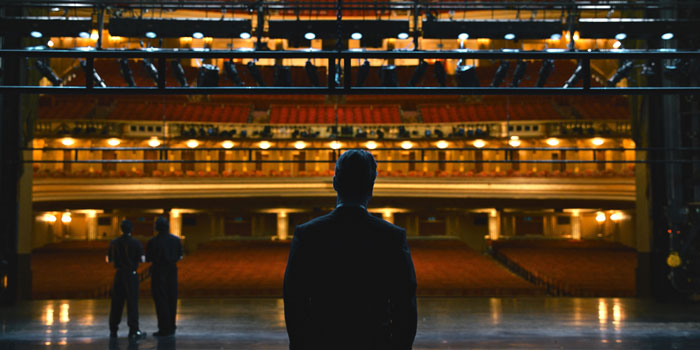
The 2015 BFI London Film Festival came to a close this evening with the European Premiere of Danny Boyle’s Steve Jobs. With all the stars out on the red carpet, it had all the hallmarks of a blockbuster finale on the scale of any of the Apple product launches we’ve become so accustomed to.

The biopic plays out in three distinct acts, all during iconic Jobs-headed product launches: the 1984 launch of the first Macintosh home computer; the 1988 launch of the NeXT Computer for NeXT Inc. (the company Jobs set up after being forced out of Apple); and ending with the 1998 launch of the first iMac computer.

Jobs worth

Jobs worth

Whilst it may risk being a big advert for Apple, the poor picture painted of the figurehead of the company throughout ensures that is never the case. The Steve Jobs we get to know over the course of the three acts, which play out in real time in the lead up to each of the presentations Jobs is giving, is narcissistic and self-centred, only relenting from the power trip when he finally achieves the success he has been driving for. It shows softer sides of his personality and attempts to justify his unique traits but the focus on his tempestuous relationship with his ex-girlfriend Chrisann Brennan and their child Lisa ensures his best side is never seen.

It is actually a difficult watch throughout. It is basically two hours of arguments, eventually becoming tiring. It does successfully portray the frantic and intense atmosphere of a huge-scale product launch in a very real manner. It fails, however, to convince that this is a good platform for great cinema.

Michael Fassbender plays the Steve Jobs we see here to perfection, capturing the nuances required of someone who is heartless to the extent of being cruel. Kate Winslet’s turn as Joanna Hoffman is steadier than her accent, and Seth Roger puts in an adequate performance as Steve Wozniak. The standout performance is quite minor but nontheless critical: Michael Stuhbarg is exceptional as the bullied inventor Andy Hertzfield.

The biggest success is the genius move to film the picture on era-appropriate equipment. The three scenes were each filmed using totally different techniques: 1984 was captured on beautiful 16mm film, 1988 on 35mm film and 1998 on digital film. The evolution of technology is reflected in the format change and portrays each era in a manner that would have been impossible with digital post-production.

Whilst it isn’t a let down, it will be difficult to find a sustainable market for this film. It’s not a straight biopic, it isn’t hugely in favour of Apple, nor is it against it. It’s a struggle to watch and is unlikely to have people raving about its successes as they leave the cinema. 

It could be Danny Boyle’s Newton moment.

Steve Jobs is released in cinemas in the UK in November.

Further Viewing

If you enjoyed the film so much you’re interested in some further viewing, then check out the below videos. In the film you see the 40 minutes building up to the release of three products, but never get to see the keynotes themselves.

1984 – Original Macintosh home computer

The original keynote:

The Superbowl “1984” advert:

1988 – NeXT

The 1988 keynote speech isn’t available on YouTube, but this ABC news segment is a close fit:

1998 – iMac

The full video in all its glory:

Film review – Star Wars Holiday Special (Steve Binder, 1978)

There was a time about fifteen years ago when very few people had heard of the Star Wars Holiday Special. George Lucas was no doubt thanking his lucky stars as what is generally considered an abomination had disappeared off everyone’s radars, the VHS copies in the hands of the general public were slowly deteriorating and there was little opportunity for the story to proliferate.

Unfortunately for Lucas, however, the internet happened. Nowadays, the average adult fan of Star Wars has very much heard of The Holiday Special and has probably made an attempt to watch it, given that it’s so readily available on the likes of YouTube.

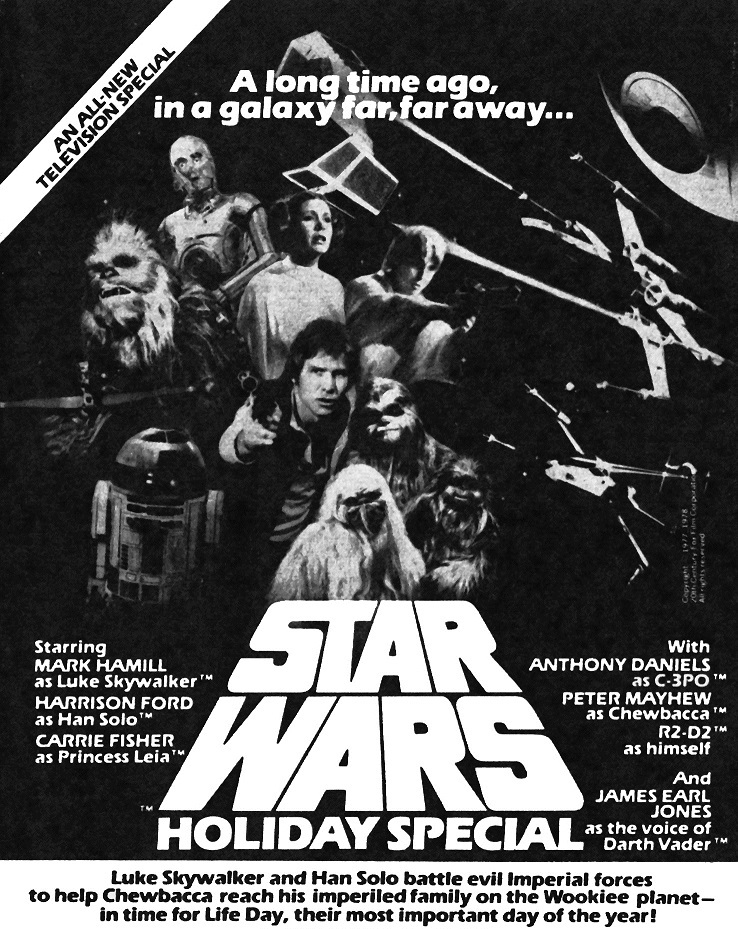
If you haven’t heard of it, the basic backstory is that in 1978, one year after the release of the first film, the rights to the Star Wars franchise were temporarily handed over to Smith-Dwight Hemion Productions, Winters Hollywood Entertainment Holdings Corporation and 20th Century Fox Television to make a Christmas variety programme with a loose story used as a platform for several musicians and comedians to entertain the viewers.

The general consensus is that the Nelvana-produced Boba Fett animated segments are the only parts of the film worth watching it for. It has to be said that the ten minute cartoon titled “The Faithful Wookiee” is of an exceptionally high standard and if you haven’t seen it yet then seek it out. It is the first time Boba Fett was seen (note that the release was two years prior to The Empire Strikes Back). There is slightly more to it than just this though.

First of all, you do get to see all of the original cast together, which is a pretty rare occurrence outside the original trilogy and the odd fan convention. Mark Hamill is clearly caked in make-up to cover up scarring from the motorcycle accident he had a year earlier.

With the fact it’s a variety show in mind, it is easier to accept the performances from the various musical acts. Jefferson Starship’s song “Light The Sky On Fire” is actually very entertaining. Who doesn’t want to find out if Carrie Fisher can sing? [1]

Unfortunately, the negatives far outweigh the positives. “This Minute Now”, sung by Diahann Carroll, is a segment in which she appears as the fantasy of Chewbacca’s father (or father-in-law) and comes across as if she’s auditioning for one of those late night television programmes we’re told to stay away from as children. The Wookiee segments are embarrassing with far too much dialogue, none of which is subtitled. Anything featuring Harvey Korman, Art Carney, Bea Arthur or acrobatic jugglers is extremely difficult to sit through and take it away from the realms of enjoyment.

So, as a Star Wars fan should you watch it? Well, that’s your call. Just because you’re a huge fan of the original trilogy (or indeed the more recent films) it doesn’t mean you have to watch everything ever produced, but all the toys and read all the canon and non-canon fiction. However, you shouldn’t take other people’s opinion as gospel without trying to give it a try.

Star Wars Holiday Special has never been released on home media, although “The Faithful Wookiee” was an Easter Egg on the Star Wars: The Complete Saga Blu-ray boxset released in 2011. You can watch this segment below in lower than SD.

[1] She can, though she never won a Tony Award like Mark Hamill.

Star Wars (Lucasgames, 1991)

There are plenty of candidates for the greatest Star Wars video game ever made. Perhaps Battlefront II, Knights of the Old Republic or The Force Unleashed are high on the list. Or even Empire At War. Maybe Lego Star Wars: The Complete Saga deserves a mention. Not for me. The video game that I will hold up as my favourite will always be the 1991 NES game, simply titled Star Wars.

Firstly, it had a badass trailer. Your mum almost got killed by Darth Vader? Who cares? Because video games.

Secondly, it’s one of the toughest games out there. If you manage to get hold of the game, you’ll immediately see why. The controls aren’t necessarily frustrating, but the sheer length of the game, limited continues and the fact you have to do it all in one sitting (yes, in 1991 nobody had invented a way to save a game) all stack up to make it a tough ask.

The goals of the initial part of the game are fairly simple. Take Luke around Tatooine, retrieve R2-D2 from the Sandcrawler, find Obi-Wan Kenobi in a (really annoying dripping) cave, collect Han Solo from the Mos Eisley cantina (with beautifully recreated 8-bit audio), all whilst collecting shields for the Millennium Falcon. These tasks can be done in any order you wish, though I always found it easier to get Obi-Wan first. Then you take the Millennium Falcon for a spin towards the Death Star. Once inside, you destroy the tractor beam generator, rescue Leia, then destroy the Death Star itself.

Sounds simple, but don’t forget that in 1991 anyone wanting to make a sidescroller game really hard would just throw in more near-impossible jumps and flood the screen with enemies and harmful projectiles.

There’s a great walkthrough of the game here by Heroes of Xanadu – Sloth. Watching it brings back a lot of fond memories. If you want to know just how tricky it got, look at the video around the 26 minute mark.

I’m not saying it’s the best Star Wars game ever. I mean, it doesn’t even allow you to have a dance off with the Emperor. But it was technically advanced for its time and was mesmerizing as my seven-year-old self. I’ve never been as gripped by a Star Wars game as I was for this one.

In researching this article I’m astonished to discover that there was a sequel to this game, again with the simple title of The Empire Strikes Back. I’m not surprised this wasn’t big news for me. I remember the game cost £60 when it was released. That’s a whopping £121 in today’s money! Thanks mum.

Find it, play it, cry.

Secret Cinema Presents: The Empire Strikes Back (Irvin Kershner, 1980)

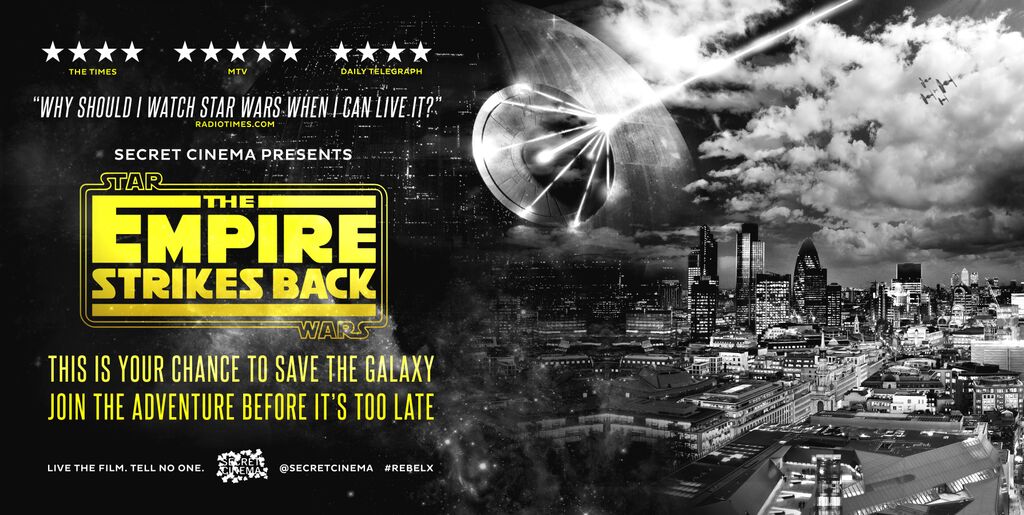
The Secret Cinema Presents: Empire Strikes Back event was easily the most immersive cinema experiences I have ever been involved with, and it will probably never be beaten. Having spent £70 on each of the two tickets, my wife and I understandably had a bit of trepidation. I can honestly say that it was worth every penny.

The event actually kicked off way before the day with a steady trickle of emails about the rebellion, the empire and things like that. We had to fill out a personality test, which resulted in me being a Galactic Explorer. This drove the costume recommendations, which consisted mainly of a white-to-cream loose shirt, beige trousers, a utility belt, boots, goggle and, most importantly, a tan and black shemagh scarf.

We were provided with precise co-ordinates to go to, near Canada Water Tube Station in London. We arrived early and were amazed to see that most cafes were shutting long before the 5:30pm entry time. This was clearly a ridiculous move as hundreds of people descended on the site every day hoping to get something to eat or drink. Never mind. Just a few thousand galactic credits lost there over the summer.

“These aren’t the droids you’re looking for.”

Once there, we were lined up by reasonably aggressive security guards, moved into a holding area and quickly briefed about what the situation was. We were told we were under surveillance by The Empire and they’d released a toxic gas into the atmosphere. We therefore had to cover our faces up with our scarves and keep low as we ran through a couple of corridors into a large hangar, where our phones were heat-sealed [1].

Once in the hangar we received rudimentary training and had a quick physical fitness test before being put into a spaceship (a simulator ride) and transported to the next area. This is where the real fun began as we all realised we were at the space port Mos Eisley on the planet Tatooine.

The moment of realising we were now IN the film at this point was overwhelming. Basically, the plan was to live in A New Hope before we watched The Empire Strikes Back on the big screen. It was impossible to take in at first. My wife is a ridiculous addict to Star Wars and was giddy with excitement for a good twenty minutes. The attention to detail was superb.

We went straight into interacting with actors in character. We chatted with Obi-Wan Kenobi, who informed us where we needed to go to trade spice to board the ship to leave Mos Eisley. We traded our seeds with Luke’s Uncle Ben for a circuit board, which we then traded with a Jawa, who we annoyed by stealing our original circuit board back and re-trading for a second pack of spice. We got cheated out of a game of Sabacc by Lando, before he was busted by a security guard and put in prison. We nipped into the Cantina to see the band playing away and grabbed a glass of some space-themed odd cocktail, before witnessing the famous Han v Greedo scene. We chatted with Han and Chewbacca for a while. I even got taken aside by a guard at one point and had to sing Moon River to get out of trouble. Very bizarre!

It was just great fun to be in there and the fact that everyone was in character and stuck to it just added to the occasion. Very quickly all the general punters were fully in character too.

The reason the scarf was important was that it sort of overruled the exact costume choices – we were given a goal once in there to trade some spice to get onto a spaceship and the trading material was dependent on the colour of your scarf. It was quite a simple means for the actors to identify the faction each person belonged to, especially since some people had made no effort with their clothing.

When the time came, we departed to the Death Star as we neared the end of A New Hope. Apparently the time at which we left drove what we saw when we arrived at Alderaan – we were in the middle so flew straight into an asteroid field (just like the film), though some saw the explosion happen and others arrived to find nothing there. Once on the Death Star, we were put in prison briefly before breaking out and witnessing the end of the film, lightsaber battles and all [2].

When the film began, everyone quickly settled in. Throughout the film actors and actresses appeared on the stage to act out key scenes and segments for us all to enjoy. This was a nice touch. It was a pleasure to be able to watch the film (if you’re interested, it was the 2004 version with Ian McDiarmid as the Emperor) with such a large group of avid Star Wars fans, all cheering and booing at the same time. It created a unique atmosphere that won’t be forgotten for a long time.

The best thing about the event was rejuvenating our love for Star Wars. As soon as we got home, Return of the Jedi was straight on the television (the original theatrical cut, if you’re interested). This Secret Cinema event has done wonders for the interest in The Force Awakens.

There hasn’t been an announcement about the next Secret Cinema event but regardless of the film choice it will be something to look out for next summer.

[1] This was probably the smartest move of all. Sitting there in the Cantina in a completely different world only to look over to see someone uploading a selfie to Facebook would have completely ruined the immersion. Well played Secret Cinema. You pre-empted the douchebag idiots.

[2] A special mention has to be said for the choreography and abilities of the actors during the battles. Perfectly in sync, excellently executed.

Film review – Begin Again (John Carney, 2013)

If Inside Llewyn Davis is the poisonous view of the hardest and most demoralising sides of the music industry, with all its rejection, squalor and misery, then Begin Again is the antidote. They are from different sides of the tracks and share nothing but a basic premise and the same city (New York) in common.

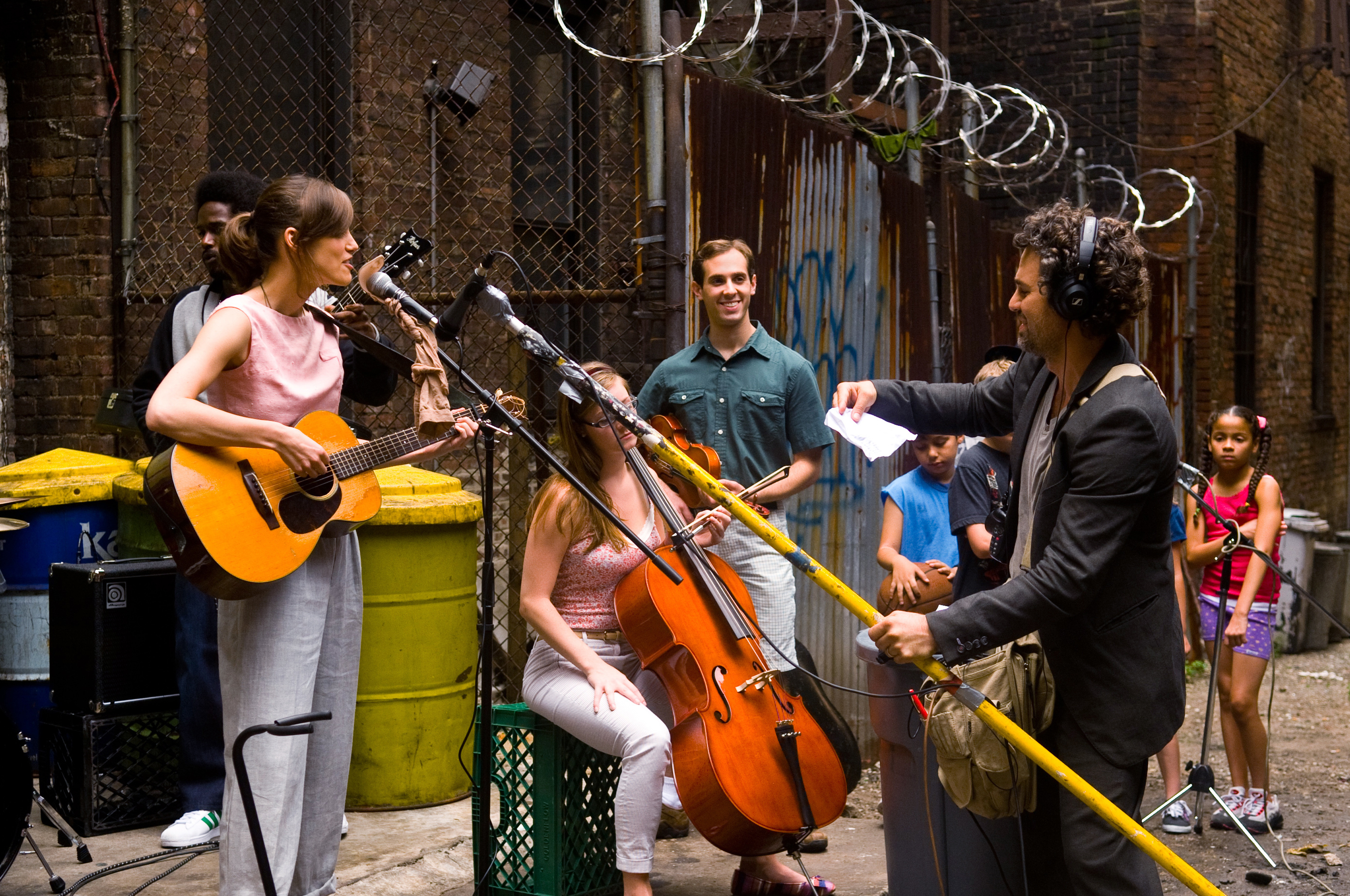
Begin Again tells the intertwining stories of two people whose lives have been ruined by the music industry. Dan Mulligan (Mark Ruffalo) has been sacked from his own record company by co-founder Saul (Mos Def) and has taken to the bottle to avoid finding focus in his life, much to the detriment of his relationship with daughter Violet (Hailee Steinfeld). He has a chance meeting in a bar with Gretta James (Keira Knightley), who has plenty of talent but no stage presence or confidence. He decides she has enough potential to turn into something more than just a singer at an open mic night, though her reluctance is powered by the recent breakdown of her relationship with Dave Kohl (Adam Levine), now seemingly destined for stardom.

Everything falls into place perfectly easily. Hurray.

Everything falls into place perfectly easily. Hurray.

Begin Again falls down where films like Inside Llewyn Davis or Carney’s last film Once succeeded for the simple reason that the songs and performances simply aren’t as good. Keira Knightley has found herself in an awkward situation. Her fame ultimately puts her as an a-lister actress and celebrity, with the ability to elevate an average film to blockbuster status due to her past successes. As a viewer, subconsciously there is an expectation that her ability as a musical performer should match that. Sadly, the studio has had this well in mind and ensured, through post-production, that her voice and entire backing track is polished to perfection, removing the intimacy seen in Glen Hansard and Markéta Irglová’s raw but powerful performances in Once. It’s an inevitable source of frustration as it is evident she has some talent, though what that is feels hard to decipher.

Ruffalo’s performance lacks conviction and the feeling that he has been really scorned by the music industry never fully materialises. Adam Levine plays his part coolly, almost as an exaggeration of his real-life personality (or what it is perceived to be). Steinfeld provides another assured performance in her supporting role, even though she doesn’t look like she’s ever picked up a guitar before. James Corden makes the most of his limited screen time.

It’s disappointing that overall this film fails to deliver on so many levels. The one thing it will be remembered for is the track “Lost Stars”, which was nominated for the Academy Award for Best Song in 2015. It is the one song here that stands up to those around which Once was built. However, one song does not a musical make; it is very unlikely this will follow its predecessor onto the West End and thus it is destined to be forgotten.

Begin Again is available for purchase now, or can be streamed on Netflix.

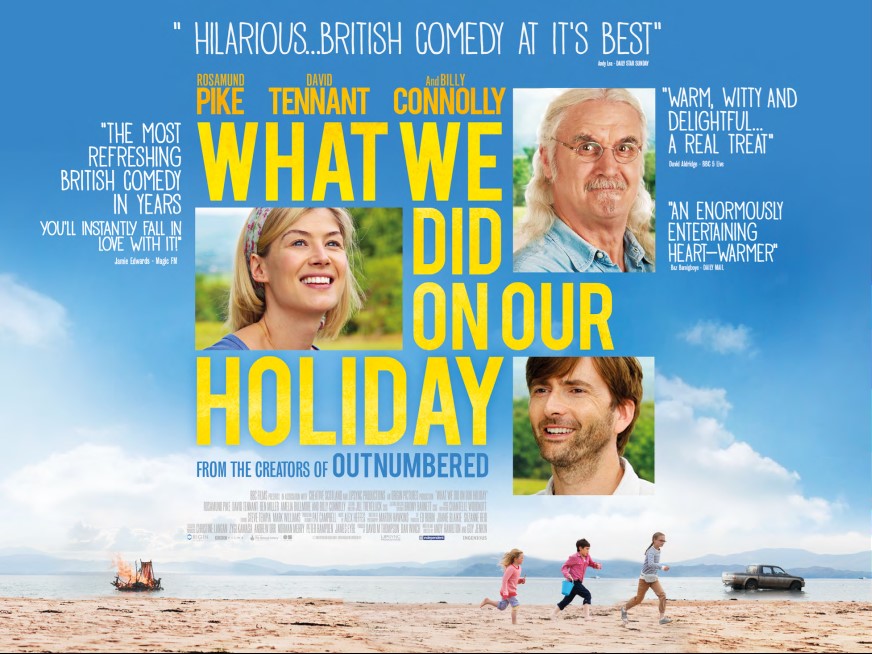
Film review – What We Did On Our Holiday (Andy Hamilton and Guy Jenkin, 2014)

If you’ve ever watched the popular British sitcom Outnumbered then you’ll become immediately outraged by What We Did On Our Holiday. The premise is exactly the same: a dysfunctional London-based family with arguing parents and three young and awkwardly inquisitive children go on a trip to visit their quirky grandfather and the annoying sibling of one of the parents. The dialogue and individual characters seem highly familiar too and it’s difficult to avoid the thought that this could have been done to much greater success with the Outnumbered cast. It’s only after a small amount of research that it becomes evident that this film is indeed written and directed by Andy Hamilton and Guy Jenkin, the creators of Outnumbered. Admittedly, they couldn’t very well have written “By the way, we made Outnumbered and we know this is basically Outnumbered: The Movie but please stick with it.” I would have helped though.

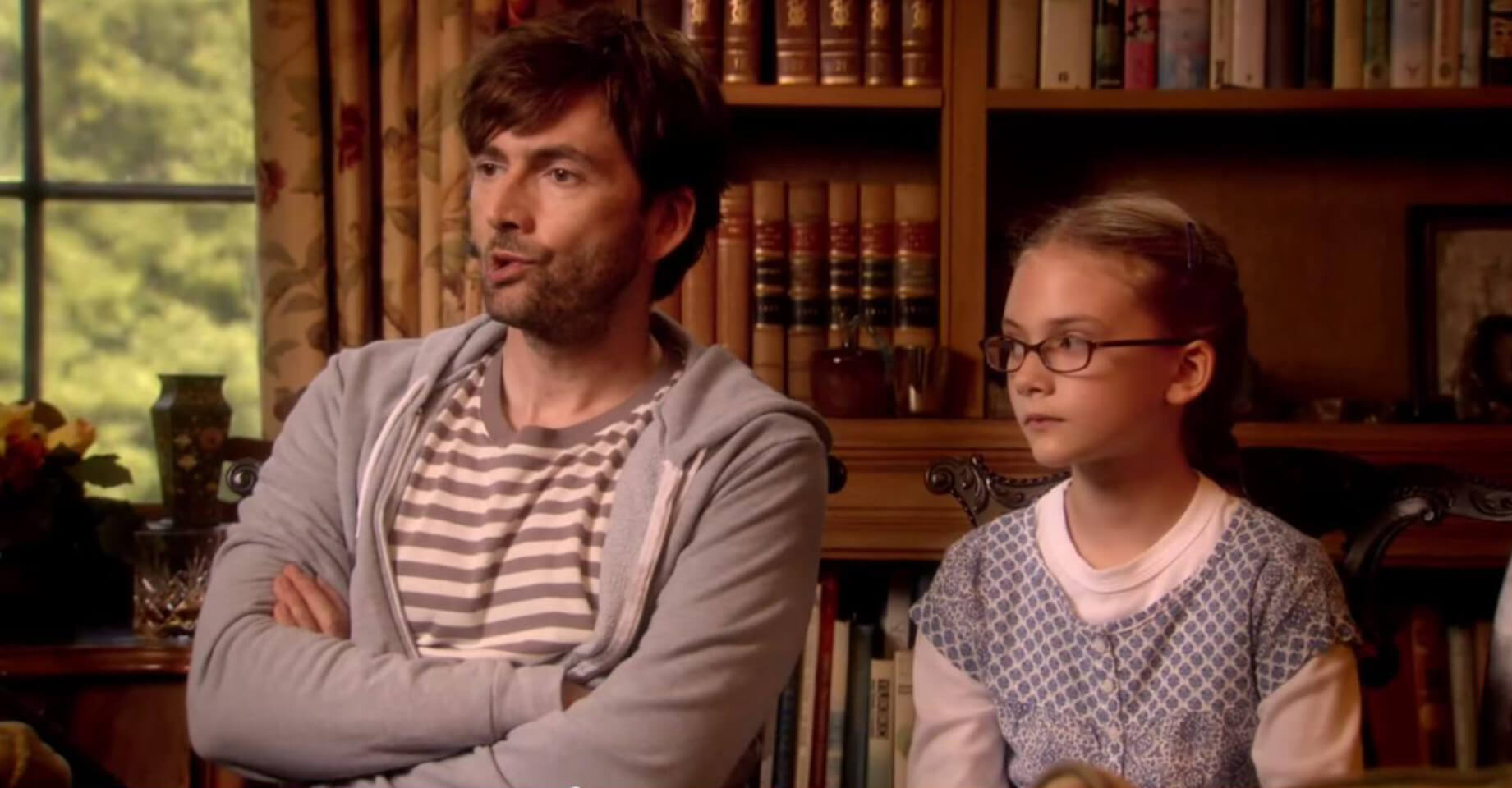
The storyline involves father Doug (David Tennant) and his wife Abi (Rosamund Pike) travelling to see Doug’s father Gordie (Billy Connolly) in the Scottish Highlands. Their marriage is on the cusp of separation, a fact they like to assume their children don’t know. They’re visiting Scotland to celebrate Gordie’s birthday with a party co-ordinated by Doug’s brother Gavin (Ben Miller) and his wife Margaret (Amelia Bullmore), who provide some laughs as a couple attempting to keep up appearances.

A laugh a minute this is not.

A laugh a minute this is not.

Despite what the poster says, this is not British comedy at its best. The reason for this is that only one of the three main cast members is a comedian and the short running time means the children aren’t provided enough space to cultivate any big laughs. The funniest moment in the whole film comes when the son Mickey tries to explain how he managed to discover his parents were getting a divorce, missing out most of the details of what was heard but lengthily revealing his technique to go to the toilet silently so he can eavesdrop. The screen time afforded to Miller and Bullmore is refreshing when it happens, though again this is limited and it feels like there was more on offer.

It’s a bold move to use this as a vehicle to tackle some pretty hefty subjects and for the most part this ambition elevates it to something bordering on a weighty drama with a humorous veneer. The impending death of elderly relatives, the lack of emotional support provided by the close family of these elderly relatives, the denial of innocence of youth due to over-exposure to mass-media, the lack of respect provided by media when the desire to get a good story transcends their own moral compass (the film was written in the immediate aftermath of the publication of the Leveson Inquiry). These are all topics that Hamilton and Jenkin clearly felt were beyond the scope of their beloved sitcom and more deserving of a feature length film. For that they should be applauded, despite an overall feeling of the film being an underwhelming disappointment.

Ultimately, a film marketed as a comedy will succeed or fail on the amount of laughs it elicits. The lack of natural comedic tendencies of both Pike and Tennant mean that the film relies too heavily on three young children playing for cute giggles and a support cast that isn’t seen enough to make up the ground. If you want to laugh a lot for 90 minutes then a better option is to just watch three episodes of Outnumbered, which is a disappointing conclusion to reach.

What We Did On Our Holidays is available on Netflix now and can also be purchased on Blu-ray or DVD.

The Intern (Nancy Meyers, 2015)

Nancy Meyers has a rich history in crowd-pleasing comedies. Her writing and directing credits include What Women Want, both Father of the Brides, It’s Complicated, The Holiday and Something’s Gotta Give. The basic premise of her latest, The Intern, is that a 70-year-old widower Ben Whittaker (Robert De Niro) signs up the the senior intern programme of a rapidly-growing start-up business, only to be assigned as the personal assistant to company director Jules (Anne Hathaway), a woman seemingly struggling to keep up with the demands of her new-found success whilst balancing it with her house-husband Matt (Anders Holm) and daughter Paige (JoJo Kushner). Initially resistant of Ben, she soon grows to his warm personality and old-fashioned sentiments, leading to doubts over the future of her personal and professional life.

This may sounds like middle-of-the-road schmaltz, but it works. Some softening colour washes, a pleasant-on-the-ear soundtrack, straight-from-GAP outfits, showroom offices and houses. It’s a look at the modern world from the rose-tinted perspective of middle-to-upper-class old people, coming together to appeal to women of anywhere between the age of about 30 upwards. It is easy on the eye and easy on the soul, but to dismiss it as just that would be wholly unfair.

internscreen

By design, Meyers has created a picture that on the surface is just a pleasant and slow-paced monorail ride through the life of Ben and Jules. However, there is quite a lot of power in the messages it is portraying. First of all, it is telling women to not lie down and take the easy road when it comes to business, despite constantly being told that attempting to be the CEO of a business isn’t correct of a woman. Secondly, just because you have a child, don’t assume that you need to forfeit your career to ensure your partner can maintain his whilst you stay at home and look after your child. Thirdly, don’t feel guilty if your partner doesn’t get any of this.

I’m not sure how this film would fair in the Bechdel Test, which scores films on how sexist the content is by checking how many named female characters are involved with conversations with other women about something that isn’t men. Unfortunately, it would probably score low because the film drowns Jules in a sea of men to highlight the isolation she is experiencing in her career (other key female characters in the office are her emotional assistant and a masseuse). It may also be seen as unfortunate that she relies on a father-figure to guide her through her issues rather than working them out herself, but that’s the nature of the beast and it isn’t at all detrimental to the overall impact of the film in the final act.

There are a few failures. Husband Matt completely loses his essence about halfway through and doesn’t seem fixed in reality, undermining the effect of his actions and Jules’s reaction to them. Too often she brings emotion to the forefront of the company – one scene is obviously playing for laughs but when she’s prioritising the retrieval of a personal e-mail over issues that could destroy the company, the thought can’t be avoided that perhaps she isn’t the right person to sit at the top.

Overall, the film is a success and will no doubt please the crowds to which its box office rivals won’t appeal. It’s slightly early for the Christmas crowds and will not be remembered when the awards season is upon us, but it if you need some surprisingly thought-provoking entertainment there are far worse ways to spend two hours.

The Intern is released at cinemas in the UK on 2nd October 2015.