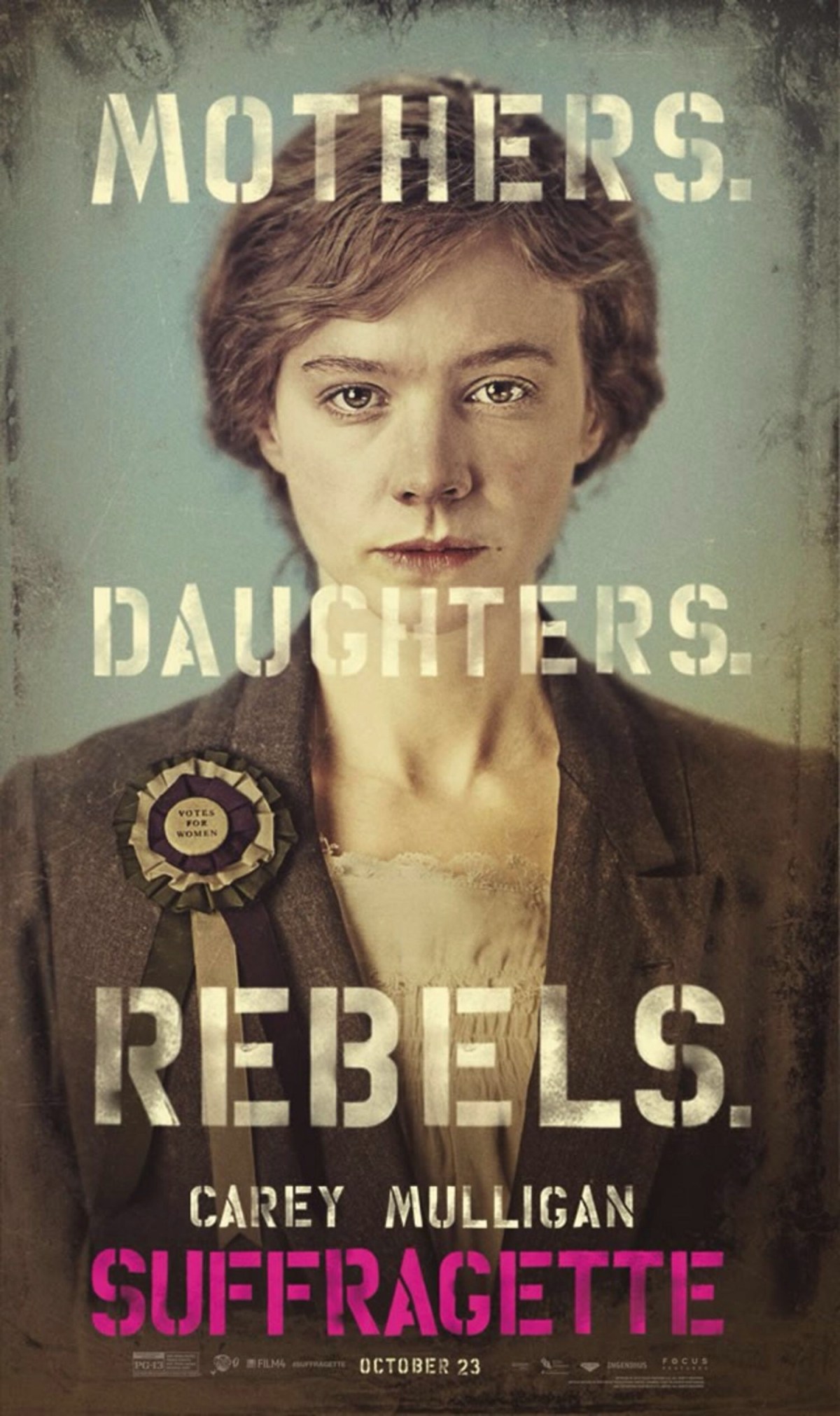
Suffragette (Sarah Gavron, 2015)

Suffragette opened the London Film Festival in some style tonight, with the stars out in force at the Vue in Leicester Square to bring their film to crowds in what was also the European premiere. The London Film Festival director Clare Stewart said prior to the screening that it was an “urgent and compelling film, made by British women, about British women who changed the course of history.” How right she was.
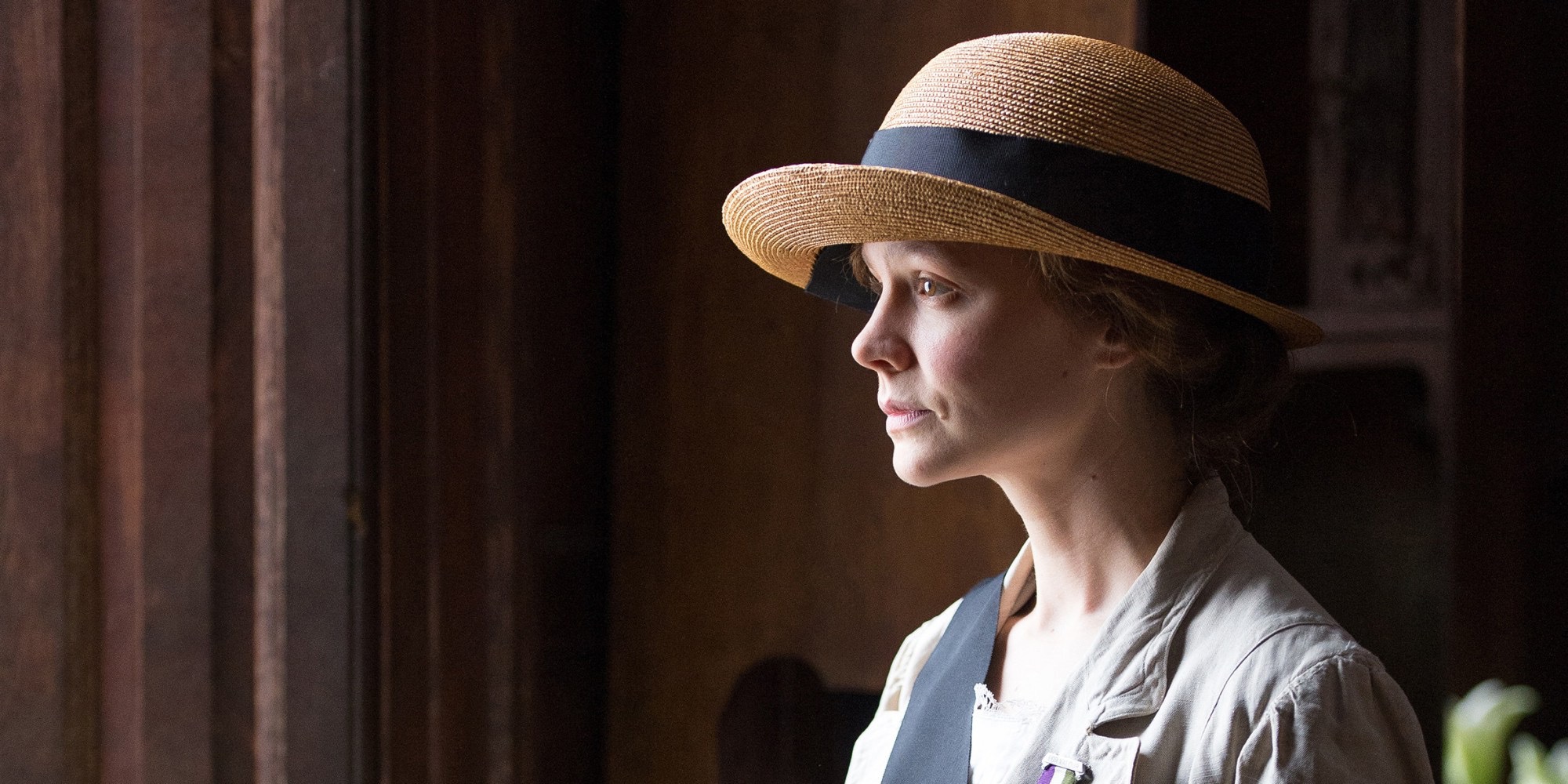
Carey Mulligan puts in an excellent performance.

The film, directed by Sarah Gavron and written by Abi Morgan, tracks the true story of the early suffragette movements of the late 19th and early 20th century and how their struggles against increasing opposition from all around them got harder as their prominence rose. The focal point is the fictional Maud Watts (Carey Mulligan), a working class washerwoman who gets slowly drawn into the fight for power and ends up losing everything to fight for her equality. She joins the local branch of the suffragette movement after a chance encounter in the West End, and quickly finds her feet alongside Edith Ellyn (Helena Bonham Carter, incidentally the great-granddaughter of H. H. Asquith who was Prime Minister from 1908 to 1916), Violet Miller (a standout performance from Anne-Marie Duff) and Emily Wilding Davidson (Natalie Press), a woman whose life is worthy of a film in her own right.

Just as important to the dynamics of this story are the men. Maud’s husband Sonny Watts is an extremely complex character portrayed magnificently by Ben Whishaw. As Whishaw discussed prior to the screening, Sonny is conflicted by the desire to protect and provide for the family he loves and doesn’t understand the importance of his wife’s involvement. However, as the plot progresses he makes some unforgivable decisions that further drive Maud’s determination. Brendan Gleeson provides depth to the role of Inspector Arthur Steed, a man of authority who is investigating the movement.

However, this is a film about women and made by women. It is extremely refreshing to see a film where the women take centre stage and it isn’t about how in love they may or may not be with a man. Screenwriter Abi Morgan said prior to the premiere that “a film that is fronted by an ensemble of women, and they are not being funny or romantic, is hard. That became a huge obstacle.” It didn’t feel like there were any obstacles in the final product, though the story is a tough one to discover if your only experience is the sanitised version of the suffragettes where everyone sits around drinking tea and waving flags that is much easier to tell and even easier to digest.

Meryl Streep appears as British suffragette leader Emmeline Pankhurst. It is a positive move to use her in the advertising and posters as her popularity will bring punters to this important piece of cinema. However, it will be a great shame if she ends up being overly celebrated for her appearance, especially given it is so brief. There are at least three actresses in this film more deserving of accolades for their supporting roles.

In 2015 34% of women eligible to vote in the United Kingdom failed to vote in the general election. This figure rises to 56% for the under 25s. Overall that’s almost ten million women. So was the suffragette’s fight in vain? For the most part, no. However, these stats do underline that the right the UK has to vote is now taken for granted. As such, the release of Suffragette is as poignant now as it ever could have been.

A postscript identifies the years in which women were given the vote in various countries around the world. It is not surprising to see that several countries are still lagging on this front, though perhaps the popularity of this film will help rectify these issues ever so slightly.

This is a powerful piece of cinema and a relevant work of art. It is essential viewing for all women, any of the 33.9% of the UK public who decided not to vote in the 2015 general election, and anyone with a passion for excellent cinema.

Suffragette will be released in UK cinemas on 12 October 2015.

L’Homme Que L’On Aimait Trop (Andre Téchiné, 2014)

Andre Téchiné’s latest film L’Homme Que L’On Aimait Trop (literally The Man That You Loved Too, though also known as In The Name of My Daughter but advertised here as the comparatively uninspiring French Riviera) was the opening film of the 2014 BFI London Film Festival. It didn’t kick the fortnight off with fireworks – that was saved for the red carpeted The Imitation Game a couple of hours later – but it was a film that was overall a missed opportunity despite almost being salvaged by a few great performances.

IMG_9218.JPG

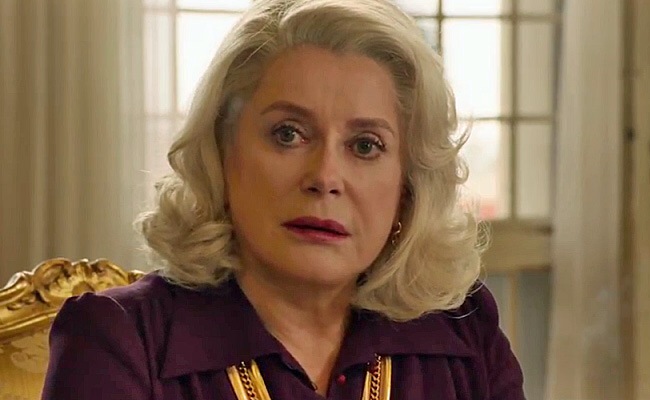
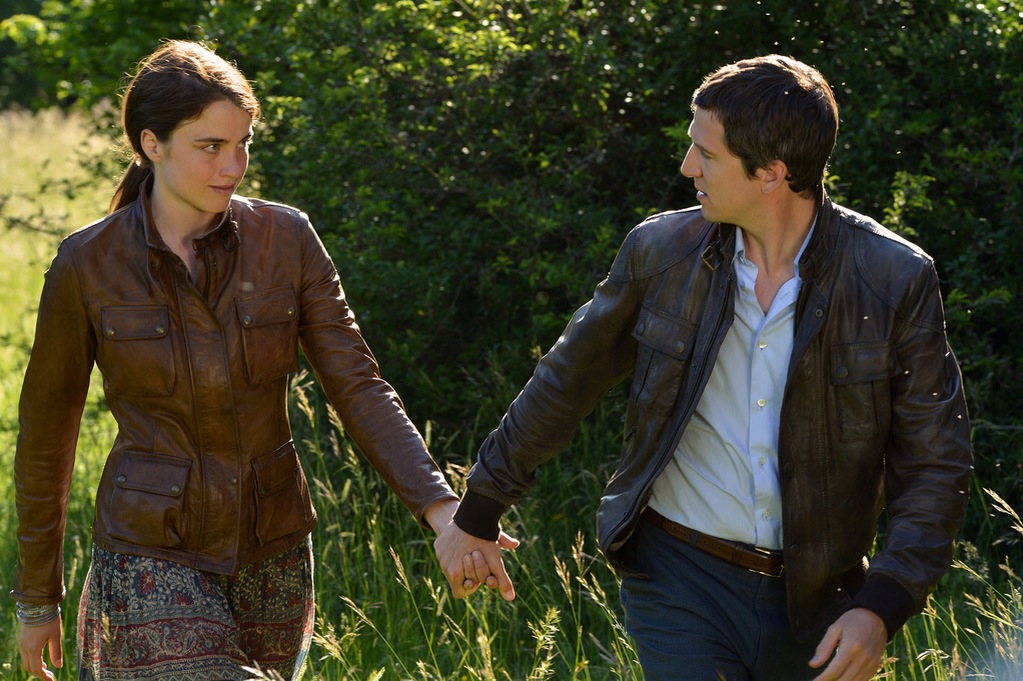
The plot centres around Renée Le Roux (played by Catherine Deneuve), the owner of The Palais, a casino in the French Riviera. We pick the story up in 1970s Nice, as her daughter Agnès (Adèle Haenel) arrives home from a long absence. She is met at the airport by Maurice (Guillaume Canet), a man who is part family lawyer and part personal assistant to Renée. The primary reason for her returning appears to be to give her mother’s opinions more backing on the executive board of the casino, but the situation quickly gets complicated when Agnès begins a largely unrequited infatuation with Maurice. Both Agnès and Maurice slowly reveal that they are driven by their own personal agendas and this makes for an interesting triangle of power, greed, love and suspicion.

Unfortunately, there is a tendency for the plot to focus on things that aren’t central to the plot, whilst critical points are overlooked. A key aspect of the plot is a power struggle between members of an executive board of a high-class casino, on which there are some suspicious mafia members pulling the strings. This is a potentially fruitful area that is largely unexploited.

Equally, the period immediately after Agnès eventually betrays her mother is almost completely skipped over and we are left to work out where exactly we are on the time line. Again, later in the film when Agnès disappears we pick the story up with Maurice a couple of months down the line. This is something that is explained about 40 minutes later in the film, but it doesn’t exactly make it easy to follow.

Indeed, the method of storytelling chosen at this point is a montage of newspaper headlines, which is frankly quite lazy. Adèle Haenel’s performance as Agnès heads towards a mental breakdown isn’t very convincing and I never really believed she was in turmoil, perhaps because too little time was spent on this period.

IMG_9248.JPG

The overall impression is that of a lack of focus and that Andre Téchiné couldn’t decide what the most relevant parts of the story were. Perhaps it was a stylistic choice to underline the fact this mysterious story is still yet to be unravelled and so much is still unknown, but I would sooner have had a story better told.

The final act of the film is set in a courtroom many years down the line. The make-up on Maurice is extraordinary. Unfortunately, they age him by about forty years and Renée only looks about ten years older, despite the fact we are told she has spent the intervening years (22 to be precise) ploughing all her time and money into searching for her daughter. He has allegedly been enjoying his early retirement in Panama. Surely someone on the set realised there was a mismatch here?

I left the cinema feeling like this was a missed opportunity to tell a really interesting story whilst shedding some light on a real-life mystery that is yet to be unravelled. It’s not a disaster, just not quite what it could have been.

L’Homme Que L’On Aimait Trop is released in UK cinemas in 2015.

BFI London Film Festival 2014 Preview

This week sees the start of this year’s BFI London Film Festival and I’ll be heading down to London tomorrow to see as many as I can in three days.

Here’s what I chose:

French Riviera (Andre Téchiné, France, 2014)
Black Coal, Thin Ice / 白日焰火 (Diao Yinan, China, 2014)
The Imitation Game (Morton Tyldum, United Kingdom, 2014)
The Duke of Burgundy (Peter Strickland, United Kingdom, 2014)
’71 (Yann Demange, United Kingdom, 2014)
Giovanni’s Island / ジョバンニの島 (Mizuho Nishikubo, Japan, 2014)

Frustratingly I double-booked myself for the Biophilia Sonic Gala so I will have to miss out, though I’m now extremely popular with my brother’s girlfriend who is seeing it for free!

Expect some reviews over the next week or so of these films. Have a great one if you’re also heading down. Maybe I’ll see you there!!