Film review – Passengers (Morten Tyldum, 2016)

It’s fun to slam a bad film, isn’t it? Hand us a terrible film and we’re all there ready with our sticks to beat it down. It’s funny, because the filmmakers have no control over it and we get away with having a good laugh at their expense.

Passengers has been that film for the last couple of weeks.

I’ve had an article shared to me with some photos that prove how creepy Chris Pratt is in it. I had another one sent over about how it had failed at the box office after poor reviews. Generally the early reviews were positive, then the consensus changed and everyone has now decided it’s a poor film, so that’s the stance everyone has taken. Even positive reviews have misleadingly negative titles to ensure they don’t buck the trend (News.com.auhad a favourable review but they titled it “What was Jennifer Lawrence thinking?”).

The three people who sent me the above articles have no intention of watching Passengers. That is entirely their loss.

Passengers is an excellent film.

There’s more to this than the reviews have suggested

Spoilers now follow.

At its heart, it is a romantic drama that explores the relationship ship between James Preston (Chris Pratt) and Aurora Lane (Jennifer Lawrence), who are trapped in space on the Avalon spaceship, en route to the planet Homestead II. To make the 120-year journey, the crew and passengers are in hibernation pods, but Preston’s pod opens early and he is forced to fend for himself, physically and mentally.

Trapped in space alone, he eventually starts to consider waking up fellow passengers. As an electrician and mechanic, he can navigate the user manuals of the hibernation pods and is able to select who he wakes up based on video messages left on their personal profiles onboard the ship’s communication devices. He chooses writer Lane, a woman he has fallen in love with, and makes the unforgivable choice to wake her up, sentencing her to the same fate as him – certain death before anyone else wakes up.

The critics have centred on this decision as a blocker to any enjoyment. That is truly unfair. If they were handed the film to edit, presumably it would finish after forty minutes and we’d have a shot of Pratt’s character dying alone as an old man, trapped and miserable, yet having made the morally correct decision. 

In Mark Kermode’s book Hatchet Job, there’s a brilliant passage on how Casablanca would have turned out if it had been shown to test screenings, with one of the greatest love stories of all time likely being changed to a happier yet implausible conclusion. 

The same applies here.

This is a plot that is deliberately divisive, meant to create discussion. Some will argue that Preston was insane, on the cusp of suicide, and his relationship with Lane sustained him long enough to figure out there was a critical error with the ship, this saving the entire ship (with her help – it was a two-person job). Others will side with Lane’s stance immediately after she realises the truth; also quite justifiable due to the fact their entire relationship is based on a fundamental lie.

Either way, director Morten Tyldum fully explores every possible line of thought enough to allow the viewers to make their minds up, with enough space in the pace of the film for those thought processes to go to fruition during the film.

Pair this complex romance with some beuatiful visuals and some stellar performances from the two leads, and you get a film much better than the critics will have you believe.

You will be robbing yourself if you believe the negativity and don’t see this film for yourself.
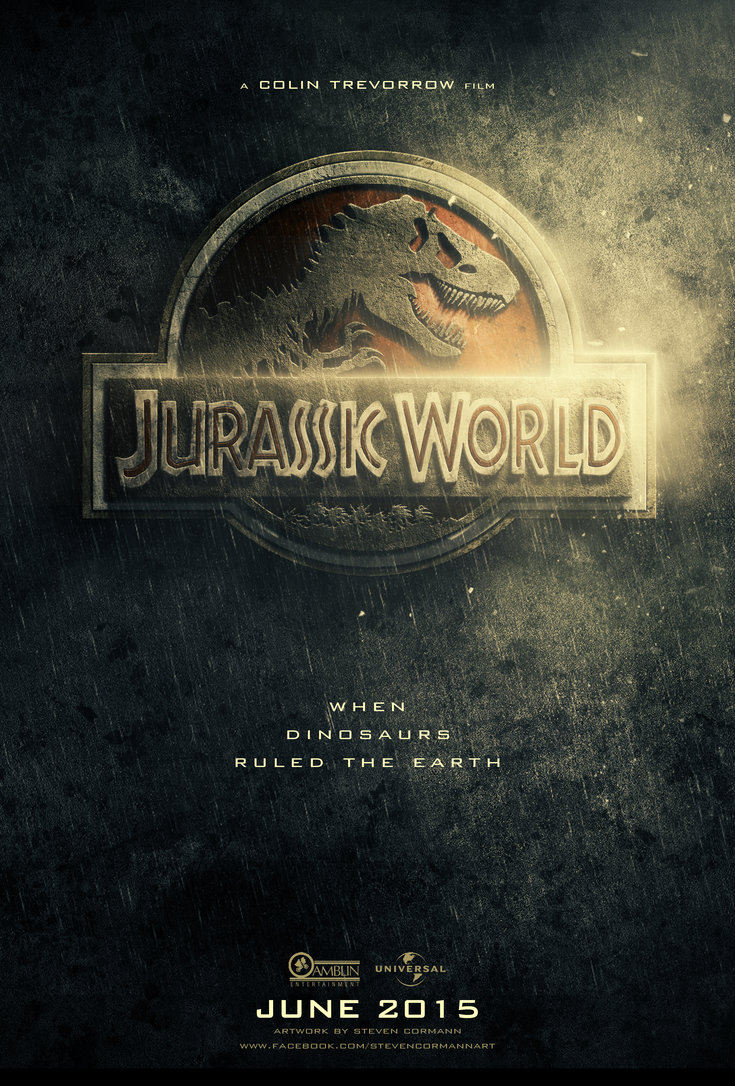
Jurassic World (Colin Trevorrow, 2015)

One of my earliest cinema memories involves Jurassic Park, the 1993 action blockbuster directed by Steven Spielberg that has gone down in history as one of the greatest action films of all time. Sat at my local cinema – Apollo / Unit Four Cinemas in Brierfield in the heart of Lancashire [1] – with my brother and mum, we were all on the edge of our seats as Dr Alan Grant attempted to get Alexis and Timothy over a soon-to-be-electrified fence. As the shots flicked between the party on the fence and Ellie Sattler in the control room re-powering the park, the alarms start to blast out and the suspense was way too much for my brother. With perfect timing, he stood up with clenched fists and shouted “JUST JUMP!” at the top of his voice. It’s a story that is still retold at family functions to this day. Occasionally I just send him a text saying “JUST JUMP!”. It never gets old.

Actually, what is interesting about this highly memorable scene is the fact it doesn’t really involve any dinosaurs. It doesn’t require any special effects or CGI until an entirely believable puppet raptor bursts through a wall over Sattler’s shoulder. It’s just a bit of tense music and some mild panic for some characters we all really care about.

Throughout the whole film the exhilarating pacing was always there and the effects were obviously well thought out to ensure a realistic and believable option was utilised. This kind of intelligent movie making was sadly missing from the two installations we’ve had to endure in the intervening years. Fans of the original were hopeful that this would all be corrected with this year’s franchise reboot. Sadly their hopes won’t be realised with Jurassic World.

Despite Chris Pratt's great performance, he can't save the film from its underachievements.

Despite Chris Pratt’s great performance, he can’t save the film from its underachievements.

The premise is excellent. Twenty-two years after the events of the first film, Isla Nublar, an island off the coast of Costa Rica, has been converted into the visionary park that Dr Hammond always dreamed of. Led by Dr Wu (the returning B. D. Wong) at the behest of Simon Masrani (Irrfan Khan), the scientific research team has secretly been working on genetic splices of dinosaurs in an attempt to turn around dwindling attendance figures. When their prize creation – an Indominus Rex – escapes from its enclosure, it is down to velociraptor trainer Owen Grady (Chris Pratt) and clueless park operations manager Claire Dearing (Bryce Dallas Howard) to rescue Dearing’s two visiting nephews Gray and Zach Mitchell (Ty Simpkins and Nick Robinson respectively).

Much has been made about Dearing as a weak role model for girls. I have to say that when I stumble across these kinds of articles I tend to roll my eyes, but in this case the anger is very much justified. As operations manager for such a huge island resort, she is immediately shown as weak-minded and out of her depth in her job, lacking in the basic facts required for her position and wholly reliant on people around her to bail her out. When she finally decides to knuckle down and help out the cause, she decides to keep her high-heels on. In the end she spends the remainder of the film hiding behind her alpha male counterpart, being rescued and generally not being much use. The only other prominent female is Zara Young, Dearing’s personal assistant, who is too engrossed in her phone to do her job. When the original film had two very likable and head-strong female characters, this comes as a bit of a disappointment.

Indeed, there are only two characters of any substance. Chris Pratt’s Owen Grady is a blast from the past, no nonsense hero who makes decisions by taking matters into his own hands and has superior knowledge of pretty much everything in the park. He is a little cliched, but it’s something that can be forgiven when everyone around him is so difficult to get behind. Ty Simpkins’s Gray Mitchell, the younger of the siblings, follows up assured performances in Iron Man 3 and the Insidious series with a solid turn as the know-it-all excited teenager. He may be Tim Murphy reincarnated but in comparison to his wooden older brother he is a breath of fresh air.

The only thing less believable than the majority of the cast is the woeful CGI. There were a couple of moments that impressed, though these were generally in the dark and in short bursts. For the most part and especially in the day time shots, the effects were a distraction and this is a sin in the art of storytelling through film. The best films take you into a world and fully immerse you in what you are experiencing. An overarching question hanging over this film is how they managed to actually make the dinosaurs less believable than Jurassic Park, despite the fact they spent more money doing it. The mind baffles.

Jurassic World is certainly better than Jurassic Park III, and perhaps on a par with The Lost World, but for all the hype around it, it never quite lives up to the expectation.

Jurassic World is in cinemas worldwide now.

[1] From my childhood home in Burnley, the Brierfield Apollo was definitely the closest to get to. It was the setting for almost all of my earliest cinema memories: Teenage Mutant Ninja Turtles (a hugely exciting 6th birthday treat in November 1990), The Never Ending Story II (December 1990), Robin Hood Prince of Thieves (July 1991), Hook (April 1992), Aladdin (another birthday trip in November 1992) and Jurassic Park (July 1993). The cinema shut down in 1997 upon the opening of Apollo Cinema in my home town Burnley, which then became the home of my teenage year’s of cinema (I think I saw two of the opening four films available in the first week – Batman and Robin then Beavis and Butt-head Do America – because there was a promotional offer to get people through the door). I think, however, all of these were preceded by a trip to see a re-release of Snow White and the Seven Dwarves at Loughborough’s Curzon Cinema in July 1987, which was abandoned because my grandma was ill.