Aside from being a massive fan of all kinds of cinema, I’m also an occasional keen gamer. I usually pick up games a while after they have been released so they are cheap, and that was true this year with games such as Catherine, FFXIII-2 and Rayman Legends taking up a lot of my time despite being over a year old. I even played Dragon’s Lair!!
I have managed to play a small amount of games that were actually released this year, so I thought I’d write a few words about some of my favourites.
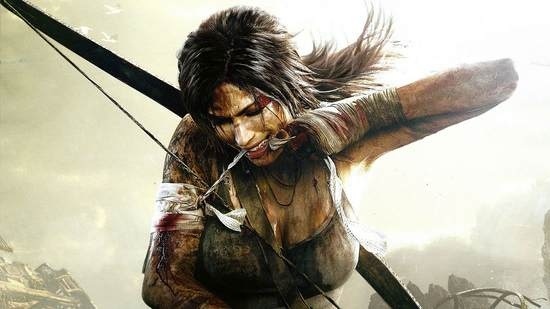
Tomb Raider (XBOX 360 / PS3)
As a twelve year old boy, the release of Tomb Raider II on the PlayStation came at a key moment of my life. The game was one of the biggest sellers, had rave reviews and was a fantastic showcase for the new console I’d just received for Christmas. No longer was I controlling a minuscule blocky man-character, but a fully-formed female equivalent of Indiana Jones.
The curvaceous way she was designed, of course, was fully aimed at me, and I can’t say this didn’t raise its appeal to me. Living in Britain in the mid-90s, even at a young age, I was aware of lad culture. The likes of Loaded and FHM were everywhere, and it wasn’t long before Lara Croft was featured in these magazines and being considered as a sex symbol. At the time there was definitely a split opinion on whether Lara Croft was an empowerment to women or she was objectifying them. The unrealistic figure by which she was designed juxtaposed with her physical power and mental strength. Perhaps this debate helped raise the franchise’s relevance in the wider gaming market and helped it shift enough copies to become one of the biggest sellers of the 90s.
It was refreshing, then, when I started on my copy of this franchise reboot. Gone are the unrealistically top-heavy curves seen fifteen years ago, replaced with a much more relatable – and frankly way more practical – figure.
The storyline picks up with a young Lara going on one of her first archaeological journeys. The action is set on an ancient island near Japan, with her team shipwrecked and seemingly incapacitated. A gang is also on the island, trying to resurrect an ancient Japanese ritual using Lara’s friend Alex as the new Sun Queen. The script is extremely well written and the voice acting is surprisingly good for a video game.
It plays as part-action, part-RPG, with players required to level up their weapons as the game progresses. There are a variety of tools with which to kill your enemies and hunt animals, and the bow is especially fun to use.
It is perhaps a slight victim of the time in which it is released, with an overwhelming amount of collectibles to be had and some pretty frustrating achievements (the one I missed – Chatterbox – still narks me now).
The other flaw is the tendency to flick to Quick Time Events in key moments. I personally hate this style of gameplay. Unfortunately Square Enix love it, and tried to use it to ruin last year’s otherwise excellent Final Fantasy XIII-2. Sometimes it’s quite difficult to work out when you’re supposed to be watching and when you’re supposed to be inanely pressing a button when it appears on the screen.
Overall though the game is a fantastic reminder of what I loved about the original games. The action keeps on coming, the characters are fully realised and the storyline keeps you gripped as much as plenty of big blockbuster films released this year. The gap between movies and gaming as a means of storytelling is getting smaller every year, and it is great when a game like Tomb Raider comes along to remind us how much more engaging a video game can be.
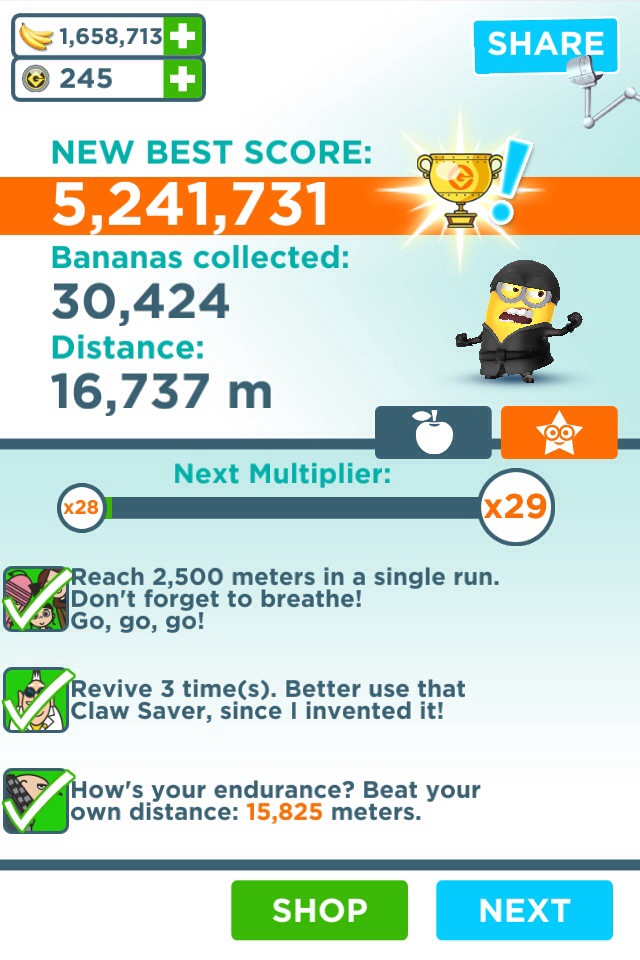
Minion Rush (iOS)
What can I say? It’s like Temple Run but a minion times better. I’m still playing it daily six months later. Not something I’m proud of, but it’s damn addictive.
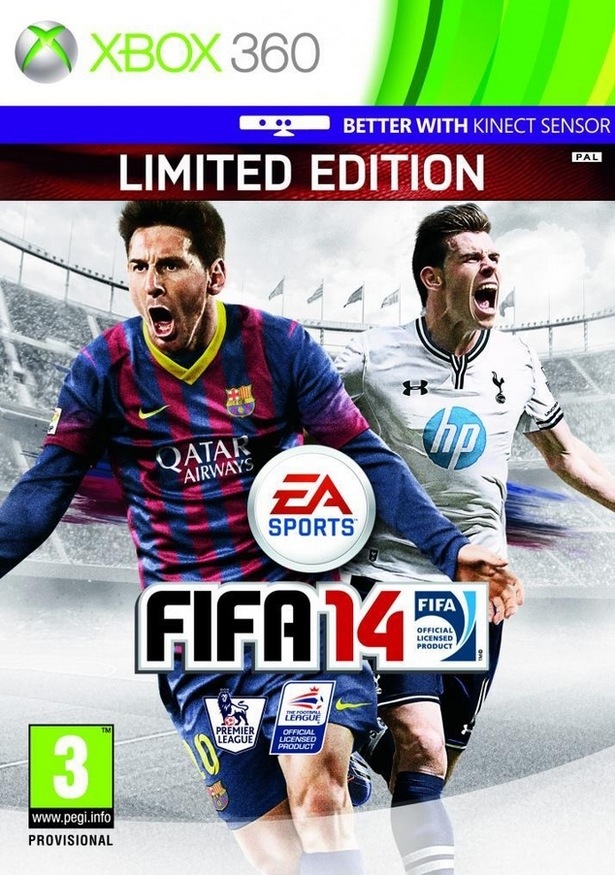
FIFA 14 (XBOX One / PS4 / XBOX 360 / PS3)
Okay, I’m aware the selection of a FIFA game in a best of the year list is a far cry from controversial, but the game is excellent.
I pick up new FIFA games once every two or three year. As such, I always appreciate the improvements that have been made and allow myself time to start to miss the game.
It’s extremely vast, with heaps of game modes to select. You can play an exhibition match, which would be the mode of choice when you’re at a mate’s house and want a quick game. You can do the usual suspects of creating a custom league or cup, or playing through the 2013-14 season with you favourite team in one of the many licensed leagues they have acquired. You can take control of a single player and play through a career, either as a real life player or a created player. You can take it online and play against friends competitively or with unknowns (who inevitably select the ridiculously good Real Madrid).
There’s Ultimate Team, where you build a squad of players by opening digital packs of cards and selecting your best team from what you find inside. There’s a robust skill games section that is still challenging me now. There’s also a mode where you can relive key moments from recent matches, and either recreate what has happened or “put right what once went wrong” (oh boy). You can take control of a single player online in 5v5 and try to complete challenges along the way. Finally, there’s also the promise of a World Cup 2014 expansion pack, which will breathe further life into its playability.
What I’m trying to say is that whilst it’s only a slight improvement on last year’s installment, you have to stand back and admire the value-for-money package that is now on offer. I could never bring myself to buy it every year (or indeed twice in one year as early adopters of the next-gen consoles have done), but coming back to the franchise after a break really makes you appreciate what is on offer here.
New Super Luigi U (Wii U)
New Super Luigi U was actually an add-on pack for New Super Mario Bros U, released in 2012. It’s essentially a rehash of the game and most of the levels are very similar in design and layout, with a few tweaks to increase the difficulty.
It is a much more difficult game than it’s immediate predecessor, perhaps because that was perceived as far too easy for most gamers.
One of the key differences is the reduces time allowance. This time you only get 100 seconds to get through the level and pick up all the star coins. Many times the pace is frantic and you have to repeat levels to pick up one or more star coins. I was in panic mode every time until I had the genius idea of turning the music off.
It’s not a groundbreaking game but it was a welcome challenge to fill the space between the first instalment and the excellent and in every way far superior Super Mario 3D World (see below).
Super Mario 3D World (Wii U)
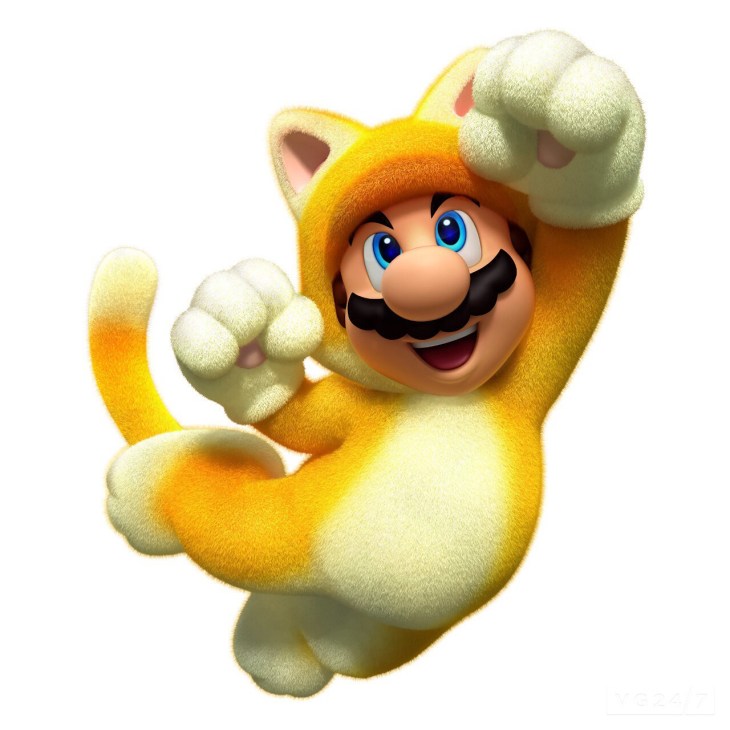
From the moment you start playing the first level, you know where the heart of the game lies: fun. It’s pulls out all the stops to give the player variety and it’s filled with imaginative ideas to breathe life into a familiar franchise. The cat suit is a stroke of genius, and new power-ups keep appearing as the game progresses.
The game is best played in multiplayer mode, which quickly comes sneakily competitive due to a winner being announced after each level based on points.
By the third world, you realise that the ideas haven’t been loaded top-heavy. They keep on arriving thick and fast, sometimes incorporating ideas from previous franchises – the Mario Kart-inspired Mount Must Dash is hilarious.
There are Captain Toad mini levels that test not your reaction skills but rather flex your logic, reasoning and spatial awareness.
The collection of the green stars really ups the replayability, functioning like the star coins of the New Super Mario series but significantly more challenging.
The end of world bosses are a great example of how to add variety to a game’s gameplay, shying away from the now well-overused jumping on the head three times style of most Mario games (it’s now over 30 years old!!).
Once you’ve finished the obligatory eight worlds, expect plenty more with the somewhat expected post-game play in the form of a bonus world. After that, you’ll be treated to another two! It will keep you going for months.
The style of the game, the immense detail on everything from the characters to the background of the world maps, the exquisite and highly varied music. All of the components add up to a highly immersive and extremely enjoyable gaming experience, a real return to form for the franchise. Whether it is enough to save the now seriously flagging Wii U remains to be seen, but if there’s ever a man to save a console it will be that tiny plumber.