It is a busy year for John Maclean. After a 21 year gap, The Beta Band are reforming for a tour to play their classic The Three EPs album across a range of venues in September and October. John will be joining them for the tour, which has been a welcome surprise for fans of the band.
Not happy with just one return after a long break, Maclean is also returning to cinemas with period samurai drama Tornado, his first feature film since 2015’s Slow West. It has been a long time in the making, with stoppages caused by the Covid pandemic and the writers’ strikes, but it was absolutely worth the wait.
Tornado’s opening immediately draws the viewer in. A mysterious girl runs across an open grassy plain, hotly pursued by a young boy and then a gang of mercenaries. The shot is reminiscent of the opening of Star Wars (1977) – you know the smaller characters are in trouble and you want to find out why. Hiding in a forest, before taking refuge in a country house, the girl watches on as she realises the gang are moments away from finding her.
This girl is the titular Tornado, portrayed wonderfully by the Tokyo-born actress Kōki, a relative newcomer who takes centre stage throughout the film. As the daughter of actor Takuya Kimura (Blade of the Immortal) she is clearly well-versed in the art of samurai swordsmanship, but the role calls for much more than just swinging a sword. Indeed, that doesn’t really become relevant until the final third of the film, then the action ramps up.
Elsewhere, Tim Roth and Jack Lowden provide an intriguing father-son relationship as their bickering threatens to cause a rupture in the close-knot gang they are part of. Joanne Whalley, Takehiro Hira and Rory McCann all feature capably in supporting roles.
Visually, Tornado is a beauty to behold. Shot on 35mm cameras on a low budget, Maclean and cinematographer Robbie Ryan (The Favourite, Poor Things, Slow West) clearly have an eye for cinematic beauty. It was surely a risk to take film on a punishing January shoot in Scotland, with only 25 days to capture the entire film, but it absolutely pays off.
It’s a great time for British film, with The Ballad of Wallis Island also proving to be popular and critically celebrated. The films couldn’t be more different in tone, but both deserve to be sought out.
Paul Verhoeven’s retelling of the story of Benedetta Carlini may surprise fans of his most mainstream English-language work (for example, Robocop, Total Recall and Starship Troopers), but it is deftly executed and performed to perfection by a strong cast, all of whom raise the bar of a smartly-written tale.
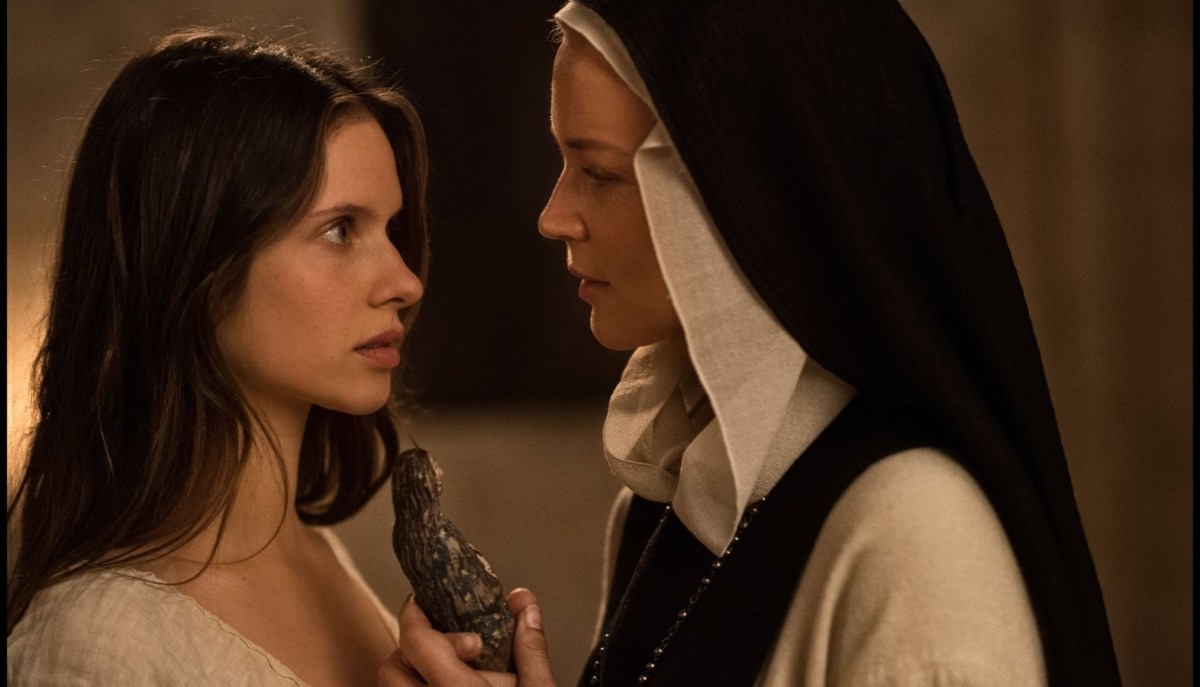
The film is set in 17th century Italy, where the titular Benedetta is taken to Pescia to become a nun. After a humorous but important opening scene of Benedetta as a child, we are transported to her in adulthood, as she begins to have visions of Jesus that raise her standing amongst her fellow sisters in the convent, belying her secret desires to start a lesbian relationship with a younger nun, the illiterate Bartolomea.
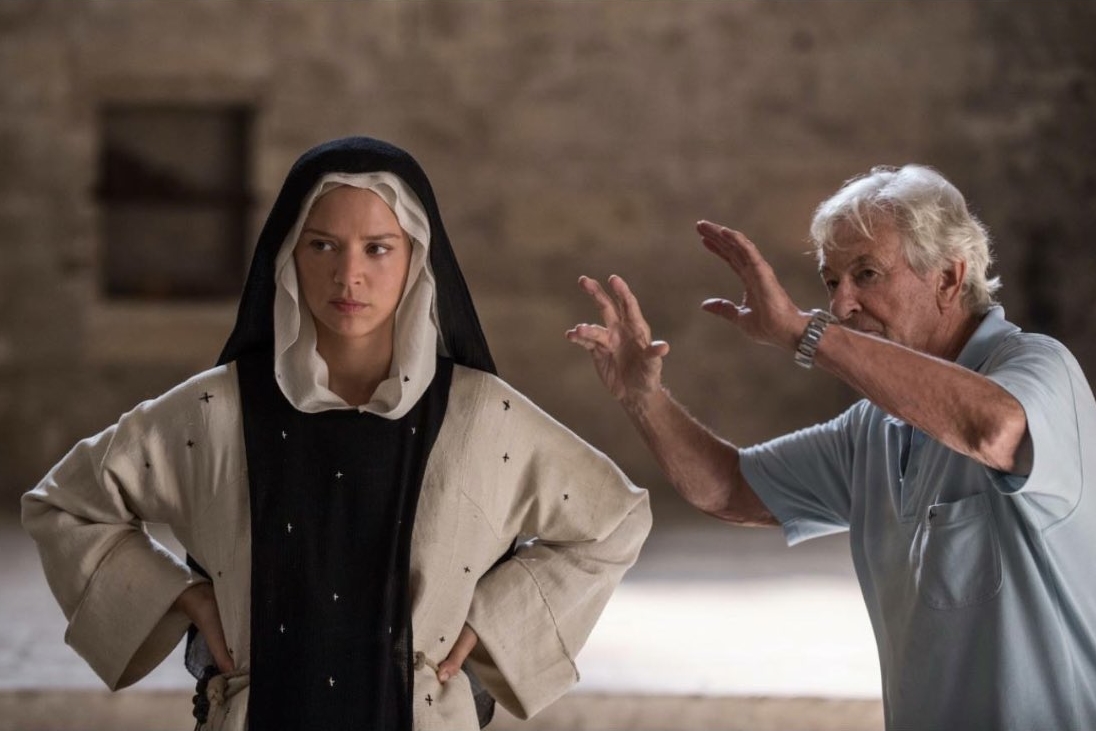
Virginie Efra on the set of Benedetta with Paul Verhoeven
Virginie Efira is in electric form in the lead role here. She is an experienced actress who has flourished in popularity in recent years with the likes of In Bed With Victoria and An Impossible Love, as well as Verhoeven’s last film Elle.
Charlotte Rampling also puts in a powerful supporting performance as Abbess Felicita, with Daphné Patakia completing the trio of female key players in a promising early role.
If there are any criticisms for the film, it’s that it feels a little slow and saggy at the start of the film proper, although viewers are more than rewarded as the film builds to a tremendous crescendo at the end of the film. Indeed, as a comet looms over the convent and the sky lights up in red hues, the action on the ground seems to offer a bigger threat to those in Pescia.
It never feels overblown or rushed, nor overly simple. I am seldom excited by a period piece, less so one set in a convent, but this had me gripped to the end. It is highly recommended.
Following the completion of filming for Phantom Thread, Daniel Day-Lewis announced that he would be retiring from acting and that his role as 1950s London high-society dressmaker Reynolds Woodcock would be his final role. This can be considered both a figurative and literal bowing out in style. Oozing elegance and beauty in every aspect, it is an absolute triumph of a film.
The story centres around Woodcock, head of the House of Woodcock, a well-regarded craftsman who is seeing his popularity diminish by the beckoning of new fashion from around the world. He baulks at the word “chic”. He is a meticulous and silent worker, unforgiving of those who have the audacity to interrupt his genius in flow. His obsessive nature flows over to his personality, and those close to him are dictated to by his need for control. His closest ally is his sister Cyril (the brilliant Lesley Manville), who manages his business affairs and the staff and running of the house. Their world is flipped upside-down when a chance encounter leads Reynolds to fall into infatuation with a young waitress named Alma (Vicky Krieps), who quickly moves into the house and thus begins her strange relationship with Reynolds.
In 2018, a cinematic year defined by an uprising of oppressed and attacked women finally being given a platform to voice their views on oppressive and controlling men in the film industry, it seems almost perverse that I enjoyed Day-Lewis’s performance so much. I felt at times like he was on the cusp of bursting into tears of laughter, such was the audacity of his character’s actions. In one of the best lines of the film, as shown below, he delivers the cutting “The tea is going out, but the interruption is staying right here with me.” Brilliant.
Jonny Greenwood, one of Paul Thomas Anderson’s most frequent and reliable collaborators, provides the score. It is mesmerising, fitting beautifully with the visuals. In a recent interview with Adam Buxton, Greenwood stated that he wrote it in order for it to be performed along with the film. “I wanted to do it with six or seven players and make it all playable and send out the scores to cinemas and say ‘get some local players to play it live’ and it be a really regular thing. I love the idea of the film arriving and then the book of music arriving and these are the two things you put together and make it quite easy, but Paul kept on asking for bigger and bigger string section sounds to build the romance.” Indeed, this decision was probably the correct one, with the enduring stay-ability of the film benefiting over what could have been simply a nice touch at release. I challenge anyone to find a more perfectly romantic piece of film music this year than ‘House of Woodcock’. [1]
A film that is centred around a celebrated dressmaker almost inevitably has a wonderful display of costumes on show. Mark Bridges is another frequent Anderson collaborator, having worked with him on The Master, Inherent Vice and There Will Be Blood. The costumes here are absolutely stunning, perfectly capturing the essence of 1950s London high society. It is a costumier’s dream of a film, with the intricate efforts of making such beautiful dresses captured in great detail.
The film culminates in a most unlikely ending that absolutely works with the film, underlining the nature of Alma and Reynolds’s relationship to one-another and their desire to stay together. Their dinner table stand-off with a mushroom omelette may not have the intensity of the “I drink your milkshake!” scene in There Will Be Blood, but it swaps intense for tense as the scene plays out. It’s just one of those scenes in cinema that hangs perfectly together. Script, acting, cinematography, lighting, score – everything is just right. A masterclass in filmmaking.
Whilst Day-Lewis may be unlikely to receive an Academy Award for this film, it certainly ranks up there with his most celebrated performances. He is one of this generation’s greatest actors and it is a real loss to the industry that he is walking away. However, it’s a noble decision to leave a profession whilst you’re at the top of your game. He could probably deliver a further three or four top performances, but his decision is clearly based on a balance between his enjoyment of his life as an artist and his enjoyment of his life outside of the industry. If Phantom Thread does prove to ultimately be his final role, then he is definitely leaving us on a high.
[1] Note: Jonny performed an exclusive version of this song on the Adam Buxton podcast (EP.63B, 9th February 2018) alongside a 30-minute interview backstage at the Royal Festival Hall prior to a live performance of the score on 30th January 2018. It’s well worth a listen and can be found here.

 Cinema, etc.