J. C. Chandor’s crime drama A Most Violent Year is a well produced piece of cinema that tells an interesting story in a solid manner. However, after sitting through over two hours of its mid-paced plot development, it failed to wow me.
The film stars Oscar Isaac as Abel Morales, the hard-working owner of Standard Oil, and Jessica Chastain as Abel’s wife Anna, with supporting roles from Alessandro Nivola, David Oyelowo, Albert Brooks, Elyes Gabel and Catalina Sandino Moreno. It covers a short but crucial period in Abel’s career as he battles against police and corruption to pull of a deal that will see his small company become a big player in 1981 New York’s oil and gas buying and selling industry.
Isaac looks uncannily like a young Al Pacino in his lead performance, and that may accidentally be to the film’s detriment. Essentially, what we aren’t going to get from this quite understated film is a shot of Isaac gunning down thugs and gangsters from a pile of bank notes and drugs, although the tone of the film could easily have ramped up to this had they wanted to go there. It’s a serious story that didn’t need to fall into some over-the-top cliches, and the film is better for it.
That said, when you’re watching such a long film you’d want slightly more to the plot than a seemingly nice but hard-working guy trying to pull off a financial transaction by going around and asking a few people nicely if they could lend him the money. It is executed very well, but the final product is a little underwhelming.
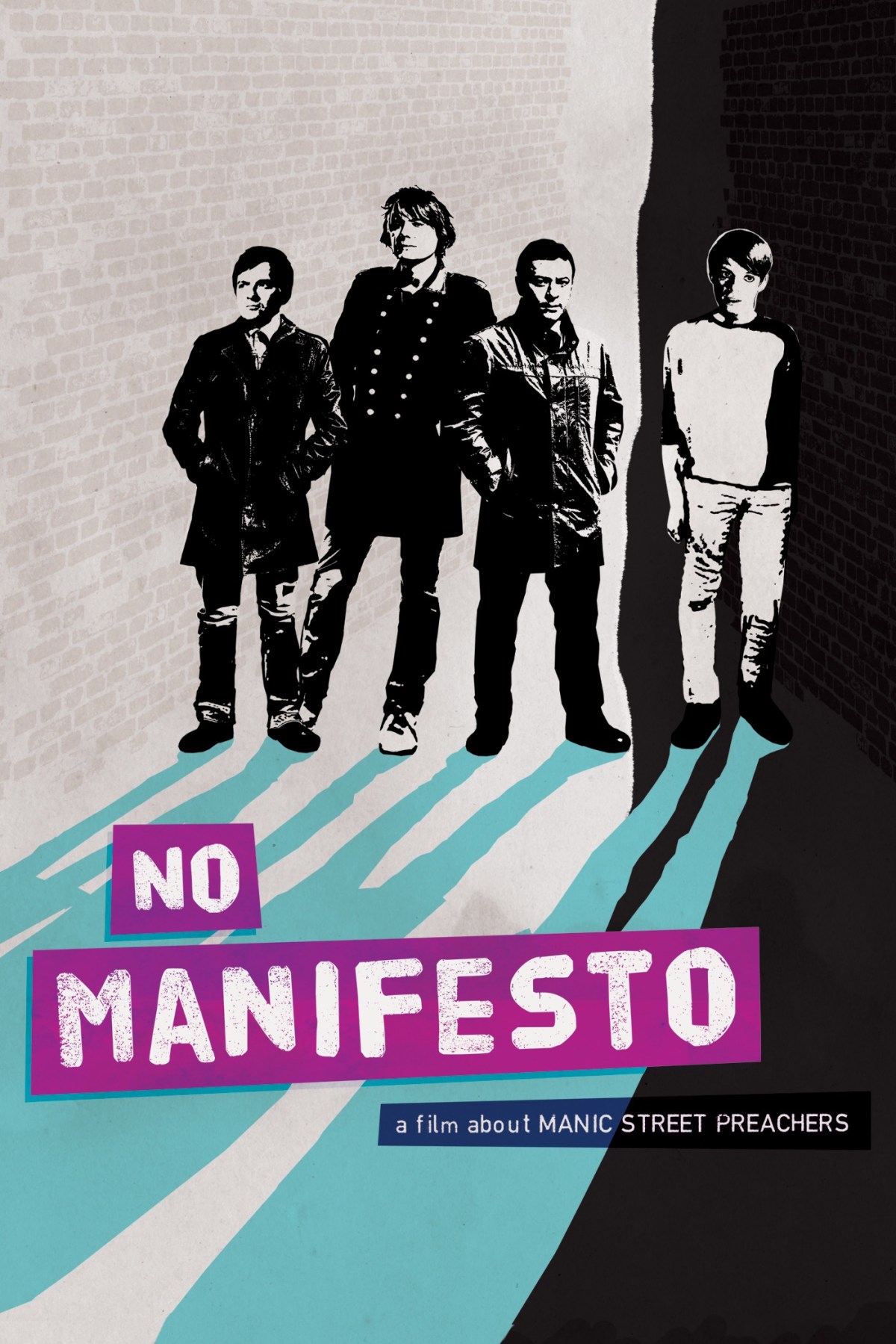
In 1991, Welsh band Manic Street Preachers arrived on the British music scene proclaiming their ambition to make one album, sell 16 million copies and then split up. 18 years, 9 studio albums, one missing member and many controversies later, they’re one of the UK’s most highly acclaimed bands. Narrated by their fans and featuring exclusive footage of recording sessions, live performances and interviews with the band combined with archival materials, No Manifesto takes an in-depth look at the Manics’ history and creative process and gives glimpses of the quirky and unique personalities that make up the band, as well as exploring the deep relationship between the band and their audience.
Director – Elizabeth Marcus
Producer – Kurt Engfehr
Inevitably when I sit down to watch a music documentary it’s going to be for a band that I already know and love. They can be a mixed affair. I recently reviewed the Elvis Costello documentary Mystery Dance and found it fascinating, full of information I wasn’t aware of. On the flip side, the Supergrass documentary Glange Fever is probably best avoided unless you’re a truly avid fan (which I am, so I loved it, but I can see a lot of people not doing so). So when I bought a ticket to a special screening of No Manifesto at Broadway Cinema in Nottingham, I fully expected a crowd full of die-hard fans eager to get a glimpse of the band behind the scenes. That panned out as expected and I think the crowd go what they wanted too. Sort of.
After so long on the music scene, the Manics have built up a close relationship with their fans. Riding the wave of Britpop despite not deliberately trying to be part of the movement (did anyone?), they stuck to their guns and kept releasing great album after great album. That hasn’t really been reflected in their album sales though, nor in the critics’ reaction to their output. As the film points out on several occasions they peaked commercially with This Is My Truth Tell Me Yours in 1998, though if you ask any avid Manics fans they were at their best in their first three albums before the mysterious disappearance of Richey Edwards.
The concept that their best work was in their early days is not something I totally agree with. I also class myself as an avid Manics fan but didn’t join the party until the Everything Must Go album, and I still hold that this is their greatest achievement as a band. Clearly this isn’t a common thought but it always baffles me as the album was so commercially and critically popular. Maybe I’m missing something.
Indeed, you only have to listen to their last couple of albums to realise that they truly haven’t slowed down at all, with a host of big hit singles saturating the radio each time. Show Me The Wonder, It’s Not War (Just The End Of Love) and Anthem For A Lost Cause, rather than standout tracks, are all just a fair representation of the quality waiting to be found within the album should you want to find it. They pretty much sell out their tours every time and their live shows are still full of energy. They truly are something special.
So what does the film bring to the table that we don’t already know? Director Elizabeth Marcus and producer Kurt Engfehr are both from North America, a place where the Manics never quite made it (for several unfortunate reasons). As the film played out and the message was consistently negative about the Manics’ achievements post-millennium, I found myself agreeing less and less with what they were saying. However, I came to realise that it was a truthful depiction of how the Manics are perceived, just in North America.
The film, for which over 100 hours of footage was filmed (“you never know what footage you need”), covers the band from 2005 in the run up to the release of the commercially viable Send Away The Tigers through to the 2009 release of Journal For Plague Lovers, the album that utilised the last lyrics written by Richey. This subject matter understandably gets a decent amount of coverage as it was such a pressing matter in the build up to their 2009 release, though it wasn’t lingered on too much.
Marcus, discussing the film after the screening, said “most press, books and TV treated the band like Richey is the only interesting thing about them. I felt they deserved more credit, both as a band and as people. They had to deal with personal loss and they had to do it in the public eye. They dealt with it with such grace and patience and I wanted them to have more attention.” I agree with this to some extent, but I don’t personally believe that they are solely associated with Richey’s disappearance. Certainly not in the UK. Most bands go through a trajectory of popularity where they have a peak of popularity somewhere between their first and third album, then continually decline from there and end up either breaking up or continuing with a reduced but hardcore fanbase. Clearly the Manics are in the latter category, but have a huge fanbase that support them with every album they release. There’s nothing wrong with that, and nothing abnormal about it. It doesn’t mean they’re really unpopular, just that they aren’t seen in the same light as when they broke through almost 25 years ago.
It wasn’t a conscious decision to take so long to produce the final product, but evidently the delay of five years from completing filming to releasing the final product is going to have an adverse effect on the success of the film. As an independently produced film it was always bound to take longer to get over the line. Actually, they had to take several breaks to earn the money to get to the next stage of the project. I hope this delay won’t mean it is a financial failure as the director and producer deserve more.
For me, the film didn’t have any surprise revelations and as such is telling a story that the target audience already knows, albeit from an unusual point of view. It is a good document of a great band, and will probably be looked back on as an important piece of work for people who become fans through word of mouth some years down the line. For now it’s simply a nice-to-have film for the already converted.
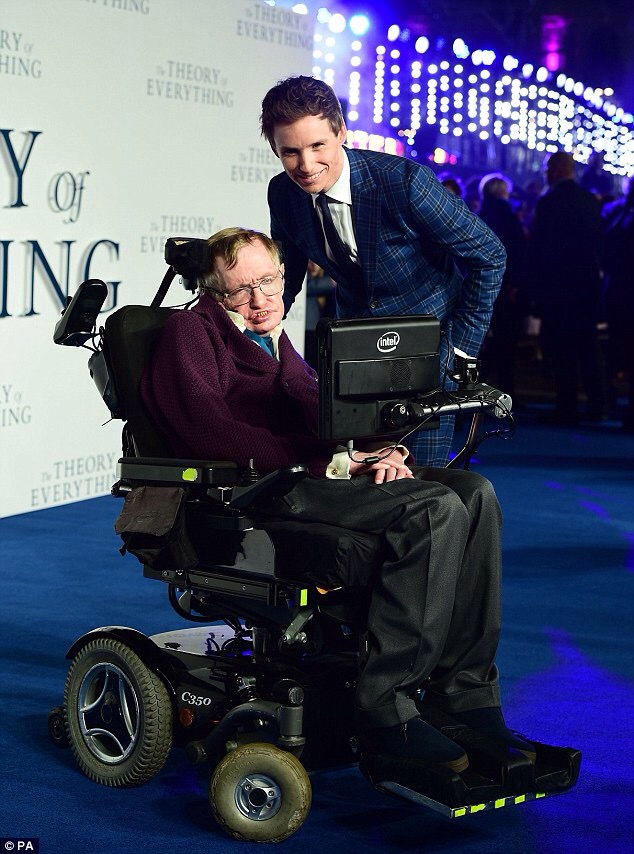
I watched the Stephen Hawking biopic in early February 2015. My challenge was to watch it without influence from the media frenzy surrounding the film and, in particular, Eddie Redmayne’s performance in the lead role. It was fairly easy to block it out, such is the conviction in his performance and the exquisite way it has been captured by director James Marsh and the excellent team of people that helped craft this fantastic film.
In case you’re unaware, Professor Stephen Hawking is a world-renowned theoretical physicist and cosmologist whose book of personal theories A Brief History of Time sold over ten million copies worldwide. He suffers from motor neurone disease (MND), which set in whilst he was still studying at university, and he is now all but completely paralysed. It is a revelation that he is even alive today – he was diagnosed in 1963 and given two years to live. The film tells the story of him reaching university, falling in love with his first wife and mother of his three children Jane Wilde, and becoming the most famous theoretical physicist of the modern world.
A little was made in the build up to release of the choice to cast an able-bodied actor as Hawking. Obviously these complaints come from people who haven’t seen the film because you just can’t cast someone with disabilities as Hawking when the first third of the film is spent on his life before his terrible motor neurone disease set in. I think these comments have gone away now as more and more people see the film.
Frankly, Redmayne’s performance was astonishing. He completely nails it, working as both a great piece of acting and an uncanny impersonation. The frustration that must be felt by the thousands of sufferers of MND is channelled directly to the viewer by coupling some intimate close-up camera work with some exceptional acting. If Redmayne wins the Oscar next month it will be because of the latter parts of the film.
Just as important is the characterisation of his wife, whose autobiography this film is based on. It’s a well-balanced treatment, with her choices portrayed honestly but respectfully by Oscar-nominated Felicity Jones. It’s a strong person that sticks around in such testing conditions and nobody can be judged on the choices they make. Just as with Hawking, she is treated with the utmost respect.
I’m greatly appreciative that a fantastic film has been made on Hawking as I didn’t think the eponymously titled 2013 documentary quite did his story justice. It too heavily concentrated on his current way-of-life and all the problems that it brings, rather than the works of genius he has brought to the world and the battles he fought to become so popular. It was, for me, a missed opportunity – a story that needs to be told, but one that shouldn’t take precedence over the one told in The Theory of Everything.
I’m not sure how closely the film sticks to the facts, as I’ve not yet read Travelling to Infinity: My Life with Stephen (the book by Jane Wilde Hawking on which this is based). Obviously not every last thing that features in this film will be a perfect account of what happened, but that freedom is allowed in biopics. As with The Imitation Game, the most important thing to do is tell a great story, or it falls short of the mark as a piece of cinematic art. Actually, I think The Imitation Game was a better film in general, and Cumberbatch edges it on the acting front for me, but I doubt the Academy will agree and to be honest that’s far more important.
The Theory of Everything is out now at cinemas worldwide.
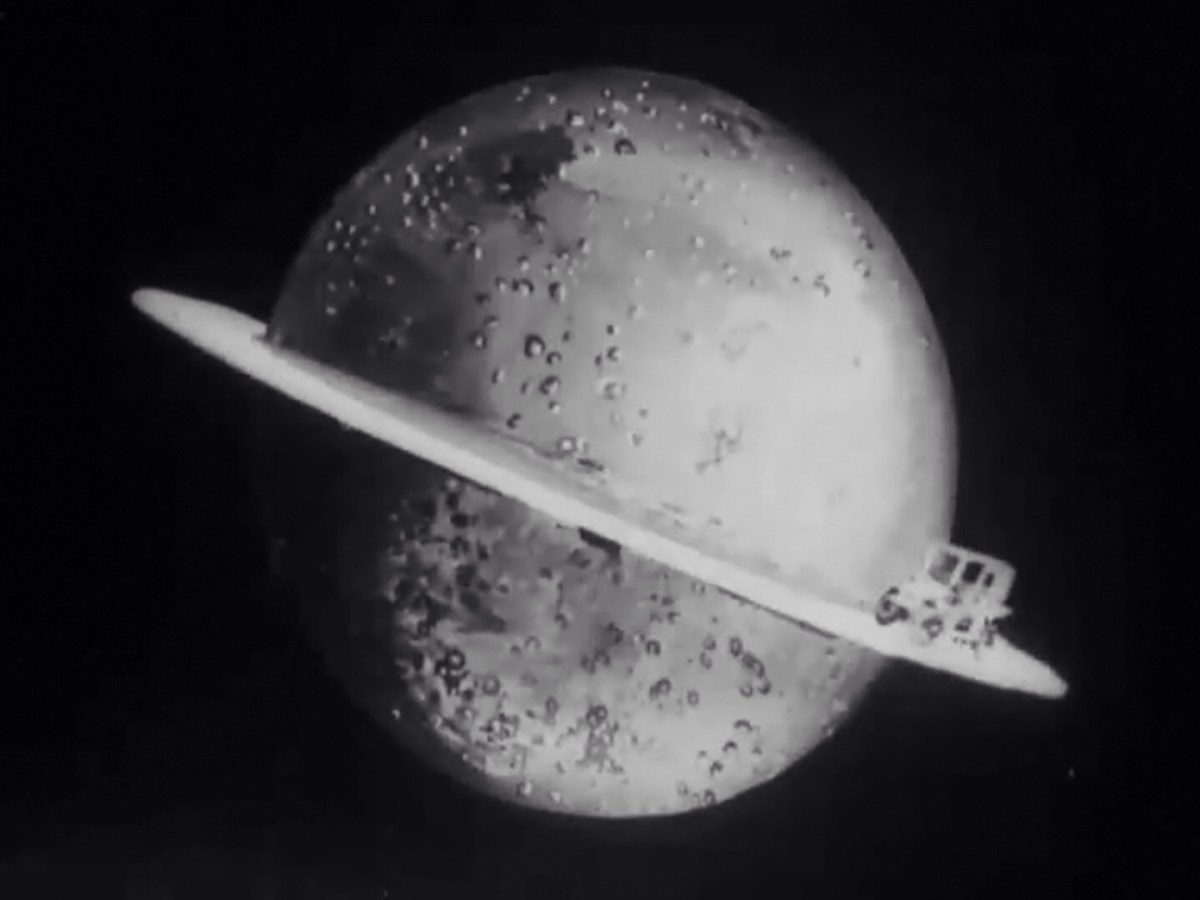
A bride, a motorcar, a robot chauffeur and a policeman – what could possibly go wrong? Fantasy and ‘trick’ film pioneer W.R. Booth uses cut-out animation and models to create a truly out-of-this-world sci-fi adventure. The mad-cap plot sees a newlywed couple transported from a country lane to outer-space (via St Paul’s Cathedral), where the policeman encounters some pretty feisty Saturnians…
Another curiosity from the BFI archives, The Automatic Motorist is a fun and playful short film that is full of science fiction. It’s completely bonkers and has the disjointed feel of a Michel Gondry music video – full of experimental shots that don’t add up to much of a story but that nonetheless provide the viewer with an enjoyable ride. Plus it’s only six minutes long, so you might as well watch it.
After listening to the excellent Masters of Cinema Cast discussion on Busby Berkeley’s 1943 musical extravaganza The Gang’s All Here, I knew I had to watch it for myself. I didn’t know what to expect and having watched it now I still don’t really know what I made of it.
I was reminded of a few modern day film-watching woes as the film played out. You know when you’re watching a 2D film at home and for some reason they have these annoying and hard to follow fast-paced sweeping shots following someone through a surprisingly tricky pathway full of things jumping towards you, and you sit there unimpressed because you aren’t at an IMAX screening? There was a great one in the Jim Carrey-starring animation A Christmas Carol. Out of context it just doesn’t wow, because the sole purpose of it is to show off a piece of technology or visual effect.
Another example is the 30-ish minutes of wasted special-effects shots in Star Trek: The Motion Picture. Loads to see, if your thing is watching outdated effects showing a spaceship slowly crawling through space. In the distance. But watched in 2015 you can’t help but drown in the lethargy of it all.
So we have The Gang’s All Here. A work of Technicolor wonder. A flimsy plot serving as a platform for countless big hit parade smashes in state-of-the-art colour film. A picture oozing razzmatazz. A picture that just doesn’t wow, simply because the visuals it spends so long showing off are just something we expect of a modern film.
That’s not to say The Gang’s All Here is the first colour film and a massive surprise to audiences. Indeed, they had been treated to both The Wizard of Oz and Gone With The Wind in 1939, some four years eariler, both shot in Technicolor. This was, however, Berkeley’s first feature to be filmed entirely in Technicolor, which would have been a great honour at the time due to the high production costs associated with the technique. It wasn’t an opportunity he was going to waste, and he certainly made enthusiastic use of his chance to use colour for the first time.
Really, the plot is a duplicate of far too many films of the era: woman and soldier fall in love in a whirlwind romance on the eve of his departure for the war (in this case, he’s off to Japan). It really isn’t important. What the 1943 American audiences wanted was escapism – two hours of over-the-top dance numbers, busy routines, familiar songs and huge stars. And that’s what they got.
There are a few numbers where Berkeley really goes to town. The big opening number “You Discovered You’re In New York” – sung by Brazilian Carmen Miranda – is a sharp comment about wartime shortages. Her other big number “The Lady In The Tutti Fruity Hat” doesn’t hide the fact that it’s full of innuendo (7ft bananas, anyone?) and is probably the most memorable number in the whole film.
There are also moments of total surrealism, none more so than the finale “The Polka-Dot Polka”, which is Berkeley indulging in his big budget and experimenting with the Technicolor medium. It’s kaleidoscopic and hilarious and deserves to be seen.
It’s not at all a perfect musical, and it hasn’t retained its popularity over the years, for one reason or another. There probably won’t be a stage adaptation, owing to the fact the storyline isn’t strong enough and the wow factor on the big number comes from visual effects that couldn’t be recreated on stage. However, it deserves to be seen in full HD, with attention given to the brightly saturated colours of the original print. Inevitably, Eureka and Masters of Cinema have delivered on this release yet again.
The Masters of Cinema release of The Gang’s All Here is available to buy now. Strangely, you can watch the whole film via YouTube below, though the low picture and sound quality just doesn’t do it justice. You can get a flavour of it though.
In the history of cinema, there have been a small number of characters so full of evil they barely resemble human beings anymore. We’re talking Louise Fletcher’s Nurse Ratched, Ian McDiarmid’s The Emporer. I think we can add another one to the list after seeing Whiplash.
J. K. Simmons’s portrayal of jazz conductor Terence Fletcher is absolutely remarkable and his Oscar nomination is fully deserved. Channelling his previous performance as newspaper owner Jameson in the 2002-2007 Spiderman trilogy but taking it to another level, removing the caricatured anger and replacing it with psychopathic traits of real malice, we are treated to a truly great cinematic performance.
The story charts 19-year-old Andrew Neimann (Miles Teller) as a first-year jazz student at the prestigious (and fictitious) Shaffer Conservatory music school. He lands a place in Fletcher’s jazz orchestra, an orchestra renowned for both the high performance standard and intense rehearsal conditions. Happy to meet the challenge, Neimann quickly realises he’s going to be pushed beyond the limits to achieve the thing that all aspiring musicians crave: perfection.
Teller’s performance is very assured, showing admiral talents in both his musicianship (he’s a self-taught rock drummer though had lessons to learn jazz drumming) and his portrayal of a young man trying to find the strength to pursue his dream and avoid a nervous breakdown. He has a bright future in the business, and this is an excellent way to announce yourself to the wider industry.
The film has come under criticism from avid fans of jazz for misrepresenting particular anecdotes used in the film and apparently poor musicianship from the lead characters. I’m no fan of jazz so I won’t comment on something I’m not confident on, but from my point of view the abilities of the performers was not something I felt was detrimental to the film at all. Indeed, it made me want to explore jazz a little more. But anyone can see this film is not about jazz. It’s about bullying, using jazz as a medium to tell the story. The jazz industry would do well to not underestimate the audience so much as to assume they wouldn’t get that.
I can’t recommend this enough to fans of great character portrayal. If Simmons isn’t awarded with an Oscar for Best Supporting Actor next month it will be the wrong decision.
What a line. It sums up perfectly the fragile mindset of one of the most brilliantly realised characters in cinematic history – Norma Desmond, portrayed by Gloria Swanson. It’s also memorable, quotable (and mis-quotable) and ironically very well delivered considering it is done so by a silent-era star playing a silent era star.
I’d been putting off seeing Sunset Boulevard for such a long time for two reasons. Firstly, I was sure I was going to love it so I wanted to savour the moment. Secondly, there is always a niggling feeling that I might not enjoy it as much as the hype suggested I would, so I was fearful I would be left disappointed. My experience was certainly very much in the former category.
The film opens with a classic film noir feel, a whodunnit of sorts. We are shown the ending at the start, with a convoy of police and news reporters converging on a mysterious man lying dead in the swimming pool of an unknown rich homeowner on Sunset Blvd. (as it is famously written in the film). We don’t know who this is or who owns the pool, but just as we start to ask ourselves that question, the narration continues and we rewind to six months earlier. From here we pick up the main thread of the film – a struggling screenwriter (Joe Gillis, portrayed by William Holden) is trying to write his breakthrough piece whilst avoiding the bailiffs threatening to take his car as payment for his debts. It is a standard but perfectly pitched opening gambit and it really pulled me in as a viewer. You can view this opening scene below:
As the film progresses into the central act, a series of coincidental events leads Gillis into the path of Desmond, a faded silent-era star who takes him under employment as the screenwriter of her comeback film. It is here that the film starts packing its biggest punches and thus I will stop commenting on the plot.
I found the way Wilder and Swanson dealt with the character of Norma Desmond absolutely mind-blowing. There is no detail lacking attention. She is filmed like a silent star. She is simply one of the greatest literary characters ever created. It’s a picture made for Gloria Swanson, with the role so ominously mirroring her real life. It is generally known that she was a hard-working and studious actress and she threw herself into this surprise return to leading actress status. She clearly knew the importance of this role and it shows in her detailed portrayal. It’s a performance that really deserves to be studied frame-by-frame. That is was completely shut out in the acting categories at the 23rd Academy Awards, is one of the greatest tragedies of the awards ceremony, though it faced tough competition from All About Eve and surprising competition from Born Yesterday,
That’s not to say it’s a one-person show. Eric von Stroheim, here playing Desmond’s butler, is also playing a character ominously similar to his real life scenario. A director in his own right, it was actually a film he directed that starred Gloria Swanson that ruined his career (1929’s Queen Kelly which, if you’re really keen, is shown briefly during Sunset Boulevard). Elsewhere, Buster Keaton and Cecil B. DeMille also have memorable appearances, as well as many other huge stars often mirroring their real life selves in one way or another.
The film has also been turned into a hugely successful musical at the hands of Don Black, Christopher Hampton and Andrew Lloyd Webber. Whilst this version really is a completely different take on an unlikely source for a musical, it has many merits and does it justice, though the popularity of Wilder’s film makes it a hard task to topple it as the ultimate telling of such an important story. You have to treat them as separate entities and I’m sure the aim of turning it into a musical wasn’t to attempt to overshadow the original.
I was blown away by this film and it’s one I will enjoy watching again in the near future, along with as many of Wilder’s films I can get my hands on.
There are five songs nominated in the shortlist for the Best Original Song Oscar. Here’s my take on them.
Everything Is Awesome (from The Lego Movie) Music and lyric by Shawn Patterson
Performed by Tegan & Sara feat The Lonely Island
Total YouTube views as of 26/01/2015 = 28,675,867
Well, I think this is the one song on the list that you already know. If you’ve not seen this film, then you can bet someone else you know has. And if they have, they will undoubtedly have sung you some or all of this song. It’s catchy as hell. I’m amazed it has been nominated to be honest, but it is a just nomination and it would be a worthy winner. Before the nominations were released I had never heard of the other four songs on this list and if recent track records are anything to go with then the most popular song always wins (see the wickedly talented, the one and only Adele Dazeem’s “Let It Go” in 2013* and Elvian Conchords Brett McKenzie’s “Man or Muppet” in 2012). The best thing about this winning would be Andy Samberg’s acceptance speech, which, if track record is anything to go by, would be awesome.
Glory (from Selma) Music and lyric by John Stephens and Lonnie Lynn
Performed by Common and John Legend
Total YouTube views as of 26/01/2015 = 1,613,740
John Legend has provided a quality chorus and backing track here, the “One day, when the glory comes” refrain more than catchy enough to stay in my head for a while. I have to say though, Common’s rapping leaves a lot to be desired. Music lovers in the UK may be forgiven for not knowing Common. He’s really a lot more well known in the US. It’s weird though, because here he has the look and feel of a middling defence lawyer in a low-budget made-for-TV courtroom drama. Don’t get me wrong, the words he has written are powerful enough, but the way they’re delivered just left me feeling a little indifferent. Mind you, I haven’t bought a hip-hop album since Mos Def’s 1999 hit “Black on Both Sides”, so maybe this just isn’t aimed at me.
Grateful (from Beyond The Lights) Music and lyric by Diane Warren
Performed by Rita Ora
Number of YouTube views as of 26/01/2015 = 331,107
By far and away the worst song on the list. I’ve no idea how this got nominated. If there was a special award for Best Diane Warren Song of 2014 it wouldn’t even win (remember Paloma Faith’s “Only Love Can Hurt Like This” was released in 2014). The film isn’t even very popular. Baffling really.
I’m Not Going to Miss You (from Glen Campbell … I’ll Be Me) Music, lyric and performance by Glen Campbell
Total YouTube views as of 26/01/2015 = 6,858,585
This would be a good shout for the win. The film Glen Campbell… I’ll Be Me has been making waves across the regions it has been available. It charts Glen Campbell’s journey suffering from Alzheimer’s, which is noble subject matter for a film. I’m yet to see it, but this song (Campbell’s last recording) is staunch reminder of his talents. It isn’t by any means his greatest work, but it is proof that the magic is still there as his condition worsens. It’s sad to listen to and should the Academy want to avoid a popular but jokey winner then this will be the one they go for.
Lost Stars (from Begin Again) Music and lyric by Gregg Alexander and Danielle Brisebois
Performed by Adam Levine
Total YouTube views as of 26/01/2015 = 20,025,920
There’s a clear reason for this being nominated: TV viewing figures. These award ceremonies are often quite uncomfortable affairs. Neil Patrick Harris will inevitably deliver a well-polished and sharp performance as presenter this year, but more often than not the links and prize giving segments are awkward, silence-filled affairs that leaves the audience begging for reprieve. When Adam Levine takes to the stage we will at least know he’ll nail this song. Taken from Begin Again, a film in which he stars alongside Keira Knightley and James Corden, this is actually a solid power-ballad, the type for which Maroon 5 have become household names. It’s one of the better ones too. It has been included on the reissue of their latest album V, which will help boost sales. I don’t think he’ll be gutted when he finds out he hasn’t won – he’ll be more bothered about how critics react to his first major acting role (quite well, I might add)**. If I were choosing and wanted a serious option, this is the one I’d go for.
* If you’ve not heard this song yet, it’s quite the song. You should check it out. If only it was more popular.
** Critics have been widely accepting-to-encouraging of Levine’s big screen acting debut. That will come as a relief to Levine, who was so desperate to land the role he agreed to do it for free. As a business-minded individual I’m sure it was a calculated risk. He’s singing half of the soundtrack so at worst it will serve as a money-maker for the royalties from he’ll get from the OST, whilst he will also get a welcome boost of interest in their latest album V. Clever boy.
Released as part of the Kenji Mizoguchi Masters of Cinema boxset “Late Mizoguchi”, Uwasa No Onna is an understated film that nonetheless packs a sizeable punch.
The story starts with a girl – Yukiko – returning home from her higher education at a music school in Tokyo, where she is studying piano. She wishes to end her education as she is suffering from a broken heart, and has attempted suicide by overdosing on sleeping pills. Her mother owns a popular geisha house in a small town and so fairly early on in the film an interesting dynamic begins as she is in a position of being the outcast by the other young girls of a similar age, many of whom believe they are effectively working to pay for an education for her that they could only dream of, and that it is selfish of her to drop out in such a fickle manner.
Mizoguchi’s casting of Kinuyo Tanaka in the lead role of Yukiko is no surprise. She was a favourite of his for much of his career, though she later went on to be a director in her own right, which in turn caused an argument that severed her friendship with Mizoguchi. When we first see her she is wearing a contemporary black dress, which gives her an immediately striking appearance, looking somewhat like Audrey Hepburn. This has two effects: in all black she is shown to be in a depressed frame of mind, and she also sets herself apart from everyone else in the film as being from a different culture, in this case contemporary Europe.
Mizoguchi has a fascination with brothels that runs throughout many of his films (perhaps most famously in the 1954 classic Akasen Chitai / 赤線地帯). These stories always have a hint of the autobiographical about them – his older sister Suzu was sold off for prostitution soon after 1915 when his mother died, which was a shameful experience for Mizoguchi. Frustratingly for him, the money she earned helped fund his higher education; this background is clearly reflected in Uwasa No Onna.
Elsewhere on the disc, the Tony Rayns bonus discussion about the film is really interesting, though it is the only bonus feature for this particular film (the film itself is a bonus feature for the more popular Chikamatsu Monogatari / 近松物語). In it he discusses Mizoguchi’s use of theatre in his films, in this case drawing a parallel between stage (watching Kyo Byen at the Noh Theatre) and reality. It’s quite an interesting scene in the film as the mother grows in embarrassment. I personally found it – on a basic level – a wonderful way to view what theatre was like in Japan when the film was set. I’ve never known anyone else capture it in such great detail.
It was a joy to hear Rayns, who is well versed in this director’s history, talk so candidly about his other work and background. Yet another reason to endorse Masters of Cinema (by the way, the transfer is excellent… as usual)!
I notice this boxset is now on sale for a ridiculous amount of money (£156 on Amazon). Frankly, it’s not worth the purchase just for this film, nor for the other three exclusives (I haven’t got round to watching them all yet). That’s because no Blu-Ray boxset is worth that amount of money. I’m sure Eureka will see sense soon and re-release the two exclusive discs for those that missed out the first time. Of course, anyone who has already forked out £156 will be fairly disappointed but they’ll have to live with it.




 Cinema, etc.