The Skull (Freddie Francis, 1965)

Freddie Francis’s 1965 Amicus Productions film The Skull was recently restored and released by Eureka Entertainment in the UK. It’s perhaps not the most gripping of horror films ever made, but with the classic pairing of Christopher Lee and Peter Cushing in the leads roles it offers a lot to fans of Amicus and Hammer.

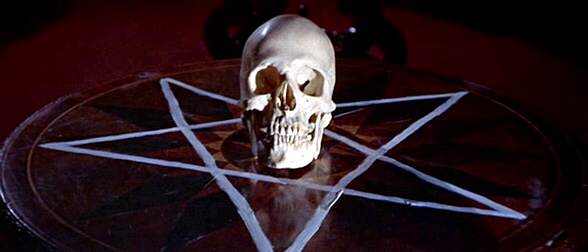
The film follows Christopher Maitland (Cushing), an antiques dealer with a penchant for the obscure and curious, particularly pertaining to the occult. He acquires the valuable skull of Marquis de Sade, a man we learn about in the opening prelude set over 100 years previous. The skull has been stolen from Sir Matthew Philips (Lee), a fellow antiques dealer. Valuable though the skull is, Philips has no interest in reclaiming it, for reasons that are initially unapparent.
  
When watched alongside modern horror films, The Skull may be hard to appreciate. This is to do with pacing. Watching a horror film celebrating its 50th anniversary needs to be watched with a mindfulness of the context. The cheap shots and by-the-numbers techniques used today are nowhere to be seen. The horror in a film like this is drawn from the suspense built up by every element of the film working together and a quality acting performance of the lead character. You simply can’t view any film like this out of the context of the landscape of cinema at the time of original release.

Lee is atypically subdued in his performance as Sir Matthew Philips. It is a supporting role but it’s really worth checking out to see him portraying someone likeable for a change.

The plaudits should go to Cushing though. He carries it towards a tremendous climax in a film that actually has almost no dialogue for the final act. He may have more popular roles – or indeed more mainstream roles – but this is an off-the-radar performance that warrants at least one viewing to underline his acting credentials.

Enhancing Cushing’s performance is some excellent camerawork and framing from director Francis and cinematographer John Wilcox. It’s all about intelligence in angles and getting close enough to feel the sheer panic on Maitland’s face as the cursed skull becomes increasingly threatening. They do such a great job that the skull becomes a character itself, especially when we’re seeing the world through its empty eye sockets.

A thoroughly enjoyable horror film for anyone looking for an unusual and obscure Cushing-Lee release.

The Skull is available to purchase on Eureka Blu-ray now.

Note: The poster I used for the featured image of this article was by the excellent Andy Potts. His website is full of fantastic posters he’s done for various reasons. Check it out.

Paper Moon (Peter Bogdanovich, 1973)

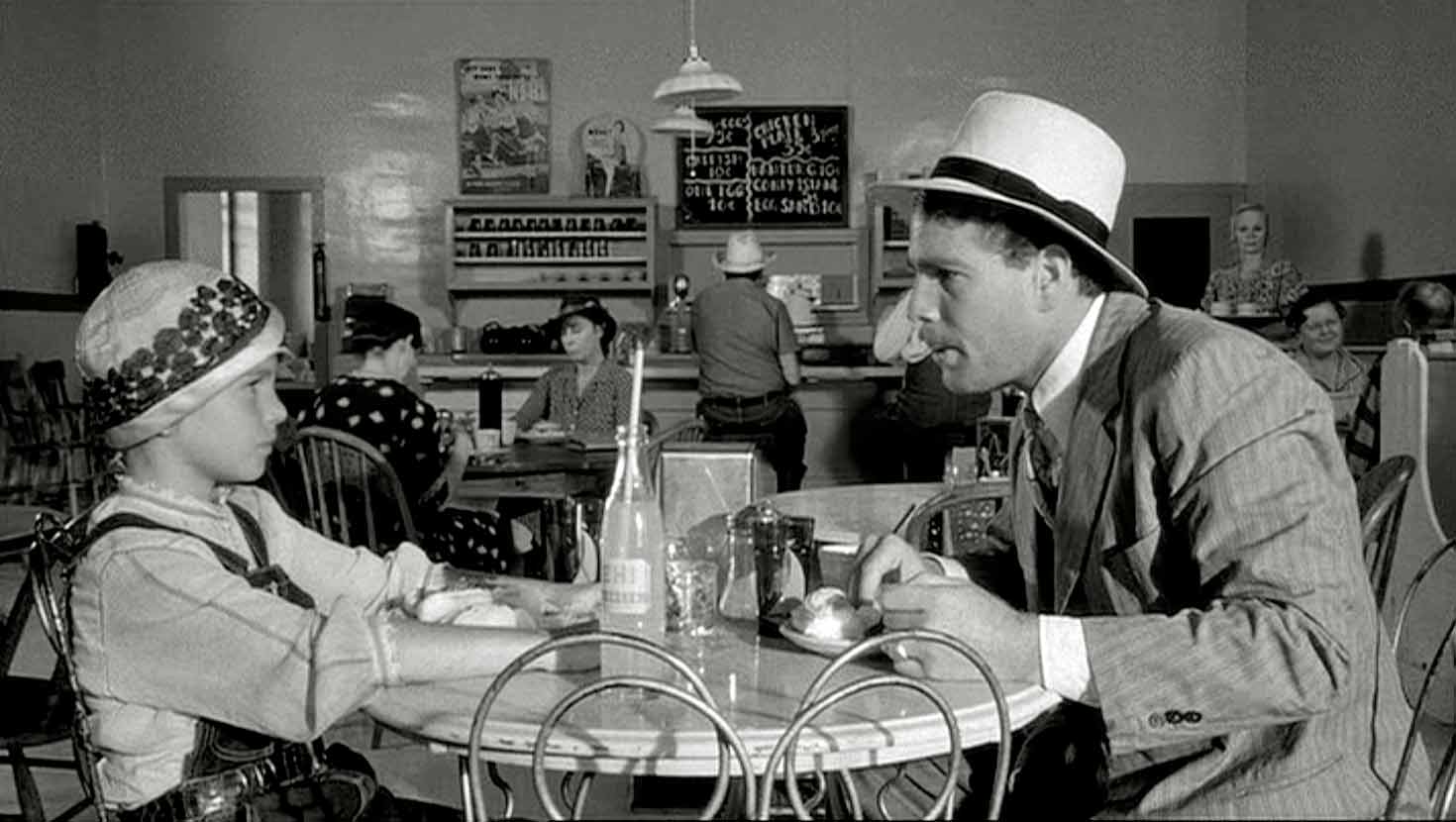
One of the most sure-fire ways of making an enjoyable and effective film is to ensure the chemistry between the two lead characters is strong. What better way to achieve this than by casting a father and daughter in what is essentially a buddy film?

In Paper Moon, we follow the story of tomboy orphan Addie Loggins (Tatum O’Neal) as she is taken under the wing of con-man Moses Pray as he agrees to take her from her mother’s funeral to her aunt’s house in Missouri. She is convinced he is her real father, a point that is hinted at throughout, despite his continued denial of the fact. One thing that they’re both convinced of, however, is that they make a great pair as a scamming duo, going door-to-door convincing recent widows that their recently deceased husbands had ordered them a personalised bible. This serves as an excuse for them to go on a prolonged adventure of dishonesty, an adventure that seems far more appealing than their other limited options.

The chemistry between the O'Neals is excellent.

The chemistry between the O’Neals is excellent.

Much was made at the time – and has been since – of Tatum O’Neal’s performance. Indeed, she remains to this day the youngest person to win an Academy Award for Acting. At 1 hour, 6 minutes and 58 seconds, it is also the longest performance to receive a Supporting Actor/Actress Academy Award. It is playful and at times unintentionally comedic, but the playoffs with father Ryan are brilliant to watch. One memorable scene involves a long one-shot as they drive and argue, both livid at each other before turning it around to agree despite their tones still being that of an argument. It’s almost so good it doesn’t feel like they’re acting, although it allegedly took 39 takes over two days to get right.

One thing the film never answers is the question of whether the two are really father and daughter. The decision is made instead to leave it open as they head off into the sunset, presumably to continue much as they did in this film (a relationship explored in a panned TV sitcom spin-off series starring Jodie Foster). It is a nice decision – the fact they need each other, either as a father figure or as a driver to act responsibly, is to them more important than finding out this truth, at least at this stage in their relationship.

The bonus features are worth watching and provide a valuable insight into the making of the picture. The highlight is an anecdote involving Tatum repeatedly fluffing a line, resulting in her father having to eat countless amounts of waffles, much to the delight of Tatum. In fact, this was deemed so important as an example of their chemistry that the outtake was incorporated into the original trailer.

The cinematography by the Hungarian László Kovács adds a great deal to the authenticity of the film and its success in recreating 1935 Kansas. Coupled with a timeless soundtrack and a great attention to detail in the scenery and costumes, the result is that it transports the viewer completely into the environment, adding further embellishment to the excellent performances of both stars and their supporting cast.

A unique film with a lot to offer even the most ambivalent of viewers, this is one of the best re-releases of the year.

Paper Moon is available on Masters of Cinema Blu-ray now.

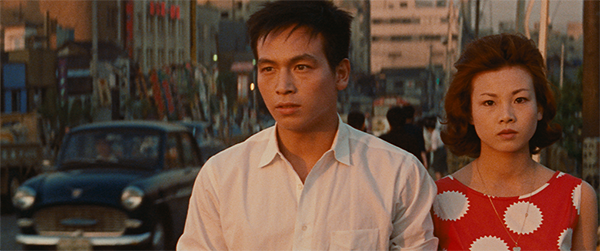
青春残酷物語 / Cruel Story of Youth (Nagisa Oshima, 1960)

Released in 1960, Nagisa Oshima’s cutting critique of Japanese outsider youth culture was an unexpected success upon its original release, amid controversy and criticism over its content. Viewed now in its glorious 4K scan restoration by Shochiku, it is an enjoyable, if flawed, experience.

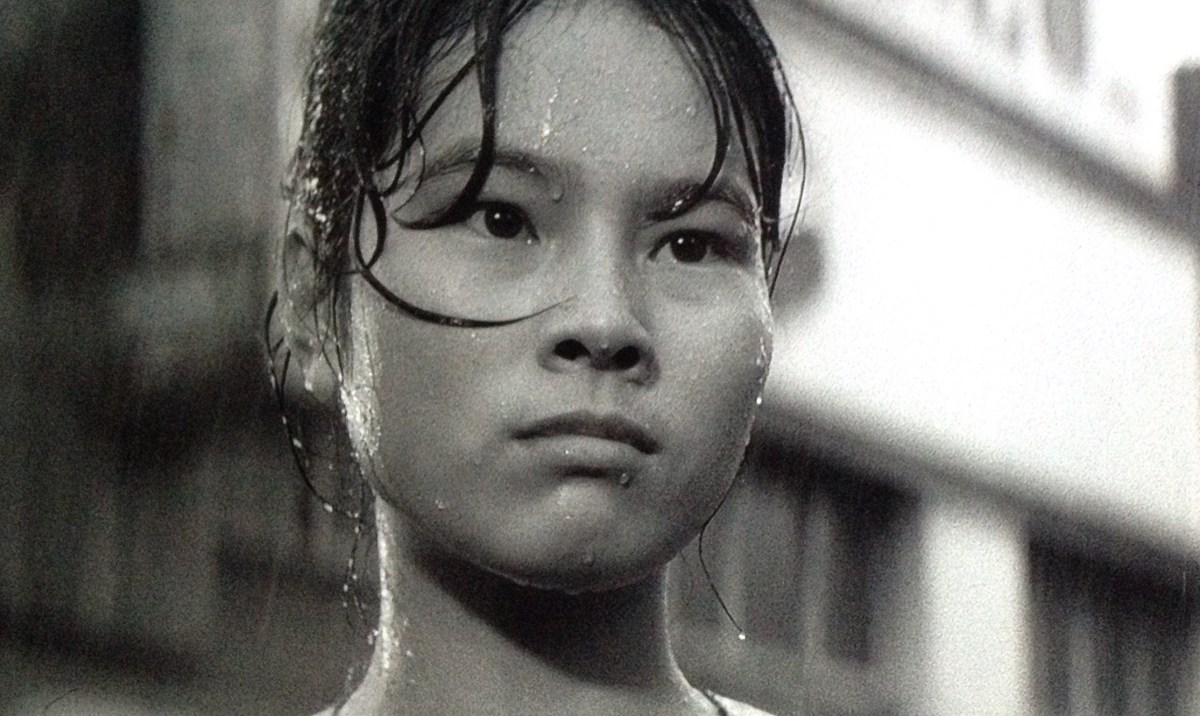
It is the story of high-school girl Makoto (Miyuki Kuwano), who we first see being advanced on by a sleazy middle-aged man. She is saved from being sexually assaulted by Kiyoshi (Yusuke Kawazu), a university student. As their unconventional romance blossoms, so too does their alienation from the society around them, running a corrupt business that involves using Makoto to lead men on, only for Kiyoshi to appear and demand payment to keep them from going to the police.

An unusually morose ending to the film.

An unusually morose ending to the film.

Clearly this isn’t an ideal way to build a relationship and it is by no means a traditional love story. It does make for an interesting dynamic for our two leads. At least, it would do but for an underwhelming performance by Kawano. Whilst Kawazu perfectly plays the disillusioned and rebellious student on the cusp of either prison, gang warfare or death, his female counterpart struggles with the dynamics that the role demands.

In a memorable early scene, soon after Kiyoshi saves Makoto, he takes her to the local docklands, forces himself on her, then threatens to drown her. It’s an uncomfortable scene to watch due to the nature of the content, but her efforts to make it look like she’s struggling to swim let the scene down. It’s also not very convincing that she is either desperate to avoid his advances, nor is the contrast to her giving in particularly stark.

This is all filmed in a brilliantly bold colour wash by Ôshima, which creates an unusual but impressive contrast to the wholly depressing content of the film. The negativity contained in the social commentary surrounding outsider youths became a staple of Ôshima’s later films. Whilst it isn’t a masterpiece, it is not without merit.

The package offered by Eureka and Masters of Cinema makes this release another great value for money Blu-ray. The transfer is top class and the booklet and extensive discussion with scholar Tony Rayns give a massive insight into the film. It’s rather like a short film study course on the film. If you can find an equivalent for around £10 then you’re doing well.

青春残酷物語 / Cruel Story of Youth is available on Blu-ray now.

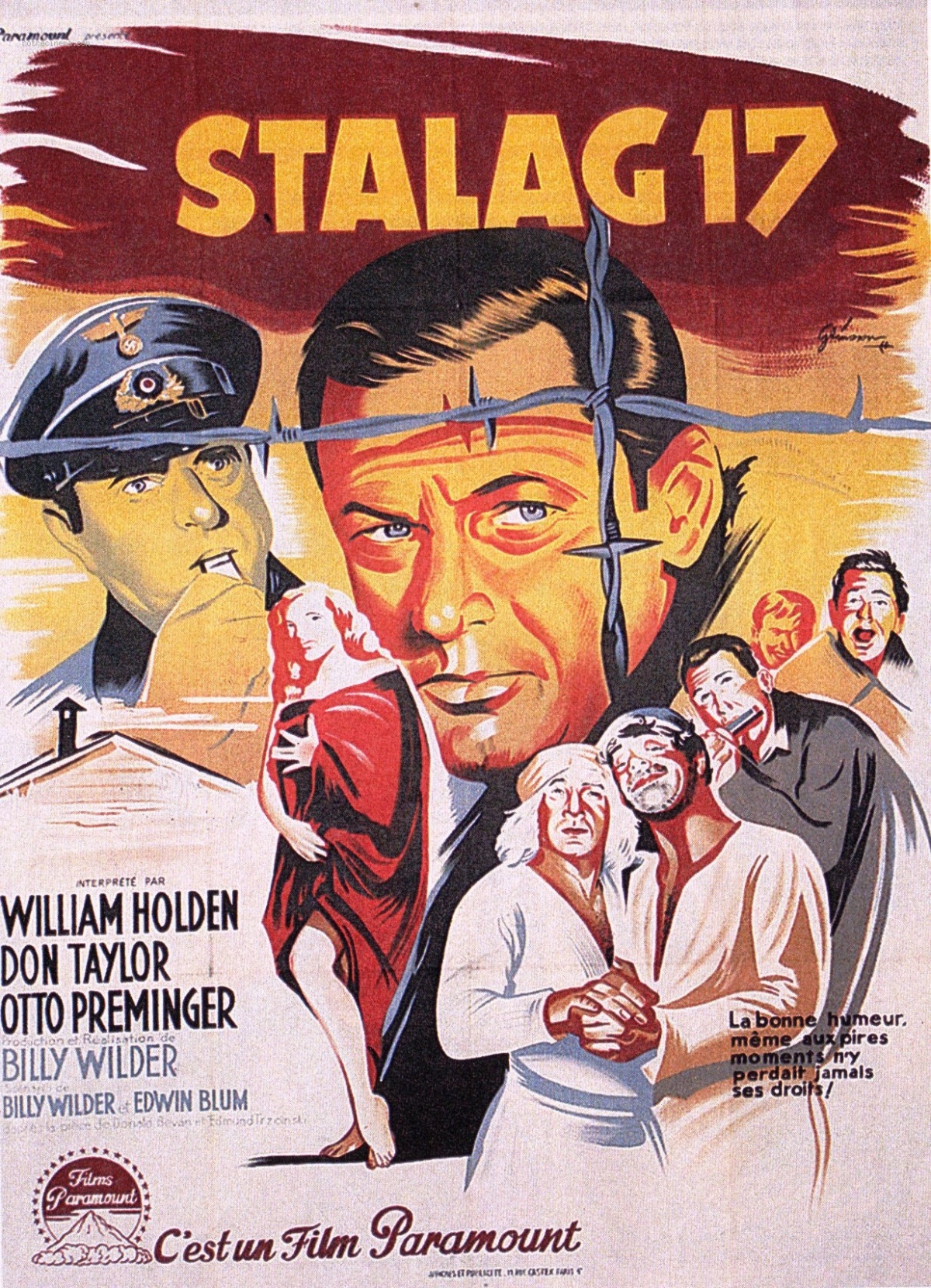
Stalag 17 (Billy Wilder, 1953)

Billy Wilder made a habit of directing films that are arguably the quintessential examples of their genre. In 1944’s Double Indemnity he defined the film noir genre. Then in 1950 Sunset Boulevard hit the big screen, perhaps the best film to ever tackle Hollywood itself. With Stalag 17, a film released in 1953, he directed what many people consider to be the greatest Prisoner of War (POW) film ever released. Of course, fans of The Bridge on the River Kwai and The Great Escape may argue the toss, but Stalag 17 is up there with the best of them.

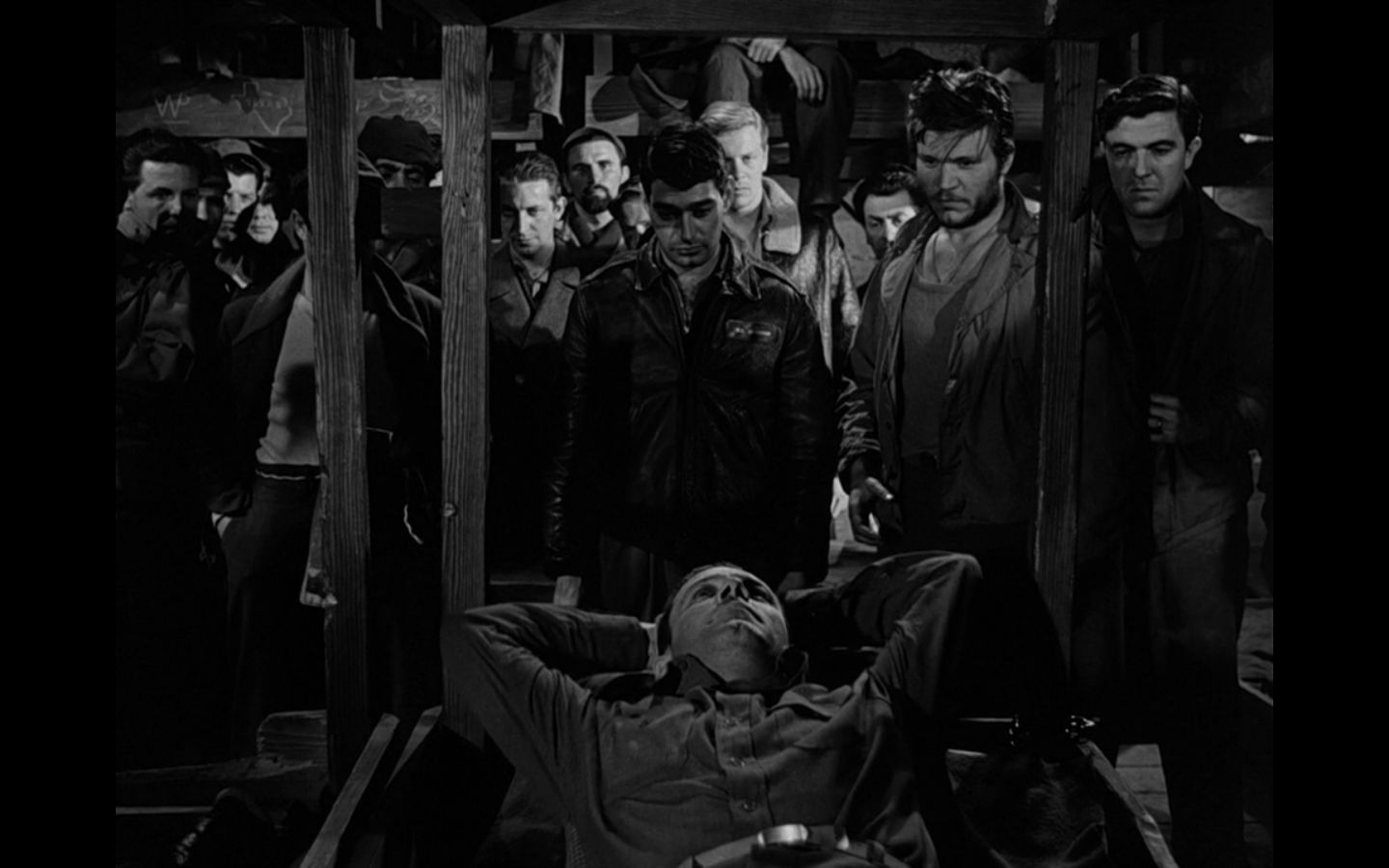
One of the most memorable scenes of the film, expertly framed.

One of the most memorable scenes of the film, expertly framed.

Set in 1944, the film focuses on the titular Luftwaffe POW camp where 640 American captured sergeants reside alongside Polish, Czech and Russian captives. It is narrated by Clarence “Cookie” Cook (Gil Stratton), reminiscing on his time in the camp. The opening sequence shows two men trying to escape from the camp, whilst the remaining men in their block argue with Sefton (William Holden) about their potential success at escaping as he takes their bets. As the only person sure of their failure, Sefton wins a large supply of cigarettes from his comrades. As the men come around to the thought that their failure may have been caused by a tip off to one of the Nazi officers, suspicion falls on the ever-cynical Sefton, who appears to be profiting nicely from various trades and deals far more than anyone else held captive. Unwilling to protest his innocence, Sefton resolves to find the real informer and expose him before another there are any more casualties.

What strikes most prominently about this film is its inclination towards comedy. It is certainly rooted in the seriousness of being held as a POW in Nazi Germany, but the comradeship and light-heartedness with which the Americans deal with their situation sets it apart from other films in this genre. It doesn’t just stop at the relationship between those of the same nationality. Indeed, it takes on quite a comical depiction of the relationship between the guards and the captives, illustrating a softer side to the Nazi officers that is seldom depicted elsewhere.

As the film progresses, however, the comical aspects fade somewhat to allow the seriousness of the situation to take centre stage. This contrast is less harsh than, say, Life is Beautiful (Roberto Benigni, 1997), but it works perfectly. The light-heartedness encourages the viewer to warm to all the characters quicker than would have otherwise been possible and by the time the final act plays out the tension is at its peak.

William Holden rightly won an Oscar for his performance as Sefton, spoiling the party that year for the likes of Marlon Brando (Julius Caeser) and Richard Burton (The Robe). The popularity of the film can be put down to two factors at the time. Firstly, the film was withheld from release until 1953 because Paramount Pictures didn’t believe anyone would be interested in a POW film; only when the release of prisoners following the end of the Korean War did it have a widespread political context (both the US release and the end of the Korean War occurred in July 1953). Secondly, the backdrop of the film industry itself was focused on the Hollywood Blacklist, a list of those industry professionals considered to be supportive of communism. This was at its height in 1953, but no studios would dare release a film to directly tackle these issues. The storyline of a lone man being singled-out by his peers based on false circumstantial evidence will no doubt have gained extra resonance against this ongoing issue.

Stalag 17 deserves to be seen, for its excellent performances, magnificent direction and historical relevance. With it being a Masters of Cinema release, there has never been a better time to check it out.

Stalag 17 is available to purchase now from Masters of Cinema on Blu-Ray.

Shohei Imamura Masterpiece Collection – Preview

This week Masters of Cinema announced the release of a new boxset titled Shohei Imamura Masterpiece Collection. So what does it contain and is it worth a purchase?

The box contains eight films, all of which have already been released before. The contents are as follows:

盗まれた欲情 / Stolen Desire (1958)
西銀座駅前 / Nishi Ginza Station (1958)
豚と軍艦 / Pigs and Battleships (1961)
にっぽん昆虫記 / The Insect Woman (1963)
人間蒸発 / A Man Vanishes (1967) – DVD only
神々の深き欲望 / Profound Desires of the Gods (1968)
復讐するは我にあり / Vengeance is Mine (1979)
楢山節考 / The Ballad of Narayama (1983)

In the Blu-ray era of Masters of Cinema, only three other boxsets have been released. The first was the three-film Martin Scorsese Presents World Cinema Foundation Volume One boxset, the second was the excellent Late Mizoguchi boxset and the final was the Shoah five-film boxset. All are worthwhile boxes to buy full of new films that hadn’t seen the light of day prior to their release (apart from the Mizoguchi release, which only had four  newly-transferred-to-HD films out of eight).

For those with any or all of the contents of this newly announced box, it no doubt represent a disappointing announcement. I was aware there was a gap in the numbering of the Masters of Cinema Blu-Ray releases, between 120 Medium cool and 129 Dragon Inn, so I was hoping that an eight-film director-centric boxset would be announced. Having just got back into Imamura I was underwhelmed when I realised the boxset would contain eight films, seven of which I already own on Blu-Ray.

That said, the films include one Palme d’Or winner, two Blue Ribbon Best Film winners, Imamura’s debut film and some excellent insights into the career of a film director considered to be one of the greatest ever to come out of Japan. Not every film is amongst his best – notably Nishi Ginza Station is fairly poor – but if you have a copy of both The Eel and Black Rain (not Masters of Cinema) then you’ll have pretty much all of his most important works. It spans his entire career and represents the only way in the UK to get any of his films on Blu-Ray.

Importantly, it is rumoured that this will be the last chance to buy these films as part of the Masters of Cinema releases as they have let the rights lapse on them. If this is true, and you don’t have these films yet, then this is a must-buy.

The Shohei Imamura Masterpiece Collection boxset is available for pre-order now.

Masters of Cinema Cast – Episode 42: The Lost Weekend (Billy Wilder, 1945)

I had the pleasure this week of recording an episode of the hugely popular and entertaining podcast Masters of Cinema Cast with Joakim Thiesen. We talked at great length about the 1945 Billy Wilder film The Lost Weekend.

Here’s the link.

Give it a listen! Hope you enjoy it!

赤線地帯 / Akasen Chitai (Kenji Mizoguchi, 1956)

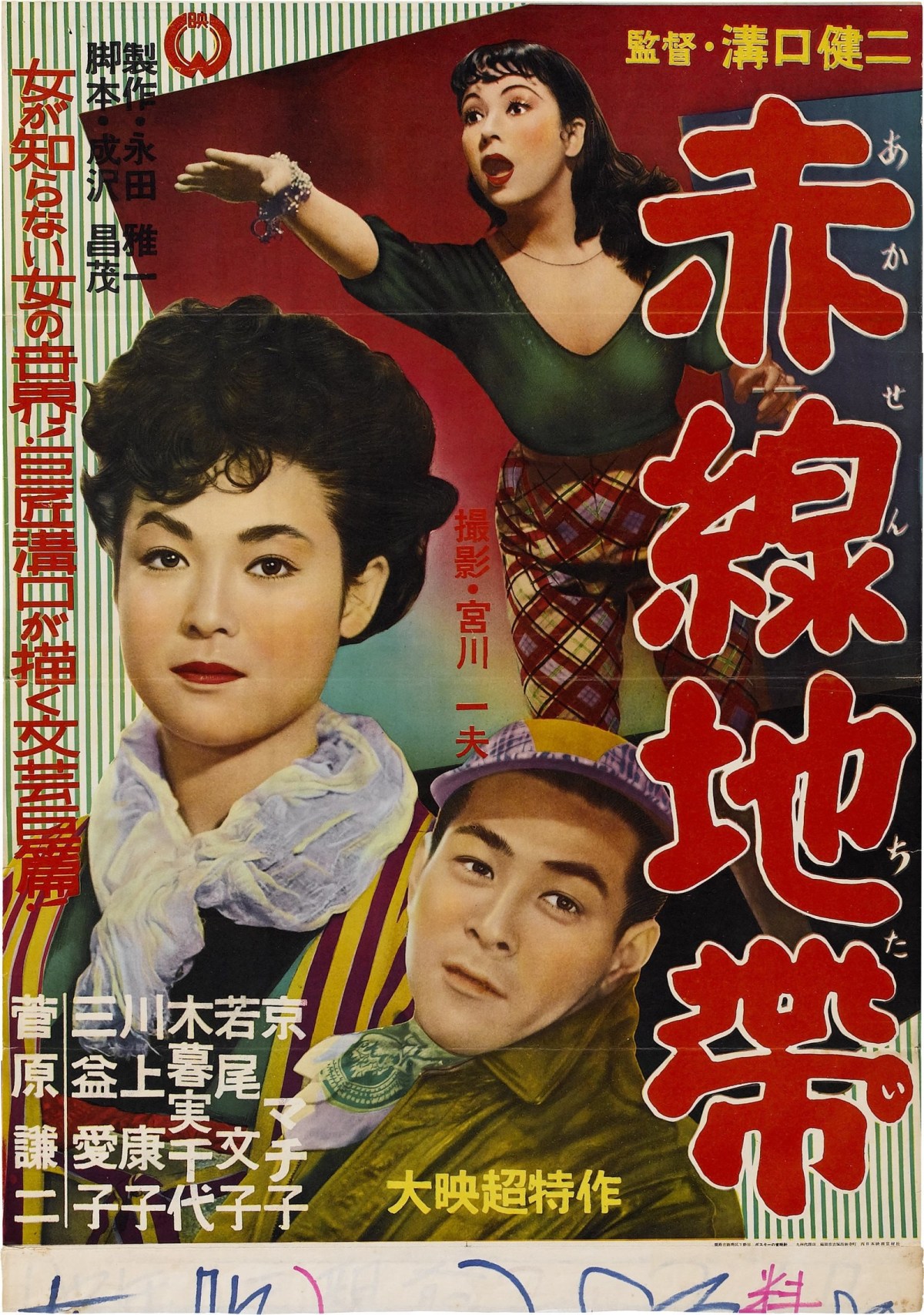
One of the highlights of the Late Mizoguchi boxset, and indeed Mizoguchi’s entire career, is the film Akasen Chitai. Literally translated as “red-line district”, the film concentrates on the legal brothels of post-war Tokyo. Two months after its release a groundbreaking law was passed in Japan that made prostitution illegal in Japan, putting an end to the “red-line” and “blue-line” zones that had operated up to that point. Mizoguchi would die in August of the same year whilst developing his next film “An Osaka Story” (later directed by Kōzaburō Yoshimura). This Akasen Chitai would prove to be his final film.

The five stars of a five-star film.

The five stars of a five-star film.

The film follows the fortunes of five prostitutes working in Dreamland, a legal brothel, contemplating their future should the Diet pass a law to make their profession illegal. The five lead characters – Yasumi (Akayo Wakao), Hanae (Michiyo Kogure), Yumeko (Aiko Mimasu), Yorie (Hiroko Machida) and Mickey (Machiko Kyô) – all form a central part of the plot in different portions of the film.

Hanae has arguably the most heart-breaking story. Trying to make ends meet to support a young child, her husband suffers from depression and suicidal tendencies as his inferiority engulfs his being. She is not a natural in her profession as her colleagues and if often criticised for her “scruffy” appearance. The only thing she fears more than her job is the possibility that she will lose her job in the near future. It is a complex and depressing sub-plot that

Conversely, the glamorous Yasumi is a compulsive liar who is playing on the emotions of her most devoted client to get him to buy her presents and give her monetary hand outs. It takes a skilled director to convince the audience to find sympathy for such a character, but that he does.

It is Mickey that eventually becomes the focal point of the plot. She arrives as a young and confident new employee at Dreamland and immediately proves popular amongst the clientele. Whilst her colleagues are all working out of desperation and a hope for a better life, it later transpires that Mickey has runaway from the home of her successful business-owning father. The scene in which he arrives to take Mickey home and avoid a family scandal is perhaps the film’s most powerful and memorable, full of elements of the mise en scène Mizoguchi was so famous for.

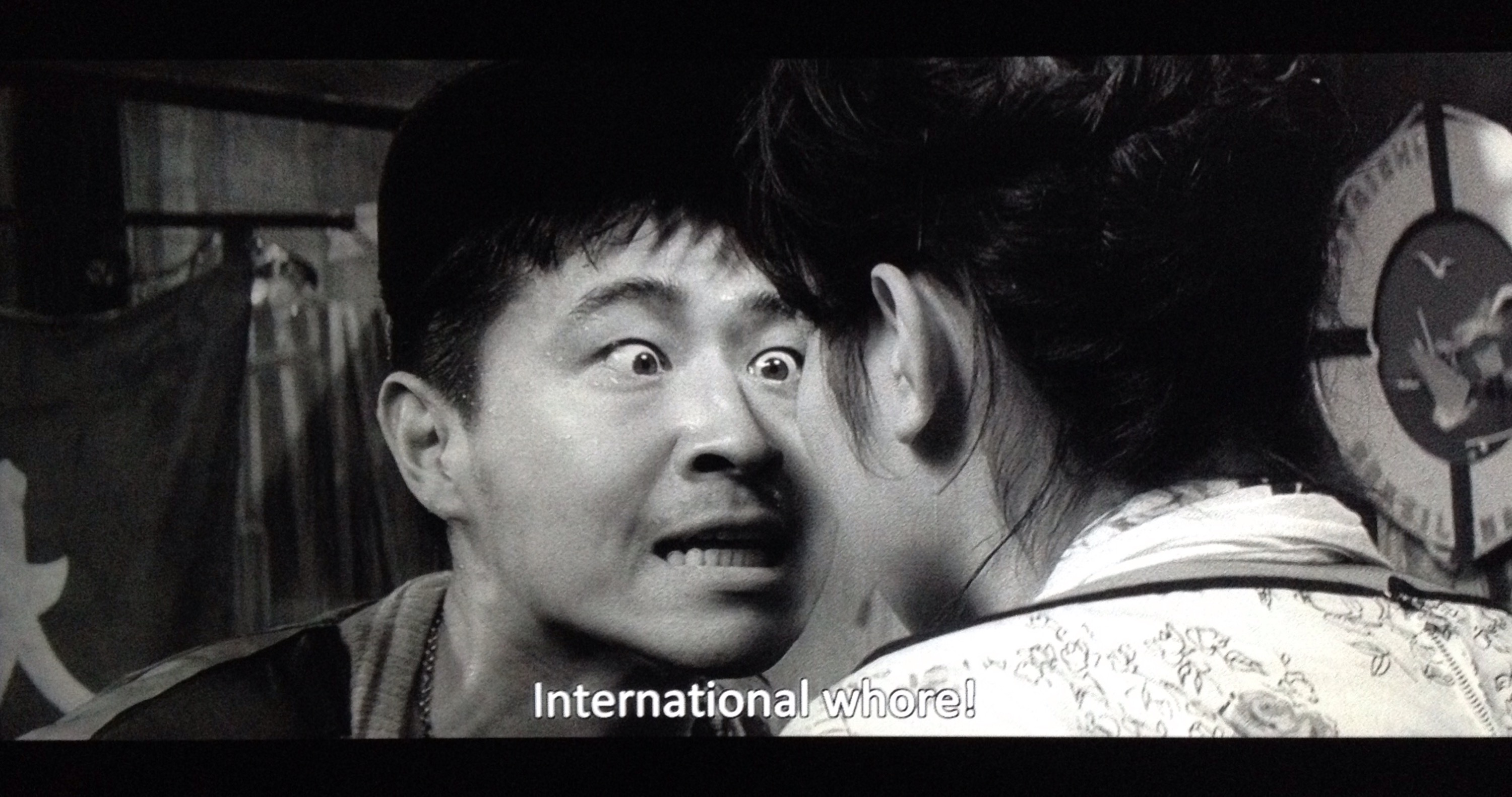
Whilst the overarching message is that of depression and desolation, the the film is effective because the characters are believable. There are also elements of humour littered throughout. For example, when the aging Yorie discovers one of her frequent clients with the younger Mickey. An argument ensues and the client calls her a whore, to which her response is “If I’m a whore then what does that make you?”, setting up the perfect response: “I’m the client!”

It may not have been his planned swansong, but Akasen Chitai is an excellent way to bookend the career of a masterful director.

Akasen Chitai is available as part of the late Mizoguchi boxset, though you may find the price of the DVD a little more palatable.

豚と軍艦 / Pigs & Battleships (Shohei Imamura, 1961)

Partly as story about criminal gangs, partly a love story and partly social commentary, Pigs and Battleships succeeds in many ways. Perhaps its biggest success is being a vehicle for Imamura to stick two fingers up at the Nikkatsu Corporation, who had forced him to product uncharacteristically light fare (such as Nishi-Ginza Station), returning to the electric edginess hinted at in his debut picture Stolen Desire (also featured here).

This tone would be the cornerstone of a rich career in the film industry and Pigs & Battleships was the first time the world saw what Imamura was capable of. The unexpected controversy coupled with a spiraling budget led to Imamura being banned from directing by Nikkatsu for two years.

The plot of the film revolves around the frictional relationship between Kinta (Hiroyuki Nagato) and Haruko (Jitsuko Yoshimura). Kinta is a member of the local yakuza gang who are hatching a plan to farm and sell pork to the occupying US Naval Forces. Haruko is desperate for them both to move away from the tricky environment they both live in; she is two-months pregnant and still being sold by her mother for dates with US sailors. Kinta, though, is his own man and wants to make a name for himself and thus avoid becoming a slave to the wage.

A wonderful new put-down enters our lives.

A wonderful new put-down enters our lives.

Sinsaku Himeda’s cinematography contributes to a beautiful-looking picture and, coupled with some wonderfully-realised characterisation by Imamura, the film is extremely accessible and enjoyable even for those without an affinity for Japanese political films over half a century old. As the film progresses, the focus shifts from Kinta to Haruko, with the storyline almost outgrowing the former’s immature and selfish outlook to focus on Haruko’s determination to find a better life. This is the overarching statement achieved in the film, with Imamura drawing on his own experiences as a black-marketeer with American soldiers to clearly point out to any viewers willing to look under the cracking façade that the post-war occupation of Japan by the US Forces with creating a disjointed and self-destructive society in which nobody could hope to build a future for themselves.

The Masters of Cinema dual-format Blu-Ray and DVD of Pigs and Battleships + Stolen Desire is available to purchase now.

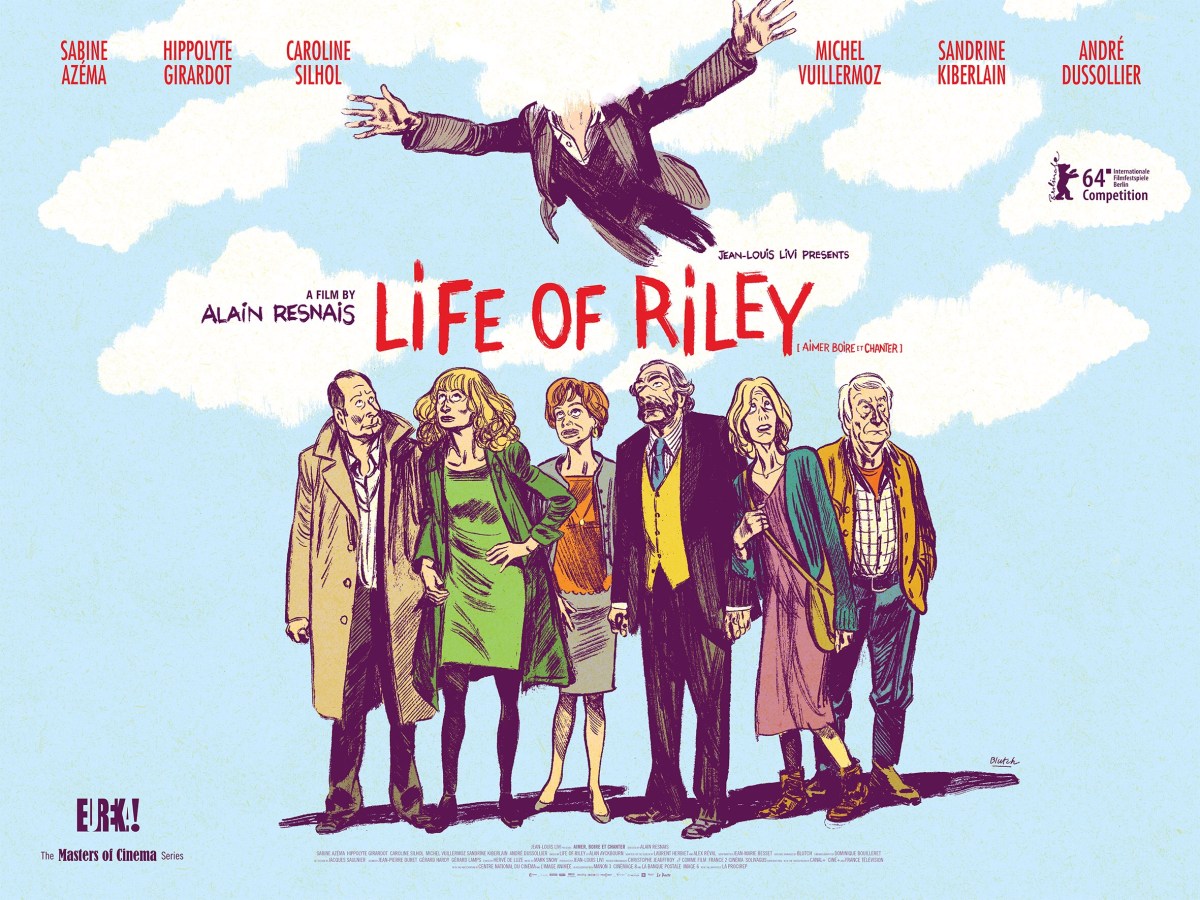
Film review – Aimer, Boire et Chanter / Life of Riley (Alain Resnais, 2014)

I remember sitting in the Olympic Stadium back in 2012, as British sporting darling Jessica Ennis stepped up to take part in another leg of her gold medal winning heptathlon events. It was a fantastic day of British sporting achievement, one which we’ve come to know as Super Saturday. Mo Farah, Jessica Ennis and Greg Rutherford picked up a gold medal each that day, whilst the rest up Britain picked up a slice of happiness. Finally it was good to be British again. We could be proud to be British. We were all preparing to eat some fish and chips, put up the bunting and play some wiff-waff. But then we realised. Something odd was happening. The public announcements. They were unusual. They were being provided in two languages. One was British-English, the best kind of English. But, wait… Is that French? BEFORE OUR LANGUAGE!? Very quickly we had forgotten how great it was to be British and taken up our normal stance of complaining about something. How very dare they? [1]

With this in mind, it’s easy to see why Life of Riley failed to ignite the British public’s interest when it was released back in 2014. The screenplay, provided by Laurent Herbiet, Alex Reval (a pseudonym for Alain Resnais) and playwright Jean-Marie Besset, follows closely the original Alan Ayckbourn play on which it is based. Ayckbourn is a quintessentially British playwright, the voice of the suburban British middle class. When the film opens and we see a car slowly drifting along a country road towards the heart of Yorkshire, we know where we stand. But then we get slapped in the face again. Why is everyone speaking in French? [2]


Of course, the more discerning amongst the cinema-goers – to which this film is primarily aimed – will see beyond this thin veneer and find quite a rewarding film. The cast provide a lot of depth to the plot, and bring it to life through some highly comedic performances, despite it constantly living in danger of slowing down slightly too much. It does fall short on a few occasions, with the pacing at fault for the lulls.

It centres around an off-screen character named George Riley, who we learn early on is dying of cancer. With months to live, the people central to his life decide it would be a good idea to have him join them in their local theatre production of another Ayckbourn play, Relatively Speaking. Those people consist of three couples: diagnosing doctor Colin and his wife Kathryn (Hippolyte Girardot and Sabine Azéma); George’s best friend Jack and his wife Tamara (Michel Vuillermoz and Caroline Silhol); and George’s ex-wife Monica and her new partner Simeon (Sandrine Kiberlain and André Dussollier). Alba Gaïa Kraghede Bellugi briefly appears as Tilly, daughter of Kathryn and Colin, in a moving final scene of the film. Most of the humour derives from the fact that our unseen titular character is evidently somewhat of a charmer and as the play continues forward and his clock is ticking down, they struggle to court his affections in increasingly desperate ways, resulting in a playoff as he decides who he takes on his final holiday to Tenerife, much to the disdain of their respective partners.

The distinctive set design is complimented by Dominique Bouilleret’s cinematography and essentially the setting of Yorkshire could have been dropped altogether. The film has the look and feel entirely of watching a play, but I did wonder whether or not it could have achieved something more given the capabilities of film as a medium over theatre.

The film premiered in competition at the 2013 Berlin Film Festival, in what would prove to be three weeks prior to the death of director Resnais. Thus, Life of Riley proved to be his swansong. I’m not convinced it would have been his first choice of film to tell at the end of his life, but it certainly doesn’t allow his career to finish on a low note. It is somewhat fitting that it would be a final return to Ayckbourn, having already adapted two other plays. It isn’t life-changing, but it is certainly not to be dismissed.

Life of Riley is available on Masters of Cinema dual-format Blu-Ray and DVD now.

[1] Dare they might, and justifiably so. French is the first language of the Olympic movement, based in the French-speaking city of Lausanne.

[2] I find this hilarious, by the way. I would like to apologise to the entire world for every single time an English or American film has decided to cast someone who can’t speak the language of the character they are portraying and asked them to speak in English with an invariably hammy accent. It’s a massive embarrassment. I still have no idea why studios are so reluctant to cast native speakers in big roles. The entire illusion of a film is lost on me when you can’t even have someone speak in the correct language.

Listen Up Philip (Alex Ross Perry, 2015)

A fast-paced and uncompromising opening scene introduces us to our lead character Philip Lewis Friedman (Jason Schwartzman), a well-regarded writer on the cusp of releasing the follow-up to a popular and critically praised debut novel. On a rampage to rub his success into people from his previous life, he exposes all his character flaws. He’s rude, frank and cynical and it’s hard from this point to feel any sympathy for him, which on an emotional level makes it hard to connect with him as a central character. Indeed, not many of the characters emote any kind of solicitude at any point in the film, bar perhaps Philip’s long-suffering girlfriend Ashley (Elisabeth Moss). This, however, doesn’t necessarily make for a bad piece of cinema. Quite the contrary.

Schwarzman is at home in a role full of self-importance and low in empathy for those around him.

Schwartzman is at home in a role full of self-importance and low in empathy for those around him.

Philip’s story carries on from here, through the prolonged breakdown of his relationship with Ashley, making a connection with similarly cynical writer Ike Zimmerman (Jonathan Pryce) and his lonesome daughter Melanie (Krysten Ritter) and later on a young and jealous academic Yvette (Josephine de la Baume). It doesn’t refrain from taking gambles on the attention span of the audience, taking several sharp turns in the storyline to cover a lot of ground in a short time frame (109 minutes).

It is communicated in a form that serves as a kind of fake biography, with a narration taking a matter-of-fact tone that gives us a knowing reassurance, almost as if the person behind the voice is channeling his words from a future where it is known that Philip Lewis Friedman is one of the world’s most renowned writers. This is reinforced by the closing credits, where we see a montage of book covers released by the characters from the movie. To be honest, it is the only way the film could tie itself together. Each character is introduced to us from a position of imbalance and for the most part they spiral into a world of depression and failure. It wasn’t until a brilliant final scene that I felt like there was a reason to drag us through the emotional dirt; it perfectly balanced a fine moment of acting from Schwartzman with some clever lighting and cinematography, on top of which laid an overarching statement that justified the cause behind the story itself.

Elisabeth Moss gives an emotional charge to Ashley as she grows in confidence

Elisabeth Moss gives an emotional charge to Ashley as she grows in confidence.

Schwartzman is in fine form throughout, in a role not too dissimilar to others we’ve loved to hate him in (Rushmore, Scott Pilgrim vs. The World). Irritating and overly-confident characters are something of his forte, which is funny if not just because he comes across as anything but irritating in interviews he gives. Moss is also given the opportunity to portray a character of real emotional depth who grows in confidence as the story progresses. It’s a shame that her segment of the film seems like something of a departure from the central thread that was otherwise progressing nicely, though overall it was necessary for the final payoff.

I’ve intelligently reviewed this as this film exits cinemas, though it is seeing a home media release on Masters of Cinema Dual Format Blu-Ray & DVD in late July.