BFI London Film Festival 2016 – Preview

I’ll be heading down to the BFI London Film Festival this weekend to catch a handful of films. I’ve picked a broad range, from headline galas to complete leftfield choices that may be my only chance to see a film on the big screen.

Here’s what I’ll be catching:

– La La Land (Damien Chazelle, US)
– Frantz (François Ozon, Germany)
– Dancer (Steven Cantor, UK)
– Creepy (Kiyoshi Kurosawa, Japan)
– Paul Verhoeven in conversation
– Psychonauts, The Forgotten Children (Pedro Rivero, Alberto Vázquez, Spain)
– Queen of Katwe (Mira Nair, US)

I’m most excited about the Queen of Katwe red carpet premiere that I’ll be lucky enough to attend, and Frantz will be screening at the specially-created Embankment Garden Cinema. 

I’ll be firing out reviews of each as I get the chance over the weekend. Maybe I’ll see one or two of you down there!

Film review – A United Kingdom (Amma Asante, 2016)

Kicking off the 2016 BFI London Film Festival in style tonight was Amma Asante’s triumphant ‘A United Kingdom’. After the glitz and glamour of the red carpet, the film’s central themes proved to be an apt starting point for a programme that festival director Clare Stewart claims will focus on diversity.

The film tells the true story of Ruth Williams (Rosamund Pike) and Seretse Khama (David Oyelowo). Khama is the King of Bechuanaland (the country now known as Botswana) and in 1948 he marries London girl Williams amid opposition from their families and countries, sparking a political debate that led to the country’s independence movement.

Asante is the first black woman ever to direct an opening night film at the London Film Festival, and she was keen to point out the relevance of her being the person at the helm telling this important story.

“[The Botswanians] were comforted that it was going to be told through the gaze of a woman of colour… There was relief, and of course a curiosity, as to how their country, and they as a people, would be reflected on screen.”

Pike and Oyelowo

The resulting picture is a moving portrayal of a changing time in two countries with a message that is as valid today as it was then. True, there has been much progress in the world since 1948, but looking back at the changes in the past 70 years should give humanity hope that as much progress can be made again in the next 70 years. Indeed, many comments from the stars on the red carpet referenced that there is still much wrong with the world and a film like ‘A United Kingdom’ serves to highlight that we should never give up the fight. This is a fact not lost on Asante, especially given the marginal bandwidth available in the film industry to both people of colour and women – something that should be considered one of the big talking points of this year’s festival.

Oyelowo and Pike work together perfectly, each delivering powerful performances worthy of the story they are telling. The film’s genesis lies with Oyelowo, who started writing the script six years ago after reading the Susan Williams book Colour Bar, and his passion for the story seeps into his emotional delivery.

The film perhaps suffers from appearing saccharine, with the story telling us that their love was so strong it overcame political opposition and brought a continent together. The truth is that the film isn’t too far from being perfectly accurate, with only a couple of timeline changes for the benefit of pacing.

This is a story that is one piece of a much larger puzzle that can be filled in with what can be seen as companion films: Mandela – Long Walk To Freedom (2013) and Hotel Rwanda (2011) are two good recent examples. There is a rich history that is still being written in Africa, from which deeply moving stories continue to be drawn in both film and literature.

It is remarkable that the actors and actresses involved knew little of the source material before receiving the script. It is likely that the same can be said of the many viewers this film will eventually reach – I have to admit that I was also blissfully unaware of the history of Botswana before seeing this film. Khama’s story isn’t one that has been well-documented and that is something that Oyelowo and Asante will be more than happy to rectify.

A truly important story told in such a captivating manner deserves to be seen. A wonderful start to the festival.


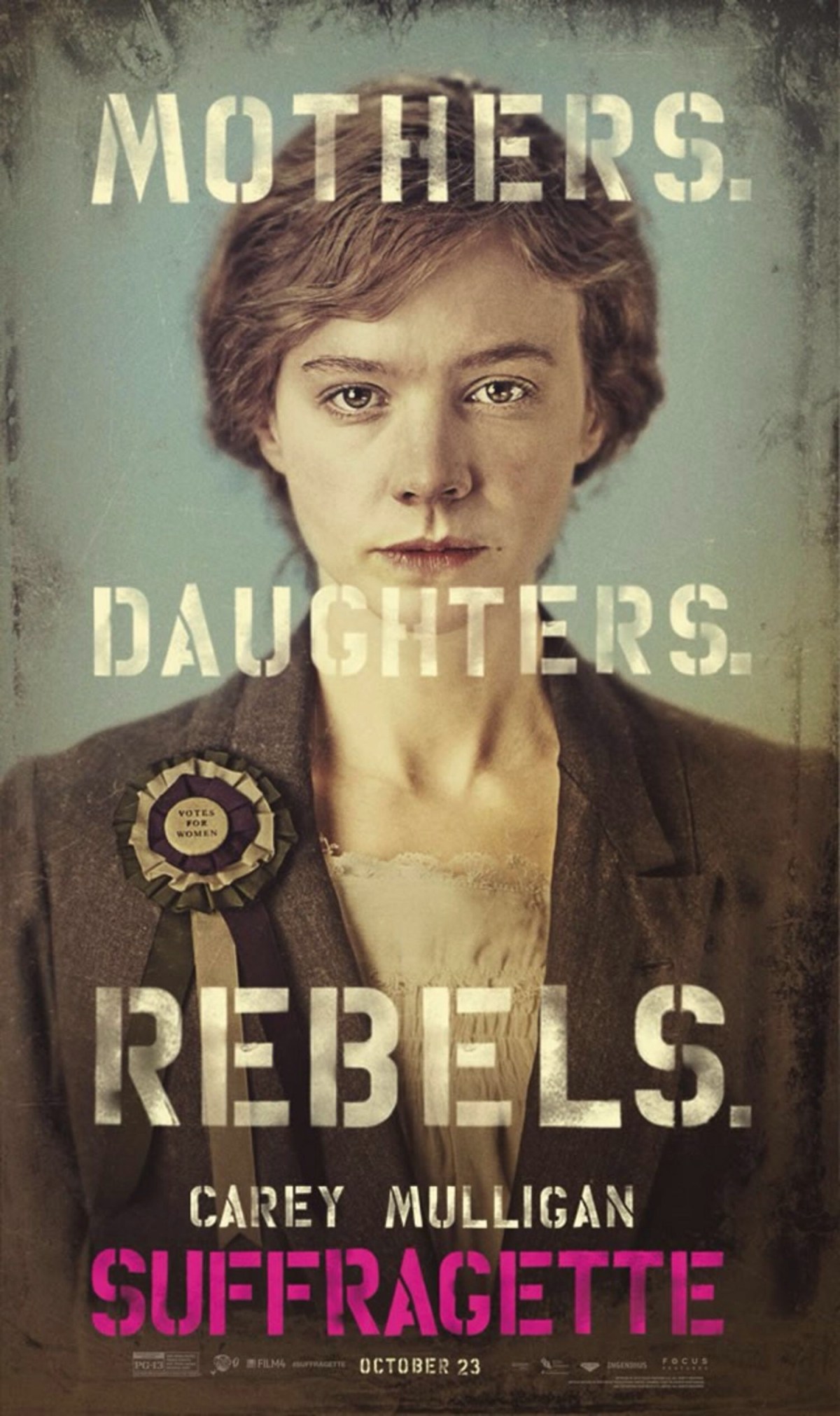
Suffragette (Sarah Gavron, 2015)

Suffragette opened the London Film Festival in some style tonight, with the stars out in force at the Vue in Leicester Square to bring their film to crowds in what was also the European premiere. The London Film Festival director Clare Stewart said prior to the screening that it was an “urgent and compelling film, made by British women, about British women who changed the course of history.” How right she was.
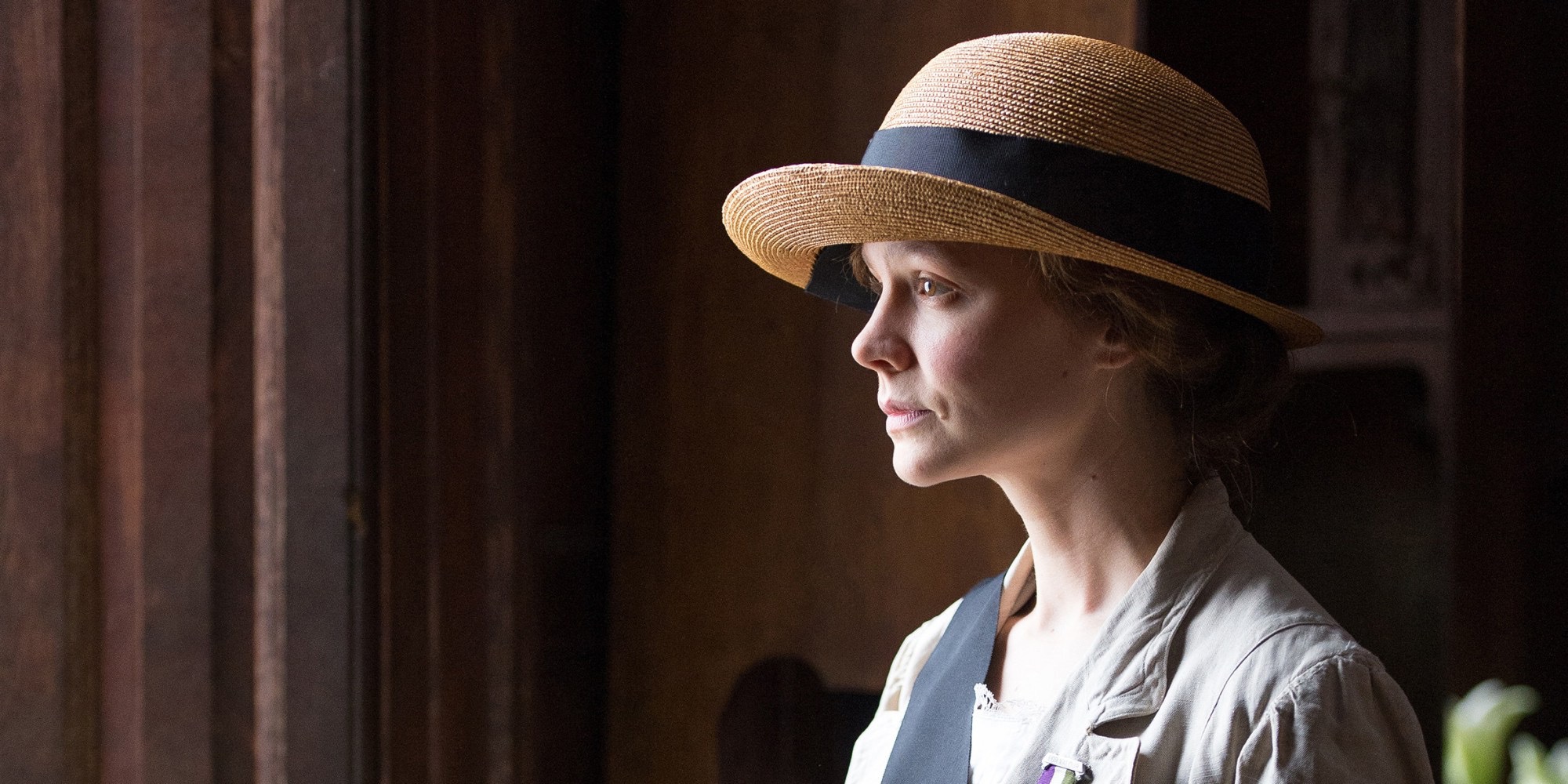
Carey Mulligan puts in an excellent performance.

The film, directed by Sarah Gavron and written by Abi Morgan, tracks the true story of the early suffragette movements of the late 19th and early 20th century and how their struggles against increasing opposition from all around them got harder as their prominence rose. The focal point is the fictional Maud Watts (Carey Mulligan), a working class washerwoman who gets slowly drawn into the fight for power and ends up losing everything to fight for her equality. She joins the local branch of the suffragette movement after a chance encounter in the West End, and quickly finds her feet alongside Edith Ellyn (Helena Bonham Carter, incidentally the great-granddaughter of H. H. Asquith who was Prime Minister from 1908 to 1916), Violet Miller (a standout performance from Anne-Marie Duff) and Emily Wilding Davidson (Natalie Press), a woman whose life is worthy of a film in her own right.

Just as important to the dynamics of this story are the men. Maud’s husband Sonny Watts is an extremely complex character portrayed magnificently by Ben Whishaw. As Whishaw discussed prior to the screening, Sonny is conflicted by the desire to protect and provide for the family he loves and doesn’t understand the importance of his wife’s involvement. However, as the plot progresses he makes some unforgivable decisions that further drive Maud’s determination. Brendan Gleeson provides depth to the role of Inspector Arthur Steed, a man of authority who is investigating the movement.

However, this is a film about women and made by women. It is extremely refreshing to see a film where the women take centre stage and it isn’t about how in love they may or may not be with a man. Screenwriter Abi Morgan said prior to the premiere that “a film that is fronted by an ensemble of women, and they are not being funny or romantic, is hard. That became a huge obstacle.” It didn’t feel like there were any obstacles in the final product, though the story is a tough one to discover if your only experience is the sanitised version of the suffragettes where everyone sits around drinking tea and waving flags that is much easier to tell and even easier to digest.

Meryl Streep appears as British suffragette leader Emmeline Pankhurst. It is a positive move to use her in the advertising and posters as her popularity will bring punters to this important piece of cinema. However, it will be a great shame if she ends up being overly celebrated for her appearance, especially given it is so brief. There are at least three actresses in this film more deserving of accolades for their supporting roles.

In 2015 34% of women eligible to vote in the United Kingdom failed to vote in the general election. This figure rises to 56% for the under 25s. Overall that’s almost ten million women. So was the suffragette’s fight in vain? For the most part, no. However, these stats do underline that the right the UK has to vote is now taken for granted. As such, the release of Suffragette is as poignant now as it ever could have been.

A postscript identifies the years in which women were given the vote in various countries around the world. It is not surprising to see that several countries are still lagging on this front, though perhaps the popularity of this film will help rectify these issues ever so slightly.

This is a powerful piece of cinema and a relevant work of art. It is essential viewing for all women, any of the 33.9% of the UK public who decided not to vote in the 2015 general election, and anyone with a passion for excellent cinema.

Suffragette will be released in UK cinemas on 12 October 2015.

Film review -トウキョウ トライブ / Tokyo Tribe (Sion Sono, 2014)

Movies should aspire to be the best in their genre. There’s no point existing as a movie unless you can at least be better than everything that has gone before in your genre. If you can’t do that, then why not mold yourself a new genre completely?

With that in mind, I am proud to announce that Tokyo Tribe is the best Japanese-language rap-musical in the tribal gang realm.

The story is pretty hard to explain. To summarise, we are let into a highly stylised version of modern Tokyo, where tribal gangs vie to rule the city. Set over one night, we see the heightening tensions as ganglord Buppa (Riki Takeuchi), his henchman Mera (Ryuhei Suzuki) and son Nkoi (Yosuke Kubozuka) declare war on all other tribes in Tokyo, announcing as much by killing the popular peace advocate Tera (Ryuta Sato). The uprising against their power trip is led by central heroine Sunmi (Nana Seino), and multiple stylised battles culminate in a dawn all-out-war.

Sunmi beat the living daylights out of another bunch of extras

Sunmi beat the living daylights out of another bunch of extras


Amazingly, the intertwining of multiple storylines and characters is reminiscent of Love Actually, though the comparisons inevitably end there. In fact, at times it’s simply hard to follow just who the central characters are. About 90% of the dialogue is delivered as rapping, so as an English native who barely speaks any Japanese it is hard to follow what are clearly some very fast and rhythmical lyrics. On this occasion, it really pays to speak the language.
Another issue is the excessive number of characters that are continuously being introduced into the mix. It felt at times like several characters were frivolously being added in too late for us to care about who they are, often getting only a handful of lines to describe who they are, what tribe they represent and a little about themselves before disappearing for the rest of the film.

That said, there is a memorable turn from Cyborg Kaori as a beatboxing servant, which is worth watching out for. She does things with her voice that seem completely unnatural. The results are fascinating and her various YouTube videos are worth checking out. This is an example of a distinct character being given the chance to shine; it’s a shame that the cast wasn’t smaller so more focus could be given to each of the talented artists involved.

Many of the featured actors and actresses, however, are new to the hip hop world and the intriguing on-disc Making Of documentary reveals a lot of the insecurities of the stars, particularly with standout performer Nana Seino. She’s clearly a talented actress but it’s sad she was the focus of such a lot of “fan-service” throughout the film.

Stylisitically, the film is top notch. From start to finish there is no break in the feeling that the characters inhabit this entirely alternate reality and in that sense it is a great success.

The same cannot be said for the storyline.

At times it’s a brilliantly unique film that threatens instant cult-classic status. Often it’s just a complete mess that loses itself in style over storyline. If you know of Sono Shion and liked his previous efforts then you know you’ll enjoy this. If not, then approach with caution.

Tokyo Tribe can be purchased on Blu-Ray in the UK now and was released by Eureka films.

BFI Flare Festival 2015 – Review

I managed to catch a couple of films this week at the BFI Flare Festival at the Southbank. The review for effective indie drama Tiger Orange was posted earlier tonight and the review of the excellent Dear White People goes live tomorrow morning. I also reviewed Peter Strickland’s bizarre but hilarious The Duke of Burgundy when I saw it at the London Film Festival last year.

The festival had a great atmosphere and it was a pleasure to be part of it, even if I only managed to visit it for a day. It looked like most of the tickets sold out but for a handful of seats for matinee performances, so there’s still chance to check out some screenings if you’re quick.

X+Y (Morgan Matthews, 2014)

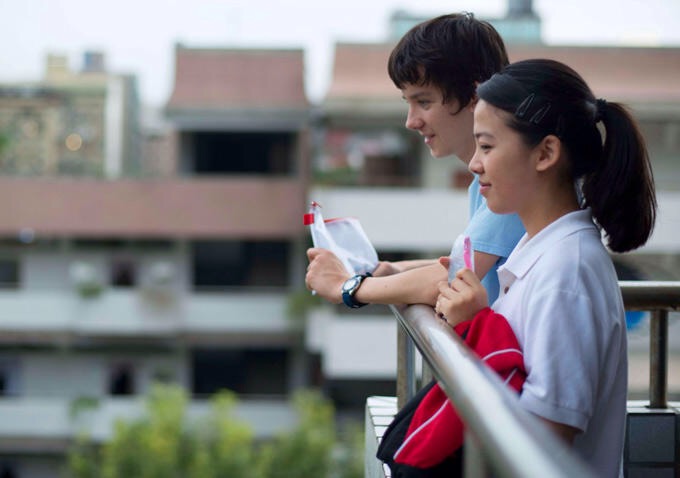
X+Y is a British film from BBC Films that follows the story of Nathan (Asa Butterfield), a teenage mathematics prodigy who is more comfortable dealing with numbers than he is with people. When he is selected to represent Great Britain on the International Mathematical Olympiad, he is forced to travel to Taiwan. As pressure to perform in the tournament grows and he finds an unlikely source of romance in Zhang Mai (Jo Yang), he soon finds that being out of his comfort zone is the starting point for a challenging journey of self-realisation.

One thing I was worried about as I sat there in the cinema waiting for it to start, was how they were going to portray autism. Inevitably we’re going to compare lead character Nathan to Dustin Hoffman in Rain Man or Russell Crowe in A Beautiful Mind, probably the two most iconic on-screen portrayals of people on the autistic spectrum. Unfortunately for sufferers of autism, this drastically sells the condition short to people who aren’t overly aware of it. Autism is a condition that affects those close to someone on the spectrum as much as the person themselves, and to assume that they will simply be a bit awkward around people and good at maths is doing it a misjustice. Many sufferers find comfort in the strict rules set out in maths – it’s an emotionless interest. However, others find the same solace in a regimented interpretation of music, with its repetitive patterns and melodies and set mathematics behind complimentary frequencies of notes. Others become obsessive over lists and facts, whatever the topic might be. Others just don’t. There are mild forms of autism and severe forms, which is why diagnosis can be tricky as early signs can’t be placed on the spectrum by someone unfamiliar with the condition. 

So it’s unfortunate that autism has been portrayed on screen by means of a maths genius yet again, even though the director has previous work on autism (2008’s Beautiful Young Minds), which covers it in a more factual manner. However, X+Y is by no means just a light-hearted walk in the park and I enjoyed the fact a lot of time was spent with Nathan’s mother Julie (Sally Hawkins) as she came to terms with the loss of a close relative with no emotional support from her son. This was an important portion of the film that gave the right emphasis to the right areas and should be applauded.


I felt Butterfield’s portrayal of a child suffering from autism was very accurate, and I felt the frustration seeping through his inability to understand others. He has become a very accomplished actor throughout the three or four major films he has been part of so far, and as long as he keeps his feet on the ground for a couple more years he will continue to be successful for a long time.

Another great performance was from Jake Davies as Luke, whose character was a much more acute sufferer of autism. One scene involving a dead prawn stuck out for me and I’m sure we’ll be seeing more from him in the future.

The comradery of the maths students didn’t ring true for me. From first hand experience (I partook in mathematics competitions as a child, to some success), these competitions are far from a sociable affair, with most children very much “in the zone” and either unable or unwilling to communicate with their peers. It was a case of get in, do maths, win. Anything else was just unneccesary. So when there’s laughing and joking and, most notably, a cringeworthy rap session (including an awful rhymical recitation of Pi), I just thought back to the suits and classical music I had to endure and wondered how much it really could have changed.

I felt let down by the end. I’m not going to go into details as the film is yet to be released, but it just didn’t ring true to me and seemed to undo a lot of hard work they’d put in earlier in the film in a manner that suggests to me they got lost with the message they wanted to send out. I’ll let you make your own mind up on that one.

Overall it’s a very accomplished film and has many enjoyable points, but I didn’t feel it quite fulfilled its potential.

X+Y is released at UK cinemas on 13th March 2015.

Testament of Youth (James Kent, 2015)

Testament Of Youth is a dramatisation of the memoirs of famed pacifist Vera Brittain. Her story is a powerful and heartbreaking one to tell. It’s just a shame that first-time director James Kent fails to bring it to life.

Alicia Vikander portrays Brittain as she watches her fiancé Roland (Kit “You Know Nothing” Harington) leave France to fight in World War I, along with her brother Edward (Taron Egerton) and friends Geoffrey (Jonathan Bailey) and Victor (Colin Morgan). The story follows her as she joins the fight as a frontline nurse, giving up her studies at Oxford University to get closer to her loved ones in France.

/home/wpcom/public_html/wp-content/blogs.dir/002/60589995/files/2015/01/img_0126.jpg

Premiering at the BFI London Film Festival in the year of the centenary of the start of the war, giving the story additional poignancy, the underlying themes of the film are no less true today. We see Brittain in all her inspirational glory, fighting for her beliefs and showing resilience in the face of adversity.

But it is far from a perfect film. Perhaps one of the most distracting parts of the feature is Kit Harington. Known a little for his modelling work but quite a lot more for his role as Jon Snow in HBO’s episodic epic Game of Thrones, he failed to ignite anything but boredom in me as I watched him try to manage a deep gamut of emotions whilst just looking a bit lost and out of place.

The pacing of the film was another downside. I think the tendency with these wartime biopics is to draw them out and allow them space to breathe, but I’m sure this could have been cut slightly. Alternatively, if they wanted to give the story more time to develop, they could have opted for a more appropriate mini-series. Oh wait…

Vikander’s accent needed work. She is of Swedish origin and clearly hasn’t mastered the English nuances yet. You’d have thought that there were better options available, although director Kent has previously stated how thrilled he was that she signed up. Maybe I missed something.

My final bug-bear is the desire to build up sympathy in a character that seemingly has everything. We watch her in the opening scenes have a disagreement with her father because he bought her a grand piano instead of helping fund her to go to university. She storms off out of the room, whilst their maids look on in horror, up the stairs and into her oversized room, which I think was in the East Wing. You get the idea. I just don’t find this sort of thing entertaining as I have no connection to that sort of lifestyle.

The film has tough competition at the box office from Oscar tips Birdman, Foxcatcher, Cake, American Sniper, Whiplash, The Theory of Everything (the list goes on). There are still some huge blockbusters too in The Hobbit: Battle of the Five Armies, Into The Woods, Hunger Games: Mockingjay Part One, Paddington and How To Train Your Dragon 2. And Dumb and Dumber To is still on. I’m sure this film won’t be overlooked when it hits home media releases later this year, but I can’t see why they’re releasing it in awards season. It needs more help than that.

Testament of Youth is released in UK cinemas on 16th January 2015.

’71 (Yann Demange, 2014)

Screened as part of the First Feature competition at the London Film Festival, Yann Demange’s ’71 is an accomplished action thriller that serves as yet another reminder of the supreme talents of Jack O’Connell.

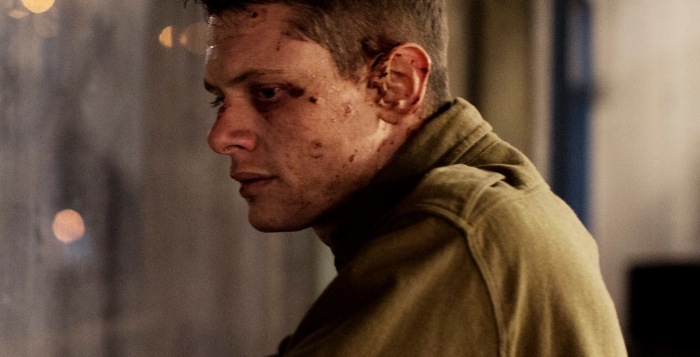
Set during The Troubles in 1971, the story follows Derbyshire soldier Gary Hook (O’Connell) who has been sent on his first mission with the Armed Forces to Belfast. His first call out, to quell some disturbances in a housing estate dubbed as “the front line” near the Falls Road, goes wrong fairly quickly and he is thrust into a man-in-hiding situation, on the run from the locals who believe the British Armed Forces have no place in their conflict. In danger and in isolation, the story becomes an cross-analysis of one man desperate to survive and return to his base safely.

IMG_9233.JPG

What I found interesting was how similar this plays out to other recent films set in more modern wars. One that immediately springs to mind is the Mark Wahlberg-starring Lone Survivor, which was set in Afghanistan. Of course the two films are as far apart as you could get in terms of style, but it serves as a reminder of how extreme the conflicts had got in the early 1970s.

Despite his frequenting of the tabloids, Jack O’Connell keeps on proving himself to be an actor with plenty of natural talent and it’s fantastic to see him building on his excellent performance in last year’s Starred Up (also reviewed here).

IMG_9232.JPG

There are moments of real tensions and shock along the way. I think it would be unfair of me to discuss them in great detail as I might ruin a great film that needs to be seen first-hand.

With a fantastic support cast (Sean Harris stands out as Captain Sandy Browning), this is a solid film worthy of your attention. Seek it out.

’71 is released in cinemas across the UK on 10th October.

Giovanni’s Island / ジョバンニの島 (Mizuho Nishikubo, 2014)

Back in July when I initially viewed Miyazaki’s final film The Wind Rises, I commented that it was a story that would have been better told in live action. The subject matter was very serious, there was nothing magical required of the story. It was simply an animation that didn’t need to be an animation.

IMG_9276-0.JPG

Giovanni’s Island, the new anime release from Mizuho Nishikubo, could have had a similar issue. It is a film set on Shikotan, a small Japanese island in 1945, which tells most of the premise in itself. We follow Young brothers Junpei and Kanya Senō as they deal with the island’s occupation by Russian soldiers, the upheaval of life as they know it, their integration with Russian culture at their school and Junpei’s romantic interest with Tanya, a Russian schoolgirl with a high-level military father.

It is overall a very depressing subject matter. By this I’m talking Grave of the Fireflies sort of level of depressing. There were many teary eyes as the film reached its conclusion, and that is testament to what a fantastic job Nishikubo has done here.

The animation style was actually quite intelligent and as the film went on there was a clear reason why animation was the medium of choice to tell this tale. There are three distinct styles on show: very realistic imagery is used for all the modern-day portions of the work; a more childlike design with juxtaposing dull greys are used for the sections covering 1945; and Junpei’s dreams and fantasies are more varied, with styles ranging from basic sketches to star-filled neon visual fireworks. The decision to use all three styles to represent a now much older Junpei’s memory of the events is a smart move, especially when we see the childlike times he spends with his brother overlaying a truly grim memory of the surrounding landscapes.

IMG_9234.JPG

One key theme throughout is the children’s obsessions with trains and railways, inspired by the brothers’ favourite book Night of the Galactic Railroad. According to the director this book used to be extremely popular but has since become just a phrase that is used. In fact, only 10 out of approximately 100 children who auditioned for the film were aware of the contents of the book. Perhaps the choice of this particular book was a comment that the younger generations of Japan are trying to move on from the painful memories suffered by their grandparents. Or perhaps it was just a happy coincidence and I’m reading too much into it.

Nishikubo has come in for criticism for the content of the film. Some Japanese critics thought he should have used the film to make more of a political statement. I tend to disagree. It really is an important and compelling story to simply tell the experience these two young children went through, without being judgemental of any of the parties. Neither the islanders nor the Russians are particularly singled out as being in the wrong. This allows us as viewers to make up our own minds, and it’s a much more balanced approach to allow the story to gain popularity and recognition in the world markets. In so many ways, this does a far better job than being highly favourable to the Japanese islanders, who went through terrible treatment no matter which way you look at it, and I’m sure this is the conclusion most will draw.

Giovanni’s Island has a limited release in UK cinemas in 2014, including the London Film Festival (10th October onwards), Scotland Loves Anime 2014 in Glasgow (12th October), Leeds Vue in the Night (12th October) and Edinburgh Filmhouse (18th October). It will subsequently be released on Ultimate Edition Blu-ray (limited to 1000 copies) and DVD on 8th December, and standard Blu-ray on 26th January 2015. More information on all these releases can be found on the official Giovanni’s Island website.

The Duke of Burgundy (Peter Strickland, 2014)

Peter Strickland’s latest film, The Duke of Burgundy, is an interesting one. Screened in competition at the British Film Festival under a wave of great reviews, it is a film very hard to categorise. I’ve seen it described as an erotic drama. It’s also been referred to as a sexual romance. I’ve a tendency to go with a black romantic comedy, albeit based on the sexual fetishes of a lesbian couple.

IMG_9272.JPG

On the face of it, it concerns a sadomasochistic relationship between a dominant woman and her submissive lover. They live in a small community populated exclusively by women, who we are led to believe share similar sexual tendencies. They are all clearly well off, and none appear to work outside a few butterfly lectures here and there.

To label it as a film simply about fetish sex is to do it a disservice. Actually by the end of the film it is clearly more about the demands made by the desires of one person in a relationship, and the effect that has on the second party, especially as they grow distant from these demands and find them less appealing.

The soundtrack, provided by Cat’s Eyes, tweely pitches somewhere between Goldfrapp and Belle and Sebastian. With the constant references to butterflies I was repeatedly reminded of early 00s band Misty Dixon. This juxtaposition between what we see and what we hear is quite intelligent: it underlines the innocence of one party and her belief that this is normal behaviour, even though it is clearly a strain on her besotted lover. She is living in a dream world and the music, in that sense, is perfectly pitched. Plus it’s really lovely music, which helps.

IMG_9229.JPG

The whole nature of the relationship is completely flipped from its initial portrayal, and by the end we see the surprising reality. This about-turn makes for some hilarious and at times heartbreaking scenes. Indeed, such is the detail in which we see the emotions and pain seen by one party, we barely see a glimpse of any of the sexual acts, usually having them implied behind closed doors or inferred from showing us the before and after shots. In this way, Strickland managed to avoid it becoming all about the sex and makes it a much greater film as a result.

In a post-50-Shades era the subject matter will no doubt turn a few heads. In many ways I hope readers of the 50 Shades series seek it out and are either disappointed or, more likely, pleasantly surprised.

Whilst it didn’t have the impact of Strickland’s previous film Berbarian Sound Studio, it was a highly satisfying, twisting and twisted tale that deserves a wide audience.

The Duke of Burgundy is released in UK cinemas in 2015.