A Short Vision (Joan and Peter Foldes, 1956)

Wild creatures flee in terror as a strange missile flies overhead. As it passes over the sleeping city, the world’s leaders and wise men look upwards. The missile explodes, destroying humans, wild creatures and the Earth itself.

A curiosity available via the BFI YouTube channel or in any of the BFI Mediatheques, A Short Vision is a short animated film that captured the imagination of a world obsessed with nuclear war and a fear-induced impending apocalypse. I discovered it during my latest visit to the BFI Mediatheque (a cracking service by the way) and found it completely captivating.

The animation style is jarring, with very little actual moving imagery. Instead, highly detailed paintings are used. Equally the score, provided by Mátyás Seiber, sounds overly eerie and fits perfectly with the visuals.

I don’t know what the purpose of the film was. It was originally funded by the BFI Experimental Film Fund. It’s incredibly depressing to say the least. The James McKechnie voice-over work doesn’t help either, his British voice relaying an almost biblical retelling of a horrible story.

To be honest, by the end of the film I couldn’t help but laugh. It seems so out of convention now that it would have aired on prime time US television as part of The Ed Sullivan Show. No wonder it sparked the biggest reaction since HG Wells’ “War of the Worlds” (presumably in terms of complaints).

Anyway, just watch it and see what you think. The perfect way to get you in the mood for the upcoming Hallowe’en season, or just to bring mood down if you feel in any way positive.

The Imitation Game (Morten Tyldum, 2014)

Every so often I see a new film that absolutely blows my socks off, where the storyline sits perfectly with my mood and I get totally enthralled in the joyous and rare occasion of seeing what could be one of my favourite films of all time. The Imitation Game was one of those films.

It is a film in three intertwined parts, covering three key periods of Alan Turing’s life: the schooldays in which Alex Lawther plays a young Turing, complete with serious bullying and a growing fondness of his best friend Christopher; the war years, where he devises and eventually builds the Turing machine that eventually cracks the Enigma code (sorry, spoiler alert!); and the early 1960s when he is investigated and prosecuted for his homosexuality. All three are critical to giving us the full picture of Turing throughout his life.

IMG_9227.JPG

Cumberbatch’s ability to transform himself and become his subject is uncanny, perhaps rivalled only by Michael Sheen by today’s younger actors for chameleon-like abilities. Having seen him in so many different roles (for range you can compare his performance as Smaug in the current Hobbit trilogy to his powerful turn in 12 Years A Slave), he never ceases to amaze me as to how there’s such little crossover between his characters. And so it is here: a totally unique take on a totally unique person.

The scenes during which the machine is developed and successfully executed is the real joy to behold. The take on Turing has no elements of a stereotypical cinema autism sufferer; this tale is set in the real world and without any intentional throwaway punchlines. People with severe autism often find themselves – intentionally or not – having disconnected exchanges with others in real life that to outsiders seem very hilarious, though the comedy here is brought to life by the chemistry with his on-screen companions. Perhaps the best example of this was the Armed Forces interview with Charles Dance, which almost completely ruins Turing’s chances of taking part in the war efforts. I won’t explain it, but it is certainly a highlight.

I imagine the film will come under criticism from people accusing it of being a slightly jingoistic, self-appreciating celebration of how great Great Britain really was back in the day. Very little screen time is given to even mentioning any other country’s war efforts. The truth is that Britain really were the only nation involved with the Turing machines and cracking Enigma, but this film isn’t about a war but about a man. In any case, it’s not only a celebration of a fantastic collaborative effort of some of the greatest minds of a generation, but also a celebration of a time when it was okay to be a proud Brit; when we had plenty to be proud of on a global scale. And jolly good it was too.

IMG_9228.JPG

I’d love to contribute some criticism of it and counter balance why I think negative aspects are acceptable, but nothing springs to mind. The support cast (Keira Knightley, Martin Strong, Charles Dance) were phenomenal, and ensured this didn’t turn into a one-man-show. The music was truly sublime and fitted the mood well. There really wasn’t anything to say that could be considered negative.

Please, do yourself a favour. Watch this film.

The Imitation Game is released in UK cinemas on 14th November and in the USA on 21st November.

Lilting (Hong Khaou, 2014)

Hong Khaou’s Lilting is a film of understated power. Watching it is a deeply moving experience.

The plot deals with the unexpected death of a young man played by Kai, and the toll this takes on his lover Richard (played by Ben Whishaw) and his mother Junn (played by Cheng Pep-pei). The snag in the situation is that the mother is unaware that her son is homosexual, and the situation is made more complex by the fact that Richard intends to respect his lover’s wish to keep this secret whilst at the same time ensuring Junn is looked after, which raises issues that are extenuated by the fact they have no common language. Or rather, they don’t until Ben hires a translator, though this gives rise to as many issues as it resolves.

This is a complicated storyline to see through and could easily fall flat with poor performances. Junn is brilliantly stubborn and cold, though we can see a heartbroken woman underneath the façade. Whishaw’s turn is an absolute revelation and every quirk adds to the belief that he is completely ripped apart by the situation.

A large amount of praise also needs to be heaped on the unwillingness to shy away from the fact we are seeing a homosexual relationship. So many times in films we see same-sex relationships implied but rarely do we see the playful intimacies and passion of such a relationship. This isn’t to say that there are any gratuitous sex-scenes, but the story called for the young men to be very much in love and the closeness is not shirked. Hopefully this is something we will see more of in the future.

Lilting is one of the best films I’ve seen this year. It’s a stunning study of the emotions people go through when someone they are close to dies with a secret, and the difficult resolutions they find to deal with the loss. If you get a chance to see it, then grasp it with both hands.

Lilting is out now in selected cinemas across the UK, and will be released in the USA on 26th September 2014.

Oscars 2014 – What missed out

20140302-181314.jpg

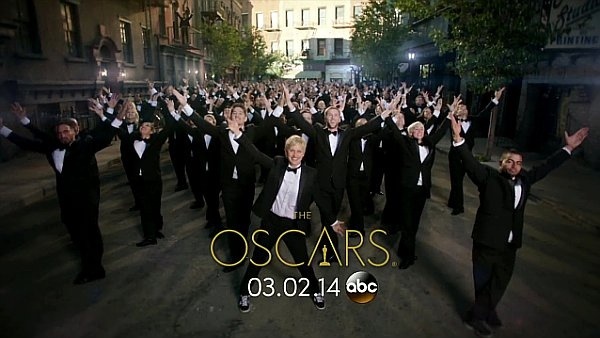
With the Oscars taking place later tonight, I look at the films that have been overlooked by the Academy.

Monsters University
20140302-181458.jpg
Okay, it wasn’t the best picture Pixar has come up with over the years. It wasn’t even the best Monsters film they’ve produced. That said, they did find space for The Croods in the nomination pool, which was fine but could you really say it was better than MU? If Pixar had released The Croods, there would have been mass derision. Miyazaki’s The Wind Rises is a hot tip to take the prize this year, but I can’t comment until it gets a UK release.

Rush
20140302-181717.jpg
I feel like this film has suffered because it wasn’t released in the typical awards season. It didn’t play by the book. It came out back in September 2013 and performed well at the box office without an Academy recommendation. Bruhl and Hemsley were both outstanding, not just as eerily accurate take-offs but as flawless acting performances in their own right. The recreation of the classic races was spot on from Howard and the story was as exhilarating as the action. In my eyes, it could have easily come in as the 10th film on the best film list. To not even get an appreciative nod for best makeup (Bruhl’s scarring was critical and spot on) or visual effects (though admittedly this was a strong category this year) is surprising.

Inside Llewyn Davis
It’s the Coen brothers latest release and they usually get nominated, right? Not this year. Whilst it’s a strong year for nominations in the Best Picture category, it should have received a nod for best song. In fact, whole soundtrack could have been considered. It received one for best sound mixing, which is a bit of a throwaway category overall. At least it was appreciated on some level.

The Hunger Games: Catching Fire
20140302-181550.jpg
Okay, I don’t agree that this film should have been nominated for best film or best acting or anything else. However, the song “Atlas” by Coldplay is easily one of the best original songs in what was admittedly a poor year for soundtracks. It’s a shame they had a song on the list that was later disqualified, especially one as awful as “Alone, Yet Not Alone” by Bruce Broughton and Dennis Spiegel. There was also space for the bland “Ordinary Love” by U2. Neither of these should have made it and they would have made room for “Atlas” and, well, anything from Inside Llewyn Davis or Her.

Saving Mr Banks
20140302-181628.jpg
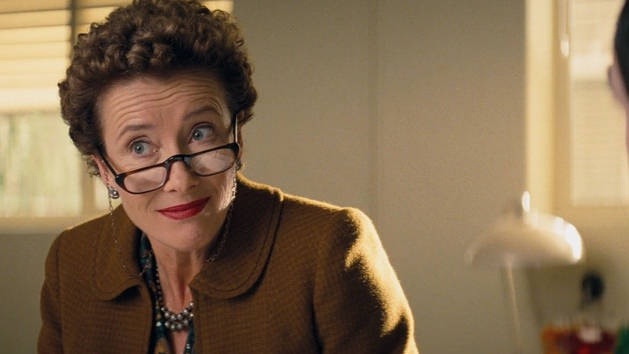
One of the biggest and most talked about shocks was the lack of a nomination for Emma Thompson in Saving Mr Banks. It’s frustrating to see Meryl Streep nominated for the 18th time for a role that she will never win the top prize for when Thompson could have been a front runner for.

Nymph()maniac
20140302-181509.jpg
I would have loved it if the Academy could have found it in themselves to nominate Uma Thurman’s fantastic supporting performance in Lars Von Trier’s latest film. It blew me away and really stood out in what was otherwise a pretty bland film. That said, it may not have qualified this year so we may have to wait another year before we see if this – and indeed Christian Slater’s excellent performance – was overlooked.

Elsewhere
Tom Hanks missed out twice for Saving Mr Banks and Captain Phillips, the latter being the biggest shock as it is probably his best performance for over a decade. Whoever thought the cinematography in 12 Years A Slave wasn’t worth noting must have been on drugs. Nothing for Robert Redford’s performance in All Is Lost was also a big surprise, though I’m not convinced Redford lost any sleep over it. The Butler was a massive omission but maybe a little too much like a typical Oscar nominee.

Starred Up (David Mackenzie, 2014)

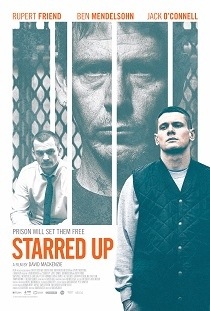
Screened in competition for Best British Film at the BFI London Film Festival 2013, Starred Up was a film I knew very little about but had high expectations for, and it didn’t disappoint.

We are introduced to the lead character Eric Love, portrayed by Jack O’Connell (Skins, This is England), who has been “starred up” from a young offenders’ institution to a jail for adults for excessive violence. As the story develops, we go on a personal journey with him as he struggles to deal with the fact he is no longer the king pin in his new home.

Helping him on his journey is prison therapist Oliver, played brilliantly by Rupert Friend (Homeland). He builds up a close relationship with both him and several fellow inmates also going through the therapy sessions. It is in these sessions that we begin to learn a different side to our protagonist, one that he hides from everyone else he comes into contact with in the prison.

20140117-172108.jpg

The twist in the tale lies in the fact Eric’s father is also incarcerated in the same jail, and this is where his struggle lies. He is finally able to spend time with his father, but cannot cope with the fact that in spite of all the larger inmates and all the guards, the one person who has control over him is the one that he blames for being in prison in the first place. It is this dynamic that really allows O’Connell to flex his acting muscles, and show he can play much more than the jack-the-lad tough guy. As an actor, he has a serious amount of talent on offer and at such a young age must feel like the world is his to take on.

Much of the praise for the successes the film enjoys must go to screenwriter Jonathan Asser. Asser won the LFF Best British Newcomer award for this film, and it’s easy to understand why. It’s an authentic and intelligent script that draws on his own personal experiences and it ensures that what could have been a run-of-the-mill prison drama becomes much more than that – a study of an individual’s struggle against authority and personal responsibility.

Starred Up is released in UK cinemas on 21st March 2014.

See a clip of the film here or the trailer here.<br />
20140117-172100.jpg