Upcoming Crowdfunded Films Preview Part Two: AVGN The Movie

I’ve been following the foul-mouthed ranting reviews of terrible old video games by the Angry Video Game Nerd (portrayed by James Rolfe) for many years. They’re one of my go-to videos on the net when I have 10 minutes to kill and want a sure-fire way to give myself a shot of humour. For someone who grew up with these infuriating games, seeing him struggle to play through Silver Surfer or Wayne’s World is a hilarious blast from the past and if you’ve not seen them I heartily recommend you check them out.

One thing you will pick up on if you watch his videos is just how much he knows about his subject matter, and it doesn’t stop at video games. I remember being blown away by his cross-referencing of the original Teenage Mutant Ninja Turtles TV series with the classic horror films they were paying homage to. There is no way he could have looked any of these up; he just knows his stuff.

So when he announced he was doing a movie based on The Nerd, I was immediately excited. The subject matter – his quest to unearth the legendary hidden ET Atari cartridges in a landfill in New Mexico – is ideal. At the time the film started production, these cartridges were one of the biggest myths of the video game industry and the story had taken on a life of its own. Some believed it was a complete fabrication, whilst others were convinced they were buried somewhere. Nobody knew how many would be found if they were ever located, and many doubted the increasingly renowned story.

avgnscreenshot

What has been frustrating is the recent unearthing of the Atari cartridges, itself documented a the Zack Penn film to be released later this year. I personally thought it was a shame the myth was proven to be correct (to some extent), as it meant the speculation was over. It was terrible timing when the AVGN film was so closed to completion, but it hasn’t deterred Rolfe from powering through and completing his first big-budget feature film. Indeed, he posted a blog post on the week the cartridges were unearthed discussing how he felt about the excavation and he raises some interesting points.

It has been released in the USA already and has been receiving solid reviews. It looks like it’s aimed directly at his already vast fanbase. For newcomers it might be a little alienating, but staying true to his character is the most important thing here. The effects were something he has poured over and the team have done an excellent job with a comparatively low budget. So much love and care has gone into the film already and I can’t wait for the UK Blu-Ray release early next year [1].

The AVGN Movie is out now to stream from Vimeo via Cinemassacre, the home of AVGN.

[1] I’m a complete snob when it comes to picture quality and resolution. I know how much effort has gone into this film and I’m not about to short-change myself and the filmmakers by streaming over the internet. My connection is so bad (thanks BT!) that I know it would wipe out a whole evening waiting for it to load. I’d rather just wait. In the meantime, I’ve noticed he’s uploaded a new AVGN review (an increasingly rare event). In fact, this one (Tagin’ Dragon) is part of a series of reviews called “The Twelve Days of Shitsmas”, which promises twelve AVGN reviews over the next twelve days. Clocking in at over one hour of running time, Christmas really has come early!

Upcoming Crowdfunded Films Preview Part One: Beyond Clueless

There are a three crowd-funded films I’m pretty excited about: Beyond Clueless from Charlie Lyne; Elstree 1976 from Jon Spira; and The Angry Video Game Nerd Movie from James Rolfe. All three are extremely talented people who opted to crowd-fund their projects, and succeeded way ahead of their target dates.

Crowd-funding is a double-edged sword. In an ideal scenario, you get the money you need to complete your project and ensure you have an audience of backers who are all on board from the start, getting e-mails on a regular basis updating them with all the latest progress as it happens. It also gives you a bit of impetus to finish it on time as you have 100s or 1000s of people to keep happy.

The negative side of crowd funding is that you can end up highly embarrassed if you fail to get enough backers and your project falls flat on its face. There have been some big-name stars who’ve fallen foul of this for a variety of reasons, usually because they set their target too high (see Bjork’s failed Biophilia app campaign) or they didn’t come up with enough interesting rewards at appropriately-pitched prices.

These boys have got it right so I thought I’d write about them and give them the attention they deserve. I’ll start with Beyond Clueless, with the other two covered over the next week.

Beyond Clueless still 4

I’ve been a backer of this campaign for almost two years now and thus feel wholeheartedly part of the journey that all backers have gone on with writer and director Charlie Lyne, who makes a living as a columnist to The Guardian and as the editor of film blog Ultra Culture. With regular updates to all the backers and exclusive videos and artwork sent out to us all (and preview screenings), this was a crowd-funding campaign that has been executed perfectly by Lyne and maintained my interest throughout, and this in turn has evidently generated a lot of buzz around the project.

The film is essentially a review and dissection of the teen movie genre narrated by Fairuza Balk (American History X, Almost Famous). The press release states “Beyond Clueless is a dizzying journey into the mind, body and soul of the teen movie, as seen through the eyes of over 200 modern teen classics”. I’m a big fan of many of the films covered, including Mean Girls, Clueless, Ferris Bueller’s Day Off and The Breakfast Club (to name but a few). The film promises to draw comparisons by interlinking scenes of different films and commenting on the themes and critically analysing all the films it covers – no easy achievement considering the breadth of the subject. Judging by the backer updates, Lyne is clearly very passionate about the subject matter and so everything will be dealt with the utmost respect.

The soundtrack is provided by the excellent Summer Camp and I’ve been listening to bits of it already and it’s absolutely perfect for this film. Plenty of it is available online and it’s well worth a listen. This is complimented by the highly stylised illustrations surrounding the film, provided by Hattie Stewart. She has done wonders to create a brand for the film and help nurture the buzz, and this can’t be underestimated.

Having read some reviews, there has been some criticism of Balk’s narrative and also of the cutting techniques used by Lyne to produce the final edit. This all remains to be seen when the film arrives locally – I’ll be at the QUAD screening in Derby when tickets and times are released. On a side note, there is a mini tour going on to promote the film and if you get chance to drop in to one of these screenings there’s quite a lot on offer, including Q+A sessions with Lyne and live soundtrack accompaniment from the aforementioned Summer Camp. They start on 13th January and go pretty much until the general release later in the month.

When it is finally released across the UK, I hope it gets the audience the team behind it deserve.

Beyond Clueless is on a promotional tour, with dates across the UK leading up to a wider release on 29th January 2015. All dates for the tour are on the official website.

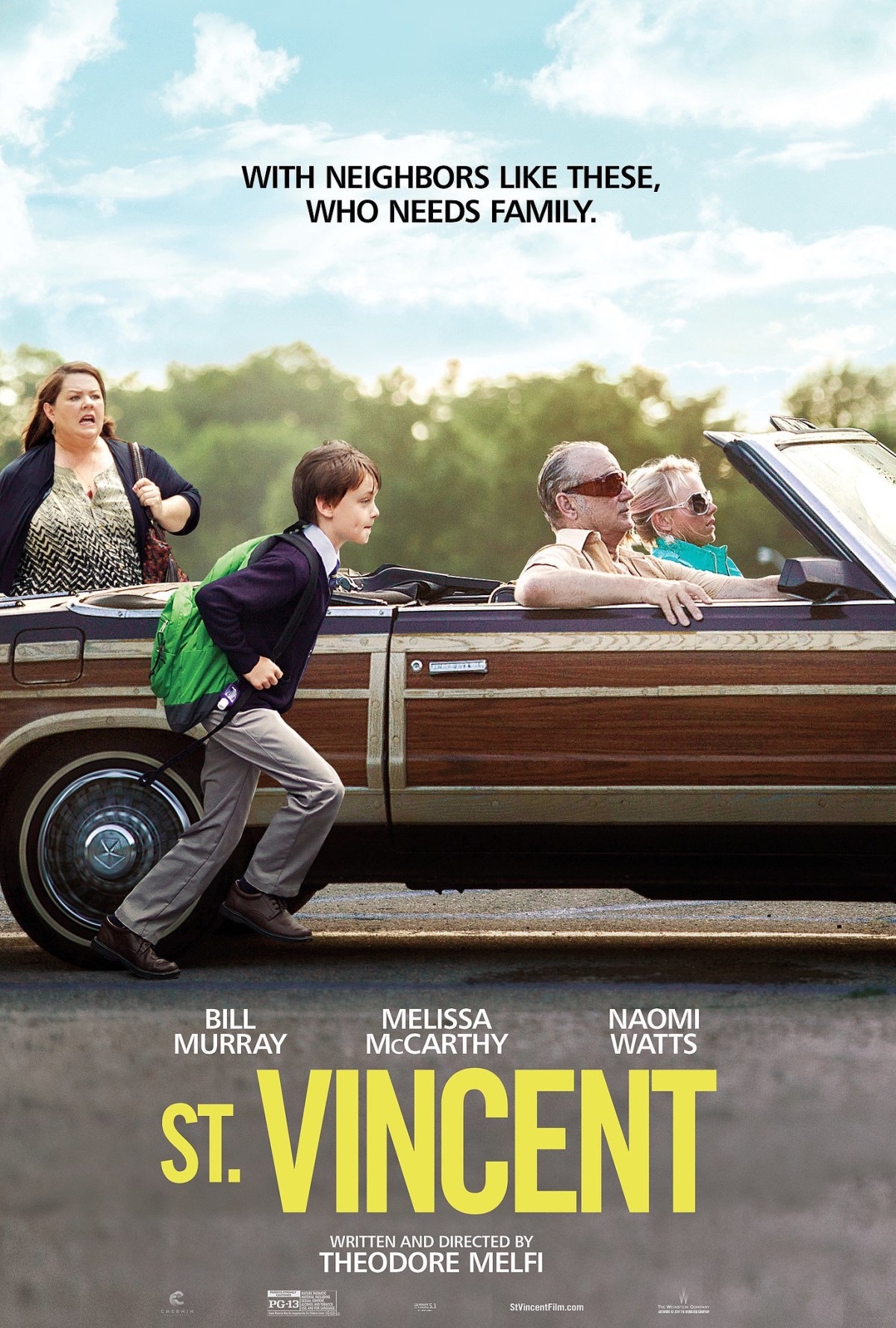
Film review – St. Vincent (Ted Melfi, 2014)

Note: This is a review that is full of spoilers. If you are yet to see the film then I suggest you don’t read on.

St Vincent is an indie film that charts a small-town tale of a young boy Oliver (Jaeden Lieberher), his mother Maggie (Melissa McCarthy) and their neighbour Vincent (Bill Murray), as they compete with their various individual struggles. Maggie is going through a divorce with her husband and has had to move away and start a new job to support herself and her son. Oliver is being bullied at his new school and is finding his way in a new neighbourhood without a father-figure (or indeed mother-figure) to guide him. Vince is an unlikely companion to Oliver, as he battles addictions to gambling and alcoholism.

Whilst Murray isn’t playing out of his comfort zone as a grumpy old man who is as sarcastic as he is rude, seeing him re-tread old ground is hardly a painful experience. Indeed, it’s exactly what we love him for and why he has been so successful in his career. It’s a little like when a band you love plays your favourite song as the encore – everyone is much older that the first time it came around but we all play along as it’s something we love experiencing.

There are some pretty unforgiveable plot holes in the film that really let it down and make it impossible to enjoy wholeheartedly. Whilst Naomi Watts is dong a fantastic job as the heavily pregnant dancer and “lady of the night”, it seems unfathomable that she’d have kept the baby and her jobs for so long. Whilst her being pregnant served as a humorous point for some good physical comedy, it was at the expense of the realistic façade Melfi had worked so hard to create.

It was confusing trying to rationalize Vince’s actions when they were eventually revealed to be revolving around keeping his wife in such an expensive care home. She has Alzheimer’s, which is a terrible condition, but since he wasn’t working and didn’t have any other responsibilities (children are never mentioned), if he truly loved his wife maybe he could have kept her at home instead of spending all his time with a Russian sex worker.

The most irrational decision was the choice of Maggie to palm off her son to a neighbour she knows only through arguments. It is convenient for both Maggie as a character and also as a key plot point around which to bend the storyline, but it would never happen. She also seems too quick and easy with her money, even though she is evidently struggling to make ends meet. Any of Vince’s personality traits would have set alarm bells ringing for a single mother, yet she chooses to ignore them all and employ him as a babysitter, essentially to serve the plot.

I also find it unlikely that the divorce would have been settled with joint custody of the child, when the evidence was clearly stacked against Maggie. If her husband was creating an equally bad environment for Oliver, then he would surely have gone into a foster home since neither parent was fit to care for their own child.

I forced myself to see past these flaws in order to enjoy the film, but a truly great film wouldn’t have asked so much of its audience.

St Vincent is out now at cinemas in the UK.

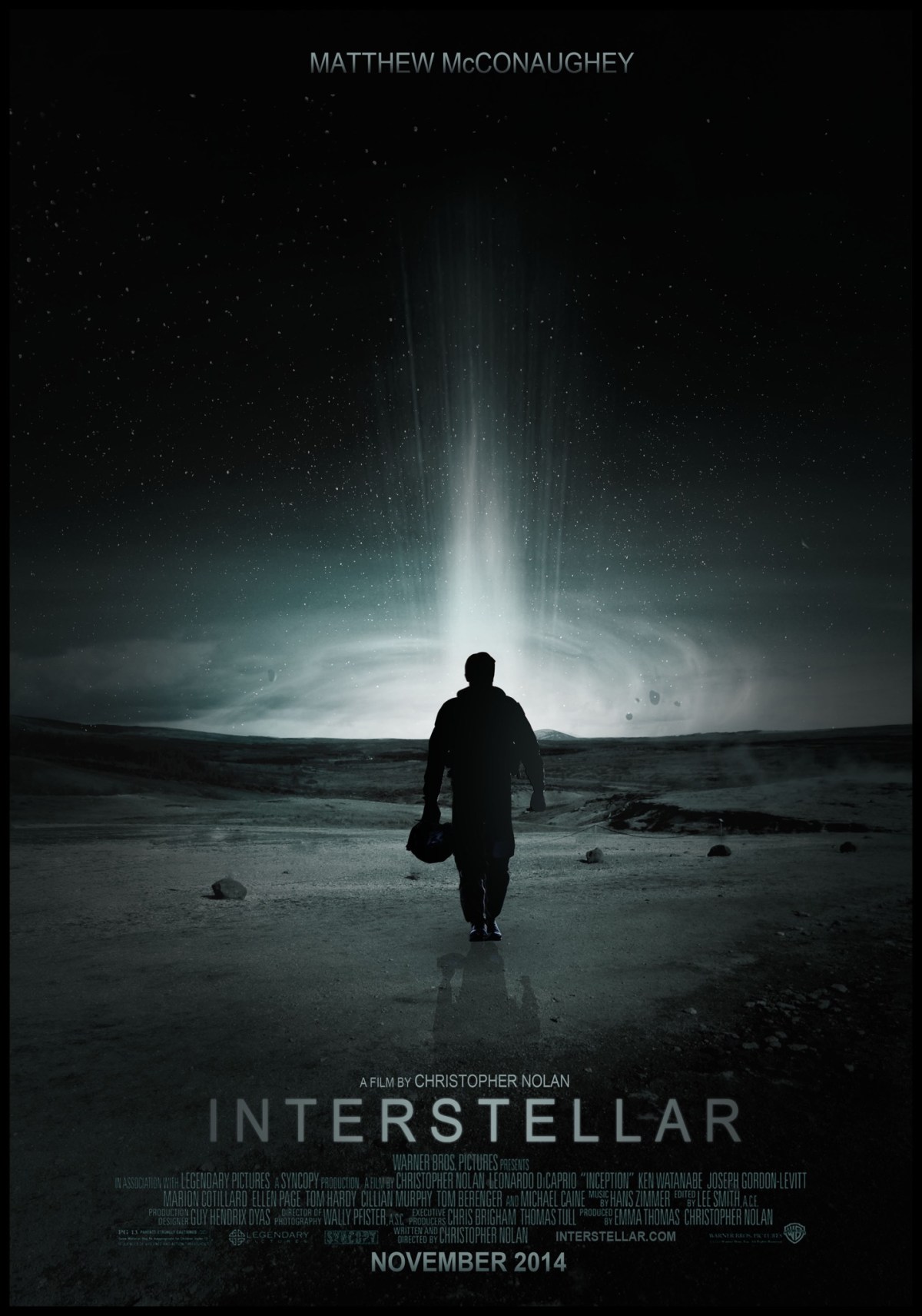
Interstellar (Christopher Nolan, 2014)

Christopher Nolan’s space-exploration epic has transcended being merely a film and has become a kind of international event. With its sprawling starscapes, well-thought-out science, huge cast and mind-blowing visuals, this was always bound to get people talking. It’s a shame that I didn’t enjoy it very much at all.

IMG_9858.JPG

Before I start, I should say that I watched it an IMAX cinema. I’ve heard stories about different experiences depending on which cinema you’ve seen it at, but mine certainly wasn’t a pleasurable one. The film starts with a blasting soundtrack, so ear-piercing it makes the viewer feel uncomfortable. The discomfort never truly goes away throughout the film, but it is most pronounced in these scenes, and sort of lulls back and forth in the background for the rest of the film, making the spoken words more or less audible depending on how Zimmer and Nolan wanted to play it. To add to this, I had the joy of watching it in a busy screening so I was also fighting against the 100s of people who were eating rustly popcorn, chocolates and sweets, slurping drinks as big as their heads, or tucking into crunchy, pungent and hideously over-priced nachos [1].

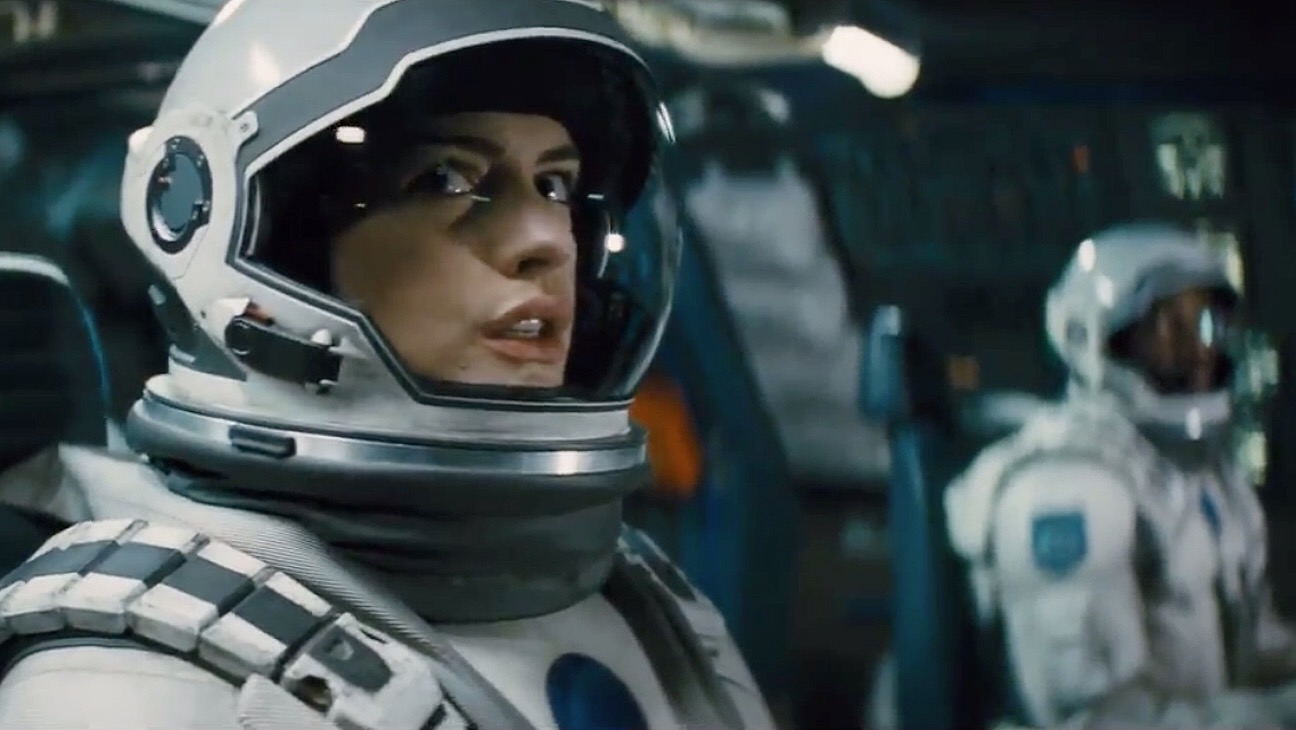
As a visual experience, the film has many merits and if there is one area it should sweep up come awards season, it should be on the special effects. The distant planets are fully realised, tangible places and when we step off into a vast rocky, icy plane we feel completely like we on a place not of this planet but totally real. That probably benefited from being seen at an IMAX, and I was doubly pleased that it didn’t have to tart itself up with 3D visuals that weren’t required.

I didn’t think any of the lead actors were at the top of their game. Following last year’s Oscar winning turn in Dallas Buyers Club and a memorable appearance in The Wolf of Wall Street, Matthew McGonaughey was obviously on a high going into this. Bar a highly emotional scene where he starts to receive video messages from his eldest child (played, eventually, by Casey Affleck), the rest of his performance was merely adequate. Anne Hathaway and Michael Caine both did a great job playing the same role they usually play in Christopher Nolan films. It’s just a shame none of these performances blew me away.

IMG_9859.JPG

As the film has many opportunities to have the plot ruined by people, mostly people said to me “It’s good, but the last 40 minutes were completely pointless.” That annoyed me because I was expecting a slump at this point. As much as I resisted, they were wholly right. Up to this point we had a solid, thoughtful action film and in the last chapter it just descended into madness, tripping itself or the audience (or both) up with complicated 5D gravitational bleeding theory and scientific speculation. At one point I actually laughed out loud. I’m convinced the most cinema goers would have been completely lost by the end of the film. Maybe that was the idea. Following Nolan’s previous films, where we were challenged and surprised by the twists at the end (The Prestige is still one of my favourite films of all time, precisely because it has a great twist or three at the end), it was disappointing that the big reveal was so well thought out but yet so poorly communicated. Perhaps they needed to have a 30 minute lecture before the film introducing us all to the work of theoretical physicist Kip Thorne. Maybe an idea for the Blu-Ray release [2].

I’m not going to sit here and recommend you don’t see this film. It’s just an opinion, and seemingly one that goes completely against the grain of everyone I’ve spoken to. I just didn’t think it was as good as the hype, nor as good as Nolan’s previous efforts. All-in-all, a bit of a let down.

Interstellar is out now at cinemas worldwide.

[1] = Why-oh-why would you choose to do spend so much on food at a cinema. A cinema of all places? It’s so expensive and you annoy everyone else at the same time. Have we, as a nation, become so obese that we can’t make it through a three hours screening without doubling our calorie intake for the day? I think it’s a serious issue and indicative of where society has taken itself that we must consume unhealthy food every couple of hours. No wonder there’s an obesity problem. It reminds me of the guy in China who buys every single ticket to a screening at his local cinema for once a week, which is increasingly seeming like a good idea (though I don’t think I could justify the £2k spend each time to be honest).

IMG_9860.JPG

[2] There’s a great explanation of the science behind the film over at Screen Rant. It’s full of spoilers but if you’ve already seen the film and want a bit of a nudge on what was happening, that’s a great place to start.

Weird Science (John Hughes, 1985)

Screened as part of Mayhem’s The Created Woman festival in Nottingham, I had a fantastic opportunity to revisit a childhood favourite on the big screen. Whilst perhaps of its time, John Hughes’s Weird Science still stands up to my memories and was every bit as enjoyable a I remember it.

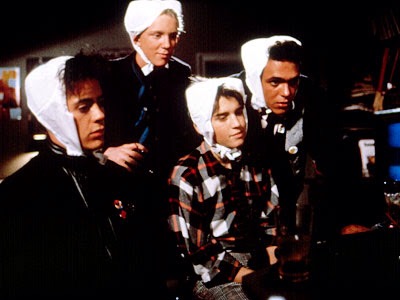
The plot centres around two teenage geeks: Gary Wallace (played by Hughes regular Anthony Michael Hall) and Wyatt Donnelly (played by Ilan Mitchell-Smith). When we first see them, they are on the wrong end of a beating at the hands of school bullies (one of which is an extremely young Robert Downey, yet to add Jnr.). When they return home, inspired by a viewing of Frankenstein – or was it Bride of Frankenstein? – they fire up their Memotech MTX512 and try to create their perfect woman using a few magazine cuttings, some rudimentary computer software, a doll and a hacked power station. What they don’t expect is that this woman will come to life, in the form of Kelly LeBrock, the sexy, British, athletic, intelligent, headstrong woman of their dreams.

IMG_9877.JPG

To enjoy the film you have to accept its many faults. There’s quite a bit of unfathomable science going on to get us through the story, with no real basis in science. The computer visuals really set the film deeply in the 1980s and have dated badly. I’m not sure the idea of a 23-year-old woman passionately kissing a 15-year-old boy would pass studio execs nowadays but LeBrock is clearly hamming up and revelling in the “ideal woman” role, where the ideal woman is one imagined by two young geeky teenagers who have never had girlfriends and don’t really know what they want. You don’t have to try hard to put that to one side and accept it for what it is – a classic teen comedy by one of the greatest directors of a generation.

Bill Paxton puts in a hilarious turn as Wyatt’s older brother, who is in charge for the weekend and is running the house like a military camp. His eventual punishment for the way he treats Wyatt is unexpected an quirky, but I’ll leave the surprise for you if you’re going to watch it soon.

Revisiting Weird Science didn’t disappoint me one bit and I’d like to thank Broadway Cinema in Nottingham and Mayhem Festival for allowing it a rare return to the big screen, especially in gorgeous 35mm print form. Keep up the good work!

Weird Science is available now to buy on Blu-Ray. A print of the lovely poster art I’ve used at the top of this article is available at Old Red Jalopy.

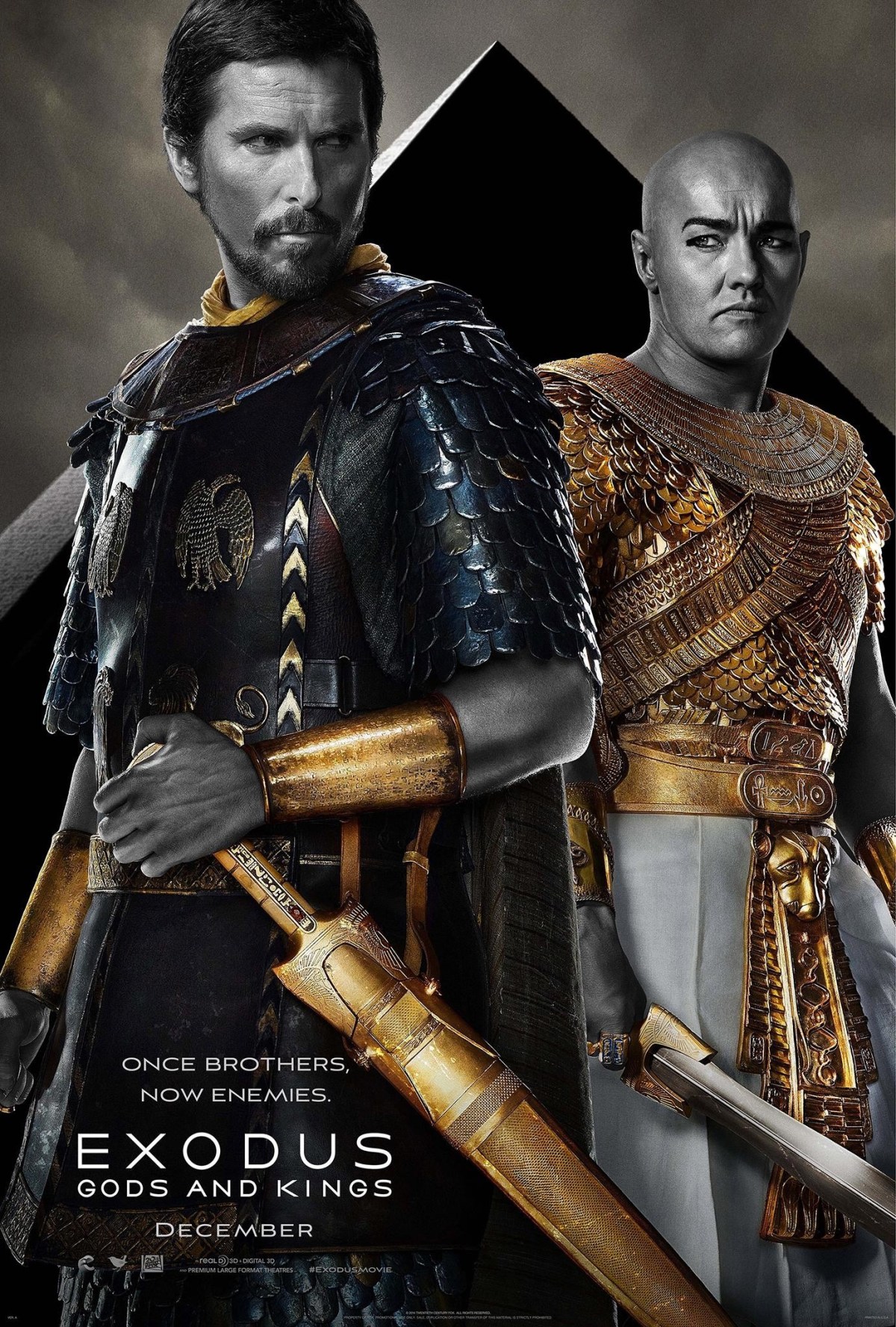
Exodus: Gods and Kings (Ridley Scott, 2014)

Ridley Scott as director. An all-star cast including Sir Ben Kingsley, Sigourney Weaver and Christian Bale. A modern retelling of The Book of Exodus. An estimated $140m budget. Epic battles. The scale and subject matter of Exodus: Gods and Kings means it’s destined for success. But is it any good?

Before I start, it’s important to note that my experience of the film has been informed by the fact I’m an atheist. Not only that, to my shame I actually went into the film without a clear memory of the story of Moses. I’m probably in the minority on that. I mean, I remember the stuff with the frogs and the locusts and the parting of the sea and the burning tree. It’s all in there, for sure. I just couldn’t remember why any of those things happened or what order any of it came in. I was approaching it with an air of naivety that was perhaps self-inflicted, both in my youth and subsequent life choices, but also in a lack of effort to remind myself of the story before I went in to the première.

To cut a long story short, I can’t tell you whether or not this is a faithful representation of the Book of Exodus. What I can tell you is that it’s a pretty spectacular experience. The story itself is a gripping tale of two brothers battling for power, one of whom is struggling to understand his own place in a world ravaged by slavery, elitism, poverty and racism, a world where he has grown up believing he is something he is not.

IMG_9854.JPG

It is the kind of tale that has been brought to the big screen many times before, though rarely on such a grand scale. Scott probably had his work cut out to keep all parties happy. He has stated that he would have had difficulty getting financial backing for the film had he not cast a white A-list actor in the lead role, though this has caused dissatisfaction amongst those that want something more accurate to the story (or is that disgust…?). Clearly, deviating from the Book of Exodus would have been a terrible move too, so most of the time he plays it safe. The story doesn’t need to be embellished to keep it interesting, so there’s no cause for panic there.

One of the things that impressed me most – and it’s something that has caused a lot of debate after the previews – was the scientific explanations of the various aspects of the story. In particular, the parting of the Red Sea is apportioned to a tsunami. Actually this is a pretty robust explanation and I can see how this would work, though I do wonder how the 400000 Israelites about 10ft above the wave on a small rock survived en masse whilst the Egyptians were wiped out as they were at sea level (sorry, spoiler alert). I also question how Ramses managed to be the lone-survivor when he was the worst positioned of everyone. That said, the fact an explanation is offered, along with the hints at Moses having hallucinations rather than seeing a real-life messenger, anchors the story in the real world and makes it far more believable. Whether a devout Christian would see it the same way is another question.

On a side note, anyone attempting to boycott a film before it has been released will probably never enjoy anything in their life. So much media attention has focused on the casting of the leads, with accusations of “white-washing” being the main issue. I was on review lockdown ahead of watching the film so I wasn’t aware of it ahead of the screening, but it wasn’t something that jumped out at me whilst I was watching. Maybe I need to see it again to see if I missed it, but it seems disrespectful to suggest that Scott would choose such a late point in his career to intentionally start showing racial bias in his films. Also, if the popular imagery of Christianity is going to be criticised then a better starting point might be the generally accepted depiction of Jesus as a tall, white man with long brown hair, which I think humanity will eventually agree probably isn’t what he would have looked like at all.

Despite some pre-film trepidation, I was pleasantly surprised that I could enjoy a Biblical film so much. The way Scott has constructed this retelling makes it accessible to all cinema goers. Hopefully it isn’t at the expense of the Christian market.

Exodus: Gods and Kings is released in the UK on 26th December 2014.

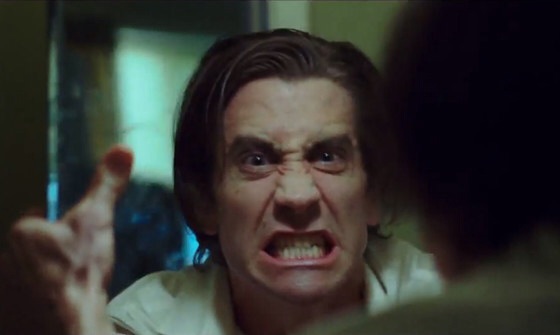
Nightcrawler (Dan Gilroy, 2014)

“The closer you look, the darker it gets” declares the poster for Dan Gilroy’s directorial debut Nightcrawler. And so it was. As I sat in the cinema wondering how far Jake Gyllenhaal’s character would take it, the answer tended to be “Oh, that far.”

The film is a bildungsroman tale of Lou Bloom (Gyllenhaal), a young man driven by money and success, and willing to go to any lengths to achieve it. He gets hooked on the idea of freelance crime journalism, specifically filming violent crimes and accidents with a personal camcorder, with the plan to sell them on to local news station KWLA manager Nina (Rene Russo). However, as his business grows and the stakes are raised, he goes to great lengths to ensure he rises to the top of the pile and stays there, no matter what the consequences are.

IMG_9506.JPG

Gyllenhaal is a wonder to watch in a film like this. He has chosen his films wisely over the years and has a body of work he can already be very proud of, including Donnie Darko, Jarhead, Brokeback Mountain, Zodiac and Source Code. This is definitely amongst his best overall, and I’d go as far as say that Lou is his most defined character yet. He plays sinister very well and clearly knows how to make his audiences tick. At times it’s a real joy to watch, at times it made me want to cover my eyes; both responses indicative that I was hooked.

The plot works as a game of oneupmanship unto itself, and this operates across the board. The characters become fuller and more dislikable as the time progresses, the gore gets gorier, the action gets more explosive and by the final act the whole movie had me whipped up into a frenzy of disbelief. Well played Gilroy.

IMG_9507.JPG

The supporting cast includes a top-form Bill Paxton (whoopee-fuckin’-do) as a rival video journalist, and a further emerging Riz Ahmed, who Brits may remember from the excellent Four Lions. Ahmed is one of my favourite British actors and it was a nice surprise to see him with such a big role in an American blockbuster.

As the finale approached, I found myself getting increasingly engrossed by Lou’s actions. His morals become so loose by the end that there is nothing remaining. His actions are fuelled by a desire to earn money, which is only possible because the viewers of KWLA are hungry to see the gruesome truth of their city. It’s an intelligent method of storytelling that we are enticed in the same manner into Lou’s own story, and by the end I found myself questioning my own morals, sitting on the edge of my seat, watching in excited disbelief.

This is an excellent film and it’s well worth seeking out whilst it’s still in cinemas. Check it out!

Nightcrawler is in cinemas worldwide now.

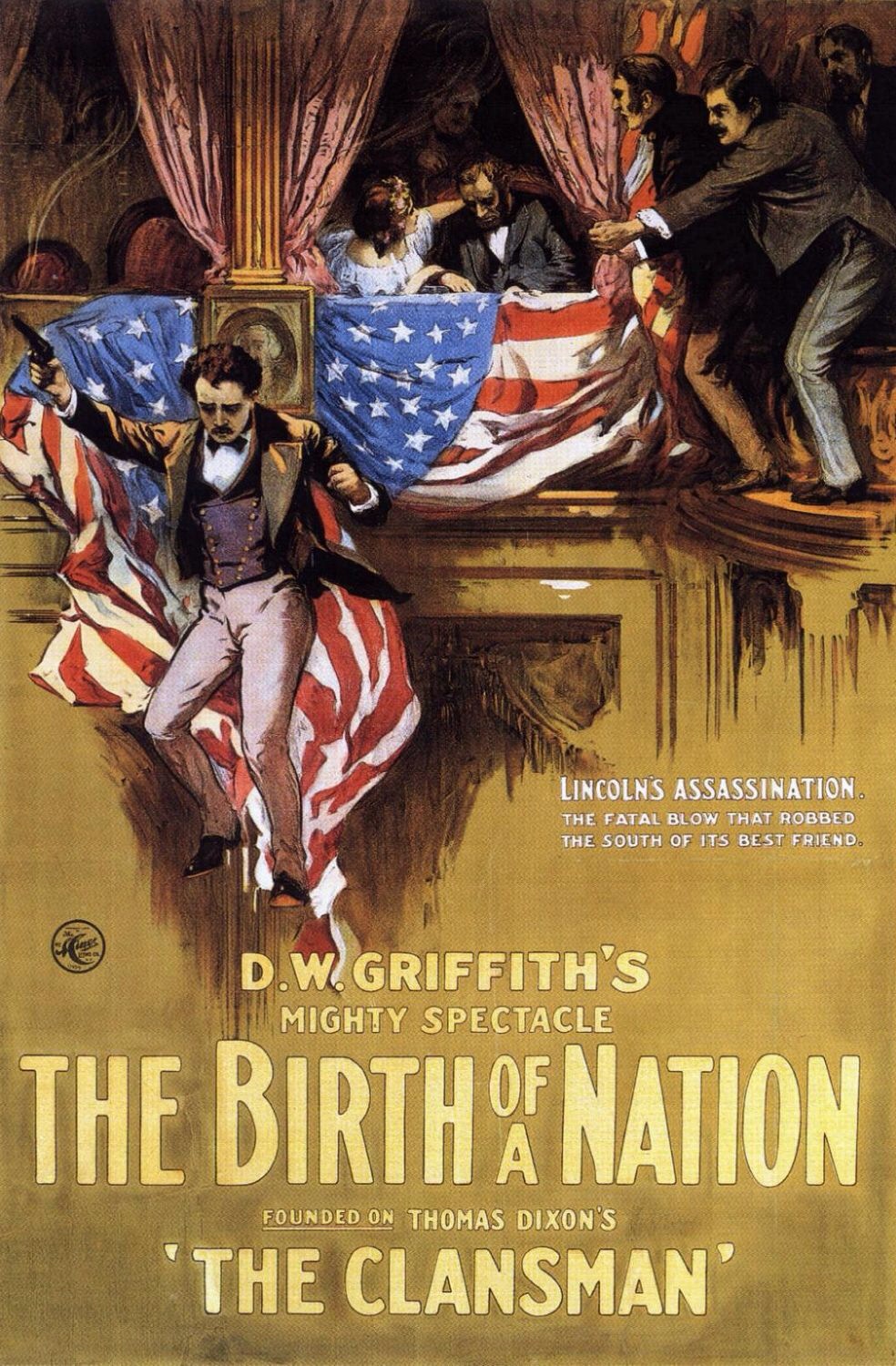
The Birth of a Nation (D. W. Griffith, 1915)

Why would I watch a film like The Birth of a Nation? It clocks in at 169 minutes long, and as a silent film that is now 100 years old I’d expect the narrative structure and storytelling to be a far cry from what I’m used to today. The storylines cover a period of history that I don’t associate with, and it is the history of a country that I have experienced first-hand only through Orlando theme parks, which despite their best intentions probably aren’t a fair representation of the rest of the USA.

There is a certain detachment from it that means it lacks the stigma I’m sure it holds for Americans. Perhaps it’s the challenge of being able to say I’ve watched it, or to see for myself what all the critics have discussed many times over. Let’s not forget that it holds a 100% fresh rating on Rotten Tomatoes, was the highest grossing film of all time until Gone With The Wind some 25 years later, and it is regarded as one of the most culturally significant films of all time. These facts alone should make it essential viewing for a fan of the history of cinema.

The film starts small and builds to encompass some of the biggest political changes the world has ever seen. Initially, we focus on two families: the Stonemans and the Camerons. The Stonemans are a pro-Union family from Northern US, and they set off to visit the Camerons, a South Carolina-based pro-Confederacy family. Romance and friendship fly between some of the younger members, but this is curtailed when the young men are forced to join their respective armies for the Civil War. Their stories and relationships are intertwined throughout the film, all with the backdrop of some great war battle scenes, some (at the time) shocking torture scenes, the assassination of Abraham Lincoln, the founding of the Ku Klux Klan and the entry into Reconstruction-era USA. It’s complex, it’s ambitious and on a purely story-driven level it really works. Films of this grand scale had never been attempted before and it’s not difficult to imagine the wow factor experienced by the audiences when they originally saw it.

IMG_9405.JPG

That said, it’s extremely difficult to cover everything necessary to put this film into context. I’m sure whole university courses have been taught on the subject. It is one that traverses cinema, film history and political history and it would take a braver man than I to tackle everything in a short review. The elements of the film that are now deemed to be racist are interesting only from a historical point of view. Indeed, it is alarming that they were ever considered to be not racist. This includes, but isn’t limited to: the romanticisation of the founding of the KKK; African Americans getting elected into parliament only to be shown drinking during parliamentary sessions once in power; the portrayal of white men as the victims for large periods of the second half of the film; the way that the mere suggestion of interracial marriage is shown as abhorrent to white people; and most offensively, the Ku Klux Klan being shown as simply upholding the good values of the land and being the savours of an honest and righteous USA.

One African American is portrayed as a sexual deviant in one scene depicting the attempted rape of a central white character, who opts for suicide in one of the most suspenseful and heartbreaking scenes of the film. It’s segments such as this that really underline both the achievements and the failings of the film, with some pioneering techniques used to create a real edge-of-the-seat experience juxtaposed by subject matter that should never have seen the light of day.

It’s an eye-opener for the political status of the USA in 1915 that this is the case. The fact is that there are quite blatantly racist depictions of African Americans, particularly in the second half, and on every level these are jarring for the modern viewer. Couple this with the length of the film and the fact it’s a silent film and you have something that is quite inaccessible for the casual viewer.

IMG_9406.JPG

Certainly Griffith, directing what would come to be his defining picture, felt he had to add a pre-title screen statement clarifying and justifying the existence of the film (this was added to a re-release of the film after its exceptionally successful initial run). Later, riddled with guilt about the success of the film and – more importantly – who it was finding success with, he released Intolerance in 1916, which went a long way to protect his reputation and show other sides of the argument by heavily criticising racism and prejudice. Later he released the first cinematic portrayal of interracial romance (Broken Blossom, 1918). Also included on this disc (the Masters of Cinema PAL release) is a seven minute interview that introduced the film from 1930 onwards, where he attempted to justify the release further. It must have been a tough situation to be in for Griffith, being lauded for a film that you no longer wished to be associated with.

I’m glad I watched it, and I would highly recommend it to anyone interested in the history of film. For a casual viewer who wants to be entertained, I see nothing for you here.

The Birth of a Nation is out now on Masters of Cinema Blu-ray and DVD dual-format release, whilst Griffith’s later film Intolerance will be released on Blu-ray, also via Masters of Cinema, on 8th December 2014.

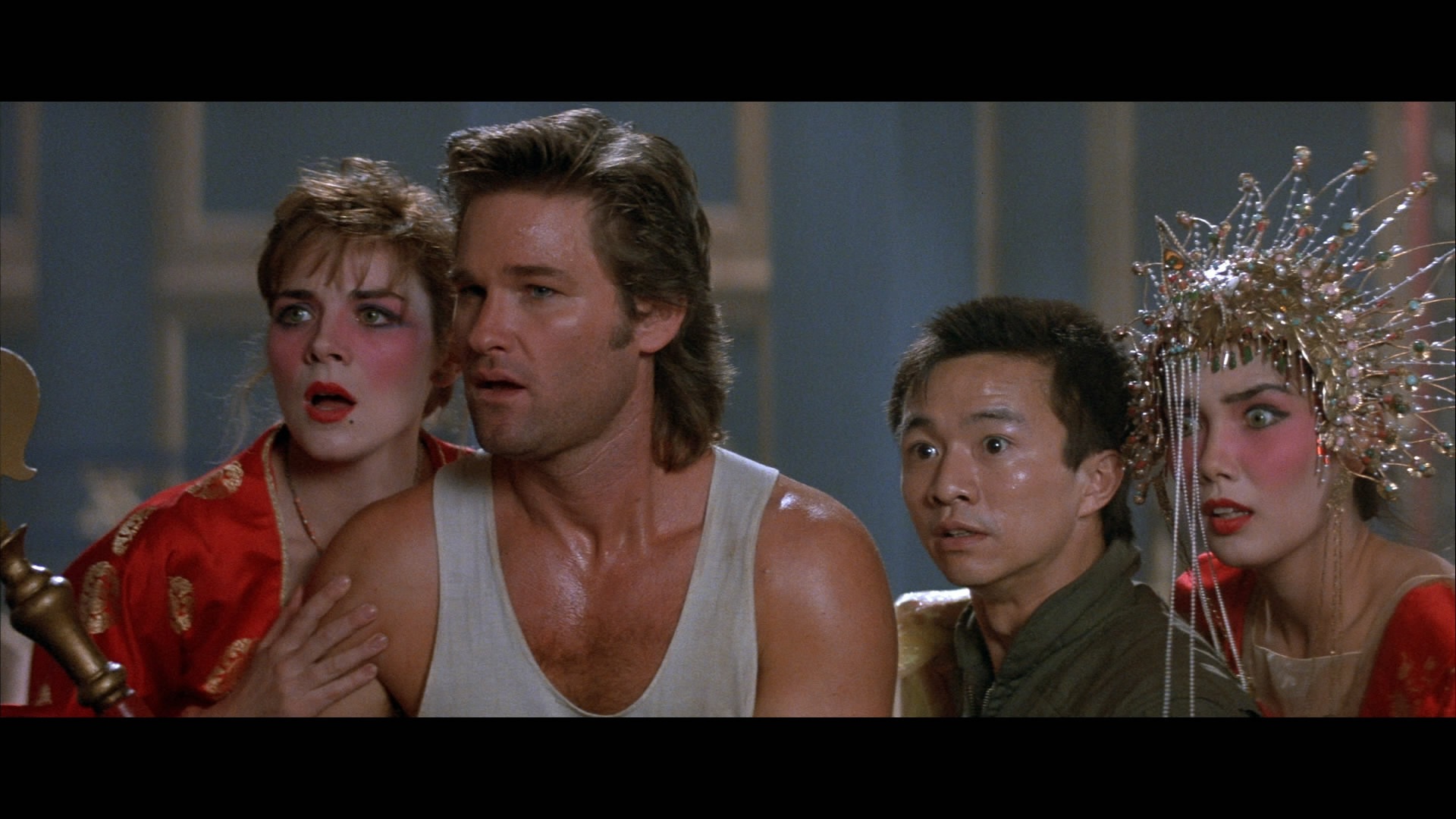
Big Trouble in Little China (John Carpenter, 1986)

When I first saw Big Trouble in Little China, it would have been as a rental from my local video store The Ritz in Burnley. I’m going to guess it was either 1991 or 1992. At this time, children across the UK had been gripped by Turtle Power and, if you were really lucky, you might also have a home video games console with a copy of Street Fighter II. Martial arts were a hot property, and re-watching this film I can see what the immediate appeal was.

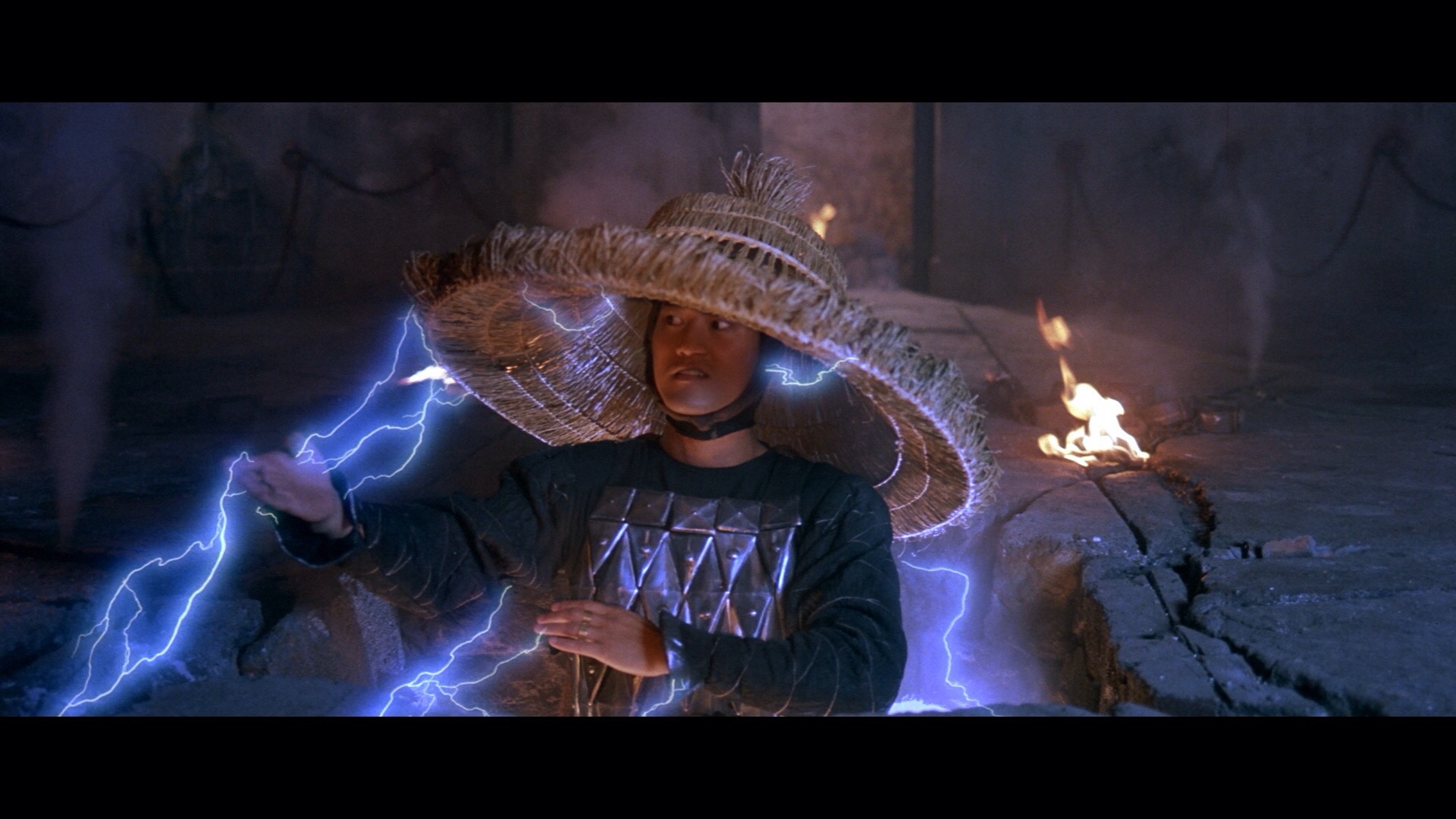
Less than ten minutes in we’re treated to a large-scale Kung Fu gang fight. As the film progresses, the battles become more over-the-top, with characters flying, using impressive magic, attacking our heroes with lightning and telekinesis and then there’s the unforgettably dread-inducing lazer eyes. It’s the live-action version of all your favourite parts of Mortal Kombat and Street Fighter II, the film that neither franchise managed to pull off. It just keeps getting better and better and I can well see how amazing that would have seemed to my 8-year-old self.

IMG_9211.JPG

The story itself is a little confused. It kicks off with an office scene where the Chinese bus driver Egg Shen (played by Victor Wong) is sat telling his lawyer that Jack Burton (Kurt Russell) was a “real hero”. In the extras we learn that Carpenter was forced to make this addition as the studio wanted Kurt Russell to be the sole main hero. As the film plays out though it is quite obvious that he’s the sidekick to Wang Chi’s cause (played by Dennis Dun). It is his girlfriend we are following the kidnapping and attempted rescue of, not Burton’s. Indeed Burton’s eventual love interest Gracie Law, played by a young Kim Cattrall, is part of the rescue party. In my opinion it’s a shame that the studio forced this change as it’s quite a bold move to cast a reasonably famous Caucasian actor as a sidekick to a Chinese lead star. As much as I’d love to see it recut, I don’t think it will ever happen.

The visual effects are to be applauded. I’m used to watching B-Movies, especially those made in the 1980s when people were getting creative with very low budgets. I am quite good at using my imagination to compensate for any subsequent substandard segments, especially if the director’s ambition is evident. Yet there was no concessions required here. There are several monster costumes that stand out as both unique and memorable. The electric storm effects and lazer effects both deliver as well. It doesn’t seem to have aged at all, much less so than some of John Carpenter’s efforts from the 1990s (and yes I’m looking directly at 1995’s Village of the Damned there).

And there lies another pleasant surprise. I had no idea this was a John Carpenter film. I watched it too early to remember either the actor playing the lead character or even the lead character’s name itself. I was never going to commit the director’s name to memory. It was great to realise a legend of cinema was on the reigns and it reassured me that it was indeed a high quality film.

IMG_9213.JPG

A word on the package. The version I’m reviewing is the Arrow 2014 Blu-ray re-release. The transfer is unbelievable. The bonus features on the release cover every angle you could possibly want. You’ve got commentary from Russell and Carpenter, trailers, an alternative extended ending. There are extensive interviews with the cast and crew. There’s a short documentary about the stuntmen. Even the menu page looks astounding. I know this is typical of Arrow releases but it’s reassuring that this is the first thing you see and you know a lot of care has gone into covering every aspect of the user experience.

So if you’re needing an 80s nostalgia hit and you’ve worn out your cheap Goonies DVD, try this one instead. I’m sure you won’t be disappointed.

Big Trouble in Little China is out now on a Blu-ray and DVD dual format package from Arrow Video in the UK.