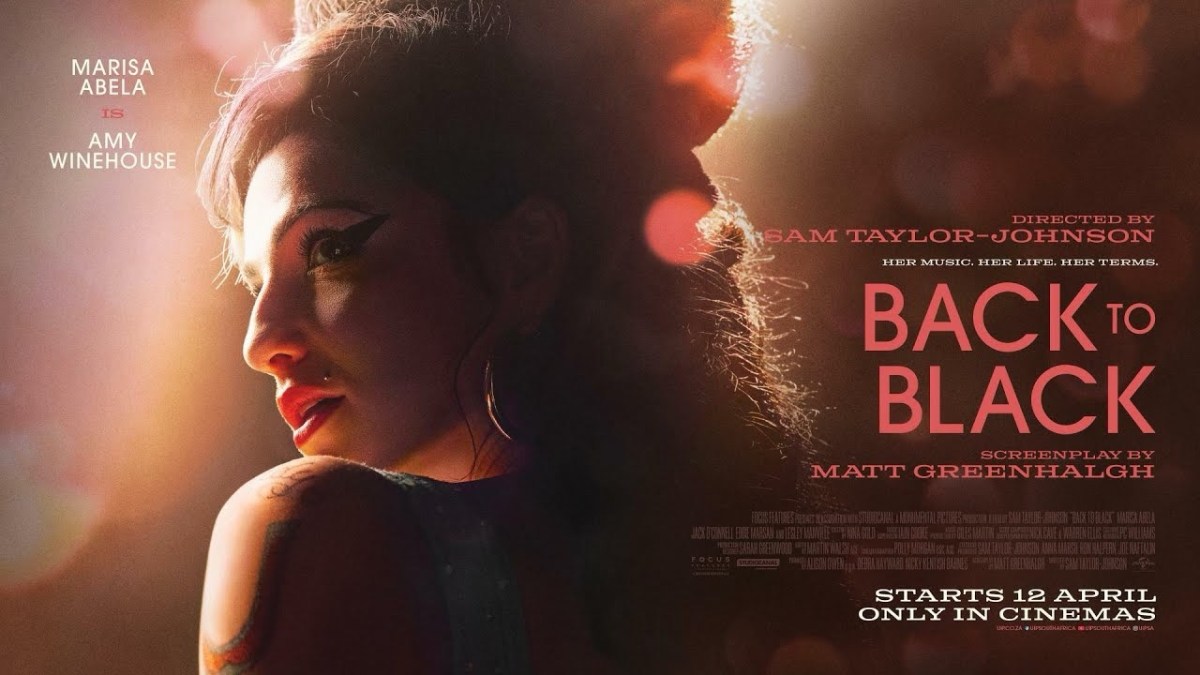
Big-budget biopics have become a popular box office draw, with Queen, Elton John, Bruce Springsteen and Robbie Williams all getting the Hollywood treatment in recent years. Sam Taylor-Johnson’s retelling of Amy Winehouse’s rise to fame is certainly not a bad film, but it falls short in many ways.
Let’s start with the story itself. The narrative that has been concocted doesn’t align with the reality and what really happened in her life. My memory of her successful music career was that she exploded into public consciousness with the song ‘Rehab’, her first in a new-sounding musical approach she’d found alongside Mark Ronson, who produced the smash-hit album ‘Back to Black’. Seemingly for narrative reasons, this song is not focused on until much later in the film, and Mark Ronson is only mentioned a couple of times rather than being a key part of the story. The implication is that she was already a huge popstar, when in reality her first album debuted at #60 in the UK charts and was outperformed that week by new releases by Michael Ball, S Club 8, Myleene Klass and Daniel O’Donnell. Not to undermine any of their careers, but none are expecting a big screen retelling of their musical successes any time soon.
Of course, chopping and changing the ordering and minor facts is something we’ve come to expect with these kinds of films, and it’s a topic I explored in my previous article ‘Fact vs Fiction – How far is too far for biopics?’. As I said at the time, there is a a fine balance between telling a truthful story and telling an entertaining and dramatic story.
The problem I have with ‘Back to Black’ is that it does neither.
What it does well is provide a platform to showcase Winehouse’s wonderful music. The music took over the world for well over a year, soundtracking big nights out, house parties, dinner parties, car journeys and everything in between. The titular album was one of the last big sellers when it comes to physical media, shipping almost 2m copies in the UK alone in 2008. You only need about a third of that now. Anyone who sees this film and who lived through that period will surely be seeking out her music in the aftermath of their first viewing.
It’s not a surprise that her alleged struggles with alcohol and substance abuse and subsequent health decline after the success of the ‘Back to Black’ album are not a key part of the film. However, by choosing the much safer route the whole film feels a bit vanilla. As a standalone piece, it kind of works. But the world knows so much more about her life and knows it has been left out for a reason.
As a result, it doesn’t really land and it feels like a struggle to enjoy.

