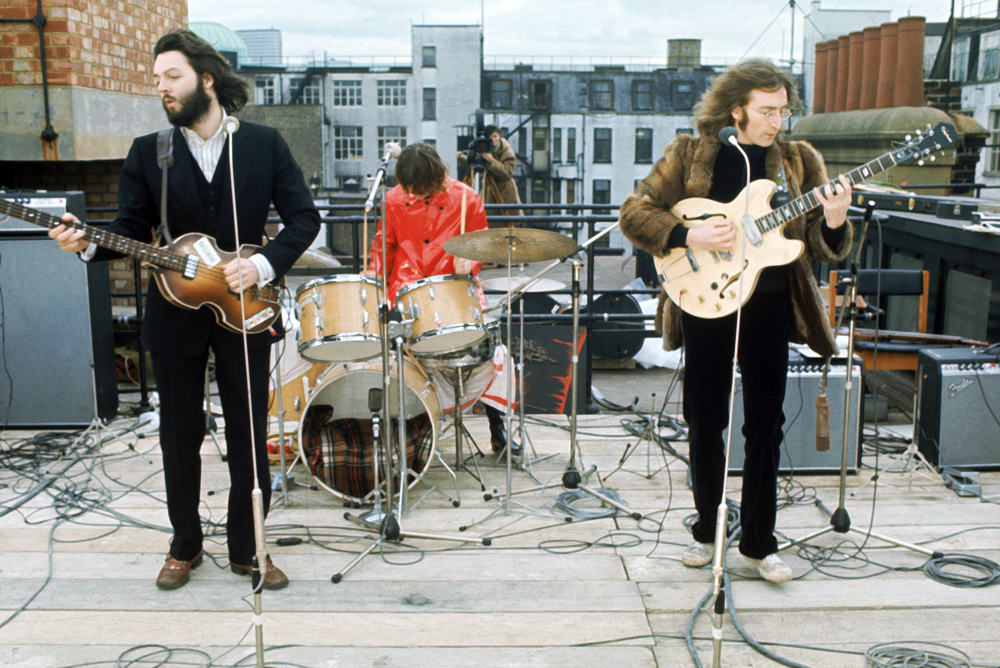
The Beatles – The 1996 album that could have been

I previously wrote about what might have happened in 1971 if The Beatles had squeezed one more album out. It’s an interesting topic that many fans of the band have pondered over the years.

With the recent release of ‘Now & Then’, a song dubbed as the final Beatles song, I started to think about the Anthology era of the band and whether things could have taken a different path. What if the trio decided that including some reworked John Lennon songs in an LP warranted enough of a representation to not tarnish his (or the band’s) legacy? Could they really have put out a full album? What other songs would have made the cut?

In this alternative reality, nothing changes up to the point they start working on the Anthology series, with Jeff Lynne joining the group as a full member to complete the sessions. With a backdrop of Britpop, will the Fab Three And A Bit hold their own and avoid tarnishing their legacy?

I’ve included all the “new” Beatles songs from the era, then filled the album with prominent collaborations from the time between the trio. I have made some omissions, mainly ditching collaborations from Ringo’s album ‘Vertical Man’, preferring to keep the album under 50 minutes in length.

1. The Song We Were Singing

Paul opened his Flaming Pie album with this beautifully reminiscent song. In the liner notes, he noted: “I was remembering the sixties, sitting around late at night, dossing, smoking pipes, drinking wine… jawing, talking about the cosmic solution… It’s that time in your life when you’ve got a chance to do all that.”

It’s reflective and a perfect opener for a Fab Four reunion album.

2. Free As A Bird

The first single from the Anthology project obviously has to be included here. It was criticised on its original release but it’s perhaps the truest collaboration of all the songs on this album. The soaring line “Whatever happened to the life that we once knew?” sung by Paul is the perfect partner for John’s slightly fragile verse lyric.

If you want to hear the best mix, you’ll need to pick up the deluxe re-release of 1, which came out in 2015. This mix, which accompanies the video, cleans up Lennon’s vocals and thus makes for a much easier listen.

3. Young Boy

Recorded by Paul McCartney and Steve Miller in the immediate aftermath of the completion of the song ‘Real Love’, there’s an excitement and urgency to ‘Young Boy’. It reflects McCartney’s ability to tap into his youthful innocence and create a fun pop-rock song in a way few mature musicians can. A belter of a tune.

4. Any Road

No Beatles record would be complete without a George Harrison track and this one, the lead single from his posthumous album Brainwashed, sits nicely amongst the other songs. George had been working on this song from its inception in 1988 and throughout the 1990s, so it’s perfectly reasonable to think he’d have brought it to the table if there was a Beatles album being created.

5. Calico Skies

A simple and beautiful song that features just Paul on vocals and guitar, supplemented by a subtle orchestration from George Martin.

6. Really Love You

‘The day after Ringo and Paul recorded Beautiful Night, the pair returned to the studio and began a jam session, Paul plucking his Hofner violin bass, Ringo beating the drums and Jeff Lynne playing guitar.’ – Flaming Pie liner notes.

This has the same feel as the ‘Looking For You’, featured later in the album. It isn’t particularly inspiring, with a generic drum beat paired with a groovy bass line and some underbaked guitar licks from Lynne. But, it’s playfully fun and easy on the ears. It may not have made the cut if the trio were given more time to develop their ideas into an album.

7. Real Love

Arguably the only John Lennon song here that stands up to the best of his solo output. The first time you hear Lennon singing “I need to be alone” over the delicate minor chord will send shivers down your spine, no matter what version of the song you hear. Simply stunning.

8. What In The World

Ringo collaborated with both Paul and George on his album Vertical Man, released in 1998. Upon hearing a playback of ‘What In The World’, McCartney remarked “Whoo Rich! Sounds kinda Beatle-ish!” There are other songs on that album that feature George and Paul, which probably never would have happened if the Anthology sessions hadn’t existed, but this is the standout.

9. Looking For You

This was a b-side for Paul McCartney’s single Young Boy. Featuring pounding drums from Ringo and an off-beat guitar riff from Jeff Lynne, this track has a blues rock feel that is a bit of a departure for the band. It’s missing any input from George Harrison and thus falls a little flat, not really going anywhere in its 4 minutes and 42 seconds of meandering around, never really going beyond what we hear in the first 20 seconds.

10. Beautiful Night

“A wonderful sight for lovers of love to behold.”Paul McCartney’s saccharine lyric combines with a power pop chord progression to create a true highlight of this reunion album. The big guns are all here: Ringo Starr, Jeff Lynne and George Martin feature on the original recording, with Linda McCartney also involved. This is absolutely sumptuous.

11. Now & Then

The version released in 2023 was recorded with a 45 year gap between its first and last contributions, which tells the story of its unique path to coming into fruition. “Now and then I miss you” is a perfect line for Paul and John to sing to each other from across the life-death divide, and certainly resonates with fans around the world who rejoiced at this final Beatles track.

12. Grow Old With Me

The John Lennon demo for this was recorded in 1980 and orchestrated for the posthumous album Milk & Honey, released in 1984. If you want to imagine what the reunion version would have sounded like, you might have to do some mental gymnastics and merge two versions together.

The orchestrated version with Lennon’s vocals – the most superior version being released on his Gimme Some Truth compilation in 2020 – is a stunning take on a beautiful song.

Ringo Starr also recorded a version of the song for his album What’s My Name in 2019, which featured vocals and bass from Paul McCartney. This is a lovely interpretation that is probably a fairer reflection of what The Beatles would have done with the track. I’m sure the AI technology available now could merge the two versions, but who am I to say what someone should do with their free time?

Conclusion

Well, there you have it. A fan’s best guess at what might have happened if they’d opted to pull an album together. It’s a product of its time and of circumstance, lacking in coherence and with a few songs that wouldn’t stand up to the best of the band in their prime. It wouldn’t have tarnished their legacy, but probably would have been a misstep – hence why it never saw the light of day.

The Beatles – The 1971 album that could have been

The Beatles remain one of the most celebrated and influential bands of all time, with one of the most prolific outputs the music world has ever seen. This didn’t slow down in the immediate aftermath of the break-up of the band in 1969, with the final studio album and accompanying film Let It Be not seeing the light of day until May 1970. Fans of the Fab Four were also able to enjoy their stars individually as they released a flurry of solo material they had perhaps been saving up for release in the knowledge their days in the band were over.

There were a few experimental items that make the second half of The White Album feel positively mainstream (see John Lennon’s Unfinished Music Vol. 1 and 2, George Harrison’s Wonderwall Music and Paul McCartney’s The Family Way soundtrack, amongst others), but their first forays into mainstream music didn’t take too long to surface.

What if they’d not fallen out for another year and managed to squeeze out a final album? What songs that made it onto these first solo efforts would have sounded great alongside each other?

I’ve tried to create a balanced tracklisting that ruthlessly selects twelve songs from their creative output of 1970 and early 1971 and gives priority to McCartney, who was writing most of the material by the end. Abbey Road was essentially all of them working apart from each other, so the tracklisting below isn’t far off what could have been.

The result is The Beatles at their most conflicting and hateful best, the rift between Paul and the other members plain to see. However, if they’d managed to squeeze this out and gone through the cathartic experience of working on the songs together, we might have seen a whole different ending to the story.

SIDE A

1. Maybe I’m Amazed (Paul McCCartney, 1970)

A standout track from McCartney’s debut album and perhaps one of the finest love songs ever written, it is nonetheless underrated due to the fact the studio version was never issued as a single.

2. My Sweet Lord (George Harrison, 1970)

This is a bit of a no brainer. It’s the highlight of George’s first album proper and it’s hard to think of a better way to follow the opening track. Despite the obvious religious connotations, I doubt John and Paul would have been able to resist the temptation to include such a high-quality song on the next Beatles album. Indeed, Ringo Starr and John Lennon both reportedly appeared on the international smash single.

3. Cold Turkey (John Lennon, 1969)

This is a song that John presented to the band in 1969 for inclusion on Abbey Road, but it was ultimately decided that it didn’t fit and put out as a solo single. If they were still together and John wasn’t thinking about a solo album, then this would have been a prime candidate for inclusion. To increase the connection to The Beatles, Lennon’s version features Ringo Starr on drums.

4. Instant Karma! (We All Shine On) (John Lennon, 1970)

A song as anthemic as this would be a clear candidate for inclusion. Indeed, the version Lennon released in 1970 – prior to the release of the final Beatles album Let It Be – featured George Harrison on electric guitar and Phil Spector on production duties, so if it had been part of a Beatles release it’s unlikely it would have sounded much different.

The John Lennon double-header of Dig A Pony and Across The Universe had served Let It Be well and the same thinking works here for a riotious kick-start to the album.

5. Every Night (Paul McCartney, 1970)

This song was included on McCartney’s debut album but had been thrown around during the final Beatles recording sessions. It’s the first hint on this album that we hear McCartney’s anger seeping into his lyrics. It would have undoubtedly sounded a lot different had all four been working on it.

6. Too Many People (Paul McCartney, 1971)

A hate-filled Paul wrote this song as a dig at John and Yoko. In a 1984 edition of Playboy, he said, “He’d been doing a lot of preaching, and it got up my nose a little bit. In one song, I wrote, ‘Too many people preaching practices’. I think is the line. I mean, that was a little dig at John and Yoko.” It kicked off Paul’s debut-proper ‘Ram’ but works better as a closer to the first side.

SIDE B

1. How Do You Sleep? (John Lennon, 1971)

John’s in the studio, probably by this point no longer talking to Paul, and he’s just listened to the final take for Side A closer ‘Too Many People’. In a fit of rage he calls up George and pretty quickly they bash out the song that opens Side B, setting the tone for the fans who are about to hear the falling apart of their favourite band.

2. What Is Life? (George Harrison, 1970)

“Tell me, what is my life without your love?”

Many could dismiss this as schmulzy pop but the killer riff and memorable hook is enough to warrant a place on the next Beatles long player. It’s a soulful rock masterpiece, and a track that had been in Harrison’s back pocket during the Abbey Road session.

3. Junk (Paul McCartney, 1970)
Any speak of what might have come to pass on their next album has to feature both ‘Junk’ and ‘Teddy Boy’, songs Paul had rehearsed with The Beatles in January 1969. Here Paul is hinting about moving on to his next project, getting rid of the old and bringing in the new. It’s also a wild reduction in pace to lead into the final section of the album.

4. Teddy Boy (Paul McCartney, 1970)

A composite version of several takes of this track featured on Anthology 3 after being recorded in the 1969 Savile Row sessions for Let It Be, and is an indication of what else The Beatles had left in them. A no-brainer for inclusion here.

5. Mother (John Lennon, 1970)

One of Lennon’s most powerful songs was written in response to some therapy sessions he had been having to deal with the underlying grief of the loss of his mother to a car accident as a child. The version included on Plastic Ono Band featured Ringo on drums and shows a different side to Lennon than is on show on his two tracks on Side A.

6. All Things Must Pass (George Harrison, 1970)

This track is a beautiful and honest song that would have served The Beatles well as a final farewell on their last album.

As George sings “None of life’s strings can last, so I must be on my way”, the feeling is pretty strong that the troubled songwriter was already done with the band when he presented this track to them during the sessions that became Let It Be. It was rejected by Lennon and McCartney, but eventually appeared on George’s debut album (with Ringo and Eric Clapton amongst the backing band), and was also a hit for Billy Preston.

And there you have it, an alternate take on the end of The Beatles and their desire to break away, but managing to hold it together for one last release.

What do you think of the track listing? Did I miss anything out that has made you supremely angry? Let me know in the comments.

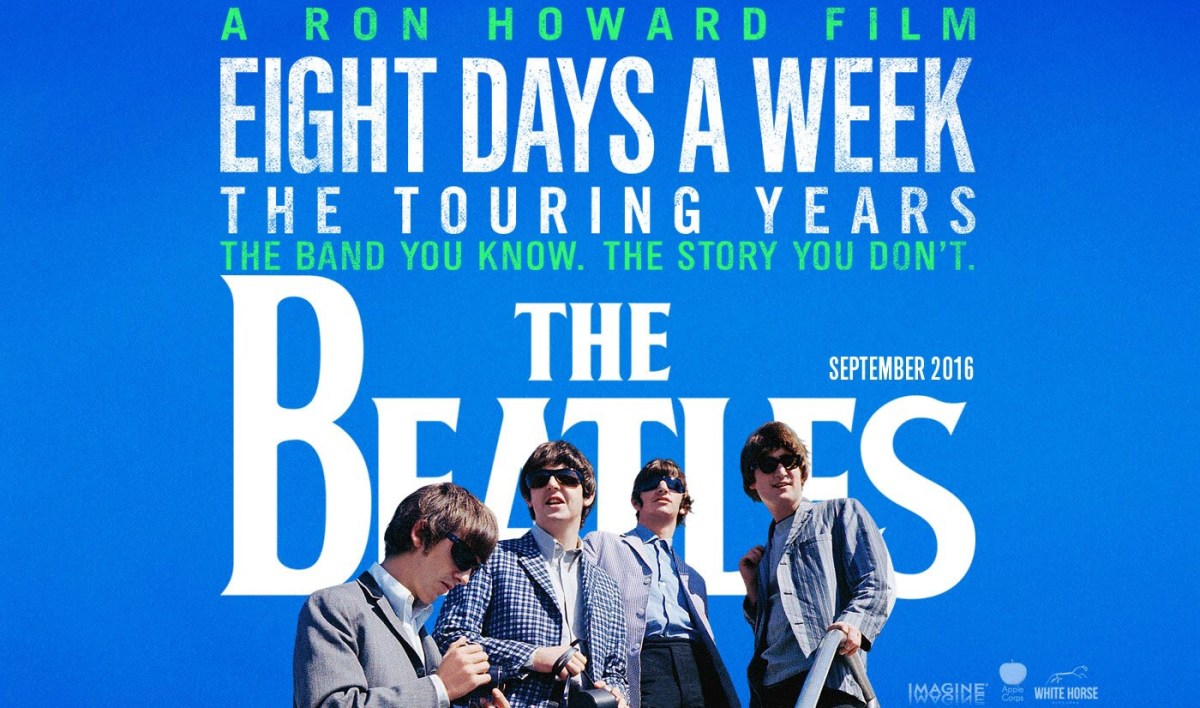
Film review – The Beatles: Eight Days a Week, The Touring Years (Ron Howard, 2016)

There is a single reason why The Beatles hitherto remain a subject largely untouched by documentarians. Quite simply, the story has been told to death. It is a well-reasoned argument that stems from the fact that a story is far more interesting if we don’t know the ending; even less so if we know the beginning, middle, end and every conversation along the way.

As a result, we have been treated to a flurry of fascinating documentary films in recent times on artists relatively unheard of to the general public: Rodriguez (Searching for Sugar Man), Anvil (Anvil! The Story of Anvil), under-celebrated back-up singers (20 Feet from Stardom); Phil Ochs (There But For Fortune). All excellent films that manage to capture the imagination of cinema-goers precisely because they tell a story as fresh as any fictional tale in the same media.

The Beatles are, however, one of the greatest bands of all time, taking over the world as clean-living heart-throbs that made radio-friendly sounds that were loved over the world. Their live performances were legendary and, at the time, revolutionary as they proved that rock bands could turn massive profits by putting in performances in large stadia.

beatleslasvegas

It’s a story that has been told many times over and it would take a brave director to try to tell it in an interesting way that didn’t feel like retreading old ground. Fortunately, the man at the helm on the clumsily titled The Beatles: Eight Days a Week – The Touring Years is the one and only Ron Howard, the genius behind the likes of Cocoon, Apollo 13, A Beautiful Mind and Frost/Nixon.

It is a truly brilliant piece of documentary film-making, managing to tell the familiar story with a flurry of individual memories that bring to life again a rise to stardom that has not and will not ever be replicated. There are wonderful talking head contributions from the likes of Howard Goodall, Dr Kitty Oliver, Sigourney Weaver (who the editors managed to pick out from the crowd footage of the 1965 Hollywood Bowl performances) and Elvis Costello. It is Whoopi Goldberg’s retelling of her mother surprising her with a ticket to the Shea Stadium performance that really stuck out and showed the positive effect they were having on both small and large scales throughout their tours.

The real stars are The Fab Four themselves, and with hours and hours of footage recorded by a press hungry for a piece of them (a point touched on in the film by Paul McCartney), we are lucky enough to be able to build up a truthful story of what was happening to a level impossible for all other artists in the charts at the time. As Eddie Izzard points out, their ability to respond to heckling in press conferences puts them all up at the same level as professional comedians.

The film is centred around their live performances rather than their time in the studio and as such it was essential the largely bootlegged sound recordings from their gigs were remastered to a usable state. Up steps Giles Martin, son of the late George Martin, to ensure everything hits the mark. Audible for the first time in such high quality, these sound recordings are evidence that despite them not being able to hear themselves or each other play they still functioned as a wholly tight musical four-piece. All that hard work out in Hamburg seemed to have paid off, then.

beatlesrooftop

It is a shame that the film cuts off in the middle of 1966 as the band released Revolver. They wound up their US tour in California, and it was a tour they were glad to see the back of. John Lennon had to painfully respond to the “bigger than Jesus” comments, there were death threats from the Ku Klux Klan and ticket sales were in decline (a point unsurprisingly missed out of the film). As a result, whilst Sgt. Pepper’s Lonely Hearts Club Band gets partial coverage, the albums Magical Mystery Tour, The Beatles (a.k.a. The White Album), Yellow Submarine, Abbey Road and Let It Be are covered in about 30 seconds, before a welcomed clip of their Abbey Road rooftop performance rounds thing off with them revisiting their glory days just before bowing out.

The film is genuinely crying out for a sequel to do justice to these missing years and perhaps beyond, though many of this is covered by the much-celebrated Anthology series released in 1995 but sadly still awaiting a Blu-ray release.

If you’re a fan of The Beatles then put this straight on your Christmas list as it will be a perfect trip down memory lane to revisit the greatest band of all time.

Eight Days a Week is available to purchase as a special edition Blu-ray and a standard DVD.

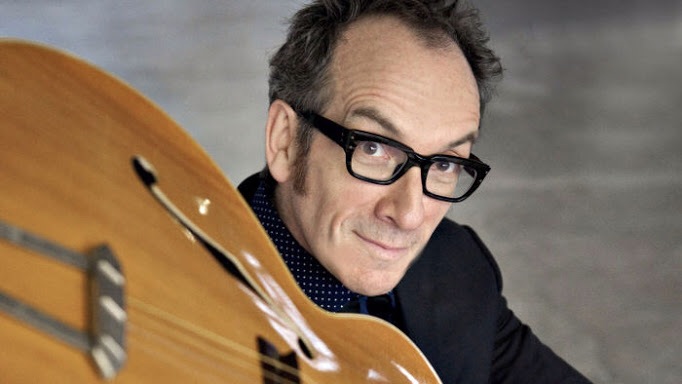
Film review – Elvis Costello: Mystery Dance (Mark Kidel, 2013)

I’ll throw it out there – I’m a huge, huge Elvis Costello fan. I can’t pinpoint an incident that served as a catalyst to get into him. As a 30-year-old Brit, the only major hit of his I remember is the Charles Aznavour cover “She” from the Notting Hill soundtrack, which, I think it’s fair to say, probably isn’t a great representation of his fantastic and varied body of work. Yet somehow the songs seeped into my psyche and I now rate him as one of my favourite artists.

This documentary serves as a biography of sorts, albeit potted around some key periods of Costello’s life. Aspects covered include his upbringing, his hometown, the politics of his lyrics and a small selection of his songs. Some huge guests are interviewed, including Paul McCartney, Mark Ellen and Nick Lowe.

Each element that is picked out is tended to perfectly. In particular, the collaborations with Paul McCartney really ignited my enthusiasm to seek out more information. Kidel has managed to get all this contributors to talk really enthusiastically about their part in the Elvis Costello journey and I as a viewer found myself swept along with it.

IMG_9541.JPG

Unfortunately, the documentary length doesn’t allow too much delving into each topic, whilst the shear bredth of his career means that a lot of his life is skipped over. It’s an impossible balance to achieve because his life and background are both so interesting, and perhaps his story is instead worthy of a series. Or perhaps that’s just the inner fan getting the better of me and I should just make do with what I’ve got.

The one lasting impression you get after watching this film is that Elvis Costello is overly enthusiastic about everything he has done. Be it having a string of top 10 albums, releasing an album of jazz soul music with Allen Toussaint, collaborating with one of the greatest songwriters of all time or creating an ill-received classical string album with The Brodsky Quartet, he has continually done so enthusiastically and been hugely successful in a variety of ways with every genre he has tried his hand at.

If you’re willing to be enthused by one of Britain’s greatest ever songwriters then check this out. Otherwise, the limited storytelling might have you searching for a biography that has a bit more detail.

Elvis Costello: Mystery Dance is available on the BBC iPlayer in the UK until 20th November 2014.