’71 (Yann Demange, 2014)

Screened as part of the First Feature competition at the London Film Festival, Yann Demange’s ’71 is an accomplished action thriller that serves as yet another reminder of the supreme talents of Jack O’Connell.

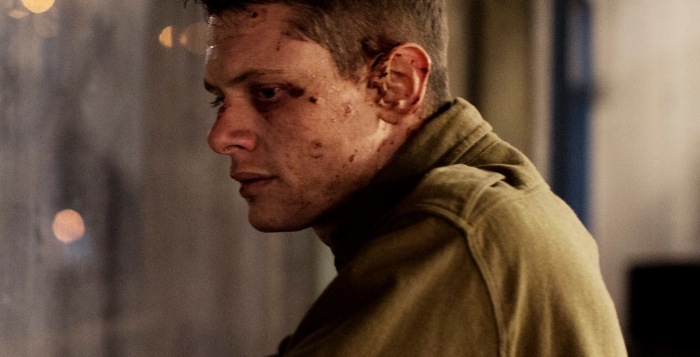
Set during The Troubles in 1971, the story follows Derbyshire soldier Gary Hook (O’Connell) who has been sent on his first mission with the Armed Forces to Belfast. His first call out, to quell some disturbances in a housing estate dubbed as “the front line” near the Falls Road, goes wrong fairly quickly and he is thrust into a man-in-hiding situation, on the run from the locals who believe the British Armed Forces have no place in their conflict. In danger and in isolation, the story becomes an cross-analysis of one man desperate to survive and return to his base safely.

IMG_9233.JPG

What I found interesting was how similar this plays out to other recent films set in more modern wars. One that immediately springs to mind is the Mark Wahlberg-starring Lone Survivor, which was set in Afghanistan. Of course the two films are as far apart as you could get in terms of style, but it serves as a reminder of how extreme the conflicts had got in the early 1970s.

Despite his frequenting of the tabloids, Jack O’Connell keeps on proving himself to be an actor with plenty of natural talent and it’s fantastic to see him building on his excellent performance in last year’s Starred Up (also reviewed here).
IMG_9232.JPG

There are moments of real tensions and shock along the way. I think it would be unfair of me to discuss them in great detail as I might ruin a great film that needs to be seen first-hand.

With a fantastic support cast (Sean Harris stands out as Captain Sandy Browning), this is a solid film worthy of your attention. Seek it out.

’71 is released in cinemas across the UK on 10th October.

A Short Vision (Joan and Peter Foldes, 1956)

Wild creatures flee in terror as a strange missile flies overhead. As it passes over the sleeping city, the world’s leaders and wise men look upwards. The missile explodes, destroying humans, wild creatures and the Earth itself.

A curiosity available via the BFI YouTube channel or in any of the BFI Mediatheques, A Short Vision is a short animated film that captured the imagination of a world obsessed with nuclear war and a fear-induced impending apocalypse. I discovered it during my latest visit to the BFI Mediatheque (a cracking service by the way) and found it completely captivating.

The animation style is jarring, with very little actual moving imagery. Instead, highly detailed paintings are used. Equally the score, provided by Mátyás Seiber, sounds overly eerie and fits perfectly with the visuals.

I don’t know what the purpose of the film was. It was originally funded by the BFI Experimental Film Fund. It’s incredibly depressing to say the least. The James McKechnie voice-over work doesn’t help either, his British voice relaying an almost biblical retelling of a horrible story.

To be honest, by the end of the film I couldn’t help but laugh. It seems so out of convention now that it would have aired on prime time US television as part of The Ed Sullivan Show. No wonder it sparked the biggest reaction since HG Wells’ “War of the Worlds” (presumably in terms of complaints).

Anyway, just watch it and see what you think. The perfect way to get you in the mood for the upcoming Hallowe’en season, or just to bring mood down if you feel in any way positive.

The Duke of Burgundy (Peter Strickland, 2014)

Peter Strickland’s latest film, The Duke of Burgundy, is an interesting one. Screened in competition at the British Film Festival under a wave of great reviews, it is a film very hard to categorise. I’ve seen it described as an erotic drama. It’s also been referred to as a sexual romance. I’ve a tendency to go with a black romantic comedy, albeit based on the sexual fetishes of a lesbian couple.

IMG_9272.JPG

On the face of it, it concerns a sadomasochistic relationship between a dominant woman and her submissive lover. They live in a small community populated exclusively by women, who we are led to believe share similar sexual tendencies. They are all clearly well off, and none appear to work outside a few butterfly lectures here and there.

To label it as a film simply about fetish sex is to do it a disservice. Actually by the end of the film it is clearly more about the demands made by the desires of one person in a relationship, and the effect that has on the second party, especially as they grow distant from these demands and find them less appealing.

The soundtrack, provided by Cat’s Eyes, tweely pitches somewhere between Goldfrapp and Belle and Sebastian. With the constant references to butterflies I was repeatedly reminded of early 00s band Misty Dixon. This juxtaposition between what we see and what we hear is quite intelligent: it underlines the innocence of one party and her belief that this is normal behaviour, even though it is clearly a strain on her besotted lover. She is living in a dream world and the music, in that sense, is perfectly pitched. Plus it’s really lovely music, which helps.

IMG_9229.JPG

The whole nature of the relationship is completely flipped from its initial portrayal, and by the end we see the surprising reality. This about-turn makes for some hilarious and at times heartbreaking scenes. Indeed, such is the detail in which we see the emotions and pain seen by one party, we barely see a glimpse of any of the sexual acts, usually having them implied behind closed doors or inferred from showing us the before and after shots. In this way, Strickland managed to avoid it becoming all about the sex and makes it a much greater film as a result.

In a post-50-Shades era the subject matter will no doubt turn a few heads. In many ways I hope readers of the 50 Shades series seek it out and are either disappointed or, more likely, pleasantly surprised.

Whilst it didn’t have the impact of Strickland’s previous film Berbarian Sound Studio, it was a highly satisfying, twisting and twisted tale that deserves a wide audience.

The Duke of Burgundy is released in UK cinemas in 2015.

The Imitation Game (Morten Tyldum, 2014)

Every so often I see a new film that absolutely blows my socks off, where the storyline sits perfectly with my mood and I get totally enthralled in the joyous and rare occasion of seeing what could be one of my favourite films of all time. The Imitation Game was one of those films.

It is a film in three intertwined parts, covering three key periods of Alan Turing’s life: the schooldays in which Alex Lawther plays a young Turing, complete with serious bullying and a growing fondness of his best friend Christopher; the war years, where he devises and eventually builds the Turing machine that eventually cracks the Enigma code (sorry, spoiler alert!); and the early 1960s when he is investigated and prosecuted for his homosexuality. All three are critical to giving us the full picture of Turing throughout his life.

IMG_9227.JPG

Cumberbatch’s ability to transform himself and become his subject is uncanny, perhaps rivalled only by Michael Sheen by today’s younger actors for chameleon-like abilities. Having seen him in so many different roles (for range you can compare his performance as Smaug in the current Hobbit trilogy to his powerful turn in 12 Years A Slave), he never ceases to amaze me as to how there’s such little crossover between his characters. And so it is here: a totally unique take on a totally unique person.

The scenes during which the machine is developed and successfully executed is the real joy to behold. The take on Turing has no elements of a stereotypical cinema autism sufferer; this tale is set in the real world and without any intentional throwaway punchlines. People with severe autism often find themselves – intentionally or not – having disconnected exchanges with others in real life that to outsiders seem very hilarious, though the comedy here is brought to life by the chemistry with his on-screen companions. Perhaps the best example of this was the Armed Forces interview with Charles Dance, which almost completely ruins Turing’s chances of taking part in the war efforts. I won’t explain it, but it is certainly a highlight.

I imagine the film will come under criticism from people accusing it of being a slightly jingoistic, self-appreciating celebration of how great Great Britain really was back in the day. Very little screen time is given to even mentioning any other country’s war efforts. The truth is that Britain really were the only nation involved with the Turing machines and cracking Enigma, but this film isn’t about a war but about a man. In any case, it’s not only a celebration of a fantastic collaborative effort of some of the greatest minds of a generation, but also a celebration of a time when it was okay to be a proud Brit; when we had plenty to be proud of on a global scale. And jolly good it was too.

IMG_9228.JPG

I’d love to contribute some criticism of it and counter balance why I think negative aspects are acceptable, but nothing springs to mind. The support cast (Keira Knightley, Martin Strong, Charles Dance) were phenomenal, and ensured this didn’t turn into a one-man-show. The music was truly sublime and fitted the mood well. There really wasn’t anything to say that could be considered negative.

Please, do yourself a favour. Watch this film.

The Imitation Game is released in UK cinemas on 14th November and in the USA on 21st November.

L’Homme Que L’On Aimait Trop (Andre Téchiné, 2014)

Andre Téchiné’s latest film L’Homme Que L’On Aimait Trop (literally The Man That You Loved Too, though also known as In The Name of My Daughter but advertised here as the comparatively uninspiring French Riviera) was the opening film of the 2014 BFI London Film Festival. It didn’t kick the fortnight off with fireworks – that was saved for the red carpeted The Imitation Game a couple of hours later – but it was a film that was overall a missed opportunity despite almost being salvaged by a few great performances.

IMG_9218.JPG

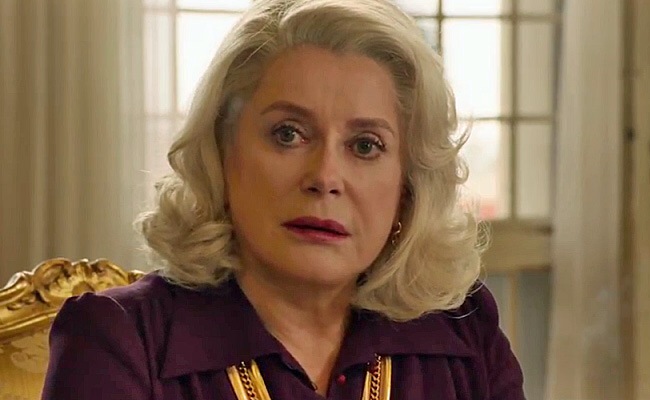
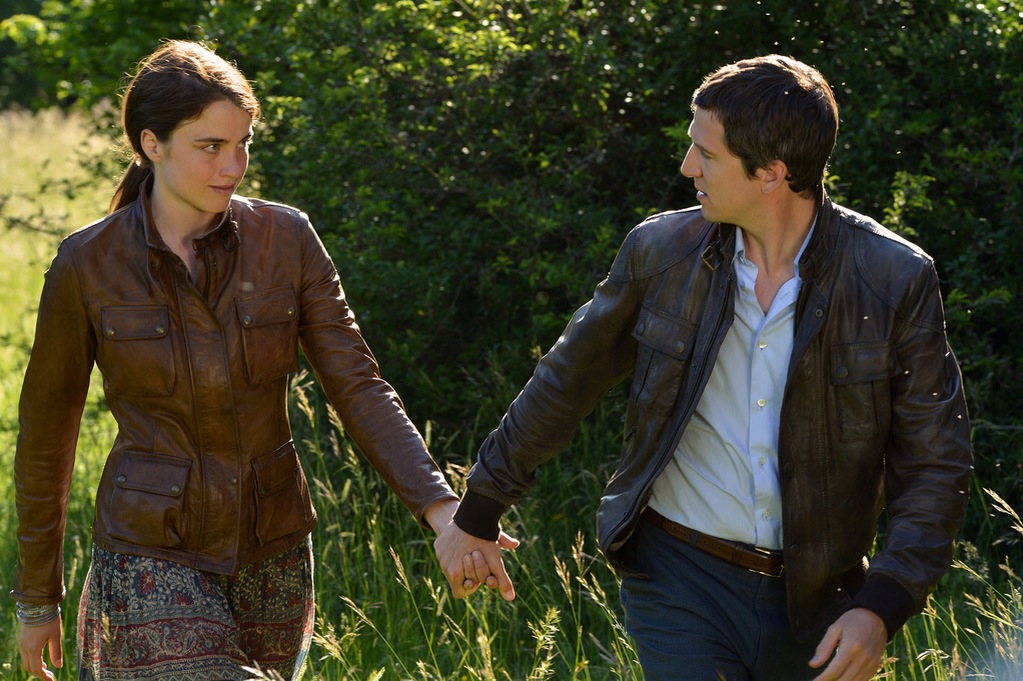
The plot centres around Renée Le Roux (played by Catherine Deneuve), the owner of The Palais, a casino in the French Riviera. We pick the story up in 1970s Nice, as her daughter Agnès (Adèle Haenel) arrives home from a long absence. She is met at the airport by Maurice (Guillaume Canet), a man who is part family lawyer and part personal assistant to Renée. The primary reason for her returning appears to be to give her mother’s opinions more backing on the executive board of the casino, but the situation quickly gets complicated when Agnès begins a largely unrequited infatuation with Maurice. Both Agnès and Maurice slowly reveal that they are driven by their own personal agendas and this makes for an interesting triangle of power, greed, love and suspicion.

Unfortunately, there is a tendency for the plot to focus on things that aren’t central to the plot, whilst critical points are overlooked. A key aspect of the plot is a power struggle between members of an executive board of a high-class casino, on which there are some suspicious mafia members pulling the strings. This is a potentially fruitful area that is largely unexploited.

Equally, the period immediately after Agnès eventually betrays her mother is almost completely skipped over and we are left to work out where exactly we are on the time line. Again, later in the film when Agnès disappears we pick the story up with Maurice a couple of months down the line. This is something that is explained about 40 minutes later in the film, but it doesn’t exactly make it easy to follow.

Indeed, the method of storytelling chosen at this point is a montage of newspaper headlines, which is frankly quite lazy. Adèle Haenel’s performance as Agnès heads towards a mental breakdown isn’t very convincing and I never really believed she was in turmoil, perhaps because too little time was spent on this period.

IMG_9248.JPG

The overall impression is that of a lack of focus and that Andre Téchiné couldn’t decide what the most relevant parts of the story were. Perhaps it was a stylistic choice to underline the fact this mysterious story is still yet to be unravelled and so much is still unknown, but I would sooner have had a story better told.

The final act of the film is set in a courtroom many years down the line. The make-up on Maurice is extraordinary. Unfortunately, they age him by about forty years and Renée only looks about ten years older, despite the fact we are told she has spent the intervening years (22 to be precise) ploughing all her time and money into searching for her daughter. He has allegedly been enjoying his early retirement in Panama. Surely someone on the set realised there was a mismatch here?

I left the cinema feeling like this was a missed opportunity to tell a really interesting story whilst shedding some light on a real-life mystery that is yet to be unravelled. It’s not a disaster, just not quite what it could have been.

L’Homme Que L’On Aimait Trop is released in UK cinemas in 2015.

BFI London Film Festival 2014 Preview

This week sees the start of this year’s BFI London Film Festival and I’ll be heading down to London tomorrow to see as many as I can in three days.

Here’s what I chose:

French Riviera (Andre Téchiné, France, 2014)
Black Coal, Thin Ice / 白日焰火 (Diao Yinan, China, 2014)
The Imitation Game (Morton Tyldum, United Kingdom, 2014)
The Duke of Burgundy (Peter Strickland, United Kingdom, 2014)
’71 (Yann Demange, United Kingdom, 2014)
Giovanni’s Island / ジョバンニの島 (Mizuho Nishikubo, Japan, 2014)

Frustratingly I double-booked myself for the Biophilia Sonic Gala so I will have to miss out, though I’m now extremely popular with my brother’s girlfriend who is seeing it for free!

Expect some reviews over the next week or so of these films. Have a great one if you’re also heading down. Maybe I’ll see you there!!