The Imitation Game (Morten Tyldum, 2014)

Every so often I see a new film that absolutely blows my socks off, where the storyline sits perfectly with my mood and I get totally enthralled in the joyous and rare occasion of seeing what could be one of my favourite films of all time. The Imitation Game was one of those films.

It is a film in three intertwined parts, covering three key periods of Alan Turing’s life: the schooldays in which Alex Lawther plays a young Turing, complete with serious bullying and a growing fondness of his best friend Christopher; the war years, where he devises and eventually builds the Turing machine that eventually cracks the Enigma code (sorry, spoiler alert!); and the early 1960s when he is investigated and prosecuted for his homosexuality. All three are critical to giving us the full picture of Turing throughout his life.

IMG_9227.JPG

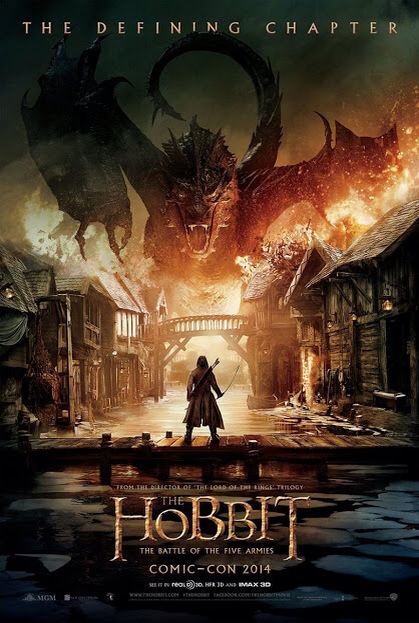
Cumberbatch’s ability to transform himself and become his subject is uncanny, perhaps rivalled only by Michael Sheen by today’s younger actors for chameleon-like abilities. Having seen him in so many different roles (for range you can compare his performance as Smaug in the current Hobbit trilogy to his powerful turn in 12 Years A Slave), he never ceases to amaze me as to how there’s such little crossover between his characters. And so it is here: a totally unique take on a totally unique person.

The scenes during which the machine is developed and successfully executed is the real joy to behold. The take on Turing has no elements of a stereotypical cinema autism sufferer; this tale is set in the real world and without any intentional throwaway punchlines. People with severe autism often find themselves – intentionally or not – having disconnected exchanges with others in real life that to outsiders seem very hilarious, though the comedy here is brought to life by the chemistry with his on-screen companions. Perhaps the best example of this was the Armed Forces interview with Charles Dance, which almost completely ruins Turing’s chances of taking part in the war efforts. I won’t explain it, but it is certainly a highlight.

I imagine the film will come under criticism from people accusing it of being a slightly jingoistic, self-appreciating celebration of how great Great Britain really was back in the day. Very little screen time is given to even mentioning any other country’s war efforts. The truth is that Britain really were the only nation involved with the Turing machines and cracking Enigma, but this film isn’t about a war but about a man. In any case, it’s not only a celebration of a fantastic collaborative effort of some of the greatest minds of a generation, but also a celebration of a time when it was okay to be a proud Brit; when we had plenty to be proud of on a global scale. And jolly good it was too.

IMG_9228.JPG

I’d love to contribute some criticism of it and counter balance why I think negative aspects are acceptable, but nothing springs to mind. The support cast (Keira Knightley, Martin Strong, Charles Dance) were phenomenal, and ensured this didn’t turn into a one-man-show. The music was truly sublime and fitted the mood well. There really wasn’t anything to say that could be considered negative.

Please, do yourself a favour. Watch this film.

The Imitation Game is released in UK cinemas on 14th November and in the USA on 21st November.

Black Coal, Thin Ice / 白日焰火 (Diao Yinan, 2014)

Black Coal, Thin Ice was screened in competition at the Berlin International Film Festival, eventually winning the prestigious Golden Bear award. Whilst it wasn’t in competition at the London Film Festival, its proceeding reputation still created a degree of interest amongst the cinema goers at this year’s LFF. So did it live up to the hype?

IMG_9223.JPG

The thriller centres around a police investigation into mysterious murders, where people’s body parts are found scattered across a large area of China in, amongst other places, coal transportation centres. Quickly the deaths are linked to one woman: Wu Zhizhen (as portrayed by Gwei Lun-Mei). It is up to the film’s eventual main protagonist – Liao Fan’s Zhang Zili -to get close to her and solve the riddle.

It is a gripping police thriller with some highly memorable and shocking scenes. The pacing is fantastic, and left me on the edge of my seat throughout. Stylistically the cinematographer Dong Jinsong has worked well with director Yinan, and between them they’ve done fantastic job with some great framing that made use of the surplus of snow on offer on the shoot.

IMG_9222.JPG

With strong performances from the two lead actors, it was clearly a justified winner of the Golden Bear. I highly recommend seeking it out if you get the chance.

白日焰火 is released in cinemas in the UK in 2015.

L’Homme Que L’On Aimait Trop (Andre Téchiné, 2014)

Andre Téchiné’s latest film L’Homme Que L’On Aimait Trop (literally The Man That You Loved Too, though also known as In The Name of My Daughter but advertised here as the comparatively uninspiring French Riviera) was the opening film of the 2014 BFI London Film Festival. It didn’t kick the fortnight off with fireworks – that was saved for the red carpeted The Imitation Game a couple of hours later – but it was a film that was overall a missed opportunity despite almost being salvaged by a few great performances.

IMG_9218.JPG

The plot centres around Renée Le Roux (played by Catherine Deneuve), the owner of The Palais, a casino in the French Riviera. We pick the story up in 1970s Nice, as her daughter Agnès (Adèle Haenel) arrives home from a long absence. She is met at the airport by Maurice (Guillaume Canet), a man who is part family lawyer and part personal assistant to Renée. The primary reason for her returning appears to be to give her mother’s opinions more backing on the executive board of the casino, but the situation quickly gets complicated when Agnès begins a largely unrequited infatuation with Maurice. Both Agnès and Maurice slowly reveal that they are driven by their own personal agendas and this makes for an interesting triangle of power, greed, love and suspicion.

Unfortunately, there is a tendency for the plot to focus on things that aren’t central to the plot, whilst critical points are overlooked. A key aspect of the plot is a power struggle between members of an executive board of a high-class casino, on which there are some suspicious mafia members pulling the strings. This is a potentially fruitful area that is largely unexploited.

Equally, the period immediately after Agnès eventually betrays her mother is almost completely skipped over and we are left to work out where exactly we are on the time line. Again, later in the film when Agnès disappears we pick the story up with Maurice a couple of months down the line. This is something that is explained about 40 minutes later in the film, but it doesn’t exactly make it easy to follow.

Indeed, the method of storytelling chosen at this point is a montage of newspaper headlines, which is frankly quite lazy. Adèle Haenel’s performance as Agnès heads towards a mental breakdown isn’t very convincing and I never really believed she was in turmoil, perhaps because too little time was spent on this period.

IMG_9248.JPG

The overall impression is that of a lack of focus and that Andre Téchiné couldn’t decide what the most relevant parts of the story were. Perhaps it was a stylistic choice to underline the fact this mysterious story is still yet to be unravelled and so much is still unknown, but I would sooner have had a story better told.

The final act of the film is set in a courtroom many years down the line. The make-up on Maurice is extraordinary. Unfortunately, they age him by about forty years and Renée only looks about ten years older, despite the fact we are told she has spent the intervening years (22 to be precise) ploughing all her time and money into searching for her daughter. He has allegedly been enjoying his early retirement in Panama. Surely someone on the set realised there was a mismatch here?

I left the cinema feeling like this was a missed opportunity to tell a really interesting story whilst shedding some light on a real-life mystery that is yet to be unravelled. It’s not a disaster, just not quite what it could have been.

L’Homme Que L’On Aimait Trop is released in UK cinemas in 2015.

BFI London Film Festival 2014 Preview

This week sees the start of this year’s BFI London Film Festival and I’ll be heading down to London tomorrow to see as many as I can in three days.

Here’s what I chose:

French Riviera (Andre Téchiné, France, 2014)
Black Coal, Thin Ice / 白日焰火 (Diao Yinan, China, 2014)
The Imitation Game (Morton Tyldum, United Kingdom, 2014)
The Duke of Burgundy (Peter Strickland, United Kingdom, 2014)
’71 (Yann Demange, United Kingdom, 2014)
Giovanni’s Island / ジョバンニの島 (Mizuho Nishikubo, Japan, 2014)

Frustratingly I double-booked myself for the Biophilia Sonic Gala so I will have to miss out, though I’m now extremely popular with my brother’s girlfriend who is seeing it for free!

Expect some reviews over the next week or so of these films. Have a great one if you’re also heading down. Maybe I’ll see you there!!

Big Trouble in Little China (John Carpenter, 1986)

When I first saw Big Trouble in Little China, it would have been as a rental from my local video store The Ritz in Burnley. I’m going to guess it was either 1991 or 1992. At this time, children across the UK had been gripped by Turtle Power and, if you were really lucky, you might also have a home video games console with a copy of Street Fighter II. Martial arts were a hot property, and re-watching this film I can see what the immediate appeal was.

Less than ten minutes in we’re treated to a large-scale Kung Fu gang fight. As the film progresses, the battles become more over-the-top, with characters flying, using impressive magic, attacking our heroes with lightning and telekinesis and then there’s the unforgettably dread-inducing lazer eyes. It’s the live-action version of all your favourite parts of Mortal Kombat and Street Fighter II, the film that neither franchise managed to pull off. It just keeps getting better and better and I can well see how amazing that would have seemed to my 8-year-old self.

IMG_9211.JPG

The story itself is a little confused. It kicks off with an office scene where the Chinese bus driver Egg Shen (played by Victor Wong) is sat telling his lawyer that Jack Burton (Kurt Russell) was a “real hero”. In the extras we learn that Carpenter was forced to make this addition as the studio wanted Kurt Russell to be the sole main hero. As the film plays out though it is quite obvious that he’s the sidekick to Wang Chi’s cause (played by Dennis Dun). It is his girlfriend we are following the kidnapping and attempted rescue of, not Burton’s. Indeed Burton’s eventual love interest Gracie Law, played by a young Kim Cattrall, is part of the rescue party. In my opinion it’s a shame that the studio forced this change as it’s quite a bold move to cast a reasonably famous Caucasian actor as a sidekick to a Chinese lead star. As much as I’d love to see it recut, I don’t think it will ever happen.

The visual effects are to be applauded. I’m used to watching B-Movies, especially those made in the 1980s when people were getting creative with very low budgets. I am quite good at using my imagination to compensate for any subsequent substandard segments, especially if the director’s ambition is evident. Yet there was no concessions required here. There are several monster costumes that stand out as both unique and memorable. The electric storm effects and lazer effects both deliver as well. It doesn’t seem to have aged at all, much less so than some of John Carpenter’s efforts from the 1990s (and yes I’m looking directly at 1995’s Village of the Damned there).

And there lies another pleasant surprise. I had no idea this was a John Carpenter film. I watched it too early to remember either the actor playing the lead character or even the lead character’s name itself. I was never going to commit the director’s name to memory. It was great to realise a legend of cinema was on the reigns and it reassured me that it was indeed a high quality film.

IMG_9213.JPG

A word on the package. The version I’m reviewing is the Arrow 2014 Blu-ray re-release. The transfer is unbelievable. The bonus features on the release cover every angle you could possibly want. You’ve got commentary from Russell and Carpenter, trailers, an alternative extended ending. There are extensive interviews with the cast and crew. There’s a short documentary about the stuntmen. Even the menu page looks astounding. I know this is typical of Arrow releases but it’s reassuring that this is the first thing you see and you know a lot of care has gone into covering every aspect of the user experience.

So if you’re needing an 80s nostalgia hit and you’ve worn out your cheap Goonies DVD, try this one instead. I’m sure you won’t be disappointed.

Big Trouble in Little China is out now on a Blu-ray and DVD dual format package from Arrow Video in the UK.

Magic in the Moonlight (Woody Allen, 2014)

Interesting fact – Woody Allen has directed and written a new feature film every year since 1982’s A Midsummer Night’s Sex Comedy. And that break – that one year break – was well deserved. Between 1972 and 1980 he managed eight feature films in a purple patch of creativity that included Manhatten, Bananas, Annie Hall, Sleeper and Love and Death. This industrious approach to churning out films from the Woody Allen cinema factory of course means that some releases are better received than others. Going to see his latest film doesn’t seem to guarantee you’ll see a great film.

In recent years, though, he has had a critical and commercial renaissance, which started with 2008’s Vicky Christina Barcelona, and he has been introduced to a whole generation of cinema-goers. Indeed, watching his recent films they all seem to be of the same universe. The fonts and designs used for the title sequences are always identical (though admittedly he has used the same Windsor font for around forty years now). The music is of a similar style, albeit usually stylised to the area in which the film is set. The locations have tended towards beautiful, luxurious areas of famous European cities with histories rich in romance, barring 2009’s Whatever Works and last year’s hugely successful Blue Jasmine. It’s almost like Woody Allen is using his films to enjoy these beauty hotspots.

So, whilst seeing Woody Allen’s latest might not guarantee you’ll see a great film, it will guarantee you’ll see a quintessentially Allenesque film, one you will immediately recognise as belonging to this most unique of directors.

And so it is with his latest.

Magic In The Moonlight stars British heavyweight Colin Firth and relative newcomer Emma Stone, both of whom are highly gifted and currently very sought-after actors. The story centres around Firth’s Stanley Crawford, a world-renowned magician whom we join as he journeys to the French Riviera to witness and debunk Stone’s Sophie Baker, a self-professed spiritual medium who Stanley is sure is as fake as the rest of her peers.

IMG_9198.JPG
Firth plays the stubborn Stanley perfectly. The character is a dislikeable person, one we see slowly fall for a girl many years his minor but refusing to admit it, doubly bad as he has a fiancé-in-waiting back home. Even when Sophie starts to show feelings for him, he rebukes her in the most insulting of manners. Firth is an inherently likeable person so that he pulls this is off so well is to be admired. Emma Stone, too, is brilliant in playing a seemingly innocent girl with an extraordinary gift. The play between these two highly talented actors is something to behold. Throw into the mix a fantastic support cast including Eileen Atkins and Simon McBurney, some beautiful scenery and a well-crafted script and you have another excellent entry into the Allen catalogue.

In many ways, I do wonder what the enduring fascination with Allen is. Especially in the UK where, in light of Operation Yewtree and a seemingly never ending chain of accusations and court cases against the stars of yesteryear, any kind of indecent relationship will be dragged through the press. It seems decidedly odd that Woody Allen’s popularity remains completely intact. There doesn’t seem to be any resolution on the horizon for his ongoing feud with Dylan Farrow, his adoptive daughter, who claims she was the victim of sexual abuse as a child. It seems bizarre that so many renowned actors would flock to be involved with his work with this hanging over his legacy. Yes, I understand that we should treat people as innocent until proven guilty, but that is frankly not the society we live in, where often trial by media is the preferred route. I don’t truly believe that these films are so good they overpower his potential loss of reputation if these allegations were true. Perhaps it’s just that his reputation as an excellent director precedes him and people are desperate to work with him as he sits in the twilight of his career. Who could turn down the opportunity to work with a bonafide legend of cinema?

So, is Magic in the Moonlight as good as Midnight in Paris or Blue Jasmine? Probably not. But it is a uniquely Allenesque picture and one that certainly won’t go down in the future as a flop; yet another water tight story told brilliant by one of the greatest directors in the history of cinema.

Magic in the Moonlight is on release at selected cinemas in the UK now.

IMG_9200.JPG

Wakolda (Lucia Puenzo, 2014)

Lucia Puenzo’s controversial new film is a thriller of sorts that really failed to thrill me in any way. Based partly on fact, it centres around a family living in Patagonia in the 1960s who are unexpectedly befriended by a German doctor. This doctor, it turns out, is actually Nazi war criminal Josef Mengele in hiding. He takes an unhealthy interest in their daughter Lilith and in the father’s hobby of making steampunk dolls with creepy beating hearts.

I’m not up on my post-second-world-war Nazi manhunt history, so I can’t comment on the factual accuracy of it all, but what I can say is that the finer details seemed a little far-fetched. The fact he was in Latin America in this period has been proved in many historical documents. However, I can’t relate in any way to a family that would allow their youngest daughter to be experimented on by a complete stranger who is quite obviously in hiding, especially when that man is German and it is known that Nazi war criminals are in hiding in South America. And you’re in South America. And he’s a creep that wants to experiment with drugs on your daughter.

IMG_9097.JPG
The acting also left a lot to be desired. The normally animated Brendemuhl (Mengele) pitches his character as too wooden and fails to elicit the correct level of hatred that is required. Indeed, for large periods of the film it feels like we are being encouraged to feel empathy for him, which in my eyes is quite divisive. Perhaps the director should be praised for being brave and allowing the actor to portray him as something other than a cinema-standard psychopath. For me, the result is just a little bit directionless.

Wakolda has won awards at festivals all around the world and perhaps the global appeal is down to the fact it is a story that involves the history of so many people’s countries. On the pure level of looking at it as a convincing and effective story in its own right, I think it falls short. It certainly wasn’t a roller-coaster ride and I didn’t really feel much for the characters, so when the story reached its climax I just didn’t feel overly engaged.

Wakolda is out now in selected cinemas across the UK.

Too Late Blues (John Cassavetes, 1961)

I’m growing tired of the Masters of Cinema releases. Time after time they release excellent transfers of classic forgotten cinema, more often than not films I’ve never heard of before, put a lovely package together and release it for about the same price as going to the cinema. It’s sickening. Unfair almost.

Elaborating on my first point – my wife and wallet are growing sick of the Masters of Cinema releases. I personally can’t get enough of them.

Too Late Blues has largely been considered a failure, not least by director John Cassavetes. His major studio debut, released following the hugely successful Shadows in 1959, the film is infamous for its compromises, which cover everything from the music to the script and even the main cast. Watching it now it is hard to see what the controversy is about.

I was particularly taken aback by Bobby Darin’s performance. I’m of a generation that knows him almost exclusively for his huge signature tune “Beyond The Sea”, and less so for “Splish Splash”, which is now unfortunately associated with the “falling in the garden pool” segments on You’ve Been Framed.

Bobby Darin finally takes time to play his piano between baths

Bobby Darin as Ghost in Too Late Blues

Playing Ghost, the leader of a struggling jazz band, Darin toys with the frailty of a damaged ego whilst putting on a front for his love interest and fellow aspiring musician Jess (played by Stella Stevens). He plays it with charm and integrity and it’s a fantastic performance in one of his early film roles.

Cassavetes ensures his stamp is made on the film by carefully throwing in one-liners that subtly defend his fear he’d be viewed as selling out by fans of his debut. At one point, a line is delivered that points to the “mixin’ up of the races” as one of the sins of jazz musicians. The fact this is delivered by an idiotic ruffian is a clear indicator that Cassavetes did not agree with the statement and was using the line as a critique of the copious Hollywood films about the thriving mixture of inspirations and culture that was the 1950s jazz scene, but which all centred on exclusively white musicians (Young Man With A Horn and Pete Kelly’s Blues are good examples of this). Indeed, the very subject matter of Too Late Blues is a man struggling with artistic integrity and what he sees as selling out. It’s an intelligent compromise and the fact it made it past the studios sort of proves his point.

Stealing the show above everyone else though is Everett Chambers, who plays the artists’ agent Benny Flowers. Reminiscent of Joe Pesci at his most evil, he perfectly plays a man riddled with jealousy. His efforts to sabotage his acts’ careers in order to keep them in his control are trumped only by the efforts he puts into ensure Ghost and Jess never become a couple, so desperate he is to end up with the girl himself. This reaches breaking point in a highly memorable bar-room brawl, which he orchestrates to perfection whilst seemingly never getting involved. It is a shame that this would prove to be one of the few roles that Chambers completed before transferring to a very successful career in television production, as he shows every pointer of being an excellent actor.

The promise shown in the opening act of the film are never really delivered on, and this is probably because of pressures from the studio upon seeing the progress as it was made. That said. it is a worthy addition to the continually excellent Masters of Cinema collection and well worth the monetary and emotional investment.

Too Late Blues is out now in the UK on Blu-ray and DVD dual format release, courtesy of the Masters of Cinema collection.

Lilting (Hong Khaou, 2014)

Hong Khaou’s Lilting is a film of understated power. Watching it is a deeply moving experience.

The plot deals with the unexpected death of a young man played by Kai, and the toll this takes on his lover Richard (played by Ben Whishaw) and his mother Junn (played by Cheng Pep-pei). The snag in the situation is that the mother is unaware that her son is homosexual, and the situation is made more complex by the fact that Richard intends to respect his lover’s wish to keep this secret whilst at the same time ensuring Junn is looked after, which raises issues that are extenuated by the fact they have no common language. Or rather, they don’t until Ben hires a translator, though this gives rise to as many issues as it resolves.

This is a complicated storyline to see through and could easily fall flat with poor performances. Junn is brilliantly stubborn and cold, though we can see a heartbroken woman underneath the façade. Whishaw’s turn is an absolute revelation and every quirk adds to the belief that he is completely ripped apart by the situation.

A large amount of praise also needs to be heaped on the unwillingness to shy away from the fact we are seeing a homosexual relationship. So many times in films we see same-sex relationships implied but rarely do we see the playful intimacies and passion of such a relationship. This isn’t to say that there are any gratuitous sex-scenes, but the story called for the young men to be very much in love and the closeness is not shirked. Hopefully this is something we will see more of in the future.

Lilting is one of the best films I’ve seen this year. It’s a stunning study of the emotions people go through when someone they are close to dies with a secret, and the difficult resolutions they find to deal with the loss. If you get a chance to see it, then grasp it with both hands.

Lilting is out now in selected cinemas across the UK, and will be released in the USA on 26th September 2014.

Deux Jours, Une Nuit (Jean-Pierre Dardenne and Luc Dardenne, 2014)

The latest film from the Dardenne brothers, Two Days, One Night, stars Marion Cotillard in what on the face of it seems quite an unlikely situation: a woman is voted out of her job by her colleagues as a result of a vote between her colleagues who choose between keeping her in employment or receiving their annual bonus. Whilst it felt far-fetched when I read the synopsis, the way it is delivered makes it not just believable but heart-breaking.

Whilst the whole story centres around Sandra’s struggles as she reacts to the news of the decision, we are treated to an expert display of serial short story writing. Sandra (Cotillard) has from 5pm on Friday night until 9am on Monday morning to visit, in person, each of her 16 work colleagues and convince them to vote in her favour when the ballot is repeated on Monday morning. Given the minimal screen time they have to offer their reasoning (the whole film is just 95 minutes in length) each character is wonderfully deep. This ensures that this one-woman tour-de-force doesn’t begin and end with the main star.

The shooting technique adds to the realism. Most scenes are completed in a single shot, which gives the effect of feeling like you’re a bystander allowed to eavesdrop on the most personal and revealing of conversations. We see extreme stubbornness, tears of guilt and logical reasoning as each character paints the picture of how they came to their decision and – more importantly – whether or not they will change it.

It is a film that sets itself up to spark debate amongst the viewer. It’s certainly not a crowd-pleaser. It is too heavily laden with working-class socio-realism for that. But does it achieve what it sets out to do? Probably, yes.

Two Days, One Night is out now at selected cinemas.