Fun as aren’t simply
Order right the in told films
Poetry like just
Obscure film jokes #002
How does Jacques Audiard like his pizzas?
Dheep-pan.
Haiku film review #037 – The Mask
Poor Stanley Ipkiss.
How did you get a cursed mask
Stuck onto your face?
Obscure film jokes #001
Did you hear about the intelligent zombie who collected internet memes?
She was called The Girl With All The GIFs.
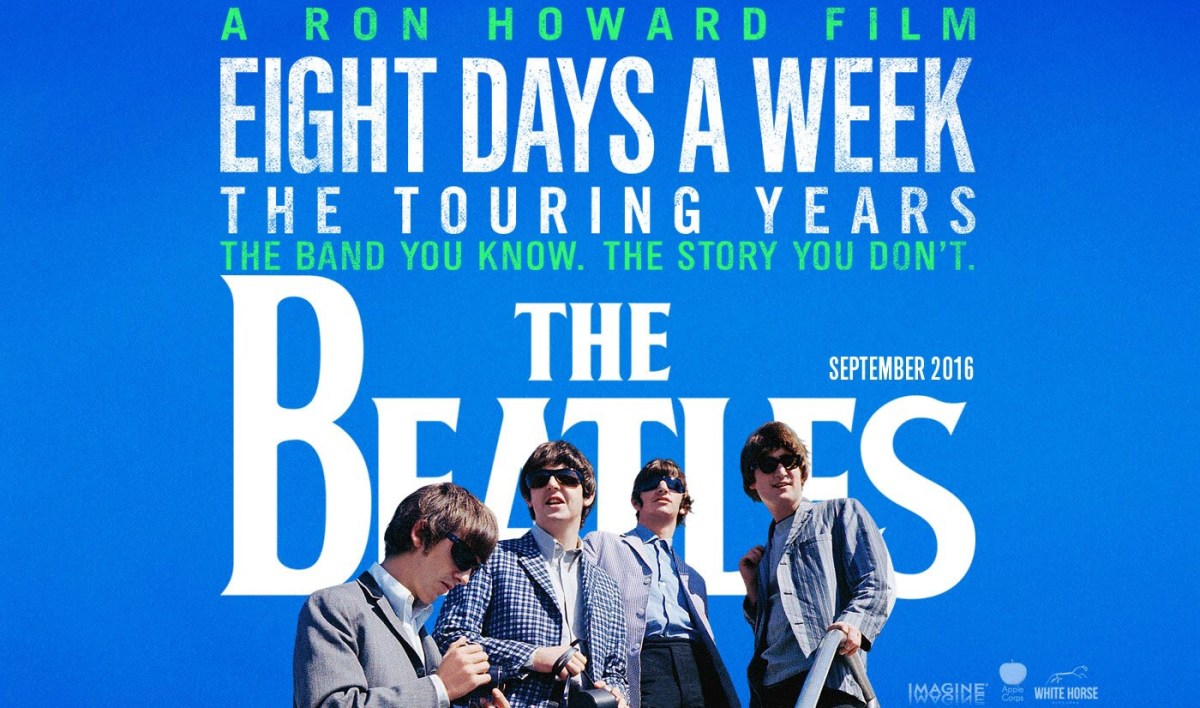
Film review – The Beatles: Eight Days a Week, The Touring Years (Ron Howard, 2016)
There is a single reason why The Beatles hitherto remain a subject largely untouched by documentarians. Quite simply, the story has been told to death. It is a well-reasoned argument that stems from the fact that a story is far more interesting if we don’t know the ending; even less so if we know the beginning, middle, end and every conversation along the way.
As a result, we have been treated to a flurry of fascinating documentary films in recent times on artists relatively unheard of to the general public: Rodriguez (Searching for Sugar Man), Anvil (Anvil! The Story of Anvil), under-celebrated back-up singers (20 Feet from Stardom); Phil Ochs (There But For Fortune). All excellent films that manage to capture the imagination of cinema-goers precisely because they tell a story as fresh as any fictional tale in the same media.
The Beatles are, however, one of the greatest bands of all time, taking over the world as clean-living heart-throbs that made radio-friendly sounds that were loved over the world. Their live performances were legendary and, at the time, revolutionary as they proved that rock bands could turn massive profits by putting in performances in large stadia.

It’s a story that has been told many times over and it would take a brave director to try to tell it in an interesting way that didn’t feel like retreading old ground. Fortunately, the man at the helm on the clumsily titled The Beatles: Eight Days a Week – The Touring Years is the one and only Ron Howard, the genius behind the likes of Cocoon, Apollo 13, A Beautiful Mind and Frost/Nixon.
It is a truly brilliant piece of documentary film-making, managing to tell the familiar story with a flurry of individual memories that bring to life again a rise to stardom that has not and will not ever be replicated. There are wonderful talking head contributions from the likes of Howard Goodall, Dr Kitty Oliver, Sigourney Weaver (who the editors managed to pick out from the crowd footage of the 1965 Hollywood Bowl performances) and Elvis Costello. It is Whoopi Goldberg’s retelling of her mother surprising her with a ticket to the Shea Stadium performance that really stuck out and showed the positive effect they were having on both small and large scales throughout their tours.
The real stars are The Fab Four themselves, and with hours and hours of footage recorded by a press hungry for a piece of them (a point touched on in the film by Paul McCartney), we are lucky enough to be able to build up a truthful story of what was happening to a level impossible for all other artists in the charts at the time. As Eddie Izzard points out, their ability to respond to heckling in press conferences puts them all up at the same level as professional comedians.
The film is centred around their live performances rather than their time in the studio and as such it was essential the largely bootlegged sound recordings from their gigs were remastered to a usable state. Up steps Giles Martin, son of the late George Martin, to ensure everything hits the mark. Audible for the first time in such high quality, these sound recordings are evidence that despite them not being able to hear themselves or each other play they still functioned as a wholly tight musical four-piece. All that hard work out in Hamburg seemed to have paid off, then.
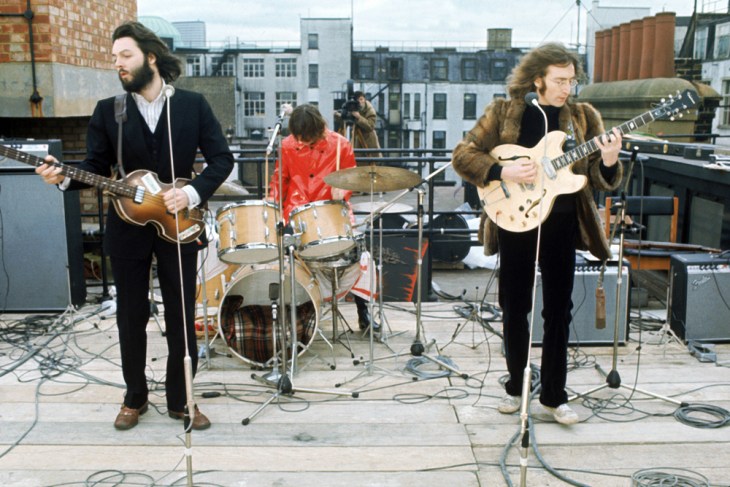
It is a shame that the film cuts off in the middle of 1966 as the band released Revolver. They wound up their US tour in California, and it was a tour they were glad to see the back of. John Lennon had to painfully respond to the “bigger than Jesus” comments, there were death threats from the Ku Klux Klan and ticket sales were in decline (a point unsurprisingly missed out of the film). As a result, whilst Sgt. Pepper’s Lonely Hearts Club Band gets partial coverage, the albums Magical Mystery Tour, The Beatles (a.k.a. The White Album), Yellow Submarine, Abbey Road and Let It Be are covered in about 30 seconds, before a welcomed clip of their Abbey Road rooftop performance rounds thing off with them revisiting their glory days just before bowing out.
The film is genuinely crying out for a sequel to do justice to these missing years and perhaps beyond, though many of this is covered by the much-celebrated Anthology series released in 1995 but sadly still awaiting a Blu-ray release.
If you’re a fan of The Beatles then put this straight on your Christmas list as it will be a perfect trip down memory lane to revisit the greatest band of all time.
Eight Days a Week is available to purchase as a special edition Blu-ray and a standard DVD.
Haiku film review #036 – Captain Fantastic
Viggo Mortensen
Home schools his kids really well
Until his wife dies

Why Super Mario Run will be great for Nintendo
In case you missed it earlier this week, Nintendo legend Shigeru Miyamoto made a surprise appearance at the Apple Special Event at San Fransisco’s Bill Graham Civic Auditorium. He was there to announce the first Super Mario game to be playable on smart phones. Indeed, it will launch as an iPhone exclusive, coming to Android at a later date.
Watch the trailer here.
The game looks simple enough. Mario runs from left to right, jumping depending on when the player presses the screen. The jumps vary in height depending on how long the screen is pressed for. This gives you a free hand with which you can do whatever you fancy, including eating an apple! Well played Miyamoto…

A familiar sight for fans of Super Mario
The news has had mixed reactions across the Internet, with many happy that the gaming giant is branching out whilst others bemoan the devaluing of the IP.
With the Wii U writhing to its gruesome end within the next six months and a serious slowdown in sales of the DS and 3DS families of consoles in recent times, Nintendo had to do something to experiment with the market and this is the perfect time to do something.
The much-discussed Nintendo NX will arrive in Spring 2017 and there hasn’t been much to get excited about on the Nintendo front this year, outside of the Pokémon Go phenomenon that Nintendo barely had anything to do with. Releasing a simple game that reminds players of the fun that can be had with the character without really going into the deep gameplay seen on the more advanced console-based games seems like the perfect move.
The game looks to have six worlds with four levels in each. Anyone familiar with the recent New Super Mario Bros. games – the visuals on which this game is sourced – will know that there are undoubtedly rewards in the form of bonus stages awaiting those completists amongst us. Miyamoto also indicated in his talk that the game will have a one-off charge but won’t have in-app payments. This is music to the ears of players around the world, tiring of necessary additional charges to get the most out of the games they enjoy.
Super Mario Run can be accessed on the App Store, though all you can do right now is set a notification for its release (currently expected for December).

Film review – Julieta (Pedro Almodóvar, 2016)
The latest film from Pedro Almodóvar, Julieta, is a stunning interwoven story of mystery and intrigue that the director takes great care in unraveling for our viewing pleasure.
Centred around the titular character, we are introduced to Julieta as she plans to move from central Madrid to Portugal with her boyfriend Lorenzo. However, a chance encounter with a friend of her daughter causes her to completely rethink her decision. Her daughter, Antía, has been missing for several years and moving will mean any chance of reconnecting with her will be lost. She opts to stay behind and rent an apartment in the last known address that her daughter could contact her. She fills her time hand writing her thoughts on the events that led to her daughter’s disappearance, which play out in the form of a long flashback that makes up the bulk of the film.
It is an adaptation of three stories by Alice Munro taken from her 2004 award winning book Runaway, which Almodóvar first hinted at in his brilliant 2011 horror thriller The Skin I Live In via a Spanish-language version of the book being prominently read by one of the central characters.
The music in Julieta plays a critical part in setting the tone, switching it from serious drama to something slightly more sinister. It borders on sounding like a horror film at times, with the implied effect of hinting that whatever story has been revealed thus far still has more secrets within.

The success of the film ultimately lies on the two actresses who portray Julieta at various times through it her life. Fortunately, both Emma Suarez and Adriana Ugarte provide brilliant turns as the older and younger incarnations of Julieta, respectively. They are very different takes, resting either side of a devastating incident in her life. It works perfectly well and the change is handled with a certain elegance that ensures buy in from the audience.
Some ardent Almodóvar fans have been disappointed with his recent output, with some pointing to airplane-disaster-comedy I’m So Excited as an indication that he’d lost his edge. Any doubts about how seriously he takes his work can be put to bed with Julieta – a beautiful work of art and a must see for anyone with a penchant for high quality cinema.
Julieta is available now on DVD.
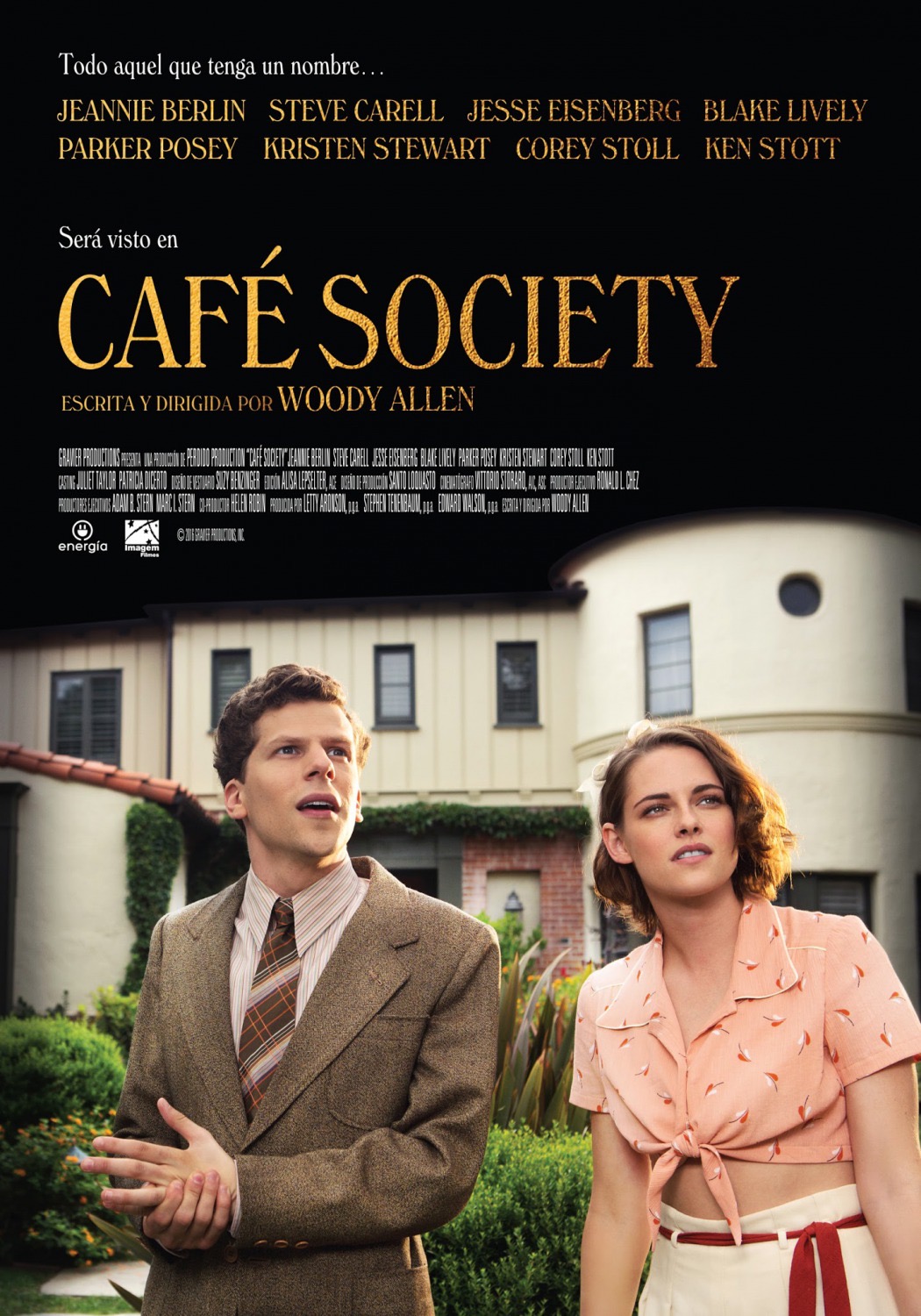
Film review – Café Society (Woody Allen, 2016)
There is a moment in Café Society where the magic of 1950s Hollywood romance is really captured: a chance glance, an excited exchange, the promise of unfolding romance recognised instantly. That this exquisite one-shot involves not Kristen Stewart – the woman we need to believe is Jesse Eisenberg’s raison d’etre – but rather Blake Lively, reveals everything we need to know about why this Woody Allen effort fails to hit the heights of his more recent successes. That is, Kristen Stewart simply isn’t a believable love interest. At least not in this kind of film.
The 1930s-set story centres around Bobby (Eisenberg), a young Jewish man who has moved to Hollywood to pursue new career opportunities under the supervision of his uncle Phil (Steve Carell), a powerful and well-connected film talent agent. He instantly falls in love with Veronica (Stewart), an assistant at Phil’s office, unaware of the fact that his uncle is on the verge of breaking off his marriage to pursue his affair with Veronica.

The film hangs together on Jesse Eisenberg’s shoulders, as he starts off by doing his best Woody Allen impression and progresses towards his final position that is ever-so-slightly more alpha male than that. It is genuinely an excellent performance, bringing energy to the screen whenever he graces it.
He works best playing off against the plethora of supporting characters who never fail to exude the feel of the time and he’s clearly having fun under the supervision of one of the greatest living film directors. It’s a beautiful homage to the heyday of Hollywood, as Bobby develops into a socialite, bouncing from party to party first in Hollywood and then later on his return to New York.
Whenever Stewart appears on screen, she feels like a woman out of place in the era and unable to match the authentic performances of those around her. This goes against some excellent post-Twilight performances that have given her a route out of potential typecasting (American Ultra is a great example of this), but a classic Hollywood leading starlet she is not.
The film is not a complete failure. A hilariously delivered exchange between Bobby and a first-time prostitute is just one example of the smart comedic dialogue we’ve come to expect in Allen’s recent film. The jazz-centric score heightens the positioning in the era.
It’s just a shame that I was routing for he wrong girl.
Cafe Society is available now on DVD, along with the sumptuous Vince Giordano soundtrack.

Film review – Weiner (Josh Kriegman and Elyse Steinberg, 2016)
The worst thing about watching the political equivalent of a car crash is that politicians never seem to learn from their predecessors’ mistakes. Wars keep happening, smear campaigns take precedent over actual policies in the run up to elections, mayoral campaigners Tweet pictures of their erect penises to strangers.
Wait, what?!
Okay, that last one is a new one on the political landscape. Anthony Weiner is a great sport though. He lived up to his name whilst figuratively – though thankfully not literally – taking one for the team by playing out the lesson twice, first in 2011 and then again in 2013. That the second one happened during under the prying eyes of documentary filmmaking duo Kriegman and Steinberg, at the time trying to capture the rebuilding of a shattered political empire, makes it all the more fascinating.
The film left me a little split on my opinion of him. On the one hand, he is clearly a driven man who is good at his job, galvanising public opinion and canvassing support for what he truly believes is right for his city.
What I can’t deny though, and I think we can all agree on this, is that the mayor of New York shouldn’t have an alter ego on the dark web called Carlos Danger tweeting pictures of his dick to women behind his wife’s back.
His wife, Huma Abedin, leaves the film with her head left relatively high. She is a woman of unbelievable strength in the face of a continuously catastrophic husband who laughs in the face of public opinion, even though his livelihood depends on being popular with his public. The only question is why she sticks around when he is clearly a huge damage to her political career (she has been an aide to Hilary Clinton throughout the two scandals and leading into the presidential election later this year).
As a documentary, Weiner is about as good as it gets. It isn’t putting the pieces together after an event, instead getting lucky and being able to present a truly spectacular political scandal from the inside of the bubble. The characters are their interactions are as captivating as any fictional story.
It might not be a comfortable watch, but there’s something about Anthony Weiner that’s hard to not get addicted to. He’s an almost great political swamped by his own ability to ruin his own chances of achieving anything other than the total humiliation of himself and everyone associated with him.
Well worth 90 minutes of your time.

