’71 (Yann Demange, 2014)

Screened as part of the First Feature competition at the London Film Festival, Yann Demange’s ’71 is an accomplished action thriller that serves as yet another reminder of the supreme talents of Jack O’Connell.

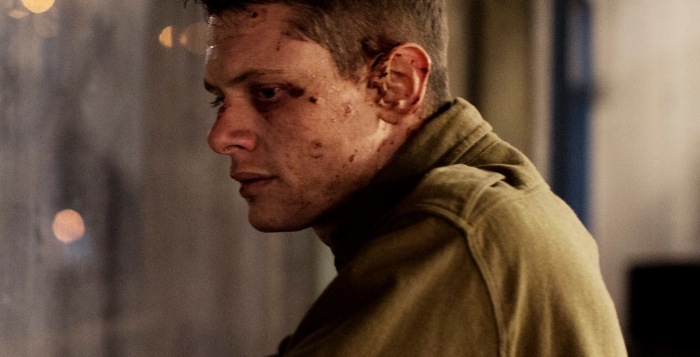
Set during The Troubles in 1971, the story follows Derbyshire soldier Gary Hook (O’Connell) who has been sent on his first mission with the Armed Forces to Belfast. His first call out, to quell some disturbances in a housing estate dubbed as “the front line” near the Falls Road, goes wrong fairly quickly and he is thrust into a man-in-hiding situation, on the run from the locals who believe the British Armed Forces have no place in their conflict. In danger and in isolation, the story becomes an cross-analysis of one man desperate to survive and return to his base safely.

IMG_9233.JPG

What I found interesting was how similar this plays out to other recent films set in more modern wars. One that immediately springs to mind is the Mark Wahlberg-starring Lone Survivor, which was set in Afghanistan. Of course the two films are as far apart as you could get in terms of style, but it serves as a reminder of how extreme the conflicts had got in the early 1970s.

Despite his frequenting of the tabloids, Jack O’Connell keeps on proving himself to be an actor with plenty of natural talent and it’s fantastic to see him building on his excellent performance in last year’s Starred Up (also reviewed here).

IMG_9232.JPG

There are moments of real tensions and shock along the way. I think it would be unfair of me to discuss them in great detail as I might ruin a great film that needs to be seen first-hand.

With a fantastic support cast (Sean Harris stands out as Captain Sandy Browning), this is a solid film worthy of your attention. Seek it out.

’71 is released in cinemas across the UK on 10th October.

Giovanni’s Island / ジョバンニの島 (Mizuho Nishikubo, 2014)

Back in July when I initially viewed Miyazaki’s final film The Wind Rises, I commented that it was a story that would have been better told in live action. The subject matter was very serious, there was nothing magical required of the story. It was simply an animation that didn’t need to be an animation.

IMG_9276-0.JPG

Giovanni’s Island, the new anime release from Mizuho Nishikubo, could have had a similar issue. It is a film set on Shikotan, a small Japanese island in 1945, which tells most of the premise in itself. We follow Young brothers Junpei and Kanya Senō as they deal with the island’s occupation by Russian soldiers, the upheaval of life as they know it, their integration with Russian culture at their school and Junpei’s romantic interest with Tanya, a Russian schoolgirl with a high-level military father.

It is overall a very depressing subject matter. By this I’m talking Grave of the Fireflies sort of level of depressing. There were many teary eyes as the film reached its conclusion, and that is testament to what a fantastic job Nishikubo has done here.

The animation style was actually quite intelligent and as the film went on there was a clear reason why animation was the medium of choice to tell this tale. There are three distinct styles on show: very realistic imagery is used for all the modern-day portions of the work; a more childlike design with juxtaposing dull greys are used for the sections covering 1945; and Junpei’s dreams and fantasies are more varied, with styles ranging from basic sketches to star-filled neon visual fireworks. The decision to use all three styles to represent a now much older Junpei’s memory of the events is a smart move, especially when we see the childlike times he spends with his brother overlaying a truly grim memory of the surrounding landscapes.

IMG_9234.JPG

One key theme throughout is the children’s obsessions with trains and railways, inspired by the brothers’ favourite book Night of the Galactic Railroad. According to the director this book used to be extremely popular but has since become just a phrase that is used. In fact, only 10 out of approximately 100 children who auditioned for the film were aware of the contents of the book. Perhaps the choice of this particular book was a comment that the younger generations of Japan are trying to move on from the painful memories suffered by their grandparents. Or perhaps it was just a happy coincidence and I’m reading too much into it.

Nishikubo has come in for criticism for the content of the film. Some Japanese critics thought he should have used the film to make more of a political statement. I tend to disagree. It really is an important and compelling story to simply tell the experience these two young children went through, without being judgemental of any of the parties. Neither the islanders nor the Russians are particularly singled out as being in the wrong. This allows us as viewers to make up our own minds, and it’s a much more balanced approach to allow the story to gain popularity and recognition in the world markets. In so many ways, this does a far better job than being highly favourable to the Japanese islanders, who went through terrible treatment no matter which way you look at it, and I’m sure this is the conclusion most will draw.

Giovanni’s Island has a limited release in UK cinemas in 2014, including the London Film Festival (10th October onwards), Scotland Loves Anime 2014 in Glasgow (12th October), Leeds Vue in the Night (12th October) and Edinburgh Filmhouse (18th October). It will subsequently be released on Ultimate Edition Blu-ray (limited to 1000 copies) and DVD on 8th December, and standard Blu-ray on 26th January 2015. More information on all these releases can be found on the official Giovanni’s Island website.

A Short Vision (Joan and Peter Foldes, 1956)

Wild creatures flee in terror as a strange missile flies overhead. As it passes over the sleeping city, the world’s leaders and wise men look upwards. The missile explodes, destroying humans, wild creatures and the Earth itself.

A curiosity available via the BFI YouTube channel or in any of the BFI Mediatheques, A Short Vision is a short animated film that captured the imagination of a world obsessed with nuclear war and a fear-induced impending apocalypse. I discovered it during my latest visit to the BFI Mediatheque (a cracking service by the way) and found it completely captivating.

The animation style is jarring, with very little actual moving imagery. Instead, highly detailed paintings are used. Equally the score, provided by Mátyás Seiber, sounds overly eerie and fits perfectly with the visuals.

I don’t know what the purpose of the film was. It was originally funded by the BFI Experimental Film Fund. It’s incredibly depressing to say the least. The James McKechnie voice-over work doesn’t help either, his British voice relaying an almost biblical retelling of a horrible story.

To be honest, by the end of the film I couldn’t help but laugh. It seems so out of convention now that it would have aired on prime time US television as part of The Ed Sullivan Show. No wonder it sparked the biggest reaction since HG Wells’ “War of the Worlds” (presumably in terms of complaints).

Anyway, just watch it and see what you think. The perfect way to get you in the mood for the upcoming Hallowe’en season, or just to bring mood down if you feel in any way positive.

The Duke of Burgundy (Peter Strickland, 2014)

Peter Strickland’s latest film, The Duke of Burgundy, is an interesting one. Screened in competition at the British Film Festival under a wave of great reviews, it is a film very hard to categorise. I’ve seen it described as an erotic drama. It’s also been referred to as a sexual romance. I’ve a tendency to go with a black romantic comedy, albeit based on the sexual fetishes of a lesbian couple.

IMG_9272.JPG

On the face of it, it concerns a sadomasochistic relationship between a dominant woman and her submissive lover. They live in a small community populated exclusively by women, who we are led to believe share similar sexual tendencies. They are all clearly well off, and none appear to work outside a few butterfly lectures here and there.

To label it as a film simply about fetish sex is to do it a disservice. Actually by the end of the film it is clearly more about the demands made by the desires of one person in a relationship, and the effect that has on the second party, especially as they grow distant from these demands and find them less appealing.

The soundtrack, provided by Cat’s Eyes, tweely pitches somewhere between Goldfrapp and Belle and Sebastian. With the constant references to butterflies I was repeatedly reminded of early 00s band Misty Dixon. This juxtaposition between what we see and what we hear is quite intelligent: it underlines the innocence of one party and her belief that this is normal behaviour, even though it is clearly a strain on her besotted lover. She is living in a dream world and the music, in that sense, is perfectly pitched. Plus it’s really lovely music, which helps.

IMG_9229.JPG

The whole nature of the relationship is completely flipped from its initial portrayal, and by the end we see the surprising reality. This about-turn makes for some hilarious and at times heartbreaking scenes. Indeed, such is the detail in which we see the emotions and pain seen by one party, we barely see a glimpse of any of the sexual acts, usually having them implied behind closed doors or inferred from showing us the before and after shots. In this way, Strickland managed to avoid it becoming all about the sex and makes it a much greater film as a result.

In a post-50-Shades era the subject matter will no doubt turn a few heads. In many ways I hope readers of the 50 Shades series seek it out and are either disappointed or, more likely, pleasantly surprised.

Whilst it didn’t have the impact of Strickland’s previous film Berbarian Sound Studio, it was a highly satisfying, twisting and twisted tale that deserves a wide audience.

The Duke of Burgundy is released in UK cinemas in 2015.

The Imitation Game (Morten Tyldum, 2014)

Every so often I see a new film that absolutely blows my socks off, where the storyline sits perfectly with my mood and I get totally enthralled in the joyous and rare occasion of seeing what could be one of my favourite films of all time. The Imitation Game was one of those films.

It is a film in three intertwined parts, covering three key periods of Alan Turing’s life: the schooldays in which Alex Lawther plays a young Turing, complete with serious bullying and a growing fondness of his best friend Christopher; the war years, where he devises and eventually builds the Turing machine that eventually cracks the Enigma code (sorry, spoiler alert!); and the early 1960s when he is investigated and prosecuted for his homosexuality. All three are critical to giving us the full picture of Turing throughout his life.

IMG_9227.JPG

Cumberbatch’s ability to transform himself and become his subject is uncanny, perhaps rivalled only by Michael Sheen by today’s younger actors for chameleon-like abilities. Having seen him in so many different roles (for range you can compare his performance as Smaug in the current Hobbit trilogy to his powerful turn in 12 Years A Slave), he never ceases to amaze me as to how there’s such little crossover between his characters. And so it is here: a totally unique take on a totally unique person.

The scenes during which the machine is developed and successfully executed is the real joy to behold. The take on Turing has no elements of a stereotypical cinema autism sufferer; this tale is set in the real world and without any intentional throwaway punchlines. People with severe autism often find themselves – intentionally or not – having disconnected exchanges with others in real life that to outsiders seem very hilarious, though the comedy here is brought to life by the chemistry with his on-screen companions. Perhaps the best example of this was the Armed Forces interview with Charles Dance, which almost completely ruins Turing’s chances of taking part in the war efforts. I won’t explain it, but it is certainly a highlight.

I imagine the film will come under criticism from people accusing it of being a slightly jingoistic, self-appreciating celebration of how great Great Britain really was back in the day. Very little screen time is given to even mentioning any other country’s war efforts. The truth is that Britain really were the only nation involved with the Turing machines and cracking Enigma, but this film isn’t about a war but about a man. In any case, it’s not only a celebration of a fantastic collaborative effort of some of the greatest minds of a generation, but also a celebration of a time when it was okay to be a proud Brit; when we had plenty to be proud of on a global scale. And jolly good it was too.

IMG_9228.JPG

I’d love to contribute some criticism of it and counter balance why I think negative aspects are acceptable, but nothing springs to mind. The support cast (Keira Knightley, Martin Strong, Charles Dance) were phenomenal, and ensured this didn’t turn into a one-man-show. The music was truly sublime and fitted the mood well. There really wasn’t anything to say that could be considered negative.

Please, do yourself a favour. Watch this film.

The Imitation Game is released in UK cinemas on 14th November and in the USA on 21st November.

Black Coal, Thin Ice / 白日焰火 (Diao Yinan, 2014)

Black Coal, Thin Ice was screened in competition at the Berlin International Film Festival, eventually winning the prestigious Golden Bear award. Whilst it wasn’t in competition at the London Film Festival, its proceeding reputation still created a degree of interest amongst the cinema goers at this year’s LFF. So did it live up to the hype?

IMG_9223.JPG

The thriller centres around a police investigation into mysterious murders, where people’s body parts are found scattered across a large area of China in, amongst other places, coal transportation centres. Quickly the deaths are linked to one woman: Wu Zhizhen (as portrayed by Gwei Lun-Mei). It is up to the film’s eventual main protagonist – Liao Fan’s Zhang Zili -to get close to her and solve the riddle.

It is a gripping police thriller with some highly memorable and shocking scenes. The pacing is fantastic, and left me on the edge of my seat throughout. Stylistically the cinematographer Dong Jinsong has worked well with director Yinan, and between them they’ve done fantastic job with some great framing that made use of the surplus of snow on offer on the shoot.

IMG_9222.JPG

With strong performances from the two lead actors, it was clearly a justified winner of the Golden Bear. I highly recommend seeking it out if you get the chance.

白日焰火 is released in cinemas in the UK in 2015.

L’Homme Que L’On Aimait Trop (Andre Téchiné, 2014)

Andre Téchiné’s latest film L’Homme Que L’On Aimait Trop (literally The Man That You Loved Too, though also known as In The Name of My Daughter but advertised here as the comparatively uninspiring French Riviera) was the opening film of the 2014 BFI London Film Festival. It didn’t kick the fortnight off with fireworks – that was saved for the red carpeted The Imitation Game a couple of hours later – but it was a film that was overall a missed opportunity despite almost being salvaged by a few great performances.

IMG_9218.JPG

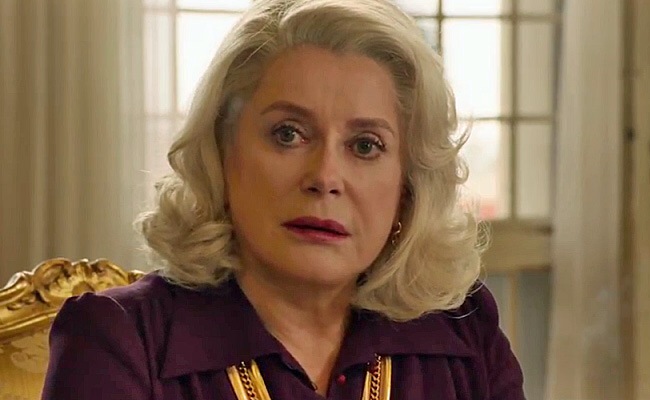
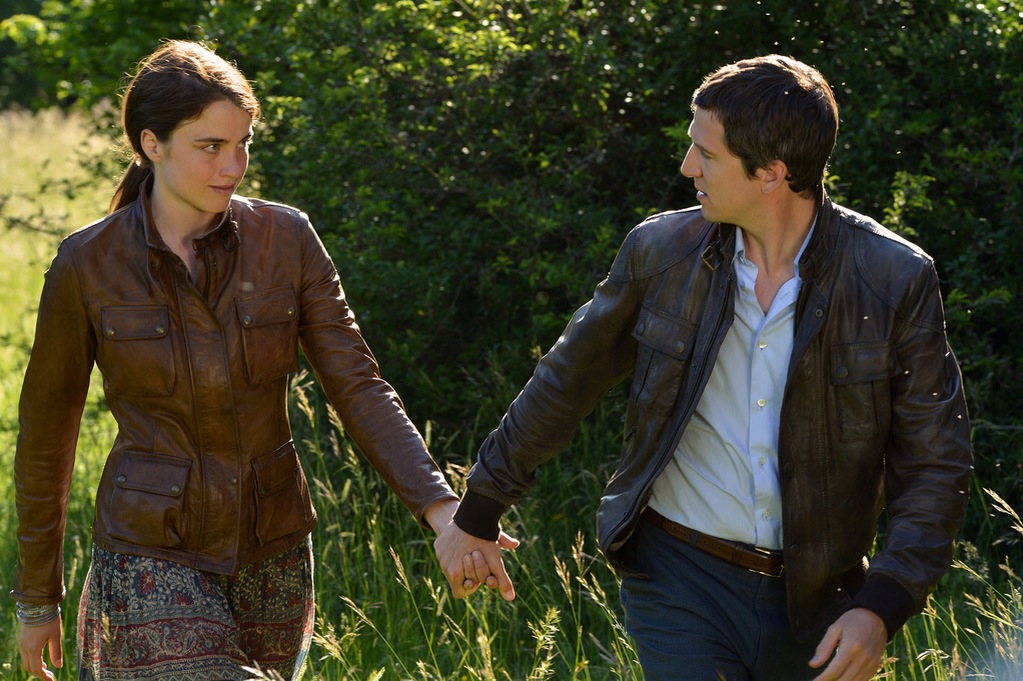
The plot centres around Renée Le Roux (played by Catherine Deneuve), the owner of The Palais, a casino in the French Riviera. We pick the story up in 1970s Nice, as her daughter Agnès (Adèle Haenel) arrives home from a long absence. She is met at the airport by Maurice (Guillaume Canet), a man who is part family lawyer and part personal assistant to Renée. The primary reason for her returning appears to be to give her mother’s opinions more backing on the executive board of the casino, but the situation quickly gets complicated when Agnès begins a largely unrequited infatuation with Maurice. Both Agnès and Maurice slowly reveal that they are driven by their own personal agendas and this makes for an interesting triangle of power, greed, love and suspicion.

Unfortunately, there is a tendency for the plot to focus on things that aren’t central to the plot, whilst critical points are overlooked. A key aspect of the plot is a power struggle between members of an executive board of a high-class casino, on which there are some suspicious mafia members pulling the strings. This is a potentially fruitful area that is largely unexploited.

Equally, the period immediately after Agnès eventually betrays her mother is almost completely skipped over and we are left to work out where exactly we are on the time line. Again, later in the film when Agnès disappears we pick the story up with Maurice a couple of months down the line. This is something that is explained about 40 minutes later in the film, but it doesn’t exactly make it easy to follow.

Indeed, the method of storytelling chosen at this point is a montage of newspaper headlines, which is frankly quite lazy. Adèle Haenel’s performance as Agnès heads towards a mental breakdown isn’t very convincing and I never really believed she was in turmoil, perhaps because too little time was spent on this period.

IMG_9248.JPG

The overall impression is that of a lack of focus and that Andre Téchiné couldn’t decide what the most relevant parts of the story were. Perhaps it was a stylistic choice to underline the fact this mysterious story is still yet to be unravelled and so much is still unknown, but I would sooner have had a story better told.

The final act of the film is set in a courtroom many years down the line. The make-up on Maurice is extraordinary. Unfortunately, they age him by about forty years and Renée only looks about ten years older, despite the fact we are told she has spent the intervening years (22 to be precise) ploughing all her time and money into searching for her daughter. He has allegedly been enjoying his early retirement in Panama. Surely someone on the set realised there was a mismatch here?

I left the cinema feeling like this was a missed opportunity to tell a really interesting story whilst shedding some light on a real-life mystery that is yet to be unravelled. It’s not a disaster, just not quite what it could have been.

L’Homme Que L’On Aimait Trop is released in UK cinemas in 2015.

BFI London Film Festival 2014 Preview

This week sees the start of this year’s BFI London Film Festival and I’ll be heading down to London tomorrow to see as many as I can in three days.

Here’s what I chose:

French Riviera (Andre Téchiné, France, 2014)
Black Coal, Thin Ice / 白日焰火 (Diao Yinan, China, 2014)
The Imitation Game (Morton Tyldum, United Kingdom, 2014)
The Duke of Burgundy (Peter Strickland, United Kingdom, 2014)
’71 (Yann Demange, United Kingdom, 2014)
Giovanni’s Island / ジョバンニの島 (Mizuho Nishikubo, Japan, 2014)

Frustratingly I double-booked myself for the Biophilia Sonic Gala so I will have to miss out, though I’m now extremely popular with my brother’s girlfriend who is seeing it for free!

Expect some reviews over the next week or so of these films. Have a great one if you’re also heading down. Maybe I’ll see you there!!

Big Trouble in Little China (John Carpenter, 1986)

When I first saw Big Trouble in Little China, it would have been as a rental from my local video store The Ritz in Burnley. I’m going to guess it was either 1991 or 1992. At this time, children across the UK had been gripped by Turtle Power and, if you were really lucky, you might also have a home video games console with a copy of Street Fighter II. Martial arts were a hot property, and re-watching this film I can see what the immediate appeal was.

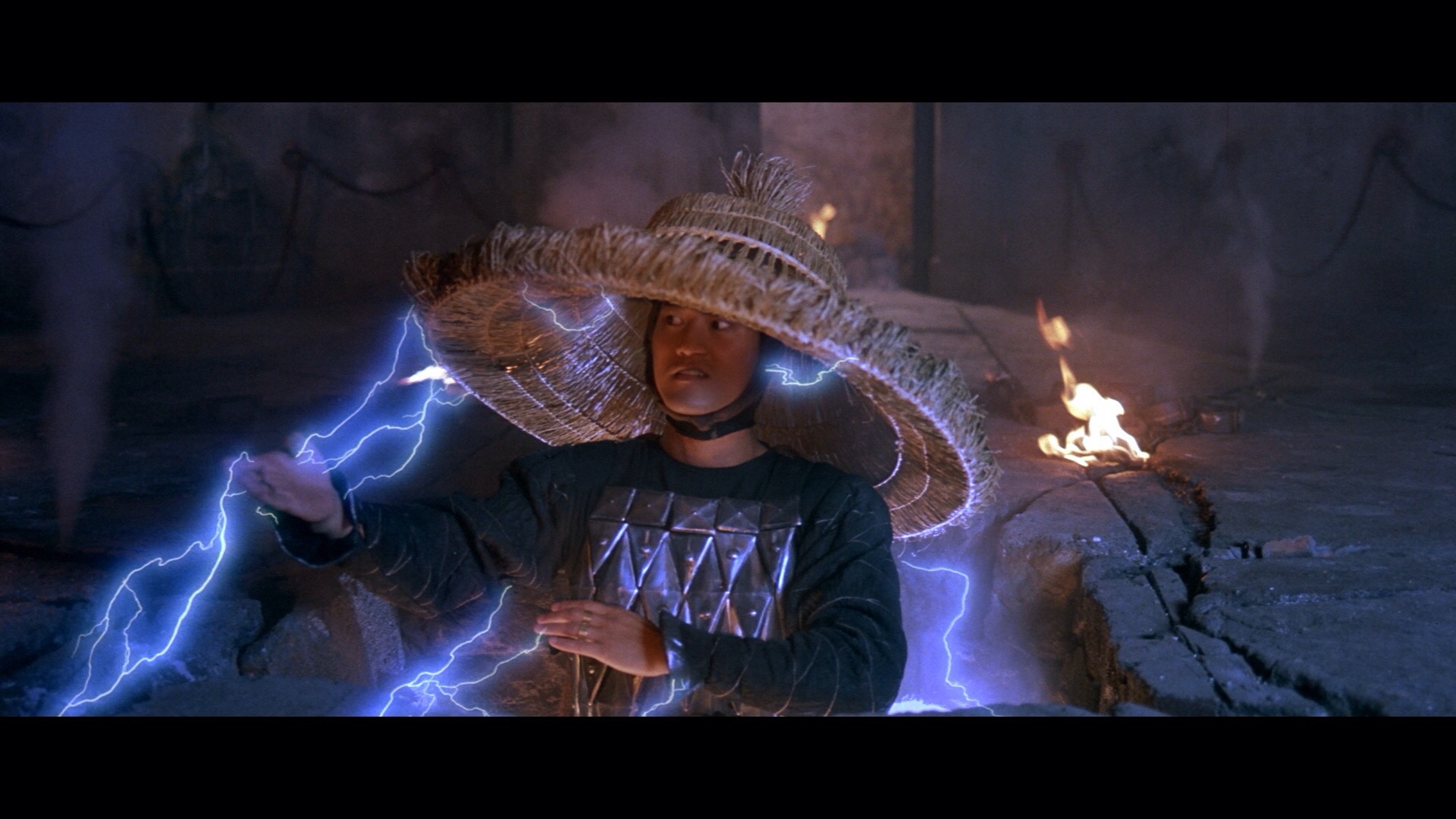
Less than ten minutes in we’re treated to a large-scale Kung Fu gang fight. As the film progresses, the battles become more over-the-top, with characters flying, using impressive magic, attacking our heroes with lightning and telekinesis and then there’s the unforgettably dread-inducing lazer eyes. It’s the live-action version of all your favourite parts of Mortal Kombat and Street Fighter II, the film that neither franchise managed to pull off. It just keeps getting better and better and I can well see how amazing that would have seemed to my 8-year-old self.

IMG_9211.JPG

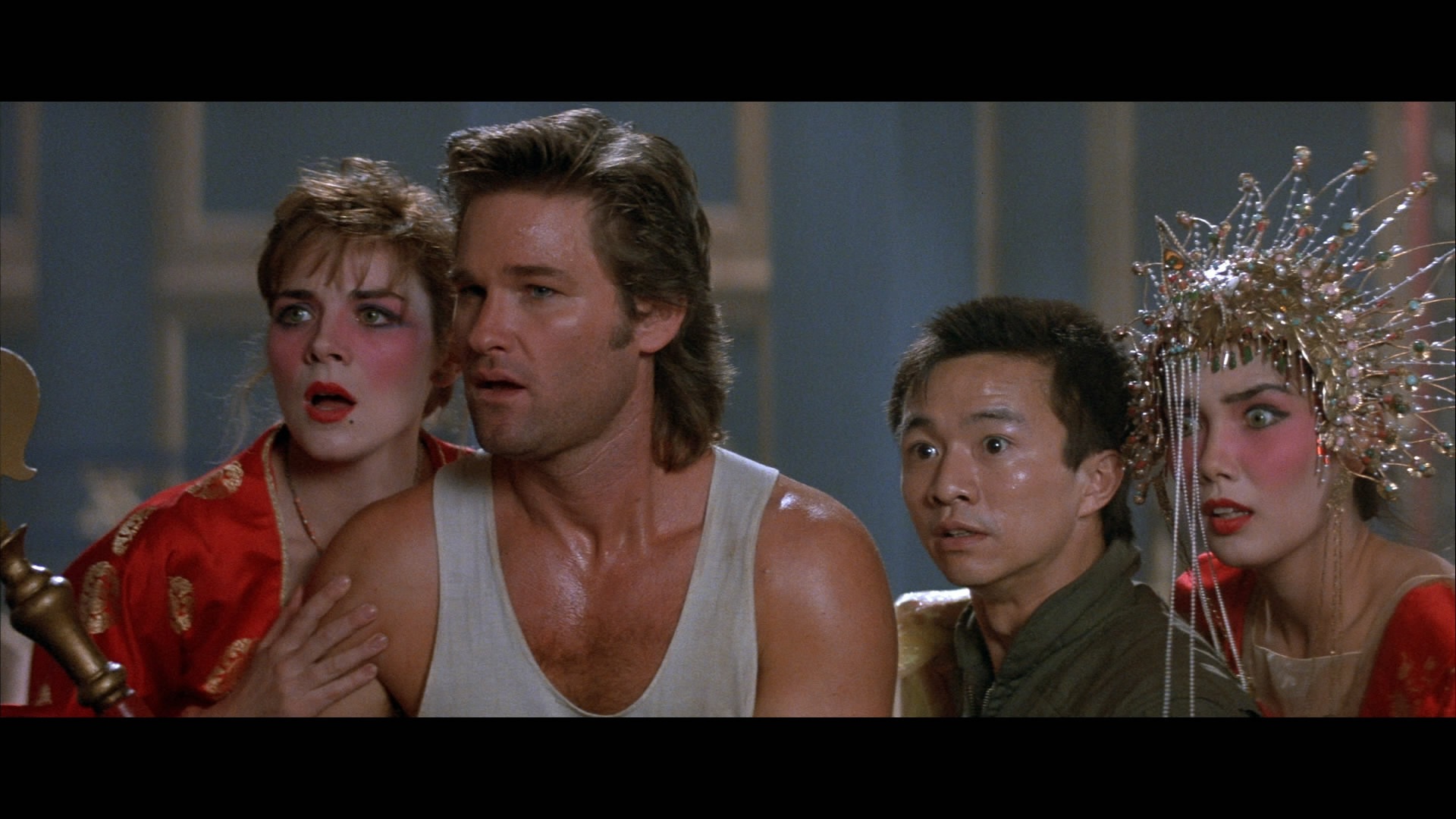
The story itself is a little confused. It kicks off with an office scene where the Chinese bus driver Egg Shen (played by Victor Wong) is sat telling his lawyer that Jack Burton (Kurt Russell) was a “real hero”. In the extras we learn that Carpenter was forced to make this addition as the studio wanted Kurt Russell to be the sole main hero. As the film plays out though it is quite obvious that he’s the sidekick to Wang Chi’s cause (played by Dennis Dun). It is his girlfriend we are following the kidnapping and attempted rescue of, not Burton’s. Indeed Burton’s eventual love interest Gracie Law, played by a young Kim Cattrall, is part of the rescue party. In my opinion it’s a shame that the studio forced this change as it’s quite a bold move to cast a reasonably famous Caucasian actor as a sidekick to a Chinese lead star. As much as I’d love to see it recut, I don’t think it will ever happen.

The visual effects are to be applauded. I’m used to watching B-Movies, especially those made in the 1980s when people were getting creative with very low budgets. I am quite good at using my imagination to compensate for any subsequent substandard segments, especially if the director’s ambition is evident. Yet there was no concessions required here. There are several monster costumes that stand out as both unique and memorable. The electric storm effects and lazer effects both deliver as well. It doesn’t seem to have aged at all, much less so than some of John Carpenter’s efforts from the 1990s (and yes I’m looking directly at 1995’s Village of the Damned there).

And there lies another pleasant surprise. I had no idea this was a John Carpenter film. I watched it too early to remember either the actor playing the lead character or even the lead character’s name itself. I was never going to commit the director’s name to memory. It was great to realise a legend of cinema was on the reigns and it reassured me that it was indeed a high quality film.

IMG_9213.JPG

A word on the package. The version I’m reviewing is the Arrow 2014 Blu-ray re-release. The transfer is unbelievable. The bonus features on the release cover every angle you could possibly want. You’ve got commentary from Russell and Carpenter, trailers, an alternative extended ending. There are extensive interviews with the cast and crew. There’s a short documentary about the stuntmen. Even the menu page looks astounding. I know this is typical of Arrow releases but it’s reassuring that this is the first thing you see and you know a lot of care has gone into covering every aspect of the user experience.

So if you’re needing an 80s nostalgia hit and you’ve worn out your cheap Goonies DVD, try this one instead. I’m sure you won’t be disappointed.

Big Trouble in Little China is out now on a Blu-ray and DVD dual format package from Arrow Video in the UK.

Magic in the Moonlight (Woody Allen, 2014)

Interesting fact – Woody Allen has directed and written a new feature film every year since 1982’s A Midsummer Night’s Sex Comedy. And that break – that one year break – was well deserved. Between 1972 and 1980 he managed eight feature films in a purple patch of creativity that included Manhatten, Bananas, Annie Hall, Sleeper and Love and Death. This industrious approach to churning out films from the Woody Allen cinema factory of course means that some releases are better received than others. Going to see his latest film doesn’t seem to guarantee you’ll see a great film.

In recent years, though, he has had a critical and commercial renaissance, which started with 2008’s Vicky Christina Barcelona, and he has been introduced to a whole generation of cinema-goers. Indeed, watching his recent films they all seem to be of the same universe. The fonts and designs used for the title sequences are always identical (though admittedly he has used the same Windsor font for around forty years now). The music is of a similar style, albeit usually stylised to the area in which the film is set. The locations have tended towards beautiful, luxurious areas of famous European cities with histories rich in romance, barring 2009’s Whatever Works and last year’s hugely successful Blue Jasmine. It’s almost like Woody Allen is using his films to enjoy these beauty hotspots.

So, whilst seeing Woody Allen’s latest might not guarantee you’ll see a great film, it will guarantee you’ll see a quintessentially Allenesque film, one you will immediately recognise as belonging to this most unique of directors.

And so it is with his latest.

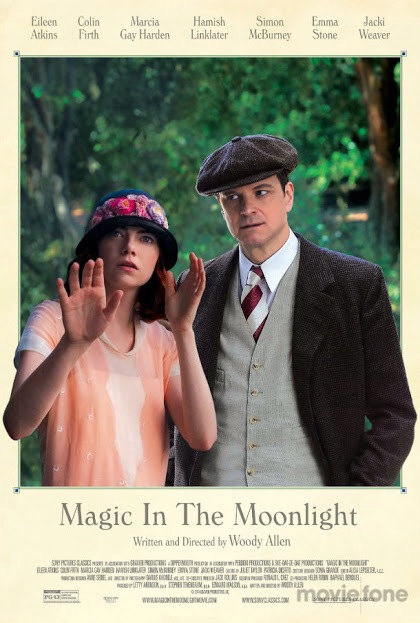
Magic In The Moonlight stars British heavyweight Colin Firth and relative newcomer Emma Stone, both of whom are highly gifted and currently very sought-after actors. The story centres around Firth’s Stanley Crawford, a world-renowned magician whom we join as he journeys to the French Riviera to witness and debunk Stone’s Sophie Baker, a self-professed spiritual medium who Stanley is sure is as fake as the rest of her peers.

IMG_9198.JPG
Firth plays the stubborn Stanley perfectly. The character is a dislikeable person, one we see slowly fall for a girl many years his minor but refusing to admit it, doubly bad as he has a fiancé-in-waiting back home. Even when Sophie starts to show feelings for him, he rebukes her in the most insulting of manners. Firth is an inherently likeable person so that he pulls this is off so well is to be admired. Emma Stone, too, is brilliant in playing a seemingly innocent girl with an extraordinary gift. The play between these two highly talented actors is something to behold. Throw into the mix a fantastic support cast including Eileen Atkins and Simon McBurney, some beautiful scenery and a well-crafted script and you have another excellent entry into the Allen catalogue.

In many ways, I do wonder what the enduring fascination with Allen is. Especially in the UK where, in light of Operation Yewtree and a seemingly never ending chain of accusations and court cases against the stars of yesteryear, any kind of indecent relationship will be dragged through the press. It seems decidedly odd that Woody Allen’s popularity remains completely intact. There doesn’t seem to be any resolution on the horizon for his ongoing feud with Dylan Farrow, his adoptive daughter, who claims she was the victim of sexual abuse as a child. It seems bizarre that so many renowned actors would flock to be involved with his work with this hanging over his legacy. Yes, I understand that we should treat people as innocent until proven guilty, but that is frankly not the society we live in, where often trial by media is the preferred route. I don’t truly believe that these films are so good they overpower his potential loss of reputation if these allegations were true. Perhaps it’s just that his reputation as an excellent director precedes him and people are desperate to work with him as he sits in the twilight of his career. Who could turn down the opportunity to work with a bonafide legend of cinema?

So, is Magic in the Moonlight as good as Midnight in Paris or Blue Jasmine? Probably not. But it is a uniquely Allenesque picture and one that certainly won’t go down in the future as a flop; yet another water tight story told brilliant by one of the greatest directors in the history of cinema.

Magic in the Moonlight is on release at selected cinemas in the UK now.

IMG_9200.JPG