Film review – Weiner (Josh Kriegman and Elyse Steinberg, 2016)

The worst thing about watching the political equivalent of a car crash is that politicians never seem to learn from their predecessors’ mistakes. Wars keep happening, smear campaigns take precedent over actual policies in the run up to elections, mayoral campaigners Tweet pictures of their erect penises to strangers.

Wait, what?!

Okay, that last one is a new one on the political landscape. Anthony Weiner is a great sport though. He lived up to his name whilst figuratively – though thankfully not literally – taking one for the team by playing out the lesson twice, first in 2011 and then again in 2013. That the second one happened during under the prying eyes of documentary filmmaking duo Kriegman and Steinberg, at the time trying to capture the rebuilding of a shattered political empire, makes it all the more fascinating.

The film left me a little split on my opinion of him. On the one hand, he is clearly a driven man who is good at his job, galvanising public opinion and canvassing support for what he truly believes is right for his city.

What I can’t deny though, and I think we can all agree on this, is that the mayor of New York shouldn’t have an alter ego on the dark web called Carlos Danger tweeting pictures of his dick to women behind his wife’s back.

His wife, Huma Abedin, leaves the film with her head left relatively high. She is a woman of unbelievable strength in the face of a continuously catastrophic husband who laughs in the face of public opinion, even though his livelihood depends on being popular with his public. The only question is why she sticks around when he is clearly a huge damage to her political career (she has been an aide to Hilary Clinton throughout the two scandals and leading into the presidential election later this year).

As a documentary, Weiner is about as good as it gets. It isn’t putting the pieces together after an event, instead getting lucky and being able to present a truly spectacular political scandal from the inside of the bubble. The characters are their interactions are as captivating as any fictional story.

It might not be a comfortable watch, but there’s something about Anthony Weiner that’s hard to not get addicted to. He’s an almost great political swamped by his own ability to ruin his own chances of achieving anything other than the total humiliation of himself and everyone associated with him.

Well worth 90 minutes of your time.

Film review – Captain Fantastic (Matt Ross, 2016)

Captain Fantastic is not the latest in the never-ending chain of Marbel superhero films. Nor is it a profile of former Liverpool captain Steven Gerrard, who is fantastic for about half of Liverpool and few others.

No, despite the title, Captain Fantastic is the directorial debut full-length feature from Matt Ross, better known as Gavin Belson from Silicon Valley. Beyond the superficial veneer of a twee, heartwarming, quirky indie flick, there is something a little more substantial and special at work here.

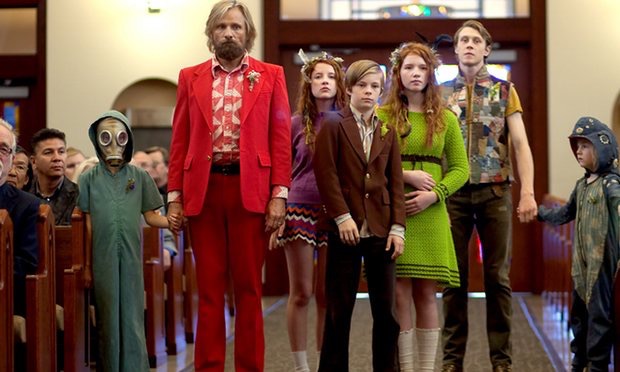
Viggo Mortensen takes the lead role as Ben Cash, a father raising six children as an only parent after his wife is hospitalised with bipolar disease. Nurturing them off-grid in a sort of wilderness commune, he is forced to bring them back into society when he receives the news that his wife has committed suicide. The journey to New Mexico for the funeral forces him to re-evaluate his choices in bring up his children, exposing them all to a world they have shunned.

Many of the greatest films to grace our screens have us questioning are inner-most philosophies. Whilst this isn’t likely to be considered an all time great, it does push the right buttons in its ability to be thought-provoking. The six children are for the most part absolutely happy, well educated, physically fit individuals that seem to have had no ill-effects from the unique brand of homeschooling afforded by their father Ben. The portrayal from them is so convincing that I was left seething when their families began to interfere and bring them back into “normality”. 

One thing that was very evident was the chemistry between the six children and Mortensen. George MacKay takes centre stage as eldest child Bo on the brink of leaving for college but struggling to find the best way to tell a father to whom he is completely devoted. Samantha Isler and Annalise Basso are great as the inseperable pair Kielyr and Vespyr. Charlie Shotwell,  Nicholas Hamilton and Shree Crooks all have extremely bright futures in the industry, the latter of the three having a charismatic charm that brought an element of hilarity to everything she said.

It is this sense of comradery and unbreakable dedication that is essential to the success of the film and without it we’d be left with nothing. Thankfully it’s here in abundance.

The music from Alex Somers (Sigor Ros producer) plays into the mood perfectly, reflecting the subtle charm of the visuals on screen. It’s non-offensive but beautifully balanced.

A must-see, feel-great film.

Film review – Wiener-Dog (Todd Solondz, 2016)

Wiener-Dog is a 2016 portmanteau black comedy written and directed by Todd Solondz. The phrase “black comedy” in this sense is somewhat skewed, for whilst the comedy is sporadic, the blackness of the story is fairly consistent. There are four separate tales told, each with the tenuous common theme of the titular wiener-dog.

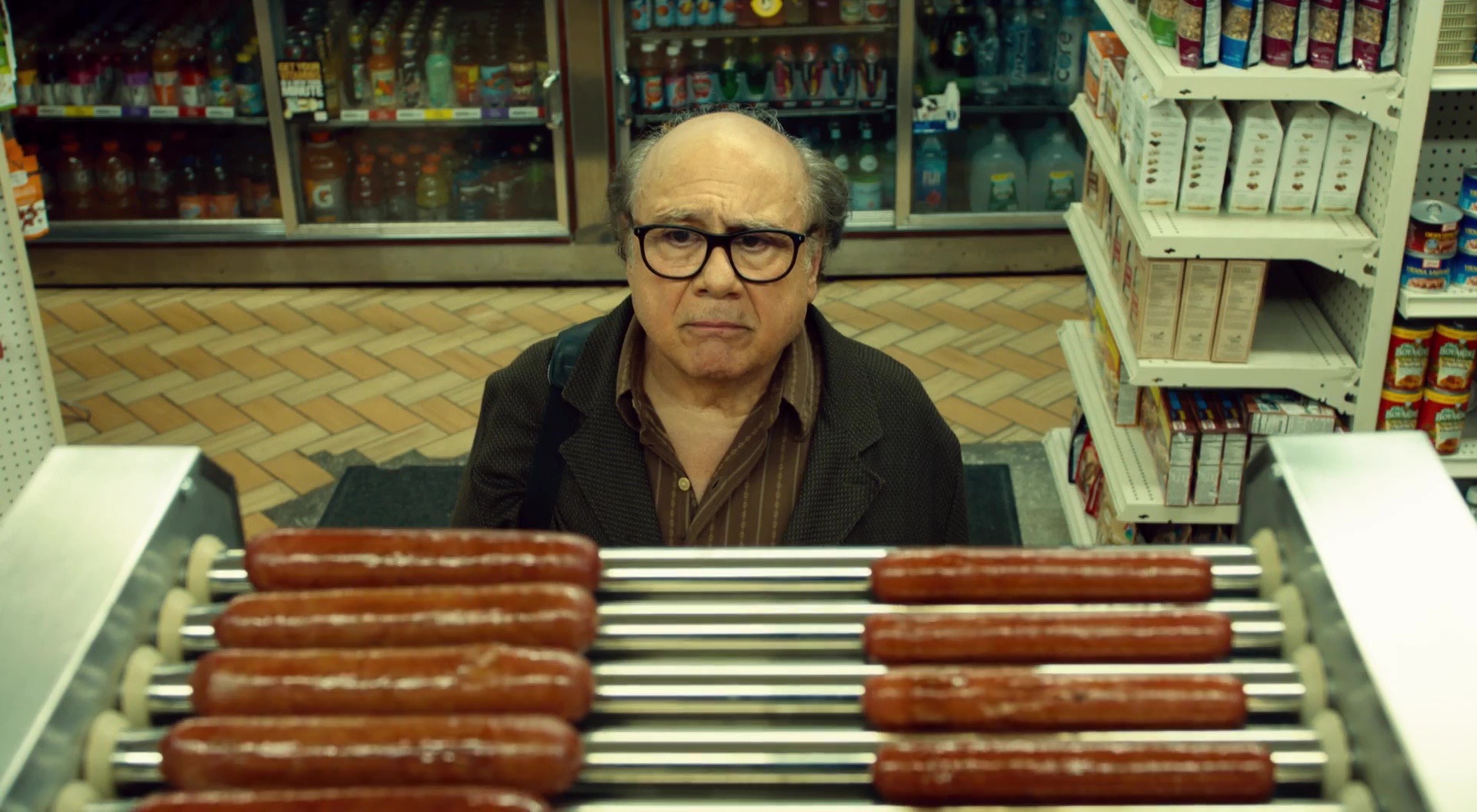
Of the four tales, only Danny DeVito’s Professor Schmerz ignites the script and leaves any sense of desire to expand on his story. This doesn’t mean the segment is too short – its length is spot on – it’s just that the character was interesting enough to warrant a follow-up story. Solondz, a film school lecturer himself, clearly drew on real life experiences to portray a wholly negative view of that world. There are several meaty laughs along the way (the clueless interviewee that failed to name a single film despite his enthusiasm sticks out), and the pay-off on the punchline is well worth investing in this captivating tale.


Sadly, the same cannot be said of the remaining three segments. Whilst there are moments in each that redeem them – a heartwarming brotherly chat, a wonderful moment of freedom with a pillow fight, a truly shocking hit and run accident – they are few and far between. The pairing of the painfully irritating Greta Gerwig and the uninspiring Kieran Culkin was inevitably enough to derail any movie just as it needed to get going. 

It’s almost as if Solondz was deliberately trying to antagonise his audience, setting their expectations only to pull the rug out from underneath them. Even the layout of the stories does this, providing a minimal thread from segment one to segment two, only to punctuate the second with a bizarre intermission and start the third with an entirely unrelated tale.

Solondz is considered by many as one of the great modern social commentary filmmakers. On the evidence here, that’s not the case. Better examples of his work are out there.

Film review – Kollektivet / The Commune (Thomas Vinterberg, 2016)

Danish director Thomas Vinterberg returns with his latest film Kollektivet, known as ‘The Commune’ in English-speaking countries. Set in 1970s Copenhagen, it revolves around architecture professor Erik (Ulrich Thomsen) and his wife Anna (Trine Dyrholm), who have inherited Erik’s gigantic childhood family home. The building has prohibitively high living costs and the pair fear it would feel empty, so Anna suggests inviting some friends and acquaintances to share the space (and costs) with them. And so they end up with a total of ten people in the house, turning it into the titular commune.

Inevitably, the unusual way of living takes its toll on all those involved, be it their shy daughter Freja (Martha Hansen) sneaking out to see her new boyfriend, emotionally unstable Allon (Fares Fares), or Ditte (Anne Gry Henningsen) and Steffen (Magnus Millang) who have a son with an increasingly threatening heart condition. Every time these characters hit a low, the other people are there to ensure spirits don’t stay too low for too long.

Where the story avoids feeling slightly convenient, it is instead overly contrived. The setup of the commune concept is abrupt and simply has to be accepted by the viewers to avoid a complete disappointment. It never felt credible to me that Erik would have not only accepted the strangers into his home but also sign the ownership away to them. This could have been resolved by indicating that they were financially sound and using another means to justify their actions, but money is given as the primary purpose of bringing more people in.

Of the ten lead characters, at least five seem to be shallow to the point of superfluity. It felt to me that having ten people in close proximity would have been the perfect platform for friction that never truly surfaced. Perhaps Vinterberg, who based the story on his real-life experiences, was too rooted in sticking to reality to throw in something to spice the plot up. Or perhaps two hours isn’t enough time to successfully explore so many characters.

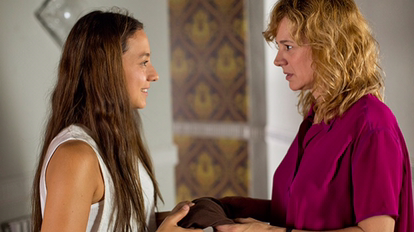
The real engine of the story is Anna, portrayed brilliantly by Dyrholm. When Erik starts having an affair with one of his students, we are taken on an emotional journey with Anna that serves as the driving force of the final third of the film. Her only support network is through the people in the commune, but being there means she has to live alongside her husband’s new lover. It is an uneasy watch, at times heartbreaking, as Dyrholm is allowed to flex her acting muscles with a powerhouse of a performance. The heartbreaking moment when her daughter takes matters into her own hands is as powerful as anything I’ve seen at the cinema this year.

It is a film fundamentally about family and community spirit and how effective that can be despite an unconventional setup. Vinterberg isn’t afraid of allowing the story to take bold turns, even if it doesn’t setup the happy ending many cinema-goers would hope for.

Matching up a strong storyline with a handful of top-level performances is always a recipe for success. A flawed but thoroughly gratifying film.