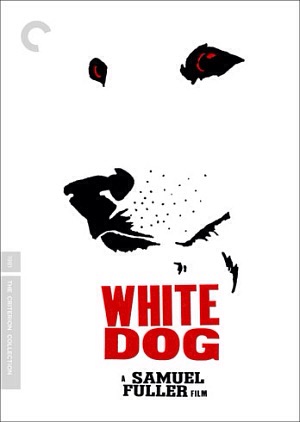
White Dog (Samuel Fuller, 1982)

I have to say that White Dog was the first Masters of Cinema release I was genuinely disappointed with. The series, which is usually so full of care, character and attention to detail, falls short on a number of levels this time out.

Firstly, the film itself is very short, at just 90 minutes. The transfer is great, but I’m sure there was space on the disc for at least one other bonus feature. Unfortunately we get nothing – no trailer, no documentaries, no language options or subtitle options, sound only in 2.0 Digital Dolby, no discussion on why the film was banned, how the ban was lifted, how the restoration went. Not that I want to specifically compare Masters of Cinema to Criterion (though they often are), but they did get interviews with producer Jon Davison, co-writer Curtis Hanson, director Samuel Fuller’s widow Christa Lang-Fuller and dog trainer Karl Lewis Miller. The only bonus is the admittedly extensive booklet, which actually has similar contents to the Criterion release. Even the packaging on the MoC release looks lazy, and hardly goes any way to sell the film to anyone not familiar with either the film or the Blu-ray series.

2015/02/img_0367.png

The film itself is actually really intriguing. The story opens with a car accident where a struggling young actress (Kristy McNichol) runs over a stray white Alsatian. She agrees to pay the veterinary bills even though she can scarcely afford to and when nobody comes forward to claim the dog she adopts it for herself. The dog saves her from a vicious attack from an intruder in her home, which tightens the bond between the girl and her new-found companion, but it soon turns out that the dog has been trained to attack black people – a dog trained by white racists. Not wanting to give her pet up, she seeks out expert animal trainer Keys (Paul Winfield), who becomes obsessed with retraining the dog’s behaviour in what will be one of the hardest projects he will ever take on.

McNichol and Winfield give assured performances in the lead roles and the dog is given real character by some clever angles and a slow reveal of his true colours. The climax to the film is exciting, though a flip in personality for McNichol’s lead character shortly before the conclusion of the story left me with mixed emotions on how I wanted it to pan out. The biggest highlight for me was the excellent score by Ennio Morricone. It’s probably not worth a purchase just for this.

White Dog would doubtless been forgotten due to lack of interest but for the fact it was banned for so long. Another non-victory for the censors then, but no great reward for the patient film lovers that have waited three decades to see the film.

White Dog is available on Masters of Cinema dual-format Blu-ray and DVD now.

The Gang’s All Here (Busby Berkeley, 1943)

After listening to the excellent Masters of Cinema Cast discussion on Busby Berkeley’s 1943 musical extravaganza The Gang’s All Here, I knew I had to watch it for myself. I didn’t know what to expect and having watched it now I still don’t really know what I made of it.

I was reminded of a few modern day film-watching woes as the film played out. You know when you’re watching a 2D film at home and for some reason they have these annoying and hard to follow fast-paced sweeping shots following someone through a surprisingly tricky pathway full of things jumping towards you, and you sit there unimpressed because you aren’t at an IMAX screening? There was a great one in the Jim Carrey-starring animation A Christmas Carol. Out of context it just doesn’t wow, because the sole purpose of it is to show off a piece of technology or visual effect.

Another example is the 30-ish minutes of wasted special-effects shots in Star Trek: The Motion Picture. Loads to see, if your thing is watching outdated effects showing a spaceship slowly crawling through space. In the distance. But watched in 2015 you can’t help but drown in the lethargy of it all.

So we have The Gang’s All Here. A work of Technicolor wonder. A flimsy plot serving as a platform for countless big hit parade smashes in state-of-the-art colour film. A picture oozing razzmatazz. A picture that just doesn’t wow, simply because the visuals it spends so long showing off are just something we expect of a modern film.

That’s not to say The Gang’s All Here is the first colour film and a massive surprise to audiences. Indeed, they had been treated to both The Wizard of Oz and Gone With The Wind in 1939, some four years eariler, both shot in Technicolor. This was, however, Berkeley’s first feature to be filmed entirely in Technicolor, which would have been a great honour at the time due to the high production costs associated with the technique. It wasn’t an opportunity he was going to waste, and he certainly made enthusiastic use of his chance to use colour for the first time.

Really, the plot is a duplicate of far too many films of the era: woman and soldier fall in love in a whirlwind romance on the eve of his departure for the war (in this case, he’s off to Japan). It really isn’t important. What the 1943 American audiences wanted was escapism – two hours of over-the-top dance numbers, busy routines, familiar songs and huge stars. And that’s what they got.

There are a few numbers where Berkeley really goes to town. The big opening number “You Discovered You’re In New York” – sung by Brazilian Carmen Miranda – is a sharp comment about wartime shortages. Her other big number “The Lady In The Tutti Fruity Hat” doesn’t hide the fact that it’s full of innuendo (7ft bananas, anyone?) and is probably the most memorable number in the whole film.

There are also moments of total surrealism, none more so than the finale “The Polka-Dot Polka”, which is Berkeley indulging in his big budget and experimenting with the Technicolor medium. It’s kaleidoscopic and hilarious and deserves to be seen.

It’s not at all a perfect musical, and it hasn’t retained its popularity over the years, for one reason or another. There probably won’t be a stage adaptation, owing to the fact the storyline isn’t strong enough and the wow factor on the big number comes from visual effects that couldn’t be recreated on stage. However, it deserves to be seen in full HD, with attention given to the brightly saturated colours of the original print. Inevitably, Eureka and Masters of Cinema have delivered on this release yet again.

The Masters of Cinema release of The Gang’s All Here is available to buy now. Strangely, you can watch the whole film via YouTube below, though the low picture and sound quality just doesn’t do it justice. You can get a flavour of it though.

Uwasa No Onna / 噂の女 (Kenji Mizoguchi, 1954)

Released as part of the Kenji Mizoguchi Masters of Cinema boxset “Late Mizoguchi”, Uwasa No Onna is an understated film that nonetheless packs a sizeable punch.

The story starts with a girl – Yukiko – returning home from her higher education at a music school in Tokyo, where she is studying piano. She wishes to end her education as she is suffering from a broken heart, and has attempted suicide by overdosing on sleeping pills. Her mother owns a popular geisha house in a small town and so fairly early on in the film an interesting dynamic begins as she is in a position of being the outcast by the other young girls of a similar age, many of whom believe they are effectively working to pay for an education for her that they could only dream of, and that it is selfish of her to drop out in such a fickle manner.

Mizoguchi’s casting of Kinuyo Tanaka in the lead role of Yukiko is no surprise. She was a favourite of his for much of his career, though she later went on to be a director in her own right, which in turn caused an argument that severed her friendship with Mizoguchi. When we first see her she is wearing a contemporary black dress, which gives her an immediately striking appearance, looking somewhat like Audrey Hepburn. This has two effects: in all black she is shown to be in a depressed frame of mind, and she also sets herself apart from everyone else in the film as being from a different culture, in this case contemporary Europe.

2015/01/img_0168.jpg

Mizoguchi has a fascination with brothels that runs throughout many of his films (perhaps most famously in the 1954 classic Akasen Chitai / 赤線地帯). These stories always have a hint of the autobiographical about them – his older sister Suzu was sold off for prostitution soon after 1915 when his mother died, which was a shameful experience for Mizoguchi. Frustratingly for him, the money she earned helped fund his higher education; this background is clearly reflected in Uwasa No Onna.

Elsewhere on the disc, the Tony Rayns bonus discussion about the film is really interesting, though it is the only bonus feature for this particular film (the film itself is a bonus feature for the more popular Chikamatsu Monogatari / 近松物語). In it he discusses Mizoguchi’s use of theatre in his films, in this case drawing a parallel between stage (watching Kyo Byen at the Noh Theatre) and reality. It’s quite an interesting scene in the film as the mother grows in embarrassment. I personally found it – on a basic level – a wonderful way to view what theatre was like in Japan when the film was set. I’ve never known anyone else capture it in such great detail.

It was a joy to hear Rayns, who is well versed in this director’s history, talk so candidly about his other work and background. Yet another reason to endorse Masters of Cinema (by the way, the transfer is excellent… as usual)!

I notice this boxset is now on sale for a ridiculous amount of money (£156 on Amazon). Frankly, it’s not worth the purchase just for this film, nor for the other three exclusives (I haven’t got round to watching them all yet). That’s because no Blu-Ray boxset is worth that amount of money. I’m sure Eureka will see sense soon and re-release the two exclusive discs for those that missed out the first time. Of course, anyone who has already forked out £156 will be fairly disappointed but they’ll have to live with it.

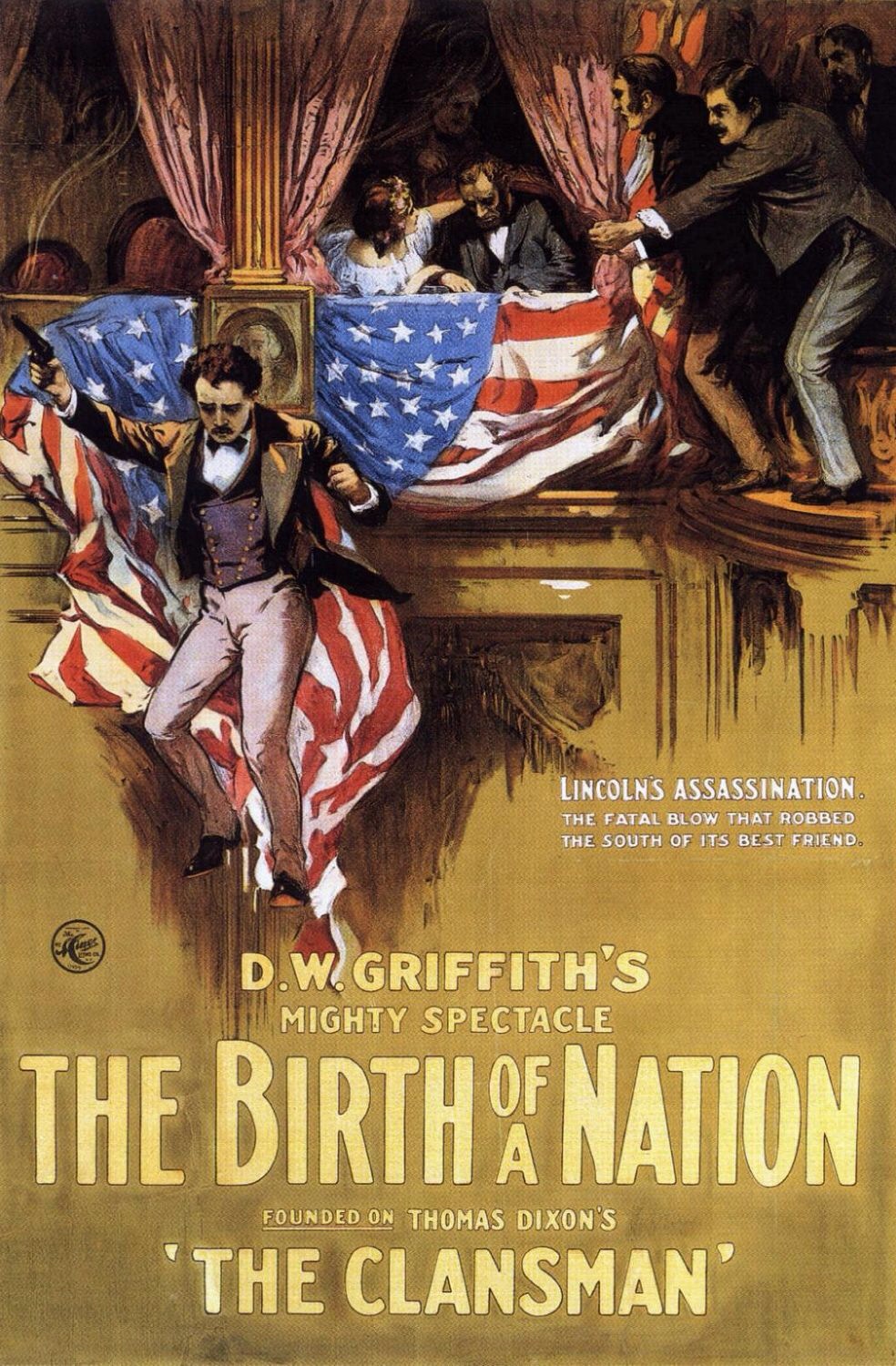
The Birth of a Nation (D. W. Griffith, 1915)

Why would I watch a film like The Birth of a Nation? It clocks in at 169 minutes long, and as a silent film that is now 100 years old I’d expect the narrative structure and storytelling to be a far cry from what I’m used to today. The storylines cover a period of history that I don’t associate with, and it is the history of a country that I have experienced first-hand only through Orlando theme parks, which despite their best intentions probably aren’t a fair representation of the rest of the USA.

There is a certain detachment from it that means it lacks the stigma I’m sure it holds for Americans. Perhaps it’s the challenge of being able to say I’ve watched it, or to see for myself what all the critics have discussed many times over. Let’s not forget that it holds a 100% fresh rating on Rotten Tomatoes, was the highest grossing film of all time until Gone With The Wind some 25 years later, and it is regarded as one of the most culturally significant films of all time. These facts alone should make it essential viewing for a fan of the history of cinema.

The film starts small and builds to encompass some of the biggest political changes the world has ever seen. Initially, we focus on two families: the Stonemans and the Camerons. The Stonemans are a pro-Union family from Northern US, and they set off to visit the Camerons, a South Carolina-based pro-Confederacy family. Romance and friendship fly between some of the younger members, but this is curtailed when the young men are forced to join their respective armies for the Civil War. Their stories and relationships are intertwined throughout the film, all with the backdrop of some great war battle scenes, some (at the time) shocking torture scenes, the assassination of Abraham Lincoln, the founding of the Ku Klux Klan and the entry into Reconstruction-era USA. It’s complex, it’s ambitious and on a purely story-driven level it really works. Films of this grand scale had never been attempted before and it’s not difficult to imagine the wow factor experienced by the audiences when they originally saw it.

IMG_9405.JPG

That said, it’s extremely difficult to cover everything necessary to put this film into context. I’m sure whole university courses have been taught on the subject. It is one that traverses cinema, film history and political history and it would take a braver man than I to tackle everything in a short review. The elements of the film that are now deemed to be racist are interesting only from a historical point of view. Indeed, it is alarming that they were ever considered to be not racist. This includes, but isn’t limited to: the romanticisation of the founding of the KKK; African Americans getting elected into parliament only to be shown drinking during parliamentary sessions once in power; the portrayal of white men as the victims for large periods of the second half of the film; the way that the mere suggestion of interracial marriage is shown as abhorrent to white people; and most offensively, the Ku Klux Klan being shown as simply upholding the good values of the land and being the savours of an honest and righteous USA.

One African American is portrayed as a sexual deviant in one scene depicting the attempted rape of a central white character, who opts for suicide in one of the most suspenseful and heartbreaking scenes of the film. It’s segments such as this that really underline both the achievements and the failings of the film, with some pioneering techniques used to create a real edge-of-the-seat experience juxtaposed by subject matter that should never have seen the light of day.

It’s an eye-opener for the political status of the USA in 1915 that this is the case. The fact is that there are quite blatantly racist depictions of African Americans, particularly in the second half, and on every level these are jarring for the modern viewer. Couple this with the length of the film and the fact it’s a silent film and you have something that is quite inaccessible for the casual viewer.

IMG_9406.JPG

Certainly Griffith, directing what would come to be his defining picture, felt he had to add a pre-title screen statement clarifying and justifying the existence of the film (this was added to a re-release of the film after its exceptionally successful initial run). Later, riddled with guilt about the success of the film and – more importantly – who it was finding success with, he released Intolerance in 1916, which went a long way to protect his reputation and show other sides of the argument by heavily criticising racism and prejudice. Later he released the first cinematic portrayal of interracial romance (Broken Blossom, 1918). Also included on this disc (the Masters of Cinema PAL release) is a seven minute interview that introduced the film from 1930 onwards, where he attempted to justify the release further. It must have been a tough situation to be in for Griffith, being lauded for a film that you no longer wished to be associated with.

I’m glad I watched it, and I would highly recommend it to anyone interested in the history of film. For a casual viewer who wants to be entertained, I see nothing for you here.

The Birth of a Nation is out now on Masters of Cinema Blu-ray and DVD dual-format release, whilst Griffith’s later film Intolerance will be released on Blu-ray, also via Masters of Cinema, on 8th December 2014.

Gate of Hell / 地獄門 (Teinosuke Kinugasa, 1953)

Teinosuke Kinugasa’s film Gate of Hell was a global smash upon its original release, winning the Palme d’Or at the Cannes Film Festival in 1954, plus a couple of Academy Awards. Now re-released sixty years on by Masters of Cinema and Criterion, cinemaphiles are able to enjoy the film all over again, allowing a whole new generation to appreciate a masterful piece of cinema.

Set in 1159 Japan, the plot centres around Morito Endo (played by Kazuo Hasegawa), who is involved with evacuating Sanjō Palace in Kyoto during a revolt. A woman, Lady Kesa (Machiko Kyō) volunteers as decoy for the shogun’s sister, and he is amongst those asked to transport her out of the palace and lure the attackers away from the real princess. The plan is successful, and as a reward for his heroism he is offered a gift of his choosing. Unfortunately, he requests Kesa’s hand in marriage, only to find out that she is already wed. For a proud samurai, this is a disastrous embarrassment, and the film from then on deals with the emotional effect this has on Morito, Kesa and Kesa’s husband Wataru Watanabe (played by Isao Yamagata).

IMG_9354-0.JPG

The film looks and sounds brilliant from the start, with the recently developed Eastmancolor used to bring 12th Century Japan to life. It is an alternative view of the shogun era of Japan, which so often at the time had been detailed in popular films by the likes of Akira Kurosawa and Yasujirō Ozu, but in black and white. I can only imagine what it must have been like to see this film back in 1954 and be blown away by the loud visuals and intricate costumes.

That said, a film wouldn’t endure for sixty years without a fantastic story and excellent acting, and this film has those in abundance. It’s paced perfectly and at 90 minutes there isn’t much in the way of filler. The actors are on top form too, harking back to the recently-diminished silent film era with long periods of silence counteracted with extreme close ups as emotions engulf their faces. It is a clever technique and one that would have helped set it apart when it reached Western audiences.

IMG_9353-0.JPG

Sourced from the 1954 New York Times review of Gate Of Hell, the comments from Jun Tsuchiya, Consul General of Japan, add context to the success of the film and the impact it had on the wider reputation of Japan globally. Speaking at the premiere, he said “The successful entree of Japanese films in the world market, may well have not only cultural, but also, I venture to suggest, economic consequences for both our countries. To me, it is entirely conceivable that the export of superior films will greatly help my country in its present unremitting struggle to become self-sufficient, to rely on trade, not aid.”

It is interesting to think of those comments in terms of the global view of Japan today. Buoyed by the hyper-acceleration of popularity of new technology and most global brands from Japan being technology-based (Sony and Nintendo spring to mind), it is ironic that they pulled themselves out of financial struggles to launch themselves forwards by looking so far into their past, especially when in this case the film’s initial popularity seems to be in part down to the use of cutting-edge film colouring technology.

Gate of Hell is out now on Masters of Cinema and Criterion Blu-ray and DVD.

Too Late Blues (John Cassavetes, 1961)

I’m growing tired of the Masters of Cinema releases. Time after time they release excellent transfers of classic forgotten cinema, more often than not films I’ve never heard of before, put a lovely package together and release it for about the same price as going to the cinema. It’s sickening. Unfair almost.

Elaborating on my first point – my wife and wallet are growing sick of the Masters of Cinema releases. I personally can’t get enough of them.

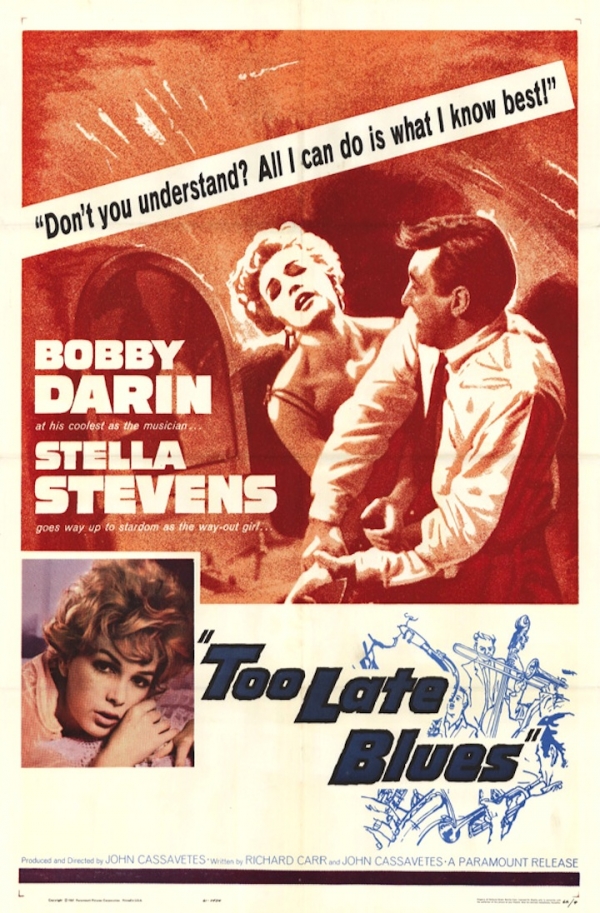
Too Late Blues has largely been considered a failure, not least by director John Cassavetes. His major studio debut, released following the hugely successful Shadows in 1959, the film is infamous for its compromises, which cover everything from the music to the script and even the main cast. Watching it now it is hard to see what the controversy is about.

I was particularly taken aback by Bobby Darin’s performance. I’m of a generation that knows him almost exclusively for his huge signature tune “Beyond The Sea”, and less so for “Splish Splash”, which is now unfortunately associated with the “falling in the garden pool” segments on You’ve Been Framed.

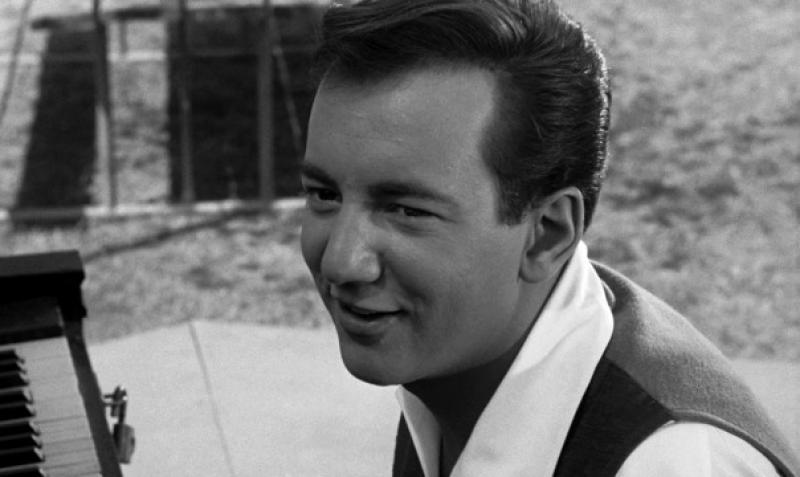
Bobby Darin finally takes time to play his piano between baths

Bobby Darin as Ghost in Too Late Blues

Playing Ghost, the leader of a struggling jazz band, Darin toys with the frailty of a damaged ego whilst putting on a front for his love interest and fellow aspiring musician Jess (played by Stella Stevens). He plays it with charm and integrity and it’s a fantastic performance in one of his early film roles.

Cassavetes ensures his stamp is made on the film by carefully throwing in one-liners that subtly defend his fear he’d be viewed as selling out by fans of his debut. At one point, a line is delivered that points to the “mixin’ up of the races” as one of the sins of jazz musicians. The fact this is delivered by an idiotic ruffian is a clear indicator that Cassavetes did not agree with the statement and was using the line as a critique of the copious Hollywood films about the thriving mixture of inspirations and culture that was the 1950s jazz scene, but which all centred on exclusively white musicians (Young Man With A Horn and Pete Kelly’s Blues are good examples of this). Indeed, the very subject matter of Too Late Blues is a man struggling with artistic integrity and what he sees as selling out. It’s an intelligent compromise and the fact it made it past the studios sort of proves his point.

Stealing the show above everyone else though is Everett Chambers, who plays the artists’ agent Benny Flowers. Reminiscent of Joe Pesci at his most evil, he perfectly plays a man riddled with jealousy. His efforts to sabotage his acts’ careers in order to keep them in his control are trumped only by the efforts he puts into ensure Ghost and Jess never become a couple, so desperate he is to end up with the girl himself. This reaches breaking point in a highly memorable bar-room brawl, which he orchestrates to perfection whilst seemingly never getting involved. It is a shame that this would prove to be one of the few roles that Chambers completed before transferring to a very successful career in television production, as he shows every pointer of being an excellent actor.

The promise shown in the opening act of the film are never really delivered on, and this is probably because of pressures from the studio upon seeing the progress as it was made. That said. it is a worthy addition to the continually excellent Masters of Cinema collection and well worth the monetary and emotional investment.

Too Late Blues is out now in the UK on Blu-ray and DVD dual format release, courtesy of the Masters of Cinema collection.

Ruggles of Red Gap (Leo McCarey, 1935)

Having recently watched McCarey’s excellent Make Way For Tomorrow, I thought I’d dig below the surface and watch some of his other films. I came into Ruggles of Red Gap knowing nothing about Charles Laughton and the other members of the cast, and very little about McCarey. I have to say that on first impression, I am very disappointed.

Laughton portrays Ruggles, an English valet who is working in Paris but is transferred to America to work for a brash American (confusingly portrayed by Charlie Ruggles). Once in Washington, our valet develops as a character and grows in confidence, going from obedient servant to full independence, eventually deciding to open his own Anglo-American restaurant.

Laughton biographer Simon Callow, in a key bonus feature on the UK Masters of Cinema release, discusses in great detail his opinion on the performance and his disappointment having watched it. In context, he was comparing him to his great performances as the Hunchback of Notre Damme and as Henry VIII, to name a couple. I have not seen these, but I wholeheartedly agree with everything he says. I’d go further – as an Englishman, the whole thing is utterly insulting.

The Ruggles that is portrayed is a bumbling Brit that would leave any aristocratic servant-employer worried for their own safety. Indeed, I’d probably ask for a different waiter if I was served by Ruggles in a restaurant. The portrayal leaves the viewer with an air of discomfort. There’s something going on between his flickering eyes and his awkward body language that made me want to look away. In hindsight, I think it was Laughton’s attempt at comedy. Perhaps it was “of the time”, but it really hasn’t aged well.

That he can’t find any route out of servitude until he goes to America, which is patriotically portrayed here – unashamedly – as the land of the free, is undermining of Britain. With very little knowledge of Laughton as a person, I’m willing to guess that he must have been very anti-British to accept such a role.

The film was hugely popular amongst American viewers and very much not popular in Britain, and for the reasons just mentioned I can understand why. Having listened to Callow speak so fondly of Laughton and McCarey, I’m really keen to seek out something that justifies their enduring popularity. I’ll gladly welcome any suggestions!

Ruggles of Red Cap is available now in the UK on Blu-ray and DVD.

Oscars 2014 – What missed out

20140302-181314.jpg

With the Oscars taking place later tonight, I look at the films that have been overlooked by the Academy.

Monsters University
20140302-181458.jpg
Okay, it wasn’t the best picture Pixar has come up with over the years. It wasn’t even the best Monsters film they’ve produced. That said, they did find space for The Croods in the nomination pool, which was fine but could you really say it was better than MU? If Pixar had released The Croods, there would have been mass derision. Miyazaki’s The Wind Rises is a hot tip to take the prize this year, but I can’t comment until it gets a UK release.

Rush
20140302-181717.jpg
I feel like this film has suffered because it wasn’t released in the typical awards season. It didn’t play by the book. It came out back in September 2013 and performed well at the box office without an Academy recommendation. Bruhl and Hemsley were both outstanding, not just as eerily accurate take-offs but as flawless acting performances in their own right. The recreation of the classic races was spot on from Howard and the story was as exhilarating as the action. In my eyes, it could have easily come in as the 10th film on the best film list. To not even get an appreciative nod for best makeup (Bruhl’s scarring was critical and spot on) or visual effects (though admittedly this was a strong category this year) is surprising.

Inside Llewyn Davis
It’s the Coen brothers latest release and they usually get nominated, right? Not this year. Whilst it’s a strong year for nominations in the Best Picture category, it should have received a nod for best song. In fact, whole soundtrack could have been considered. It received one for best sound mixing, which is a bit of a throwaway category overall. At least it was appreciated on some level.

The Hunger Games: Catching Fire
20140302-181550.jpg
Okay, I don’t agree that this film should have been nominated for best film or best acting or anything else. However, the song “Atlas” by Coldplay is easily one of the best original songs in what was admittedly a poor year for soundtracks. It’s a shame they had a song on the list that was later disqualified, especially one as awful as “Alone, Yet Not Alone” by Bruce Broughton and Dennis Spiegel. There was also space for the bland “Ordinary Love” by U2. Neither of these should have made it and they would have made room for “Atlas” and, well, anything from Inside Llewyn Davis or Her.

Saving Mr Banks
20140302-181628.jpg
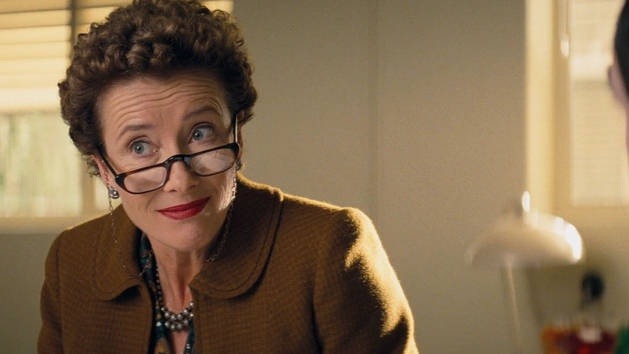
One of the biggest and most talked about shocks was the lack of a nomination for Emma Thompson in Saving Mr Banks. It’s frustrating to see Meryl Streep nominated for the 18th time for a role that she will never win the top prize for when Thompson could have been a front runner for.

Nymph()maniac
20140302-181509.jpg
I would have loved it if the Academy could have found it in themselves to nominate Uma Thurman’s fantastic supporting performance in Lars Von Trier’s latest film. It blew me away and really stood out in what was otherwise a pretty bland film. That said, it may not have qualified this year so we may have to wait another year before we see if this – and indeed Christian Slater’s excellent performance – was overlooked.

Elsewhere
Tom Hanks missed out twice for Saving Mr Banks and Captain Phillips, the latter being the biggest shock as it is probably his best performance for over a decade. Whoever thought the cinematography in 12 Years A Slave wasn’t worth noting must have been on drugs. Nothing for Robert Redford’s performance in All Is Lost was also a big surprise, though I’m not convinced Redford lost any sleep over it. The Butler was a massive omission but maybe a little too much like a typical Oscar nominee.

Susuz Yaz [Dry Summer] (Metin Erksan, 1964)

Susuz Yaz is the first film to be released in the UK as part of the World Cinema Project, as founded and chaired by Martin Scorsese. Released in 1964 and directed by Metin Erksan, the film was immediately banned by Turkish authorities and was thus not enjoyed by the wider audience it deserved, despite winning the Golden Bear at the 14th Berlin Film Festival and the Biennale Award at the 29th Venice Film Festival. It has been a long time coming, but it is finally seeing a high definition official home video release.

The film charts the story of two brothers – Osman and Hasan Kocabas – who own a tobacco farm on which a water spring that serves a community is sourced. It is a drought summer, so Osman decides to dam the supply and keep the water for himself. Hasan opposes the idea, seeing the potential for arguments, starvation and unhappiness in the community. It’s the classic tale of conflict from within family, the choice of doing what’s right by the community or what’s right by your family.

There’s only one catch. Osman is a complete asshole.

Osman is a guy that is screwing over his neighbours solely for his own benefit. A guy that peeks through a crack in the wall to see his brother having sex with his wife. A guy that kills a man that tries to dismantle a dam that shouldn’t have been there in the first place, then forces his brother to take the blame. There are so many despicable acts as the story progresses and I don’t want to ruin them for you if you’re looking at watching this film. Just trust me that the character is up there with Nurse Ratched the great assholes of cinema list.

He’s part of a triangle of lead characters that drive the film forwards at a fantastic pace. The beautiful Hülya Koçyiğit is great as the oppressed housewife Bahar, whilst Erol Taş gives a great turn as the brother determined to do right by the community. Yet it is Ulvi Dogan as Osman that keeps us enthralled and captivated right to the end. He’s truly disgusting and pulls out every stop to make your skin crawl. At no point does Erksan attempt to court sympathy for him, which is refreshing to see nowadays.

The film comes in a box-set of three forgotten works of art along with an extensive booklet with short essays on the respective films. It’s a fantastic package that is similar in design to the recent Late Mizoguchi boxset, also from Masters of Cinema. The three films (this one plus Ahmed El Maanouni’s Trances and Ermek Shinarbaev’s Revenge) all have introductions from Martin Scorsese himself. Having not got to the other two discs yet, I can only comment on the Dry Summer disc. The five-minute introduction doesn’t really critically analyse the film and also offers no insight into it, though it is nice to see Mr Scorsese chat about something he’s clearly passionate about. Perhaps I’m just information hungry these days but I was certainly underwhelmed by the lack of bonus features. I guess the sheer fact that we get to see the film in any form is bonus enough and I can’t complain too much!

Delving into the Phil Coldiron essay into the booklet, we find out a small amount of info about the film and the context in which it is set, and it offers a perspective on why the film was so risque at the time that is found itself being banned. Certainly by today’s standards, the things I suspect it was banned for – the point of view upskirt shots of the desperately unhappy Bahar, the passionate sex scenes, etc – all seem very tame indeed. The more horrific scenes come in the form of animal cruelty and, later on, the fight scene between the brothers that is so convincingly acted out that it leaves the viewer feeling almost sympathetically exhausted for them.

All in all, if you have even a passing interest in the history of world cinema and want to support the great cause of film restoration then you should consider buying this release. I was nervous that it might stray from the high standards that have been set by the Masters of Cinema series but that just isn’t the case. It’s not a film I’ll be rushing back to watch again (I have two more from the same box first!), but I won’t be forgetting the great asshole Osman any time soon.

Martin Scorsese Presents World Cinema Project Volume One is released on Blu-ray and DVD dual format on 25th November 2013.

Susuz Yaz film poster from the 14th Berlin Film Festival

Susuz Yaz film poster from the 14th Berlin Film Festival