The Duke of Burgundy (Peter Strickland, 2014)

Peter Strickland’s latest film, The Duke of Burgundy, is an interesting one. Screened in competition at the British Film Festival under a wave of great reviews, it is a film very hard to categorise. I’ve seen it described as an erotic drama. It’s also been referred to as a sexual romance. I’ve a tendency to go with a black romantic comedy, albeit based on the sexual fetishes of a lesbian couple.

IMG_9272.JPG

On the face of it, it concerns a sadomasochistic relationship between a dominant woman and her submissive lover. They live in a small community populated exclusively by women, who we are led to believe share similar sexual tendencies. They are all clearly well off, and none appear to work outside a few butterfly lectures here and there.

To label it as a film simply about fetish sex is to do it a disservice. Actually by the end of the film it is clearly more about the demands made by the desires of one person in a relationship, and the effect that has on the second party, especially as they grow distant from these demands and find them less appealing.

The soundtrack, provided by Cat’s Eyes, tweely pitches somewhere between Goldfrapp and Belle and Sebastian. With the constant references to butterflies I was repeatedly reminded of early 00s band Misty Dixon. This juxtaposition between what we see and what we hear is quite intelligent: it underlines the innocence of one party and her belief that this is normal behaviour, even though it is clearly a strain on her besotted lover. She is living in a dream world and the music, in that sense, is perfectly pitched. Plus it’s really lovely music, which helps.

IMG_9229.JPG

The whole nature of the relationship is completely flipped from its initial portrayal, and by the end we see the surprising reality. This about-turn makes for some hilarious and at times heartbreaking scenes. Indeed, such is the detail in which we see the emotions and pain seen by one party, we barely see a glimpse of any of the sexual acts, usually having them implied behind closed doors or inferred from showing us the before and after shots. In this way, Strickland managed to avoid it becoming all about the sex and makes it a much greater film as a result.

In a post-50-Shades era the subject matter will no doubt turn a few heads. In many ways I hope readers of the 50 Shades series seek it out and are either disappointed or, more likely, pleasantly surprised.

Whilst it didn’t have the impact of Strickland’s previous film Berbarian Sound Studio, it was a highly satisfying, twisting and twisted tale that deserves a wide audience.

The Duke of Burgundy is released in UK cinemas in 2015.

L’Homme Que L’On Aimait Trop (Andre Téchiné, 2014)

Andre Téchiné’s latest film L’Homme Que L’On Aimait Trop (literally The Man That You Loved Too, though also known as In The Name of My Daughter but advertised here as the comparatively uninspiring French Riviera) was the opening film of the 2014 BFI London Film Festival. It didn’t kick the fortnight off with fireworks – that was saved for the red carpeted The Imitation Game a couple of hours later – but it was a film that was overall a missed opportunity despite almost being salvaged by a few great performances.

IMG_9218.JPG

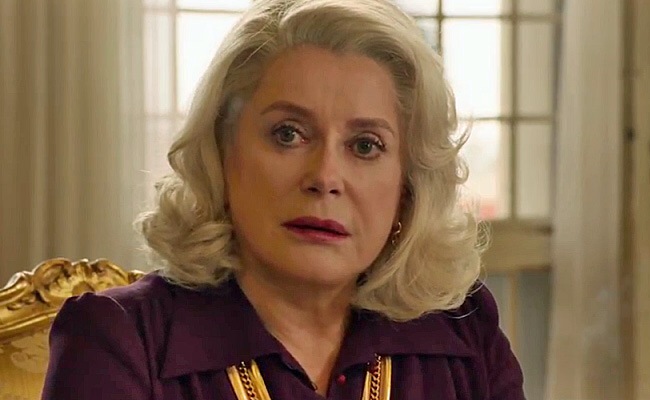
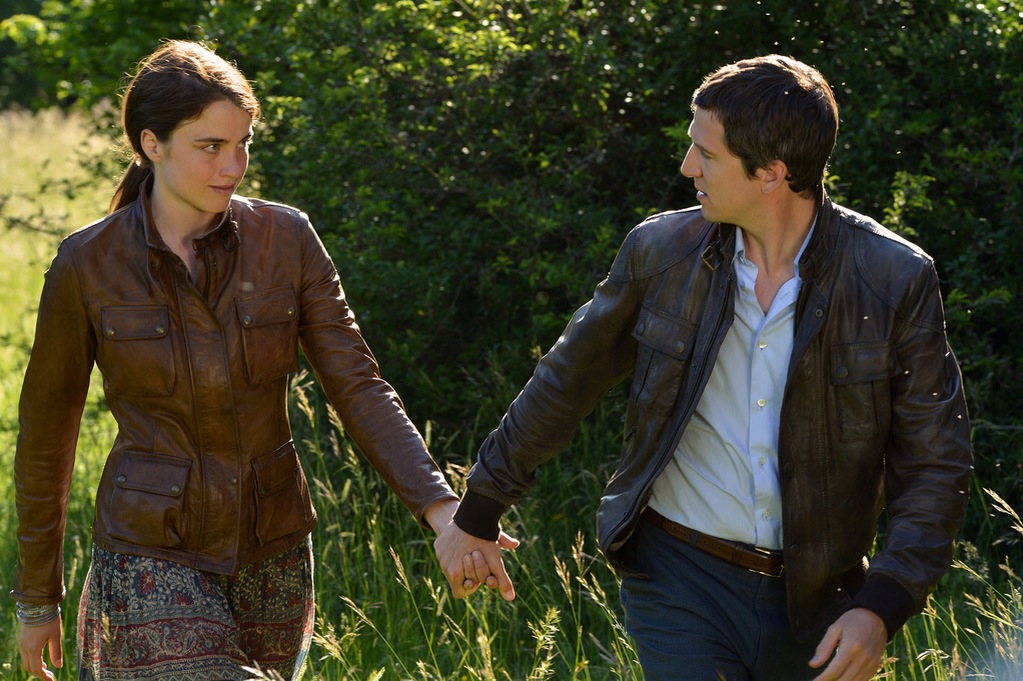
The plot centres around Renée Le Roux (played by Catherine Deneuve), the owner of The Palais, a casino in the French Riviera. We pick the story up in 1970s Nice, as her daughter Agnès (Adèle Haenel) arrives home from a long absence. She is met at the airport by Maurice (Guillaume Canet), a man who is part family lawyer and part personal assistant to Renée. The primary reason for her returning appears to be to give her mother’s opinions more backing on the executive board of the casino, but the situation quickly gets complicated when Agnès begins a largely unrequited infatuation with Maurice. Both Agnès and Maurice slowly reveal that they are driven by their own personal agendas and this makes for an interesting triangle of power, greed, love and suspicion.

Unfortunately, there is a tendency for the plot to focus on things that aren’t central to the plot, whilst critical points are overlooked. A key aspect of the plot is a power struggle between members of an executive board of a high-class casino, on which there are some suspicious mafia members pulling the strings. This is a potentially fruitful area that is largely unexploited.

Equally, the period immediately after Agnès eventually betrays her mother is almost completely skipped over and we are left to work out where exactly we are on the time line. Again, later in the film when Agnès disappears we pick the story up with Maurice a couple of months down the line. This is something that is explained about 40 minutes later in the film, but it doesn’t exactly make it easy to follow.

Indeed, the method of storytelling chosen at this point is a montage of newspaper headlines, which is frankly quite lazy. Adèle Haenel’s performance as Agnès heads towards a mental breakdown isn’t very convincing and I never really believed she was in turmoil, perhaps because too little time was spent on this period.

IMG_9248.JPG

The overall impression is that of a lack of focus and that Andre Téchiné couldn’t decide what the most relevant parts of the story were. Perhaps it was a stylistic choice to underline the fact this mysterious story is still yet to be unravelled and so much is still unknown, but I would sooner have had a story better told.

The final act of the film is set in a courtroom many years down the line. The make-up on Maurice is extraordinary. Unfortunately, they age him by about forty years and Renée only looks about ten years older, despite the fact we are told she has spent the intervening years (22 to be precise) ploughing all her time and money into searching for her daughter. He has allegedly been enjoying his early retirement in Panama. Surely someone on the set realised there was a mismatch here?

I left the cinema feeling like this was a missed opportunity to tell a really interesting story whilst shedding some light on a real-life mystery that is yet to be unravelled. It’s not a disaster, just not quite what it could have been.

L’Homme Que L’On Aimait Trop is released in UK cinemas in 2015.

Magic in the Moonlight (Woody Allen, 2014)

Interesting fact – Woody Allen has directed and written a new feature film every year since 1982’s A Midsummer Night’s Sex Comedy. And that break – that one year break – was well deserved. Between 1972 and 1980 he managed eight feature films in a purple patch of creativity that included Manhatten, Bananas, Annie Hall, Sleeper and Love and Death. This industrious approach to churning out films from the Woody Allen cinema factory of course means that some releases are better received than others. Going to see his latest film doesn’t seem to guarantee you’ll see a great film.

In recent years, though, he has had a critical and commercial renaissance, which started with 2008’s Vicky Christina Barcelona, and he has been introduced to a whole generation of cinema-goers. Indeed, watching his recent films they all seem to be of the same universe. The fonts and designs used for the title sequences are always identical (though admittedly he has used the same Windsor font for around forty years now). The music is of a similar style, albeit usually stylised to the area in which the film is set. The locations have tended towards beautiful, luxurious areas of famous European cities with histories rich in romance, barring 2009’s Whatever Works and last year’s hugely successful Blue Jasmine. It’s almost like Woody Allen is using his films to enjoy these beauty hotspots.

So, whilst seeing Woody Allen’s latest might not guarantee you’ll see a great film, it will guarantee you’ll see a quintessentially Allenesque film, one you will immediately recognise as belonging to this most unique of directors.

And so it is with his latest.

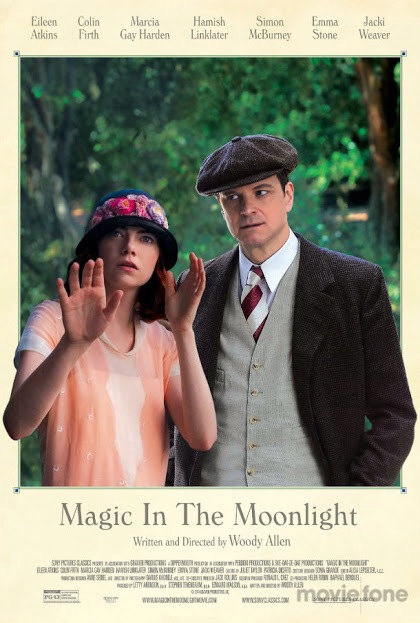
Magic In The Moonlight stars British heavyweight Colin Firth and relative newcomer Emma Stone, both of whom are highly gifted and currently very sought-after actors. The story centres around Firth’s Stanley Crawford, a world-renowned magician whom we join as he journeys to the French Riviera to witness and debunk Stone’s Sophie Baker, a self-professed spiritual medium who Stanley is sure is as fake as the rest of her peers.

IMG_9198.JPG
Firth plays the stubborn Stanley perfectly. The character is a dislikeable person, one we see slowly fall for a girl many years his minor but refusing to admit it, doubly bad as he has a fiancé-in-waiting back home. Even when Sophie starts to show feelings for him, he rebukes her in the most insulting of manners. Firth is an inherently likeable person so that he pulls this is off so well is to be admired. Emma Stone, too, is brilliant in playing a seemingly innocent girl with an extraordinary gift. The play between these two highly talented actors is something to behold. Throw into the mix a fantastic support cast including Eileen Atkins and Simon McBurney, some beautiful scenery and a well-crafted script and you have another excellent entry into the Allen catalogue.

In many ways, I do wonder what the enduring fascination with Allen is. Especially in the UK where, in light of Operation Yewtree and a seemingly never ending chain of accusations and court cases against the stars of yesteryear, any kind of indecent relationship will be dragged through the press. It seems decidedly odd that Woody Allen’s popularity remains completely intact. There doesn’t seem to be any resolution on the horizon for his ongoing feud with Dylan Farrow, his adoptive daughter, who claims she was the victim of sexual abuse as a child. It seems bizarre that so many renowned actors would flock to be involved with his work with this hanging over his legacy. Yes, I understand that we should treat people as innocent until proven guilty, but that is frankly not the society we live in, where often trial by media is the preferred route. I don’t truly believe that these films are so good they overpower his potential loss of reputation if these allegations were true. Perhaps it’s just that his reputation as an excellent director precedes him and people are desperate to work with him as he sits in the twilight of his career. Who could turn down the opportunity to work with a bonafide legend of cinema?

So, is Magic in the Moonlight as good as Midnight in Paris or Blue Jasmine? Probably not. But it is a uniquely Allenesque picture and one that certainly won’t go down in the future as a flop; yet another water tight story told brilliant by one of the greatest directors in the history of cinema.

Magic in the Moonlight is on release at selected cinemas in the UK now.

IMG_9200.JPG

Deux Jours, Une Nuit (Jean-Pierre Dardenne and Luc Dardenne, 2014)

The latest film from the Dardenne brothers, Two Days, One Night, stars Marion Cotillard in what on the face of it seems quite an unlikely situation: a woman is voted out of her job by her colleagues as a result of a vote between her colleagues who choose between keeping her in employment or receiving their annual bonus. Whilst it felt far-fetched when I read the synopsis, the way it is delivered makes it not just believable but heart-breaking.

Whilst the whole story centres around Sandra’s struggles as she reacts to the news of the decision, we are treated to an expert display of serial short story writing. Sandra (Cotillard) has from 5pm on Friday night until 9am on Monday morning to visit, in person, each of her 16 work colleagues and convince them to vote in her favour when the ballot is repeated on Monday morning. Given the minimal screen time they have to offer their reasoning (the whole film is just 95 minutes in length) each character is wonderfully deep. This ensures that this one-woman tour-de-force doesn’t begin and end with the main star.

The shooting technique adds to the realism. Most scenes are completed in a single shot, which gives the effect of feeling like you’re a bystander allowed to eavesdrop on the most personal and revealing of conversations. We see extreme stubbornness, tears of guilt and logical reasoning as each character paints the picture of how they came to their decision and – more importantly – whether or not they will change it.

It is a film that sets itself up to spark debate amongst the viewer. It’s certainly not a crowd-pleaser. It is too heavily laden with working-class socio-realism for that. But does it achieve what it sets out to do? Probably, yes.

Two Days, One Night is out now at selected cinemas.

Casse-tête Chinois [Chinese Puzzle] (Cedric Klapisch, 2014)

I have to confess that I saw Casse-tête Chinois (Chinese Puzzle) at the 2013 London Film Festival and knew nothing about it. It was picked on a whim when I had a gap to fill in my schedule and I wasn’t able to put any research into it beforehand. During the post-film Q&A with director Klapisch, I learned that it is in fact the third installment of what is known as the Spanish Apartment trilogy, following L’Auberge Espagnole (2002) and Les Poupées russes (2005).

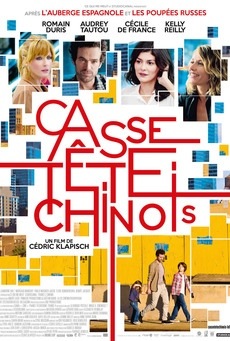
It stars Romain Duris as Xavier, a novelist whose ex-wife and children have moved to New York. The story concentrates on the complicated web of relationships that surround him as he tries to find an apartment, a job and some kind of life. Included in this web are his ex-wife Wendy (Kelly Reilly, now with her new husband), his ex-girlfriend Martine (Audrey Tautou) and her children, his best friend Isabelle (Cecile de France) and her partner Ju (Sandrine Holt) who are trying to have children of their own (with Xavier’s help), and many more bit players, all full of character. It’s a great ensemble cast and it’s clear they had a fantastic time filming together.

20140117-171746.jpg

The film is a joy to watch, with laugh-out-loud moments littered throughout. It’s unusual and quirky. It did not matter one bit that I didn’t know any of the background; the characters are well defined and it works very well as a standalone film. The hilarious business meeting where Martine has to speak Chinese, the sham marriage Spanish Xavier goes through with a Chinese girl to become American, and the crescendo where they all come together in one edge-of-the-seat hilarious finale – the balance is spot on. There are some more serious moments too, not least Isabelle’s affair with her au pair, but these tend to (eventually) be dealt with in a light-hearted manner.

It’s probably not going to make massive waves outside France, which is a shame because there are some lovely romantic comedies being made in that country at the moment and they deserve a little more attention. It may well also be the last installment in the series, with the director alluding to the fact it was difficult to convince some of them – especially Tautou – to come back for the third chapter.

I’d recommend it if you fancy a humorous and whimsical journey through someone else’s very complicated problems and need an emotional lift. It certainly won’t disappoint you.

Casse-tête chinois is released later in 2014 in the UK.

Watch the trailer here.

20140117-171738.jpg