Film review – Dad’s Army (Oliver Parker, 2016)

Dad’s Army is one of the best-regarded sitcoms to ever come out of Britain. A film would always have two almost certain outcomes: making a lot of money and not living up to the public’s fond memories of the original series. In this sense Oliver Parker’s 2016 effort doesn’t disappoint.

This film adaptation stars Toby Jones as Captain Mainwaring, the leader of a Home Guard [1] platoon the fictional Walmington-on-Sea in England during World War II. His platoon consists of Sergeant Wilson (Bill Nighy), Lance Corporal Jones (Tom Courtenay), Private Godferey (Michael Gambon), Private Pike (Blake Harrison), Private Walker (Daniel Mays) and Private Frazer (Bill Paterson). They are being visited by glamorous journalist Rose Winters (Catherine Zeta Jones), there to report on the Home Guard.
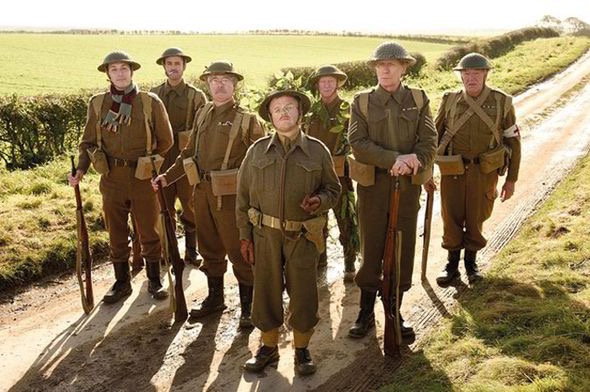
The authenticity of this film is, to the untrained eye, fantastic. The colour washes and costumes give it the feel that you genuinely are watching a Home Guard operation in 1944. There is a clear attention to detail that has gone into this and the film is much better for it.

The plot, generally, is enjoyable. It is pitched at the right level between the series and what is expected of a big-budget film. It puts the Home Guard into a potentially larger plot that is at the centre of the war efforts.

Where this film majorly falls down is the humour, or lack thereof. The writing was on the wall with the trailer, which felt a little flat. Unfortunately, most of the best material was featured in one or more of the trailers, and between these moments the humour was lightly sprinkled in a way that may bring a smile to the audience members’ faces but never succeeds in delivering a belly laugh. In this sense it has been a huge failure in comparison to the original series.

The actors do a wonderful job impersonating the original cast members, to scarily uncanny levels. This is perhaps the only time when all these stars will grace the screen together and it is a real letdown that the material they’ve been served is so underwhelming.

A massive disappointment.

[1] During World War II, those unable to serve on the front line provided a second line of defence on British home soil. Platoons were generally made up of those too old or too young to serve in battles, individuals with injuries or illnesses that prevented them from being on the front line and those with professional occupation that were exempt from joining the front line war effort. It was a significant operation, consisting of around 1.5m volunteers.

Film review – Hail, Caesar! (Joel Coen and Ethan Coen, 2016)

Hail, Caesar!, the new film from the Coen Brothers, is a film heavy on nostalgia and authenticity but light on focus to moving along the central plot. It has so many fantastic elements that seeing the final product fall short is a huge disappointment.

The film tells the story of Eddie Mannix (Josh Brolin), head of production at Capitol Pictures whose job involves firefighting the many problems created by the studio’s roster of stars who seem to have an uncanny ability to mix themselves up in controversy. The studio’s next big film will be Hail, Caesar!, a biblical epic in which Baird Whitlock (George Clooney) will star. However, when a prop wine goblet is spiked by an extra on the set, he is kidnapped by a group of communist scriptwriters called The Future and held to ransom for a then significant total of $100,000, putting pressure on Mannix at a time when he is considering a career change to join the aviation industry with the Lockheed Corporation.

  
It felt at times that the Coen Brothers were so hell bent on fitting in a plethora of big-star cameos that they didn’t care that each time they did so they completely derailed the focus of the story. Take, for example, Frances McDormant’s studio film editor CC Calhoun. Her hammed-up effort is a nice comedy turn introduced at a critical point of the film. She could have easily turned into a key character, but never reappeared and thus there didn’t really seem to be much point to her appearance.

A bigger offender comes in the form of a more significant subplot featuring pregnant star Dee-Anna Moran (Scarlett Johansson) and surety agent Joe Silverman (Jonah Hill). It’s a huge eater of time but in the end resolves itself with little input from Mannix at a time when he is deciding that he needs to stay in the film industry, presumably because he is so critical to it.

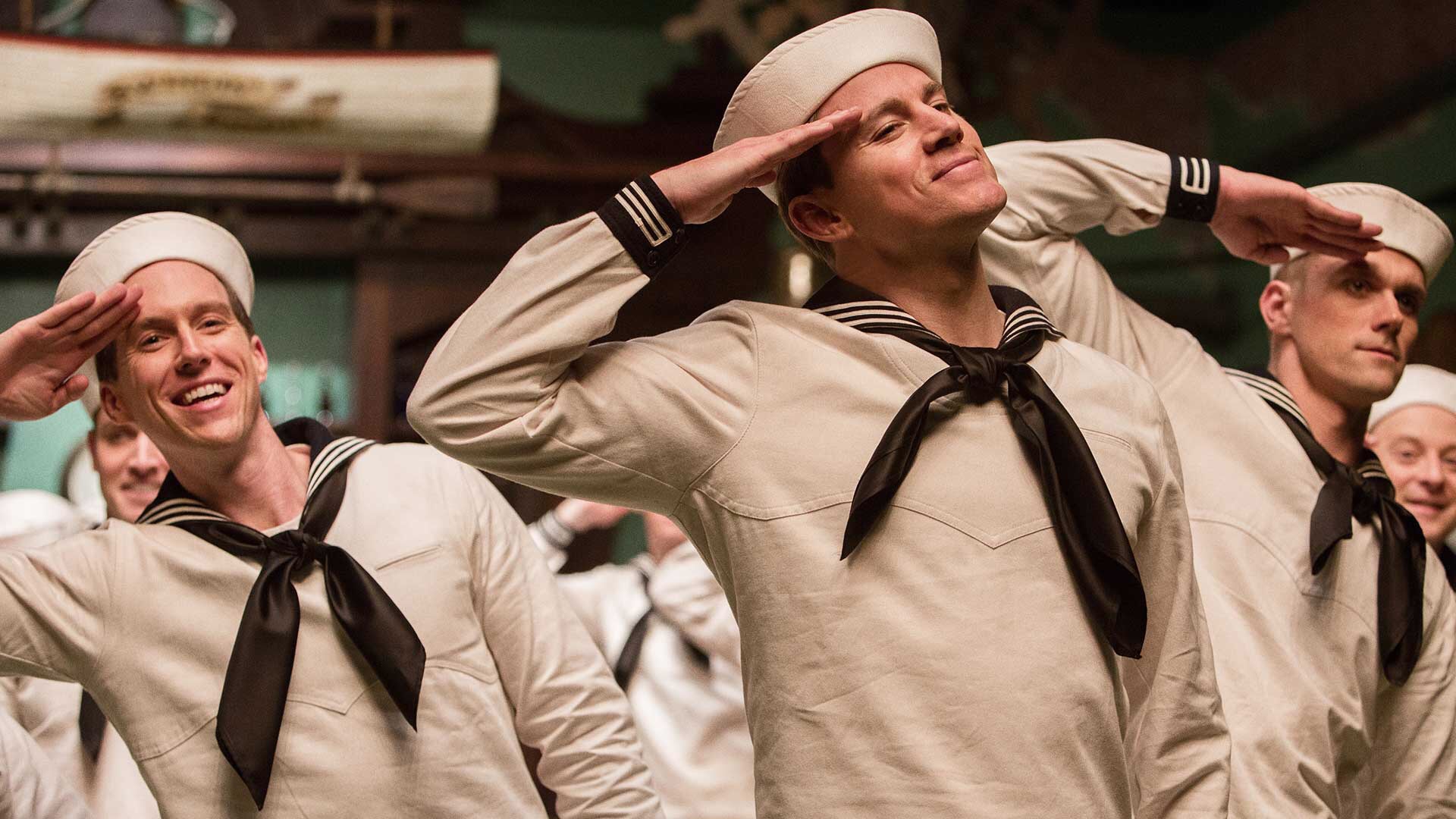
Similarly, Channing Tatum, who features as Burt Gurney, gets a great song and dance scene – a real highlight to the film – but is probably only in three scenes in total. The time spent with Johansson and Hill may have been better served with Tatum. Instead, none of the three characters really feel significant enough to elicit the response they could have achieved had more time been spent with them.

  
One character that does end up getting fully fleshed-out is the Western star Hobie Doyle (Alden Ehrenreich). He is introduced as a big studio star that has got where he is by his ability to perform massive stunts rather than any of his acting qualities. There are some fun scenes with Laurence Laurentz (Ralph Fiennes) as he tried to get the best out of his acting abilities or lack thereof. Near the end of the film there is some subtle symbolism involving him figuratively lassoing Baird Whitlock and taking him back to the studios from the communists, a nod to the cowboy as an upholder of traditional American values. Whether or not they needed to spend so long in the film emphasising his cowboy skills to set this up is another question, but at least this character takes us on a journey and proves to be critical to the resolution of the story.

At the heart of the story is Josh Brolin’s Mannix, a man who is essentially a fixer for the studio. It is an interesting character and, along with Clooney’s bumbling Whitlock, he carries the film. His climactic scene with Whitlock underlines why his decision was made – he sees the communist issues surrounding the film industry as a huge threat to America and something he can have a significant impact on from his position. He takes what he considers to be the harder option but in doing so gives his future life more worth. 

There is an underlying message about the wider issues facing Holllywood at the time this film is set (1951) and how easy it was for people like Whitlock to get involved with communist cells. The discussions on such topics is outside the intended remit of this review, though the recent film Trumbo is a good starting point.

Hail, Caesar! offers a lot to fans of the Coen Brothers, though it feels like a hugely missed opportunity due to failings of an over-complicated plot that could have been significantly trimmed to focus the story on the most relevant characters. Fun in parts but overall a disappointment.

Film review – Deadpool (Tim Miller, 2016)

Deadpool may be many things. Some call it a superhero film. Some will call it an action film. Some will call it a romance. Some will call it a comedy. It may be all of these things, but one thing it doesn’t do is take itself seriously.

Deadpool has opened with the largest first weekend takings of an R-rated movie ever ($132.7m). Both the taking and the rating are well deserved. Where its superhero counterparts have sanitised the violence portrayed, Deadpool plays to it. There are beheadings. There are dead human carcasses splattered at high speed into road signs. There is terrible, offensive and graphic language. The violence is non-stop. There’s even more after the opening scene. Later, we visit a strip club. Indeed, there’s a sex montage that lasts about five minutes and is played for laughs. Nothing is off-limits.

It never loses its sense of humour, and at the centre of this achievement is Ryan Reynolds who proves that he’s the right guy for the job after all. We have seen Reynolds’s take on Deadpool once before, albeit in what is generally regarded to be a butchered take on the comic book character. His first appearance as the chatty bad ass was in 2008’s X-Men Origins: Wolverine, in which he was inexplicably not able to talk once he became Weapon XI / Deadpool. It was seen at the time as a missed opportunity by fanboys of the comics, though in hindsight it is hard to pin the blame on Reynolds. What else could he do with a silent character, especially acting alongside will.i.am?

This time around he is actively encouraged to pastiche other superhero films. Several times the fourth wall is broken to humorous effect, usually to take a poke at the previous Marvel films, the messy timeline involved in the X-Men franchise, Hugh Jackman himself and, most frequently, that underwhelming Origins film.

It’s refreshing to see a superhero film not taking itself very seriously. It was also great to see a director – a first-time director at that – given the ammo to do exactly what he wants with a film and not be told to fit it into a larger universe. We can only wonder if Ant-Man could have been this good if Edgar Wright was allowed to finish it.

Tim Miller has directed one short film prior to Deadpool. It was an animated short film from 2004 called Gopher Broke. You can view it here:

Supporting Cast

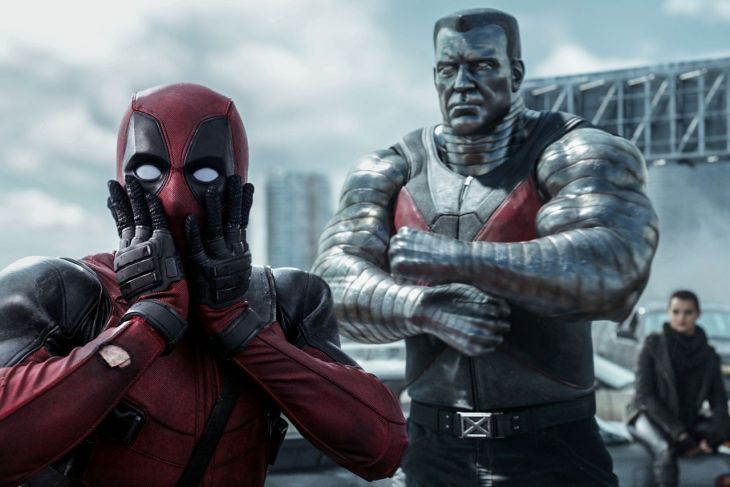
One of my favourite X-Men characters as a child was Collossus (Stefan Kapicic). Here he is given yet another outing on the big screen in a CGI creation that is well realised visually if not in terms of characterisation. He is present as one of Deadpool’s sidekicks solely for comic relief rather than to provide any real threat, and as a result it’s difficult to see him having any room to manoeuvre in future X-Men films.

The other sidekick character making up the lead trio is Negasonic Teenage Warhead (Brianna Hildebrand). An emo-styled young mutant, she at least has some potentially useful strength. However, she is also on the receiving end of some great one-liners from Deadpool and doesn’t offer much to suggest she might ever become a fan favourite.

deadpoolcolossus

These two supporting X-Men were clearly only ever seen as a bit of background built around the requirement for a subplot in the final battle sequence. A joke is made at one point about the studio not being able to afford any more X-Men. There is doubtless some truth in this.

Elsewhere, the supporting cast also includes the annoyingly evil Ed Skrein, who does a good job of making the fairly generic character Ajax quite dislikable. Morena Baccarin is well cast as the romantic interest, though it’s a shame we saw yet another an initially headstrong female character dissolve into a damsel in distress. Hopefully she will be given more prominence if a sequel is made – if they stick to the comic books she will become the mutant Copycat.

Conclusion

It is a very good film, almost a great film. It’s brash, it’s offensive and it’s graphic. It’s almost like a superhero film from an alternate reality, where the primary goal isn’t to sell action figures and lunchboxes. Its failings are more than made up for by how refreshing it was to see a completely different take on the genre.

If nothing else, at least now we can say a film has done justice to the Deadpool franchise.

Deadpool is out now at cinemas globally.

Sisters (Jason Moore, 2015)

Sometimes cinematic events so huge occur that they transcend cinema and infiltrate the wider global conversation. To not see a film, occasionally, is to almost deliberately stand out from the crowd and, in some cases, refuse to be a sheep. Because everyone else is in love with a film but perhaps didn’t get it at first, the desire to take a stand gets in the way of allowing yourself to be interested.

If you’re in that boat and have taken a stance against Star Wars: The Force Awakens, then perhaps Sisters is the film for you. It is in so many ways the antithesis of an epic and excellent space opera. Yes, it isn’t very good. Yes, it vastly underused its two lead stars. But someone had to take the hit and be THAT film that was released the same week as the film that looks set to be the most successful in box office terms since Avatar.

The story is as banal as the majority of the jokes. Sisters Maura (Amy Poehler) and Kate (Tina Fey) find out that their parents are selling their childhood home and have to go home to clear out their rooms. They do just that, but in the process decide to throw a huge house party. Things get out of hand and they wreck the house, though in doing so learn some valuable lessons.

It isn’t without merit. Some jokes are downright hilarious. However, these appear to be the ones that were ad libbed by the two leads. There are a few examples of this is when they are trying on dresses ahead of the party. Additionally, the scenes with Maya Rudolph are all highlights and almost give a feeling of a rewarding experience. Most of the remainder, however, falls disappointingly flat.

A truly entertaining time was had by all. Just not in this screen.

After about half-an-hour I found myself in such deflated amazement that I started to enjoy it out of disbelief that it was such a waste of their talent. This twisted enjoyment sustained until the final section when it started to feel protracted – the party kept going slightly too long and the joke was wearing thin.

The final segment, which awkwardly ties it to Christmas and thus tried to justify it as a festive film doesn’t really convince with conviction. This was clearly an afterthought to a film that was obviously intended for a summer market but that the studios didn’t dare release into clear air when excuses would have been harder to come by than the Star Wars card.

Sisters is on general release worldwide now.

Film review – What We Did On Our Holiday (Andy Hamilton and Guy Jenkin, 2014)

If you’ve ever watched the popular British sitcom Outnumbered then you’ll become immediately outraged by What We Did On Our Holiday. The premise is exactly the same: a dysfunctional London-based family with arguing parents and three young and awkwardly inquisitive children go on a trip to visit their quirky grandfather and the annoying sibling of one of the parents. The dialogue and individual characters seem highly familiar too and it’s difficult to avoid the thought that this could have been done to much greater success with the Outnumbered cast. It’s only after a small amount of research that it becomes evident that this film is indeed written and directed by Andy Hamilton and Guy Jenkin, the creators of Outnumbered. Admittedly, they couldn’t very well have written “By the way, we made Outnumbered and we know this is basically Outnumbered: The Movie but please stick with it.” I would have helped though.

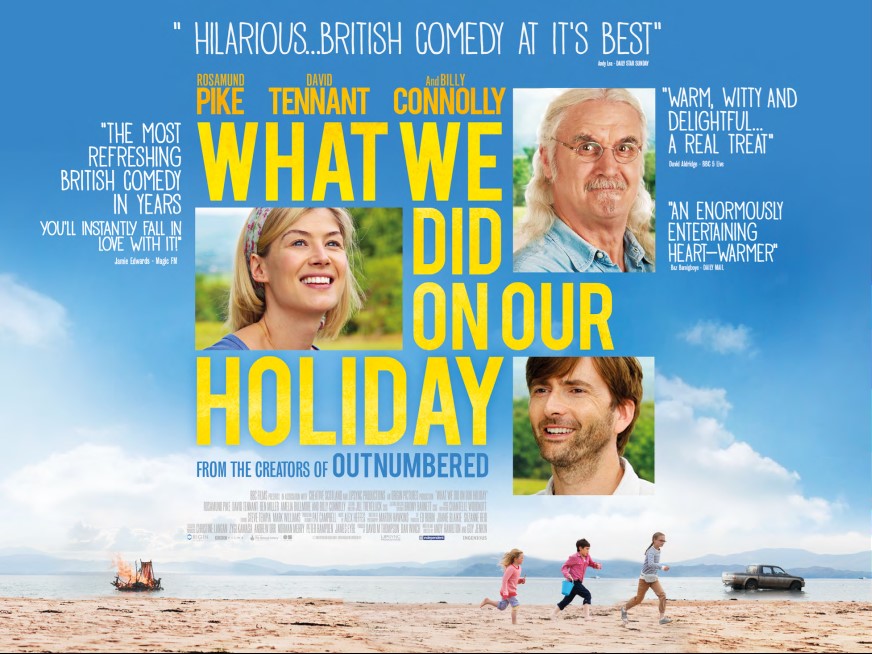
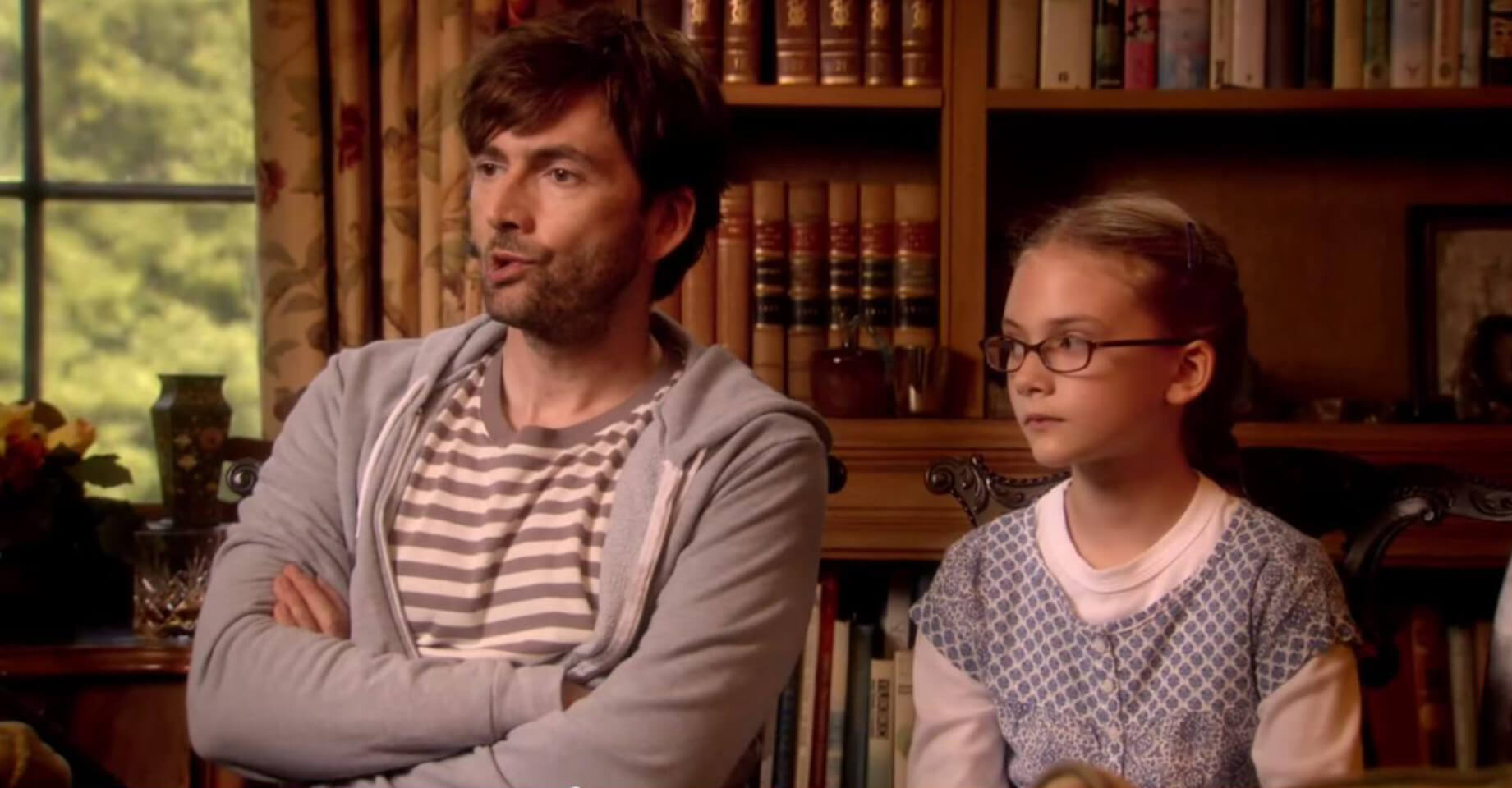
The storyline involves father Doug (David Tennant) and his wife Abi (Rosamund Pike) travelling to see Doug’s father Gordie (Billy Connolly) in the Scottish Highlands. Their marriage is on the cusp of separation, a fact they like to assume their children don’t know. They’re visiting Scotland to celebrate Gordie’s birthday with a party co-ordinated by Doug’s brother Gavin (Ben Miller) and his wife Margaret (Amelia Bullmore), who provide some laughs as a couple attempting to keep up appearances.

A laugh a minute this is not.

A laugh a minute this is not.

Despite what the poster says, this is not British comedy at its best. The reason for this is that only one of the three main cast members is a comedian and the short running time means the children aren’t provided enough space to cultivate any big laughs. The funniest moment in the whole film comes when the son Mickey tries to explain how he managed to discover his parents were getting a divorce, missing out most of the details of what was heard but lengthily revealing his technique to go to the toilet silently so he can eavesdrop. The screen time afforded to Miller and Bullmore is refreshing when it happens, though again this is limited and it feels like there was more on offer.

It’s a bold move to use this as a vehicle to tackle some pretty hefty subjects and for the most part this ambition elevates it to something bordering on a weighty drama with a humorous veneer. The impending death of elderly relatives, the lack of emotional support provided by the close family of these elderly relatives, the denial of innocence of youth due to over-exposure to mass-media, the lack of respect provided by media when the desire to get a good story transcends their own moral compass (the film was written in the immediate aftermath of the publication of the Leveson Inquiry). These are all topics that Hamilton and Jenkin clearly felt were beyond the scope of their beloved sitcom and more deserving of a feature length film. For that they should be applauded, despite an overall feeling of the film being an underwhelming disappointment.

Ultimately, a film marketed as a comedy will succeed or fail on the amount of laughs it elicits. The lack of natural comedic tendencies of both Pike and Tennant mean that the film relies too heavily on three young children playing for cute giggles and a support cast that isn’t seen enough to make up the ground. If you want to laugh a lot for 90 minutes then a better option is to just watch three episodes of Outnumbered, which is a disappointing conclusion to reach.

What We Did On Our Holidays is available on Netflix now and can also be purchased on Blu-ray or DVD.

The Intern (Nancy Meyers, 2015)

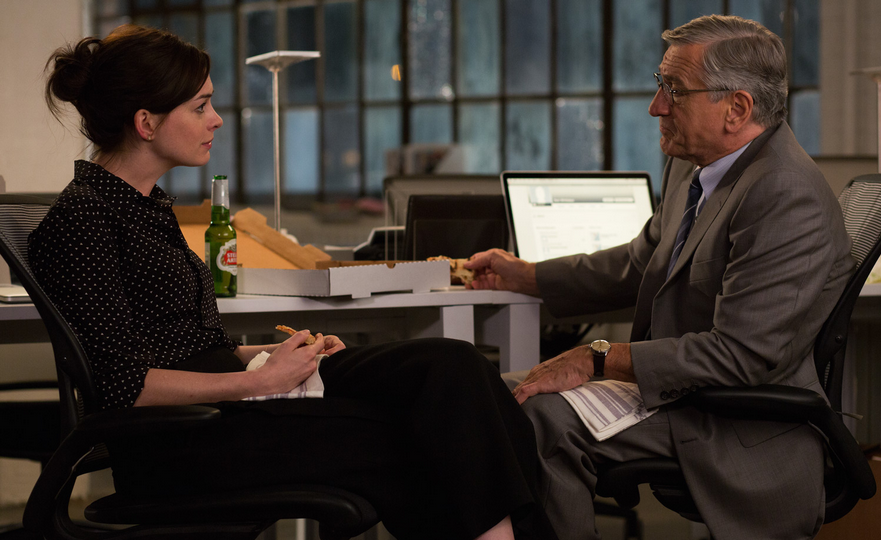
Nancy Meyers has a rich history in crowd-pleasing comedies. Her writing and directing credits include What Women Want, both Father of the Brides, It’s Complicated, The Holiday and Something’s Gotta Give. The basic premise of her latest, The Intern, is that a 70-year-old widower Ben Whittaker (Robert De Niro) signs up the the senior intern programme of a rapidly-growing start-up business, only to be assigned as the personal assistant to company director Jules (Anne Hathaway), a woman seemingly struggling to keep up with the demands of her new-found success whilst balancing it with her house-husband Matt (Anders Holm) and daughter Paige (JoJo Kushner). Initially resistant of Ben, she soon grows to his warm personality and old-fashioned sentiments, leading to doubts over the future of her personal and professional life.

This may sounds like middle-of-the-road schmaltz, but it works. Some softening colour washes, a pleasant-on-the-ear soundtrack, straight-from-GAP outfits, showroom offices and houses. It’s a look at the modern world from the rose-tinted perspective of middle-to-upper-class old people, coming together to appeal to women of anywhere between the age of about 30 upwards. It is easy on the eye and easy on the soul, but to dismiss it as just that would be wholly unfair.

internscreen

By design, Meyers has created a picture that on the surface is just a pleasant and slow-paced monorail ride through the life of Ben and Jules. However, there is quite a lot of power in the messages it is portraying. First of all, it is telling women to not lie down and take the easy road when it comes to business, despite constantly being told that attempting to be the CEO of a business isn’t correct of a woman. Secondly, just because you have a child, don’t assume that you need to forfeit your career to ensure your partner can maintain his whilst you stay at home and look after your child. Thirdly, don’t feel guilty if your partner doesn’t get any of this.

I’m not sure how this film would fair in the Bechdel Test, which scores films on how sexist the content is by checking how many named female characters are involved with conversations with other women about something that isn’t men. Unfortunately, it would probably score low because the film drowns Jules in a sea of men to highlight the isolation she is experiencing in her career (other key female characters in the office are her emotional assistant and a masseuse). It may also be seen as unfortunate that she relies on a father-figure to guide her through her issues rather than working them out herself, but that’s the nature of the beast and it isn’t at all detrimental to the overall impact of the film in the final act.

There are a few failures. Husband Matt completely loses his essence about halfway through and doesn’t seem fixed in reality, undermining the effect of his actions and Jules’s reaction to them. Too often she brings emotion to the forefront of the company – one scene is obviously playing for laughs but when she’s prioritising the retrieval of a personal e-mail over issues that could destroy the company, the thought can’t be avoided that perhaps she isn’t the right person to sit at the top.

Overall, the film is a success and will no doubt please the crowds to which its box office rivals won’t appeal. It’s slightly early for the Christmas crowds and will not be remembered when the awards season is upon us, but it if you need some surprisingly thought-provoking entertainment there are far worse ways to spend two hours.

The Intern is released at cinemas in the UK on 2nd October 2015.

American Ultra (Nima Nourizadeh, 2015)

American Ultra is far better than it should have been. The basic story – a stoner grocery store assistant (Jesse Eisenberg) is actually an advanced agent from a secret programme that was shut down before his memory was wiped – sounds like pretty standard fare and doesn’t really suggest a great film is in order. A fast pace, short running time and well-judged performances make it an enjoyable romp.

  
Eisenberg is well cast and it’s a wise move to keep him in reluctant stoner character throughout, though it would have been easier to make him magically turn into an alpha male. Kristen Stewart makes another case for the ATL (Anti Twilight League) to take her a little more seriously with a solid performance and there are great turns elsewhere from Bill “Was That Bill Pullman?” Pullman, Topher “That 70s Guy” Grace, John “Luigi Mario” Leguizamo and Tony “Loose Seal” Hale.Perhaps this film doesn’t justify a trip to the cinema, but when it hits the steaming platforms it should be near the top of your list.

American Ultra is out now at cinemas in the UK.

Vacation (Jonathan Goldstein and John Francis Daley, 2015)

The newest addition to the Vacation legacy is an attempt to reboot the previously successful franchise and bring the story to a whole new audience. It’s a shame then that it fails to do either and also tarnishes the memory of the originals in the process.

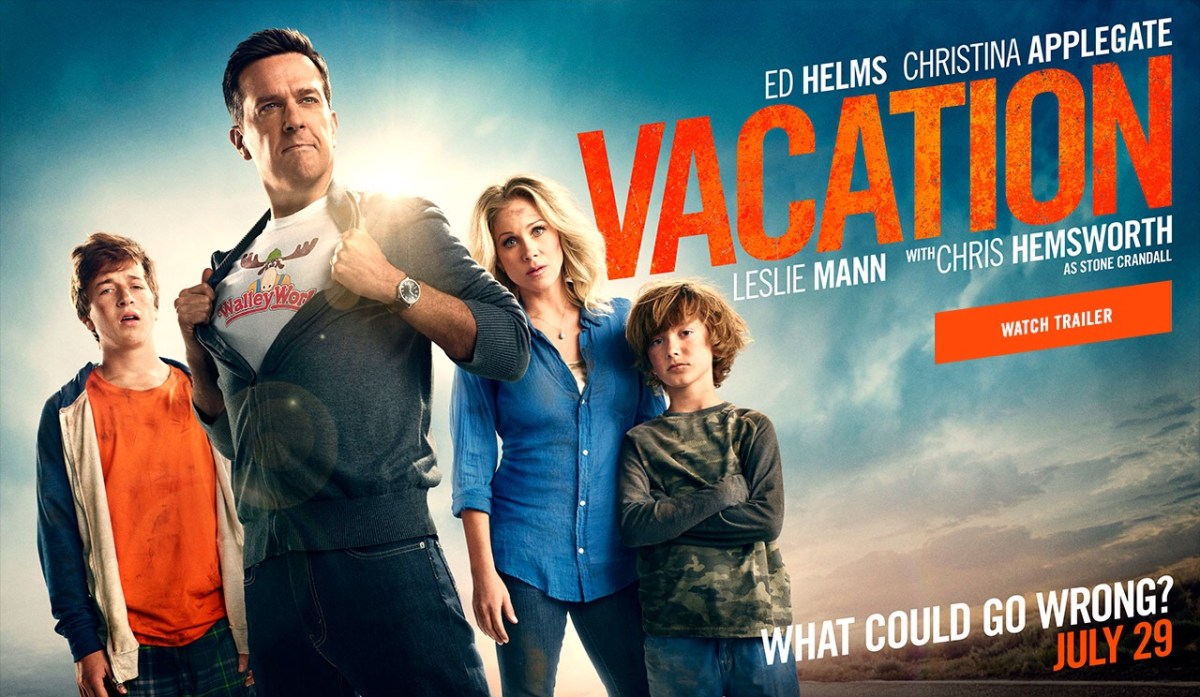
It stars Ed Helms as the now grown up Rusty, who we know as the son of the old Griswold family. He now has a family of his own to look after. Following in his father’s footsteps, he decides to reboot their family bonds by taking his wife Debbie (Christina Applegate) and two sons Kevin (Steve Stebbins) and James (Skyler Gisondo) to Walley World. Hilarity ensues.

The opening twenty minutes or so as they set up the characters is delivered in a very tedious manner and doesn’t really achieve the desired results of showing a truly dysfunctional family. There are some cheap gags as the four family members conform to some stereotypical character traits before the real action gets going and some fun starts, but to have such a slow start to a big summer comedy is a risky move that contributes to the film’s downfall.


The best moments come when the Griswolds interact with other characters appearing in cameo roles. Most notable are Chris Hemsworth as Stone, the well-endowed brother-in-law, and Charlie Day as Chad, a depressive river rafting guide. Both spawn some great moments that are let down by the punctuating gags between about rim jobs and swimming in poo.

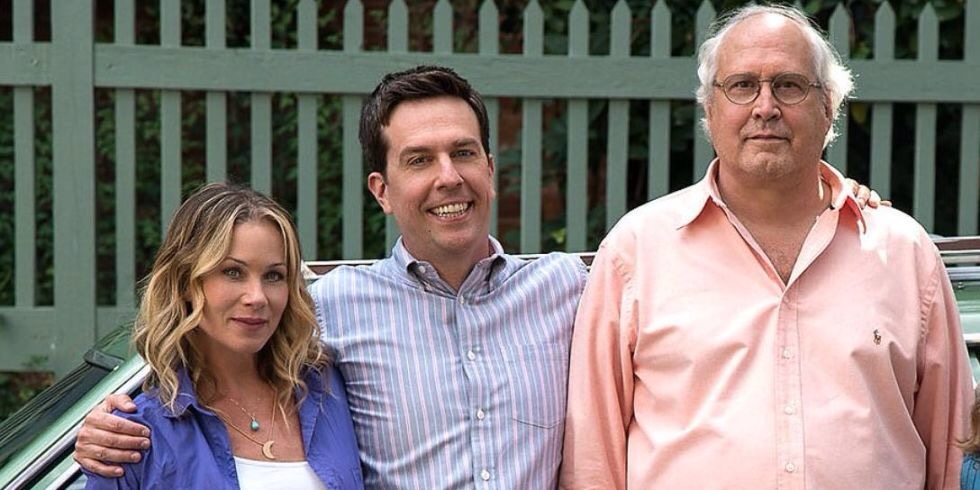
The lowest point is when Chevy Chase appears in a wholly unfunny late scene. Watching him attempt to make the removal of a medium sized guitar from a large cabinet look awkward and clumsy for over ten seconds is simply excruciating.

It’s a valiant attempt to bring the kind of humour that made the originals so successful to a new audience but it actually tarnishes the originals as I’m now questioning whether they were all of this quality. Avoid this film unless your main priorities are familiarity with a rehashed storyline and a lack of anything remotely thought-provoking.

Family Plot (Alfred Hitchcock, 1976)

Family Plot is the final film directed by Alfred Hitchcock, released four years before his death. Based on the book The Rainbird Pattern by Victor Canning, it is a shadow of his most celebrated works owing to a slow pace and a lack of chemistry between the lead characters.

The story concerns two couples. Fake psychic medium Blanche (Barbara Harris) and taxi-driver George (Bruce Dern) are petty criminals who find an opportunity to locate the son of an heiress called Edward Shoebridge and collect a £10,000 reward. In searching for this heir their lives become unexpectedly intertwined with professional criminals Fran (Karen Black) and jeweler Arthur (William Devane), who kidnap famous millionaires and return them in exchange for jewel-based ransoms.

Dern, Dern, Deeeeeeeern!

Dern, Dern, Deeeeeeeern!

Bruce Dern wasn’t the first choice for the lead role. Hitchcock’s preferred actor was Al Pacino, but his price was too high. Hitchcock went with Dern following his experience with him in Marnie and also in Alfred Hitchcock Presents episodes Night Caller and Lonely Place. Of the four central characters, he is perhaps the most entertaining to watch. It’s a highly believable turn as a man controlled by his girlfriend and partner in crime and his comic abilities are put to great use. It’s hard to see Pacino improving on this, as talented as he is.

Roy Thinnes was originally cast as the Arthur / Edward character and five days of shooting were completed before the first choice William Devane became available and Thinnes was dismissed. Devane’s turn is one that doesn’t really deliver. The character calls for malice and terror, which never really comes to fruition; this in turn makes Black’s performance as his partner fall short as the coldness she tries hard to rescue never really comes to the forefront of their scenes.

Barbara Harris was in the middle of a career purple patch when this was released. Family Plot came sandwiched between two other career successes: Nashville and Freaky Friday. All three earned her Golden Globe nominations, though it is hard to see why her turn as Blanche was so celebrated at the time. True, there are moments of real hilarity in there, and she is clearly having fun with Dern with the relentless innuendos Hitchcock has littered throughout the script, but often she comes across as irritating and it feels like she is over-cooking her lines. The low point in the film is a scene where the pair lose control of the car they are travelling in when the brakes are cut. It goes on far too long and her reaction to the situation is at odds with her portrayal in the rest of the film. It came as no surprise to find out that Hitchcock was unable to be involved with these scenes due to his deteriorating health and this and other such scenes were filmed by a second unit headed up by Wayne A. Farlow and Howard G. Kazanjian. They do, unfortunately, lack the usual Hitchcock touch.

Many of Hitchcock’s films feel like they inhabit the same universe, but the same can’t be said of this film. It is a genuine disappointment. Coupled with a lazy transfer by Universal – one of the worst I’ve ever seen on the Blu-Ray format – this is overall a real disappointment. Steer clear unless you’re really desperate.

Family Plot is available as part of the Alfred Hitchcock: The Masterpiece Collection Blu-Ray boxset, or as an individual release.

Film review – The Interview (Seth Rogen and Evan Goldberg, 2014)

So, here we have it. The film that almost started World War III. The film that Sony were so adamant it was going to release they refused to listen to threats from North Korea, even ignoring the fact that they were being infiltrated by “The Guardians of Peace”, a hacking group from North Korea.

It’s a shame it’s such a terrible film.

Another failed attempt at the "water sprinkler" dance move.

Another failed attempt at the “water sprinkler” dance move.

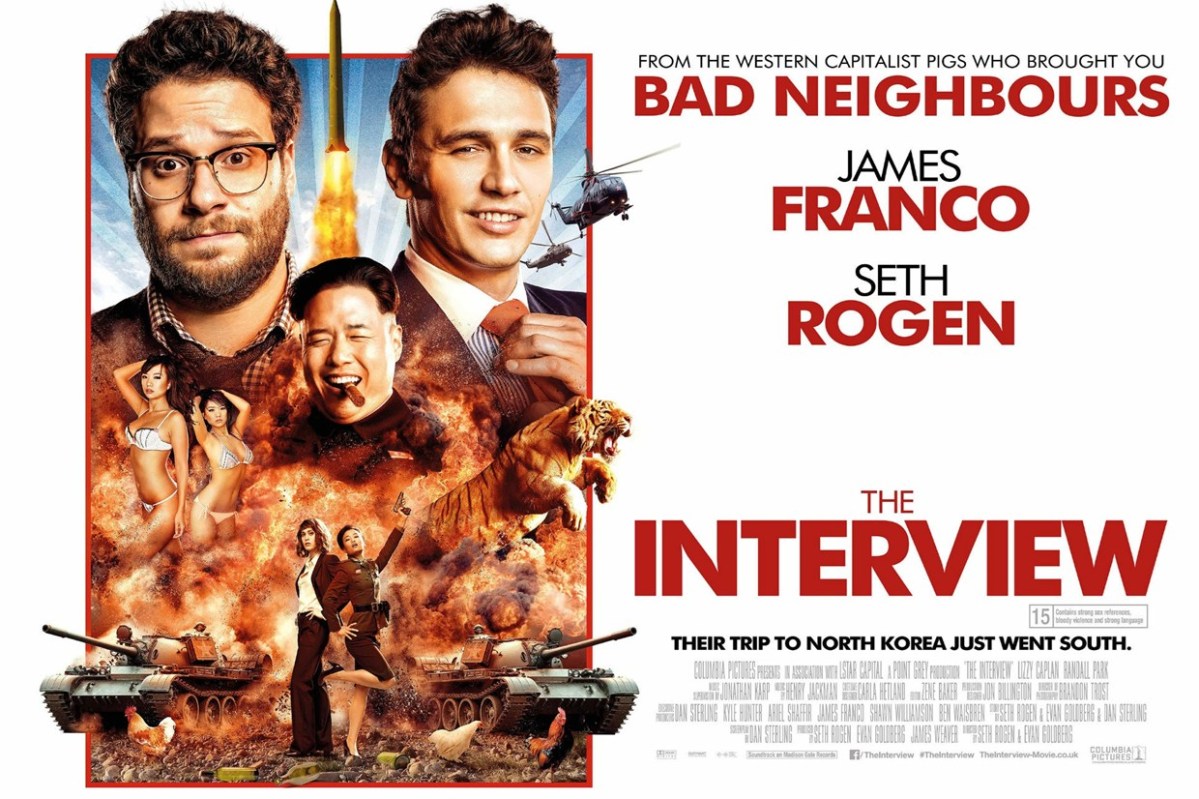
The premise of the film is thus. Dave Skylark (James Franco) is a popular trash entertainment TV presenter in USA and has his own show called Skylark Tonight. However, as they reach their 1000th show his producer Aaron Rapaport (Seth Rogen) longs to produce something with a bit more depth. When an unlikely interview with North Korean leader Kim Jon-Un (Randall Park) becomes a reality, their breakthrough into high-brow entertainment is quickly turned into an undercover CIA mission to assassinate the leader. Hilarity ensues.

The humour in the film is generally derived from one of two sources: poking fun at the North Koreans or crude toilet humour gags. At one point a botched administering of ricin leaves the two stranded in North Korea without the ability to complete the mission. The CIA, in a continuity-challenging move, send over two additional ricin doses in a small rocket. Rogen, by this point facing imminent death due to a stray tiger (what?) and a group of about 15 guards closing in on him decides the only way to save the day is the insert the entire capsule into his anus.

Elsewhere we discover that Kim Jong-Un is a huge fan of cocktails and Katy Perry. He has emotional issues due to disconnection and lack of approval from his father. He regularly spends time with prostitutes. Despite their differences to the Western world, North Korea is a proud nation with a lack of understanding of the ways of the west. On this level it is understandable why this film would cause them a serious issue.

It’s a shame that this film has no sense of intelligent writing that has been on display in the creative outputs of both of its lead characters. Of all the films to fall flat with, it’s most unfortunate that it happened with a film that had the eyes of the world focused on it.

The Interview is out now on Blu-Ray and DVD.