X+Y (Morgan Matthews, 2014)

X+Y is a British film from BBC Films that follows the story of Nathan (Asa Butterfield), a teenage mathematics prodigy who is more comfortable dealing with numbers than he is with people. When he is selected to represent Great Britain on the International Mathematical Olympiad, he is forced to travel to Taiwan. As pressure to perform in the tournament grows and he finds an unlikely source of romance in Zhang Mai (Jo Yang), he soon finds that being out of his comfort zone is the starting point for a challenging journey of self-realisation.

One thing I was worried about as I sat there in the cinema waiting for it to start, was how they were going to portray autism. Inevitably we’re going to compare lead character Nathan to Dustin Hoffman in Rain Man or Russell Crowe in A Beautiful Mind, probably the two most iconic on-screen portrayals of people on the autistic spectrum. Unfortunately for sufferers of autism, this drastically sells the condition short to people who aren’t overly aware of it. Autism is a condition that affects those close to someone on the spectrum as much as the person themselves, and to assume that they will simply be a bit awkward around people and good at maths is doing it a misjustice. Many sufferers find comfort in the strict rules set out in maths – it’s an emotionless interest. However, others find the same solace in a regimented interpretation of music, with its repetitive patterns and melodies and set mathematics behind complimentary frequencies of notes. Others become obsessive over lists and facts, whatever the topic might be. Others just don’t. There are mild forms of autism and severe forms, which is why diagnosis can be tricky as early signs can’t be placed on the spectrum by someone unfamiliar with the condition. 

So it’s unfortunate that autism has been portrayed on screen by means of a maths genius yet again, even though the director has previous work on autism (2008’s Beautiful Young Minds), which covers it in a more factual manner. However, X+Y is by no means just a light-hearted walk in the park and I enjoyed the fact a lot of time was spent with Nathan’s mother Julie (Sally Hawkins) as she came to terms with the loss of a close relative with no emotional support from her son. This was an important portion of the film that gave the right emphasis to the right areas and should be applauded.
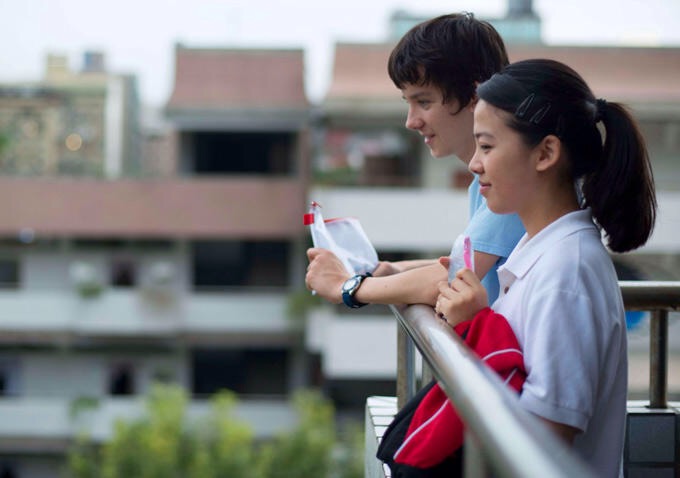


I felt Butterfield’s portrayal of a child suffering from autism was very accurate, and I felt the frustration seeping through his inability to understand others. He has become a very accomplished actor throughout the three or four major films he has been part of so far, and as long as he keeps his feet on the ground for a couple more years he will continue to be successful for a long time.

Another great performance was from Jake Davies as Luke, whose character was a much more acute sufferer of autism. One scene involving a dead prawn stuck out for me and I’m sure we’ll be seeing more from him in the future.

The comradery of the maths students didn’t ring true for me. From first hand experience (I partook in mathematics competitions as a child, to some success), these competitions are far from a sociable affair, with most children very much “in the zone” and either unable or unwilling to communicate with their peers. It was a case of get in, do maths, win. Anything else was just unneccesary. So when there’s laughing and joking and, most notably, a cringeworthy rap session (including an awful rhymical recitation of Pi), I just thought back to the suits and classical music I had to endure and wondered how much it really could have changed.

I felt let down by the end. I’m not going to go into details as the film is yet to be released, but it just didn’t ring true to me and seemed to undo a lot of hard work they’d put in earlier in the film in a manner that suggests to me they got lost with the message they wanted to send out. I’ll let you make your own mind up on that one.

Overall it’s a very accomplished film and has many enjoyable points, but I didn’t feel it quite fulfilled its potential.

X+Y is released at UK cinemas on 13th March 2015.

The Party’s Over (Guy Hamilton, 1963)

The BFI Flipside series is, according to the back of the Blu-ray box, dedicated to “rescuing weird and wonderful British films from obscurity and presenting them in new high-quality editions.” I picked up a few of them when my local Zavvi finally closed down a couple of years ago (yes, there really did used to be Zavvi shops that you could walk into), meaning a lot of Masters of Cinema and BFI releases were reduced to about £7-8. One that I picked up and put at the bottom of my “to watch” list was The Party’s Over, Guy Hamilton’s 1963 controversial release.

Opening with a drunken Chelsea party, we’re immediately introduced to Oliver Reed’s pack leader Moise (pronounced “Mo-Eece”). He’s a handsome and popular guy, not afraid of being the centre of attention but equally happy to slip into the background. He shows off a bit and everyone looks on in admiration. This is then juxtaposed by a painfully cool opening sequence as Melina (Luoise Sorel) walks towards the camera, brilliantly soundtracked by Annie Ross and John Barry.

A shot from the cool opening sequence

A shot from the painfully cool opening sequence

It’s obviously a film that isn’t afraid to glamorise its subject matter and candidly display every part of their lives, and I suspect that was one of the reasons it was withheld from release subject to several cuts and changes. This was 1963 after all, and censor John Trevelyan perhaps thought an audience besotted by a young new group called The Beatles were unnerved enough without this kind of film further rotting their brain. In short, the world wasn’t quite ready for the subject matter [1].

Despite a decent range of characters, it is Oliver Reed who steals the show throughout. His is a character that snaps his fingers and gets what he wants immediately, such is the influence he has over his beatnik and largely non-descript gang members. As the plot develops through some shocking developments – including sexual assault and suicide – it is Reed that maintains his position as the driving force of the narrative, much as Moise is the driving force of the gang.

It is a shame that there are several lacklustre performances. The supporting cast look like they’re straight out of acting school and don’t look overly comfortable in front of the camera. Several of the leading cast either overact or lack conviction, which is quite an achievement in itself when you think about it. Carson (Clifford David), Meilna’s fiancé, provides a solid performance and rescues the film from being a poor one-man-show.

BFI Flipside has been responsible for a number of excellent releases, with as much care given to their release as any famous film. Whilst the audience is undoubtedly more niche, it’s great that we are able to watch a film like The Party’s Over without any edits as the production team originally intended [2]. It’s not a film that has changed my life, but it might have had a much greater impact on the landscape of cinema had the censors not got involved some 50 years ago [3].

The Party’s Over is out now on BFI dual-format Blu-Ray and DVD.

[1] This release contains extensive words on both the censoring of the film and the director’s recollection of making and editing the film in line with the increasing pressure from Trevelyan.

[2] According to the booklet, one edit was made at the request of the director, with the removal of the credits over the opening sequence. It is unnoticeable unless, I suspect, you vividly remember to original.

[3] The Wikipedia page suggests the film was made in 1965. It was eventually released in 1965, but I’ve decided to list the film as a 1963 release. This was done because the version presented is as close as we’ve ever got to a version director Guy Hamilton’s pre-censor vision. The film was completed in 1963 and this is the version I have reviewed. For completionists, the 1965 version is also included on the Blu-Ray disc.

The Theory of Everything (James Marsh, 2014)

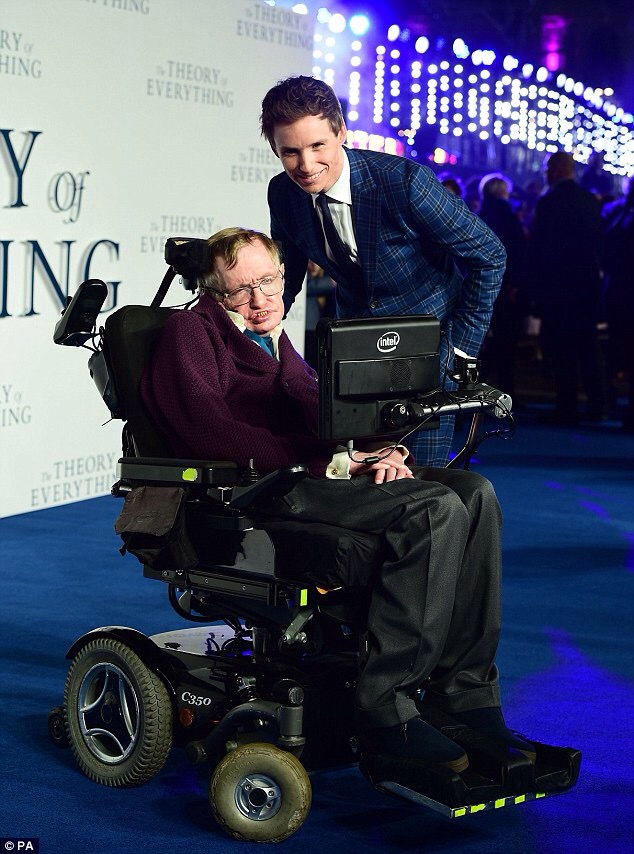
I watched the Stephen Hawking biopic in early February 2015. My challenge was to watch it without influence from the media frenzy surrounding the film and, in particular, Eddie Redmayne’s performance in the lead role. It was fairly easy to block it out, such is the conviction in his performance and the exquisite way it has been captured by director James Marsh and the excellent team of people that helped craft this fantastic film.

In case you’re unaware, Professor Stephen Hawking is a world-renowned theoretical physicist and cosmologist whose book of personal theories A Brief History of Time sold over ten million copies worldwide. He suffers from motor neurone disease (MND), which set in whilst he was still studying at university, and he is now all but completely paralysed. It is a revelation that he is even alive today – he was diagnosed in 1963 and given two years to live. The film tells the story of him reaching university, falling in love with his first wife and mother of his three children Jane Wilde, and becoming the most famous theoretical physicist of the modern world.

2015/02/img_0286.jpg

A little was made in the build up to release of the choice to cast an able-bodied actor as Hawking. Obviously these complaints come from people who haven’t seen the film because you just can’t cast someone with disabilities as Hawking when the first third of the film is spent on his life before his terrible motor neurone disease set in. I think these comments have gone away now as more and more people see the film.

Frankly, Redmayne’s performance was astonishing. He completely nails it, working as both a great piece of acting and an uncanny impersonation. The frustration that must be felt by the thousands of sufferers of MND is channelled directly to the viewer by coupling some intimate close-up camera work with some exceptional acting. If Redmayne wins the Oscar next month it will be because of the latter parts of the film.

Just as important is the characterisation of his wife, whose autobiography this film is based on. It’s a well-balanced treatment, with her choices portrayed honestly but respectfully by Oscar-nominated Felicity Jones. It’s a strong person that sticks around in such testing conditions and nobody can be judged on the choices they make. Just as with Hawking, she is treated with the utmost respect.

2015/02/img_0285.jpg

I’m greatly appreciative that a fantastic film has been made on Hawking as I didn’t think the eponymously titled 2013 documentary quite did his story justice. It too heavily concentrated on his current way-of-life and all the problems that it brings, rather than the works of genius he has brought to the world and the battles he fought to become so popular. It was, for me, a missed opportunity – a story that needs to be told, but one that shouldn’t take precedence over the one told in The Theory of Everything.

I’m not sure how closely the film sticks to the facts, as I’ve not yet read Travelling to Infinity: My Life with Stephen (the book by Jane Wilde Hawking on which this is based). Obviously not every last thing that features in this film will be a perfect account of what happened, but that freedom is allowed in biopics. As with The Imitation Game, the most important thing to do is tell a great story, or it falls short of the mark as a piece of cinematic art. Actually, I think The Imitation Game was a better film in general, and Cumberbatch edges it on the acting front for me, but I doubt the Academy will agree and to be honest that’s far more important.

The Theory of Everything is out now at cinemas worldwide.

Short film review – The Automatic Motorist (W. R. Booth, 1911)

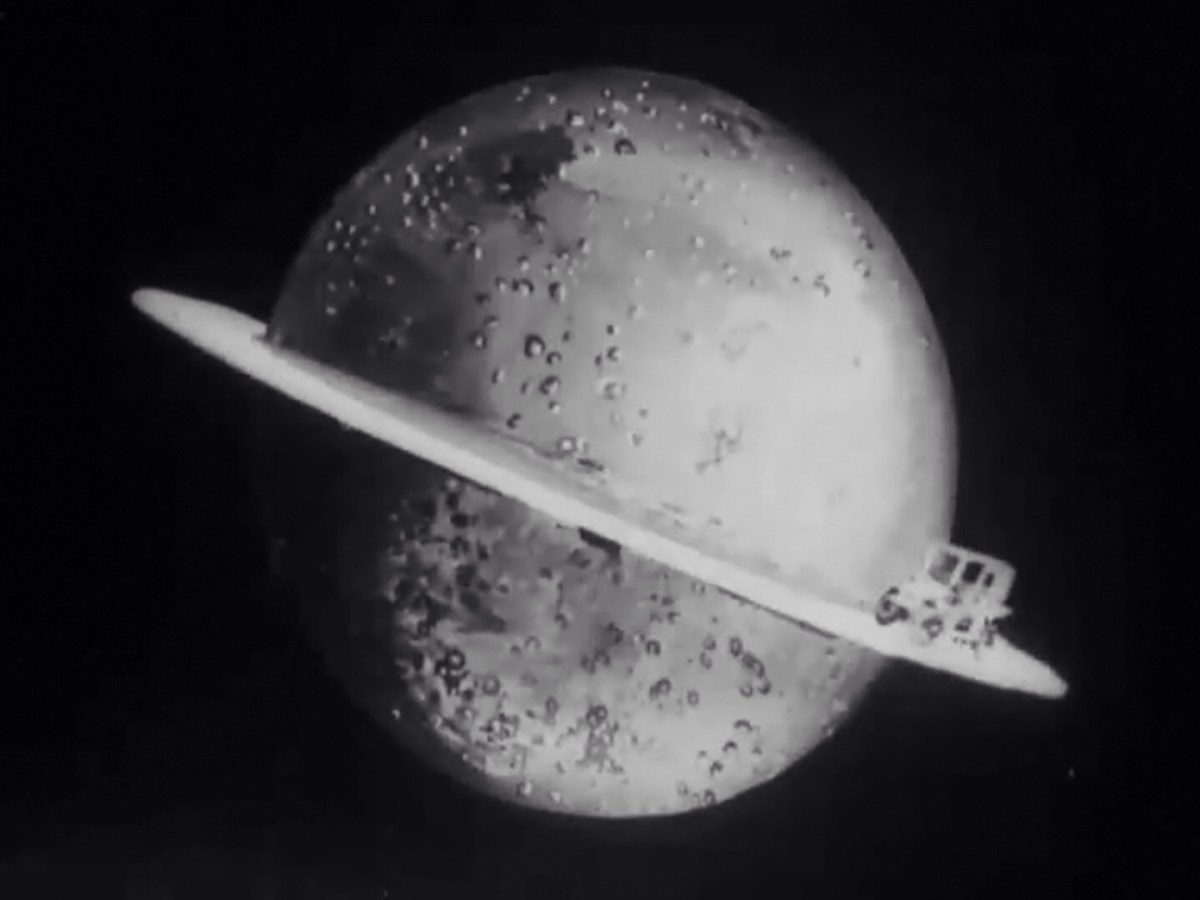
A bride, a motorcar, a robot chauffeur and a policeman – what could possibly go wrong? Fantasy and ‘trick’ film pioneer W.R. Booth uses cut-out animation and models to create a truly out-of-this-world sci-fi adventure. The mad-cap plot sees a newlywed couple transported from a country lane to outer-space (via St Paul’s Cathedral), where the policeman encounters some pretty feisty Saturnians…

http://player.bfi.org.uk/film/watch-automatic-motorist-1911/

Another curiosity from the BFI archives, The Automatic Motorist is a fun and playful short film that is full of science fiction. It’s completely bonkers and has the disjointed feel of a Michel Gondry music video – full of experimental shots that don’t add up to much of a story but that nonetheless provide the viewer with an enjoyable ride. Plus it’s only six minutes long, so you might as well watch it.

BAFTA Awards 2015 – Nominations (Full List)

Best Film
Birdman
Boyhood
The Grand Budapest Hotel
The Imitation Game
The Theory of Everything

Outstanding British Film
’71
The Imitation Game
Paddington
Pride
The Theory of Everything
Under The Skin

Actor
Benedict Cumberbatch – The Imitation Game
Ralph Fiennes – The Grand Budapest Hotel
Jake Gyllenhaal – Nightcrawler
Michael Keaton – Birdman
Eddie Redmayne – The Theory of Everything

Actress
Amy Adams – Big Eyes
Felicity Jones – The Theory of Everything
Julianne Moore – Still Alice
Rosamund Pike – Gone Girl
Reese Witherspoon – Wild

Supporting Actor
Steve Carell – Foxcatcher
Ethan Hawke – Boyhood
Edward Norton – Birdman
Mark Ruffalo – Foxcatcher
JK Simmons – Whiplash

Supporting Actress
Patricia Arquette – Boyhood
Renee Russo – Nightcrawler
Keira Knightley – The Imitation Game
Imelda Staunton – Pride
Emma Stone – Birdman

Director
Wes Anderson – Grand Budapest Hotel
Damian Chazelle – Whiplash
Alejandro Gonzalez Inarritu – Birdman
Richard Linklater – Boyhood
James Marsh – The Theory of Everything

Adapted Screenplay
American Sniper – Jason Hall
Gone Girl – Gillian Flynn
The Imitation Game – Graham Moore
Paddington – Paul King
The Theory of Everything – Anthony McCarten

Original Screenplay
Birdman – Alejandro G. Inarritu, Nicolas Giacobone, Alexander Dinelaris Jr, Armando Bo
Boyhood – Richard Linklater
The Grand Budapest Hotel – Wes Anderson
Nightcrawler – Dan Gilroy
Whiplash – Damien Chazelle

Animated Film
Big Hero 6
The Boxtrolls
The Lego Movie

Documentary
20 Feet from Stardom
20,000 Days on Earth
Citizenfour
Finding Vivian Maier
Virunga

Foreign Film
Ida
Leviathan
The Lunchbox
Trash
Two Days, One Night

Cinematography
Birdman – Emmanuel Lubezki
The Grand Budapest Hotel – Robert Yeoman
Ida – Lukasz Zal, Ryzsard Lenczewski
Interstellar – Hoyte van Hoytema
Mr Turner – Dick Pope

Costume Design
The Grand Budapest Hotel
The Imitation Game
Into the Woods
Mr Turner
The Theory of Everything

Editing
Birdman – Douglas Crise, Stephen Mirrione
The Grand Budapest Hotel – Barney Pilling
The Imitation Game – William Goldenberg
Nightcrawler – John Gilroy
The Theory of Everything – Jinx Godfrey
Whiplash – Tom Cross

Make-up and Hair
The Grand Budapest Hotel – Frances Hannon
Guardians of the Galaxy – Elizabeth Yianni-Georgiou, David White
Into the Woods – Peter Swords King, J Roy Helland
Mr Turner – Christine Blundell, Lesa Warrener
The Theory of Everything – Jan Sewell

Music
Birdman – Antonio Sanchez
The Grand Budapest Hotel – Alexandre Desplat
Interstellar – Hans Zimmer
The Theory of Everything – Johann Johannsson
Under the Skin – Mica Levi

Production Design
Big Eyes – Rick Heinrichs, Shane Vieau
The Grand Budapest Hotel – Adam Stockhausen, Anna Pinnock
The Imitation Game – Maria Djurkovic, Tatiana MacDonald
Interstellar – Nathan Crowley, Gary Fettis
Mr Turner – Suzie Davies, Charlotte Watts

Sound
American Sniper – Walt Martin, John Reitz, Gregg Rudloff, Alan Robert Murray, Bub Asman
Birdman – Thomas Varga, Martin Hernandez, Aaron Glascock, Jon Taylor, Frank A Montaño
The Grand Budapest Hotel – Wayne Lemmer, Christopher Scarabosio, Pawel Wdowczak
The Imitation Game – John Midgley, Lee Walpole, Stuart Hilliker, Martin Jensen
Whiplash – Thomas Curley, Ben Wilkins, Craig Mann

Visual Effects
Dawn of the Planet of the Apes – Joe Letteri, Dan Lemmon, Erik Winquist, Daniel Barrett
Guardians of the Galaxy – Stephane Ceretti, Paul Corbould, Jonathan Fawkner, Nicolas
Aithadi
The Hobbit: The Battle of the Five Armies – Joe Letteri, Eric Saindon, David Clayton, R Christopher White
Interstellar – Paul Franklin, Scott Fisher, Andrew Lockley
X-Men: Days of Future Past – Richard Stammers, Anders Langlands, Tim Crosbie, Cameron Waldbauer

British Short Animation
The Bigger Picture – Chris Hees, Daisy Jacobs, Jennifer Majka
Monkey Love Experiments – Ainslie Henderson, Cam Fraser, Will Anderson
My Dad – Marcus Armitage

British Short Film
Boogaloo and Graham – Brian J Falconer, Michael Lennox, Ronan Blaney
Emotional Fusebox – Michael Berliner, Rachel Tunnard
The Karman Line – Campbell Beaton, Dawn King, Tiernan Hanby, Oscar Sharp
Slap – Islay Bell-Webb, Michelangelo Fano, Nick Rowland
Three Brothers -S Aleem Khan, Matthieu de Braconier, Stephanie Paeplow

Outstanding Debut by a British Writer, Director or Producer
Elaine Constantine (writer/director Northern Soul)
Gregory Burke, Yann Demange (writer and director ’71)
Hong Khaou (writer/director Lilting)
Paul Katis, Andrew De Lotbiniere (director/producer and producer Kajaki: The True Story)
Stephen Beresford, David Livingstone (writer and producer Pride)

Rising Star Award
Gugu Mbatha-Raw
Jack O’Connell
Margot Robbie
Miles Teller
Shailene Woodley

Testament of Youth (James Kent, 2015)

Testament Of Youth is a dramatisation of the memoirs of famed pacifist Vera Brittain. Her story is a powerful and heartbreaking one to tell. It’s just a shame that first-time director James Kent fails to bring it to life.

Alicia Vikander portrays Brittain as she watches her fiancé Roland (Kit “You Know Nothing” Harington) leave France to fight in World War I, along with her brother Edward (Taron Egerton) and friends Geoffrey (Jonathan Bailey) and Victor (Colin Morgan). The story follows her as she joins the fight as a frontline nurse, giving up her studies at Oxford University to get closer to her loved ones in France.

/home/wpcom/public_html/wp-content/blogs.dir/002/60589995/files/2015/01/img_0126.jpg

Premiering at the BFI London Film Festival in the year of the centenary of the start of the war, giving the story additional poignancy, the underlying themes of the film are no less true today. We see Brittain in all her inspirational glory, fighting for her beliefs and showing resilience in the face of adversity.

But it is far from a perfect film. Perhaps one of the most distracting parts of the feature is Kit Harington. Known a little for his modelling work but quite a lot more for his role as Jon Snow in HBO’s episodic epic Game of Thrones, he failed to ignite anything but boredom in me as I watched him try to manage a deep gamut of emotions whilst just looking a bit lost and out of place.

The pacing of the film was another downside. I think the tendency with these wartime biopics is to draw them out and allow them space to breathe, but I’m sure this could have been cut slightly. Alternatively, if they wanted to give the story more time to develop, they could have opted for a more appropriate mini-series. Oh wait…

Vikander’s accent needed work. She is of Swedish origin and clearly hasn’t mastered the English nuances yet. You’d have thought that there were better options available, although director Kent has previously stated how thrilled he was that she signed up. Maybe I missed something.

My final bug-bear is the desire to build up sympathy in a character that seemingly has everything. We watch her in the opening scenes have a disagreement with her father because he bought her a grand piano instead of helping fund her to go to university. She storms off out of the room, whilst their maids look on in horror, up the stairs and into her oversized room, which I think was in the East Wing. You get the idea. I just don’t find this sort of thing entertaining as I have no connection to that sort of lifestyle.

The film has tough competition at the box office from Oscar tips Birdman, Foxcatcher, Cake, American Sniper, Whiplash, The Theory of Everything (the list goes on). There are still some huge blockbusters too in The Hobbit: Battle of the Five Armies, Into The Woods, Hunger Games: Mockingjay Part One, Paddington and How To Train Your Dragon 2. And Dumb and Dumber To is still on. I’m sure this film won’t be overlooked when it hits home media releases later this year, but I can’t see why they’re releasing it in awards season. It needs more help than that.

Testament of Youth is released in UK cinemas on 16th January 2015.

Esio Trot (Dearbhla Walsh, 2015)

There have been many adaptations of Roald Dahl’s many novels and short stories. Some were great: Matilda, Willy Wonka and the Chocolate Factory and, surprisingly, Gremlins (yes, I know*) were all brilliant. Others were just awful (I may just be thinking about Tim Burton’s Charlie and the Chocolate Factory, which is frankly beyond creepy and really is an abomination to the source). It was quite a surprise to realise that Esio Trot has never been made into any kind of feature film, though based on the cast and the time slot this aired (6:30pm, New Year’s Day, BBC1), I was expecting a soft and faithful take on what was always a whimsical story. This is exactly what I got.

/home/wpcom/public_html/wp-content/blogs.dir/002/60589995/files/2015/01/img_0116.jpg

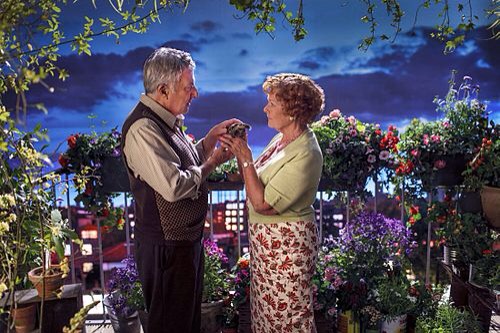
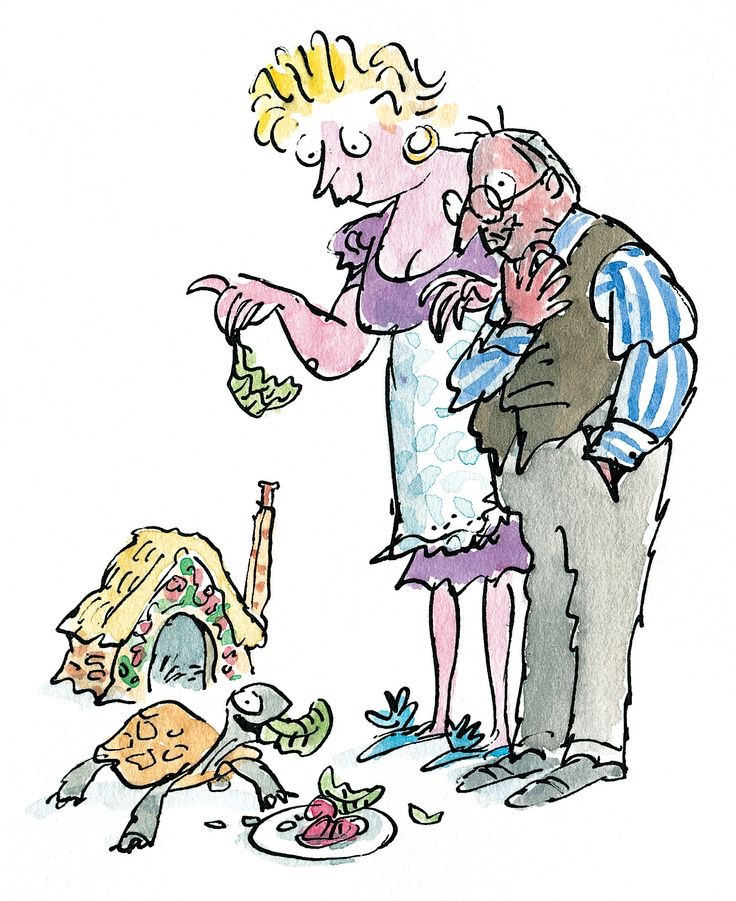
This television adaptation stars Dustin Hoffman as Mr Hoppy, an older man who lives alone in a flat in London with nothing much to keep his interest except his love of traditional jazz and a meticulously maintained flower garden terrace. This is all turned upside down when Mrs Silver (Dame Judi Dench) moves into the flat below and he is immediately overcome with feelings of love and excitement. He hatches an elaborate plan involving the growth of her beloved pet tortoise Alfie knowing it will bring her happiness, in the belief that she will fall in love with him as a result.

The supporting cast, including James Corden as narrator and Richard Cordery as the annoying neighbour Mr Pringle (a new character created especially for this adaptation), worked their parts well, though this really was a tale of two hearts.

It was a faithful take on the classic Dahl book, one of the last of the seventeen children’s novels he wrote. By this I don’t mean just in the details (and there were one or two deviations made by the writers Richard Curtis and Paul Mayhew Archer, mainly because the original book was so short), but also in the tone.

It isn’t an easy book to tackle in comparison to the likes of Matilda and Charlie and the Chocolate Factory. Dahl’s books are always firmly aimed at children, and many of his most enduring successes are stories that prominently feature relatable young characters. In Esio Trot, however, we are presented with two much older individuals, and thus a conundrum for the filmmakers. I am pleased to say they were able to maintain the quintessential Dahlness we have grown to love over the years. It would have been far easier to adapt the story to one aimed at the older generation, those the same age as Hoppy and Silver.

/home/wpcom/public_html/wp-content/blogs.dir/002/60589995/files/2015/01/img_0117.jpg

Looking back, I’m not sure why I loved this story so much as a child. It is essentially a love story between two lonely and wrinkled septuagenarians. Perhaps it was the ridiculous mischief of the plan Hoppy executed. I’m not entirely sure. In many ways, Esio Trot is the biggest vindication of Roald Dahl’s status as one of the greatest children’s authors that ever lived. How else could he have made this one work?

Esio Trot is available for purchase on DVD now.

* The 1984 film Gremlins is loosely based on the characters developed by Dahl for his 1943 book The Gremlins, which were to be the basis of a Walt Disney Studios animated film until plans were shelved. The gremlins in his book derived from the mythical creatures that British Air Forces pilots blamed unknown faults with their aircrafts on.

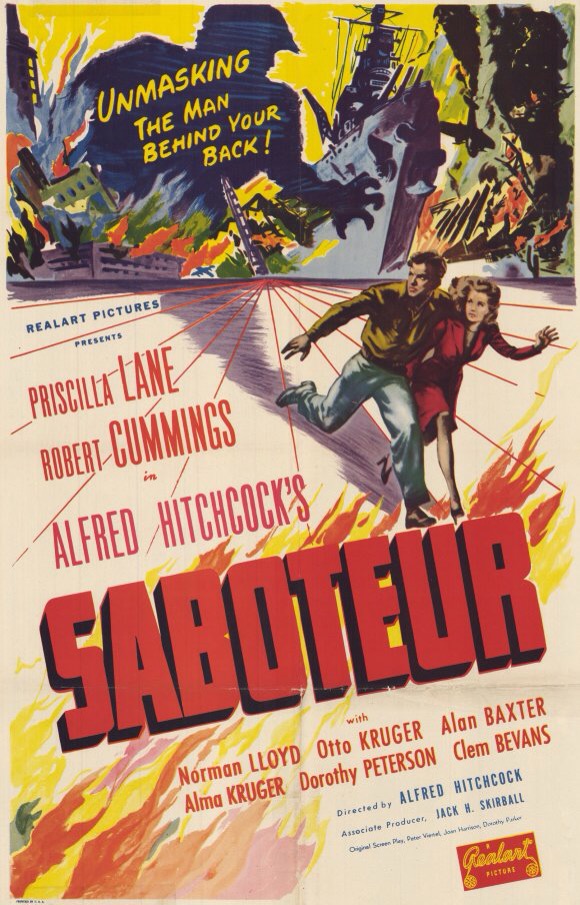
Saboteur (Alfred Hitchcock, 1942)

The earliest film included in the Hitchcock Masterpiece Blu-Ray Collection, Saboteur offers viewers a chance to see the master before the string of films he is most remembered for (Vertigo, Psycho, The Birds, to name but three) but long after he had established himself as a first class director.

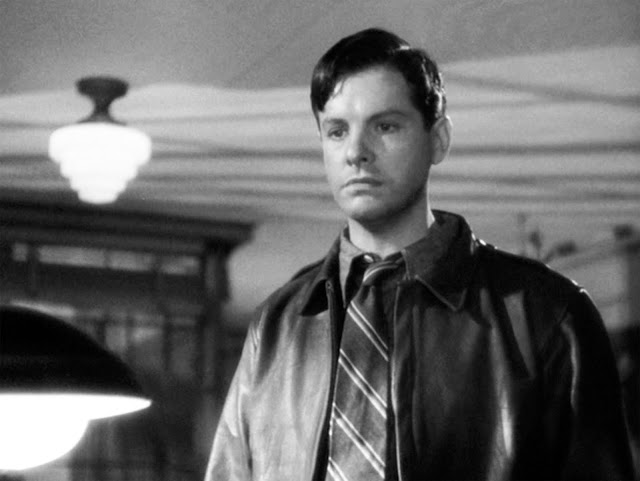
Barry Kane

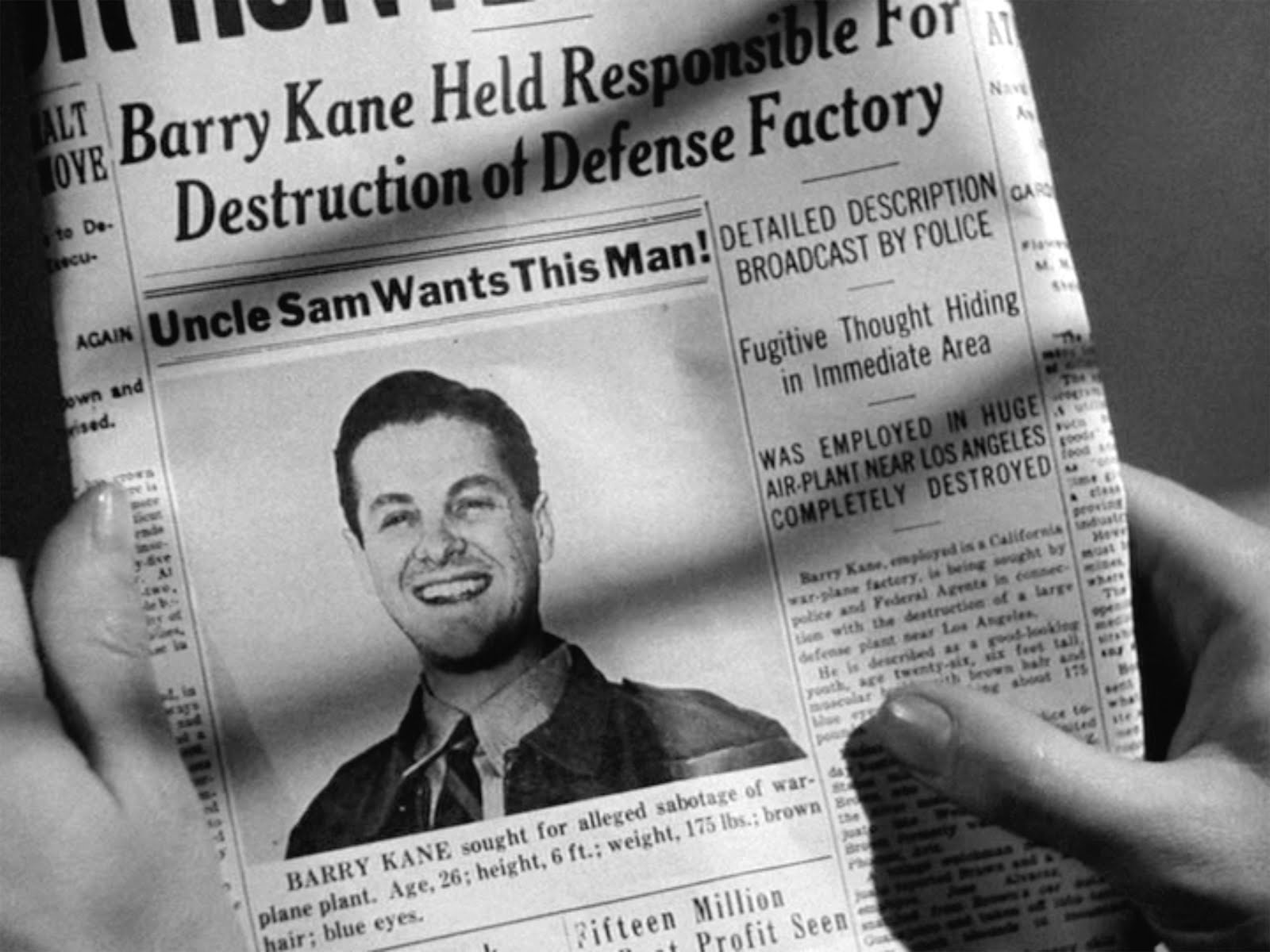
The wartime story follows Barry Kane (Robert Cummings) as he is framed for a murder he did not commit. We pick up the story as Kane, a worker in an aircraft factory, is accused of causing a fire that kills his friend Mason (Virgil Summers), though he believes that it is a mysterious man named Fry (Norman Lloyd) who is really behind it. Kane is quickly being embroiled in the unravelling of a complicated cover-up involving a whole array of people he comes across, all seemingly involving a secret community of saboteurs attempting to fulfil a plot to blow up the USS Atlanta battleship. His eventual companion and love interest comes in the form of Pat Martin (Priscilla Lane), who provides a counterpoint to his story arc and is a very intriguing character in her own right.

The first thing to say is that this is not vintage Hitchcock. The cast will be largely unfamiliar to modern cinema fans, though that is not to say they are all terrible. The storyline is enticing but not gripping, with a number of conveniences allowing an easy route to the next step of the journey. Actually, the plot is at time nonsensical and you have to forgive this to enjoy it. Some of the acting is below par, particularly from the Mason housemaid and the blind father of Martin, whose performance is afforded a rousing and self-righteous speech about what it is to be a real American.

Saboteur Newspaper

There are a few hallmarks of the great director on display though. Of course he gets his cameo, this time quite early on in the film. It is quite standard, though this was mainly due to Hitchcock appeasing the censors by cutting his originally planned argument between two deaf-mute pedestrians. We also see a much-revisited theme: an innocent man presumed guilty and on the run from the police. It’s a joy to see an early take on this, though admittedly it would later be trumped several times by Hitchcock as he created some of the greatest films ever made.

One thing I loved was the climactic scene on top of the Statue of Liberty. It’s actually worth watching just for this scene, with some brilliant close-up shots and clever cutting between parallel stories building the tension into a frenzy as a life hangs by a thread. It truly is a masterclass in suspense and at this early stage was merely a hint of what Hitchcock would achieve later in his career.

The best way I can think to sum this up is that it’s a great place to start for people looking to investigate the underbelly of Hitchcock’s vast catalogue of films. With the 14-disc Hitchcock Masterpiece Collection currently on sale for a mere £34.99 at Zavvi, now is the perfect time to start.

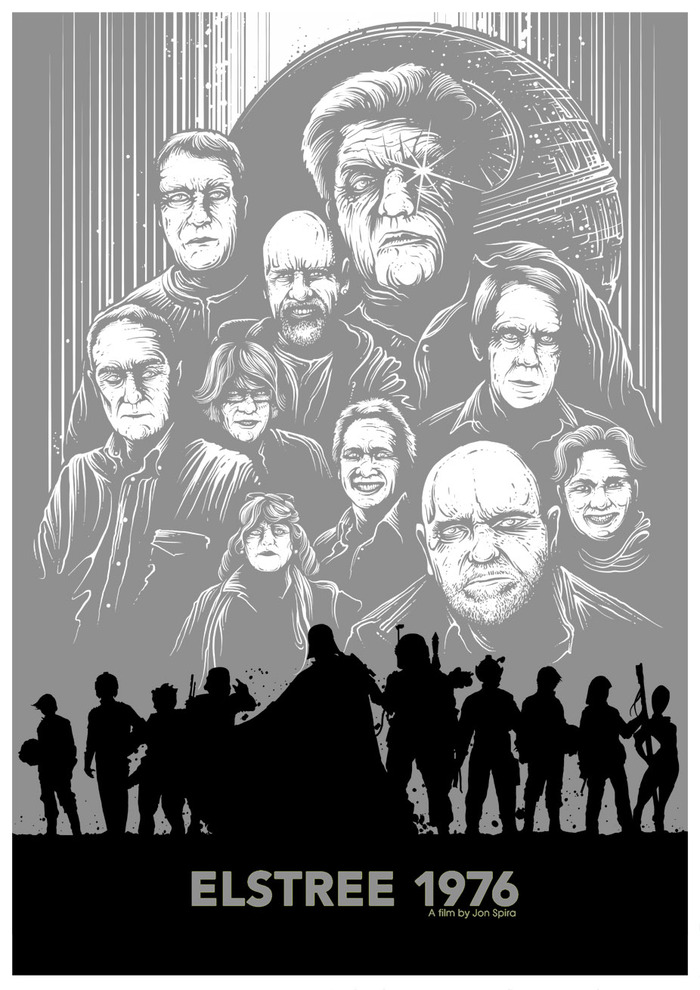
Upcoming Crowdfunded Films Preview Part Three: Elstree 1976

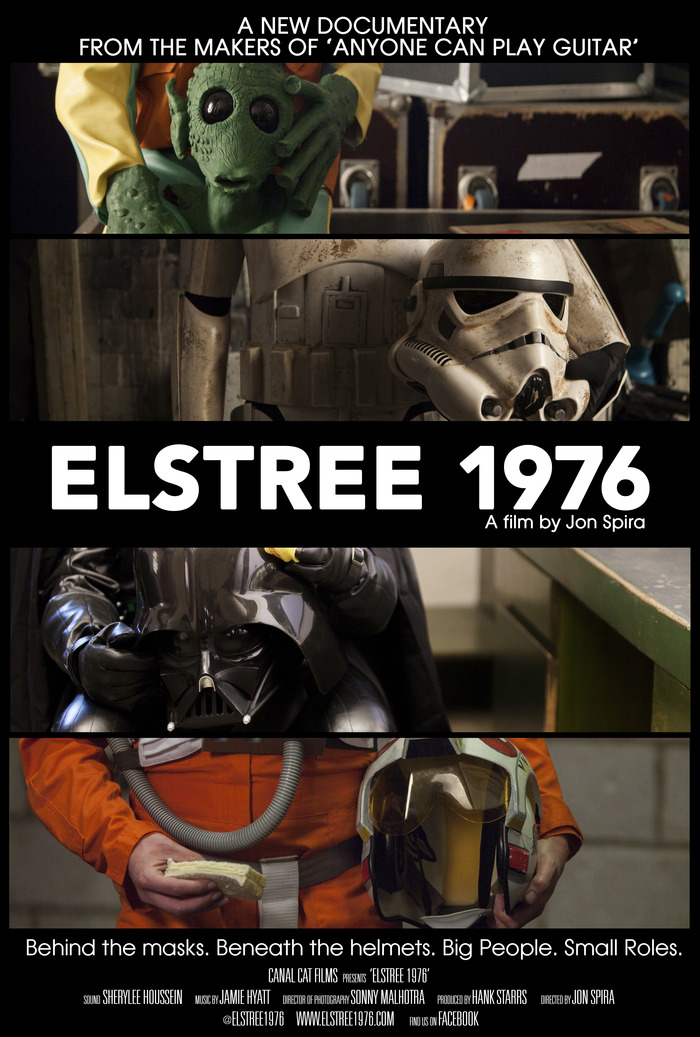
Elstree 1976 charts the lives of ten people who were featured in some way in the original Star Wars film. This includes people we know already: David Prowse (the body of Darth Vader), Jeremy Bulloch (Boba Fett) and Paul Blake (Greedo) are all involved. There are also a few people who were extras only, including one who was in the film for less than a second. They didn’t realise at the time but their involvement with the film would come to define their lives, something that they have forever been associated with and can’t get away from, whether they like it or not.

This film promises to find out their side of the story, through a series of interviews with all of them and footage of them at conventions, giving a side of the story never seen before. The filmmakers are keen to stress that this is not just a film to provide Star Wars fans with loads of new stories about the making of the film. I think this is a wise move – the stories have been told so many times and if you’re really interested in that side of things you probably have all of the various DVDs and Blu-rays with their respective bonus features.

It will instead fell the stories of the forgotten men, those whose lives are now ruled by a seemingly inconsequential decision to take up a lowly paid job as an extra. Judging by the trailer, some clearly enjoy it whilst others detest the fact that their best way to earn money is to play into the hands of the geeks who desire their autographs.

elstree1976

It doesn’t promise to be a laugh-a-minute, but rather a humorous and sometimes painful look at the lives of people who otherwise never get any attention. Jon Spira – who has already proven himself as an excellent filmmaker with the much celebrated 2011 music documentary Anyone Can Play Guitar – has spent months and months getting deep into interviews with his ten subjects and judging by the updates there’s plenty to go on, with editing and post-production beginning in earnest in February 2015. As documentaries go, this is bound to be quirky but I predict it will find a wide audience if the momentum can keep building, especially with its release schedule set to coincide with Star Wars VII: The Force Awakens next year.

Elstree 1976 is set for release in November 2015.

’71 (Yann Demange, 2014)

Screened as part of the First Feature competition at the London Film Festival, Yann Demange’s ’71 is an accomplished action thriller that serves as yet another reminder of the supreme talents of Jack O’Connell.

Set during The Troubles in 1971, the story follows Derbyshire soldier Gary Hook (O’Connell) who has been sent on his first mission with the Armed Forces to Belfast. His first call out, to quell some disturbances in a housing estate dubbed as “the front line” near the Falls Road, goes wrong fairly quickly and he is thrust into a man-in-hiding situation, on the run from the locals who believe the British Armed Forces have no place in their conflict. In danger and in isolation, the story becomes an cross-analysis of one man desperate to survive and return to his base safely.

IMG_9233.JPG

What I found interesting was how similar this plays out to other recent films set in more modern wars. One that immediately springs to mind is the Mark Wahlberg-starring Lone Survivor, which was set in Afghanistan. Of course the two films are as far apart as you could get in terms of style, but it serves as a reminder of how extreme the conflicts had got in the early 1970s.

Despite his frequenting of the tabloids, Jack O’Connell keeps on proving himself to be an actor with plenty of natural talent and it’s fantastic to see him building on his excellent performance in last year’s Starred Up (also reviewed here).

IMG_9232.JPG

There are moments of real tensions and shock along the way. I think it would be unfair of me to discuss them in great detail as I might ruin a great film that needs to be seen first-hand.

With a fantastic support cast (Sean Harris stands out as Captain Sandy Browning), this is a solid film worthy of your attention. Seek it out.

’71 is released in cinemas across the UK on 10th October.