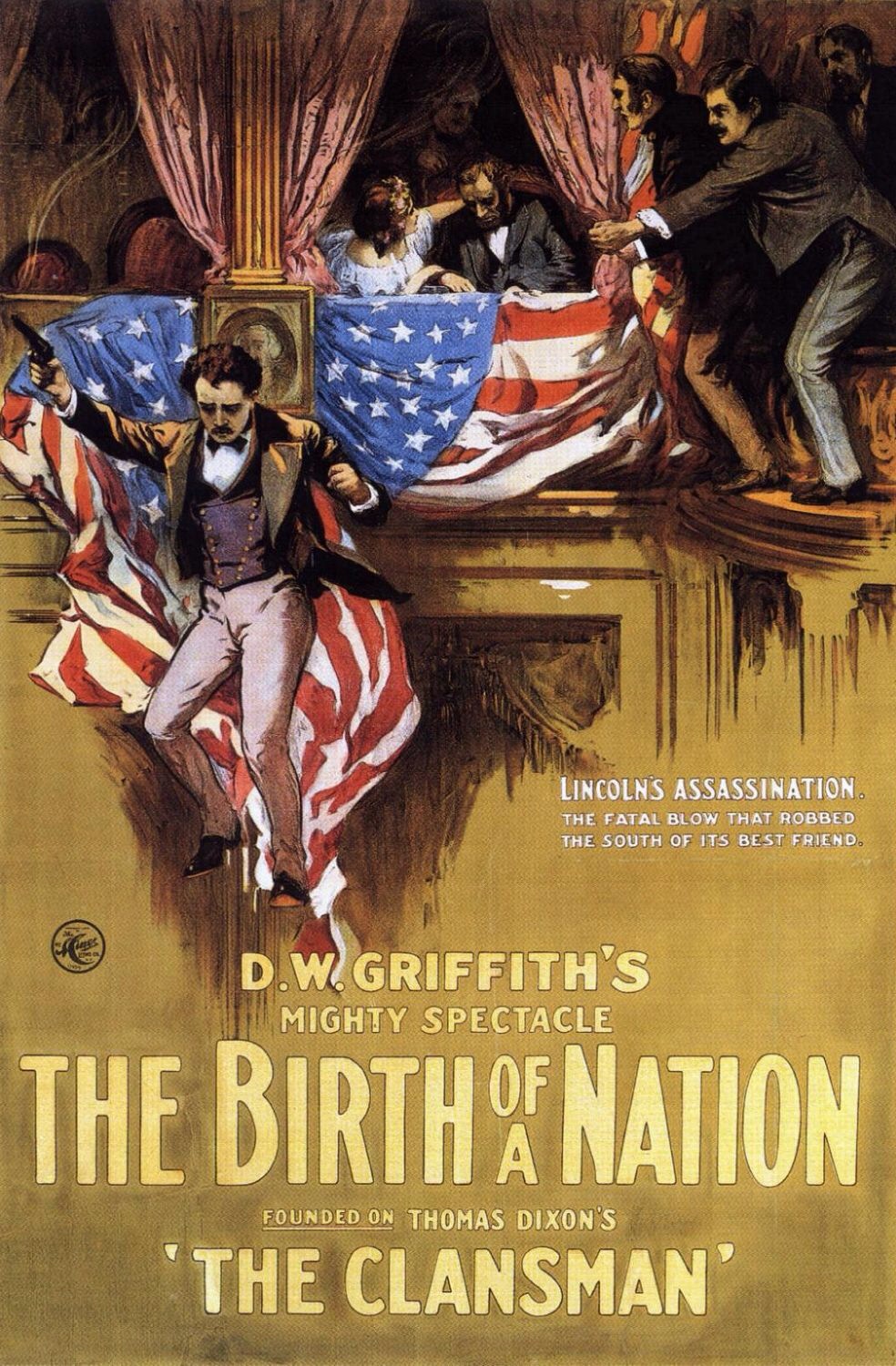
Why would I watch a film like The Birth of a Nation? It clocks in at 169 minutes long, and as a silent film that is now 100 years old I’d expect the narrative structure and storytelling to be a far cry from what I’m used to today. The storylines cover a period of history that I don’t associate with, and it is the history of a country that I have experienced first-hand only through Orlando theme parks, which despite their best intentions probably aren’t a fair representation of the rest of the USA.
There is a certain detachment from it that means it lacks the stigma I’m sure it holds for Americans. Perhaps it’s the challenge of being able to say I’ve watched it, or to see for myself what all the critics have discussed many times over. Let’s not forget that it holds a 100% fresh rating on Rotten Tomatoes, was the highest grossing film of all time until Gone With The Wind some 25 years later, and it is regarded as one of the most culturally significant films of all time. These facts alone should make it essential viewing for a fan of the history of cinema.
The film starts small and builds to encompass some of the biggest political changes the world has ever seen. Initially, we focus on two families: the Stonemans and the Camerons. The Stonemans are a pro-Union family from Northern US, and they set off to visit the Camerons, a South Carolina-based pro-Confederacy family. Romance and friendship fly between some of the younger members, but this is curtailed when the young men are forced to join their respective armies for the Civil War. Their stories and relationships are intertwined throughout the film, all with the backdrop of some great war battle scenes, some (at the time) shocking torture scenes, the assassination of Abraham Lincoln, the founding of the Ku Klux Klan and the entry into Reconstruction-era USA. It’s complex, it’s ambitious and on a purely story-driven level it really works. Films of this grand scale had never been attempted before and it’s not difficult to imagine the wow factor experienced by the audiences when they originally saw it.

That said, it’s extremely difficult to cover everything necessary to put this film into context. I’m sure whole university courses have been taught on the subject. It is one that traverses cinema, film history and political history and it would take a braver man than I to tackle everything in a short review. The elements of the film that are now deemed to be racist are interesting only from a historical point of view. Indeed, it is alarming that they were ever considered to be not racist. This includes, but isn’t limited to: the romanticisation of the founding of the KKK; African Americans getting elected into parliament only to be shown drinking during parliamentary sessions once in power; the portrayal of white men as the victims for large periods of the second half of the film; the way that the mere suggestion of interracial marriage is shown as abhorrent to white people; and most offensively, the Ku Klux Klan being shown as simply upholding the good values of the land and being the savours of an honest and righteous USA.
One African American is portrayed as a sexual deviant in one scene depicting the attempted rape of a central white character, who opts for suicide in one of the most suspenseful and heartbreaking scenes of the film. It’s segments such as this that really underline both the achievements and the failings of the film, with some pioneering techniques used to create a real edge-of-the-seat experience juxtaposed by subject matter that should never have seen the light of day.
It’s an eye-opener for the political status of the USA in 1915 that this is the case. The fact is that there are quite blatantly racist depictions of African Americans, particularly in the second half, and on every level these are jarring for the modern viewer. Couple this with the length of the film and the fact it’s a silent film and you have something that is quite inaccessible for the casual viewer.

Certainly Griffith, directing what would come to be his defining picture, felt he had to add a pre-title screen statement clarifying and justifying the existence of the film (this was added to a re-release of the film after its exceptionally successful initial run). Later, riddled with guilt about the success of the film and – more importantly – who it was finding success with, he released Intolerance in 1916, which went a long way to protect his reputation and show other sides of the argument by heavily criticising racism and prejudice. Later he released the first cinematic portrayal of interracial romance (Broken Blossom, 1918). Also included on this disc (the Masters of Cinema PAL release) is a seven minute interview that introduced the film from 1930 onwards, where he attempted to justify the release further. It must have been a tough situation to be in for Griffith, being lauded for a film that you no longer wished to be associated with.
I’m glad I watched it, and I would highly recommend it to anyone interested in the history of film. For a casual viewer who wants to be entertained, I see nothing for you here.
The Birth of a Nation is out now on Masters of Cinema Blu-ray and DVD dual-format release, whilst Griffith’s later film Intolerance will be released on Blu-ray, also via Masters of Cinema, on 8th December 2014.