Stalag 17 (Billy Wilder, 1953)

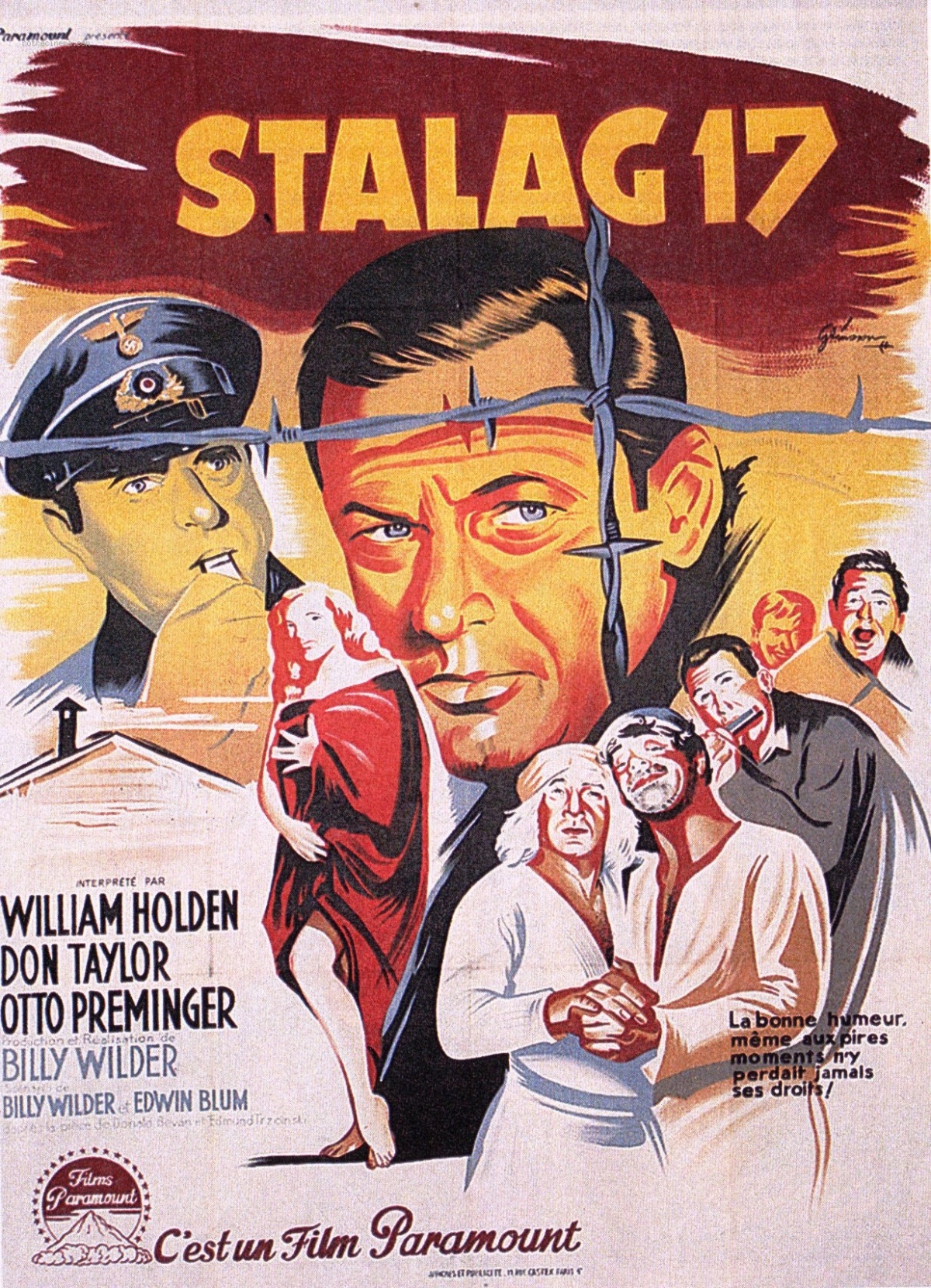
Billy Wilder made a habit of directing films that are arguably the quintessential examples of their genre. In 1944’s Double Indemnity he defined the film noir genre. Then in 1950 Sunset Boulevard hit the big screen, perhaps the best film to ever tackle Hollywood itself. With Stalag 17, a film released in 1953, he directed what many people consider to be the greatest Prisoner of War (POW) film ever released. Of course, fans of The Bridge on the River Kwai and The Great Escape may argue the toss, but Stalag 17 is up there with the best of them.
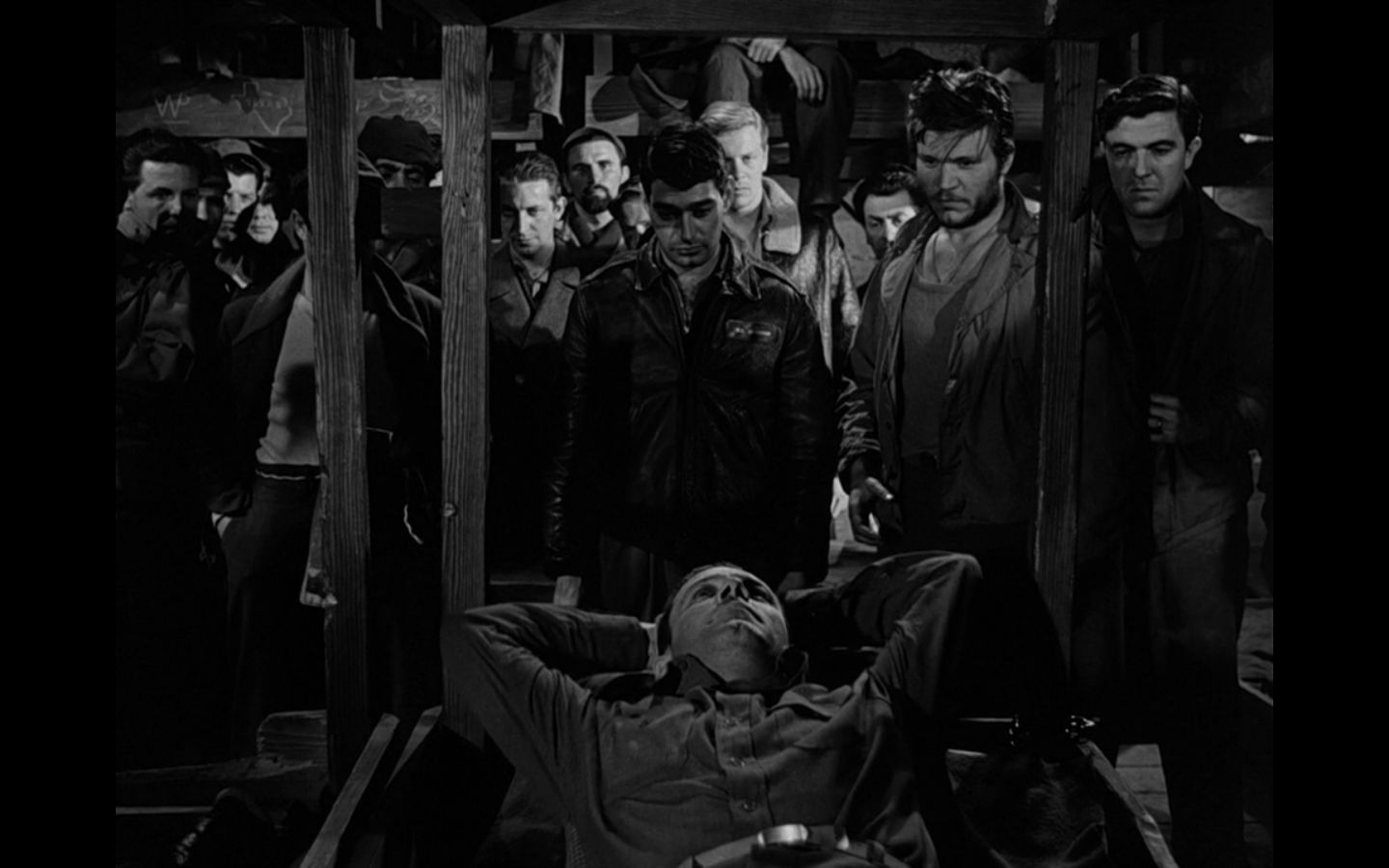
One of the most memorable scenes of the film, expertly framed.

One of the most memorable scenes of the film, expertly framed.

Set in 1944, the film focuses on the titular Luftwaffe POW camp where 640 American captured sergeants reside alongside Polish, Czech and Russian captives. It is narrated by Clarence “Cookie” Cook (Gil Stratton), reminiscing on his time in the camp. The opening sequence shows two men trying to escape from the camp, whilst the remaining men in their block argue with Sefton (William Holden) about their potential success at escaping as he takes their bets. As the only person sure of their failure, Sefton wins a large supply of cigarettes from his comrades. As the men come around to the thought that their failure may have been caused by a tip off to one of the Nazi officers, suspicion falls on the ever-cynical Sefton, who appears to be profiting nicely from various trades and deals far more than anyone else held captive. Unwilling to protest his innocence, Sefton resolves to find the real informer and expose him before another there are any more casualties.

What strikes most prominently about this film is its inclination towards comedy. It is certainly rooted in the seriousness of being held as a POW in Nazi Germany, but the comradeship and light-heartedness with which the Americans deal with their situation sets it apart from other films in this genre. It doesn’t just stop at the relationship between those of the same nationality. Indeed, it takes on quite a comical depiction of the relationship between the guards and the captives, illustrating a softer side to the Nazi officers that is seldom depicted elsewhere.

As the film progresses, however, the comical aspects fade somewhat to allow the seriousness of the situation to take centre stage. This contrast is less harsh than, say, Life is Beautiful (Roberto Benigni, 1997), but it works perfectly. The light-heartedness encourages the viewer to warm to all the characters quicker than would have otherwise been possible and by the time the final act plays out the tension is at its peak.

William Holden rightly won an Oscar for his performance as Sefton, spoiling the party that year for the likes of Marlon Brando (Julius Caeser) and Richard Burton (The Robe). The popularity of the film can be put down to two factors at the time. Firstly, the film was withheld from release until 1953 because Paramount Pictures didn’t believe anyone would be interested in a POW film; only when the release of prisoners following the end of the Korean War did it have a widespread political context (both the US release and the end of the Korean War occurred in July 1953). Secondly, the backdrop of the film industry itself was focused on the Hollywood Blacklist, a list of those industry professionals considered to be supportive of communism. This was at its height in 1953, but no studios would dare release a film to directly tackle these issues. The storyline of a lone man being singled-out by his peers based on false circumstantial evidence will no doubt have gained extra resonance against this ongoing issue.

Stalag 17 deserves to be seen, for its excellent performances, magnificent direction and historical relevance. With it being a Masters of Cinema release, there has never been a better time to check it out.

Stalag 17 is available to purchase now from Masters of Cinema on Blu-Ray.

Masters of Cinema Cast – Episode 42: The Lost Weekend (Billy Wilder, 1945)

I had the pleasure this week of recording an episode of the hugely popular and entertaining podcast Masters of Cinema Cast with Joakim Thiesen. We talked at great length about the 1945 Billy Wilder film The Lost Weekend.

Here’s the link.

Give it a listen! Hope you enjoy it!

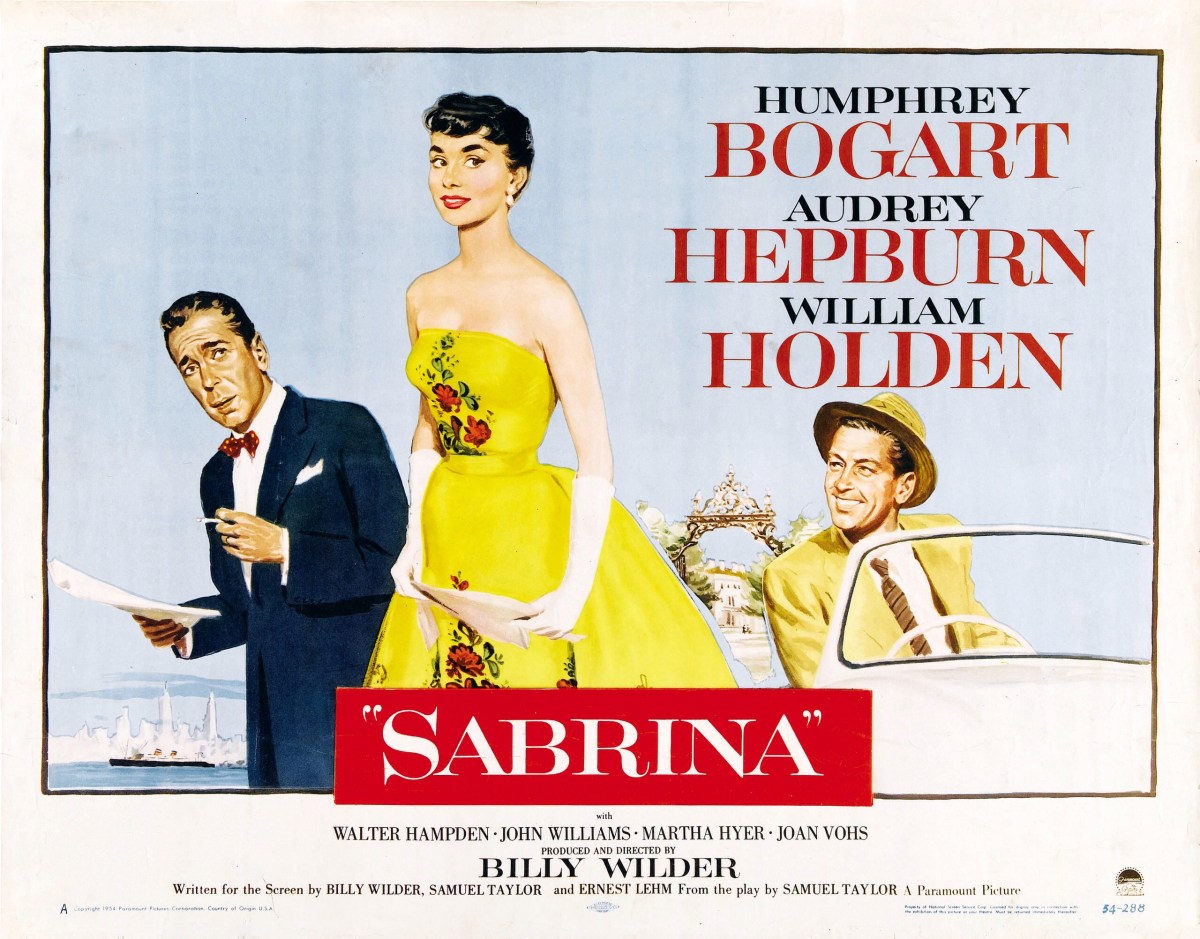
Sabrina (Billy Wilder, 1954)

In 1954, Audrey Hepburn was at the start of a run that saw some of her most popular roles, having been nominated for an Academy Award for her role in Funny Face the year before and also winning a Tony Award for her title role in the stage production of Ondine in 1954. Sabrina’s release saw her cement her position as a global star, providing an Academy Award nomination for her role, a win for the costume design for Edith Head [1] and garnering critical and commercial success worldwide. 

[SPOILER ALERT] 

The following paragraph summarises the synopsis, but potentially has spoilers for the first fifty minutes of the film. I’ve not seen the trailer, but I imagine it reveals more. Also, the film was released 61 years ago, so it’s hard to complain about spoilers. Skip it if you’re concerned. 

Audrey Hepburn stars as title character Sabrina Fairchild, the young daughter of the chauffer to the Larrabee family. Sabrina has been in love with the playboy David Larrabee (William Holden) all her life, despite the fact he barely notices her. Sabrina begrudgingly agrees to go to Paris to attend a culinary school, but on her return two years later she is a completely changed woman, full of style, charm and sophistication. Inevitably, David immediately takes notice, and his attraction to Sabrina jeopardises a pre-arranged marriage that has been organised to benefit the family business, much to the dismay of workaholic older brother Linus (Humphrey Bogart), who formulates a plan to get the deal back on track.

[SPOILERS DONE]

It marked the first time Hepburn had worked with Billy Wilder, who was one of the most prominent film directors at the time. By this point he’d already notched up Double Indemnity (1944), The Lost Weekend (1945), Sunset Boulevard (1950), Ace In The Hole (1951) and Stalag 17 (1953), amongst others. His films had by this time won 8 Academy Awards and been nominated an additional 28 times. Ultimately, Sabrina would prove to be equally popular, adding an additional win and three further nominations to his belt.

The successes were completely justified. Wilder may be on comfortable territory with a fairly standard love triangle, but few director-screenwriters could inject so much life into the script. If you want to see Wilder capturing Hepburn at her most playfully charming, there are few finer examples than her journey back from the airport with Holden’s David. It’s perfectly written and delivered and is one of the film’s many highlights.

Much has been made of Bogart’s awkwardness on set. He was one of the most established actors in Hollywood and at the time was still one of the biggest box office draws. He frequently had disagreements with Wilder and Holden, and later publicly denounced Audrey Hepburn’s acting ability. The friction doesn’t really transfer to the screen, with all the actors apparently on top of their game. 

The only thing that stands out is the age of the actors in the love triangle. William Holden was 36, Hepburn 24 and Bogart 54. I agree to the much-discussed theory that Holden would have been better as the older brother Linus, with a younger actor appearing as David. Holden had proved to Wilder his depth as an actor in both Sunset Boulevard and Stalag 17 and by comparison the character of David seems a little shallow. He handles it well, but age-wise having Sabrina fall in love with a man 30 years her senior seems unusual.

Sabrina has been remembered as one of Audrey Hepburn’s finest moments. It’s a quintessential part of her filmography: she was in the process of becoming a star, was able to show off her acting ability, had one of the greatest directors of all time directing her and was wearing de Givenchy’s costumes for the first time. If you’ve seen Breakfast at Tiffany’s and My Fair Lady, then this is your next stop.

Sabrina can be purchased as part of the Hepburn Collection Blu-Ray boxset.

[1] The costumes that Audrey Hepburn wears are absolutely beautiful, much like the actress herself. Edith Head was credited with the Academy Award for Best Costumes, but there is an ongoing suggestion that they were mainly created by Hubert de Givenchy. Both were adamant that they were responsible for the costume design until their deaths, though the fact that de Givenchy became Hepburn’s go-to costume designer for much of her career suggests it is more than likely that Head had little involvement with her clothing. Whilst there were many other characters to dress, the Oscar was clearly given as a merit to Hepburn’s memorable costumes.