Unknown's avatar

Posts by hutchwp

Chief writer and editor at Cinema, Etc.

Film review – 偽りの隣人 / Creepy (Kiyoshi Kurosawa, 2016)

Kiyoshi Kurosawa’s latest release Creepy received its U.K. premiere tonight as part of the London Film Festival. It blends elements of police drama, suspense and mild horror to create an intriguing film that achieves much but ultimately falls down due to a lack of ruthlessness in editing that would have helped the pacing.

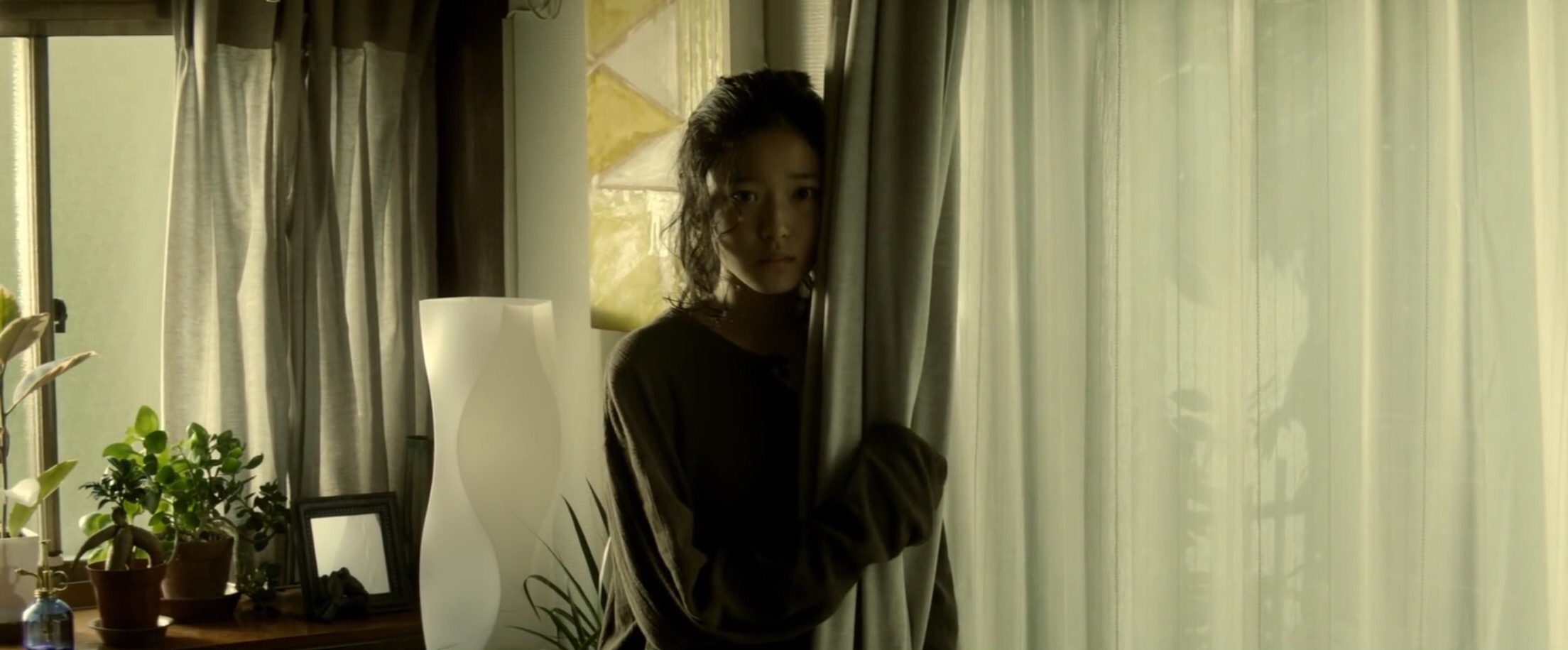
Set in approximately 2009, it tells the story of a retired policeman Takakura (Hidetoshi Nishijima) who has changed careers to work as a criminology professor at a local university. Having moved to a new part of town with his wife Yasuko (Yūko Takeuchi) and dog Max, they begin to become suspicious of the titular creepy neighbour Nishino (Teruyuki Kagawa) and his daughter Mio (Ryoko Fujino), whilst Takakura attempts to solve an old case that has come out of the woodwork.

Creepy Nishino

The casting of the genuinely creepy Kagawa is a solid choice. Director Kurosawa is on familiar ground, having worked with him on 2009’s Tokyo Sonata, though this role is very much a departure from the jobless family man we saw previously. When the results are this good there’s no need to change.

Kurosawa, working again with cinematographer Akiko Ashizawa, achieves a lot with natural lighting to create darkness for the lead characters as they delve into their inner-most thoughts. This was an effective technique used previously by the pair in Journey To The Shore and is mined more subtly here to arguably better effect, especially in one particular witness interrogation scene.

However, there are flaws. The ending could genuinely have happened about twenty minutes prior to when it finally occurs, and when the story is finally resolved the relief I felt wasn’t for any of the particular characters but more for the fact it signalled the end was in sight. It’s unfortunate that the ending is so shocking and powerful with some great acting that was undermined by the preceding needless plot extension.

There were a few ideas throughout the film that seemed to fizzle out. Saki (Haruna Kawaguchi) was really prominent for a good portion of the film but was clumsily written out before the resolution of her storyline; her family went missing but she doesn’t seem to care why in the end. A police chief is written into the key part of the story to get Takakura out of a dead end in the plot. There’s a mind control element to the story that isn’t ever fully explained, instead expecting the viewer to just go with it. 

After a long setup, this film is genuinely exhilarating for about an hour. With a shorter ending and a little more clarity, it could have been much better than the final result. For me, it is a missed opportunity.

BFI London Film Festival 2016 – Preview

I’ll be heading down to the BFI London Film Festival this weekend to catch a handful of films. I’ve picked a broad range, from headline galas to complete leftfield choices that may be my only chance to see a film on the big screen.

Here’s what I’ll be catching:

– La La Land (Damien Chazelle, US)
– Frantz (François Ozon, Germany)
– Dancer (Steven Cantor, UK)
– Creepy (Kiyoshi Kurosawa, Japan)
– Paul Verhoeven in conversation
– Psychonauts, The Forgotten Children (Pedro Rivero, Alberto Vázquez, Spain)
– Queen of Katwe (Mira Nair, US)

I’m most excited about the Queen of Katwe red carpet premiere that I’ll be lucky enough to attend, and Frantz will be screening at the specially-created Embankment Garden Cinema. 

I’ll be firing out reviews of each as I get the chance over the weekend. Maybe I’ll see one or two of you down there!

Film review – Hunt for the Wilderpeople (Taika Waititi, 2016)

SPOILER ALERT – There’s a spoiler pretty much immediately in the first paragraph of this review. Sorry, it just turned out that way. Come back when you’ve seen the film and rejoice in its excellence with me. General  and spoile-free review: it’s excellent and well worth watching.

Here we go…

There is a moment, about twenty minutes into Hunt for the Wilderpeople, where the laughs start rolling in and the set up falls into place, proving that very good things come to those who wait. That this happens in the middle of the funeral of one of the lead characters, who is unexpectedly killed-off in the middle of the opening act, proves the point that comedy doesn’t have to be routine to be absolutely hilarious.

Indeed, looking at the two lead actors, there is nothing to suspect they would work on a comedy duo level. Sam Neill has been doing fantastic work for years, delivering memorably serious performances in the likes of The Hunt for Red October, Dead Calm, The Piano and Jurassic Park. His partner in crime in Hunt for the Wilderpeople, Julian Dennison, is pretty much a newcomer to the industry, having starred in 2015’s Paper Planes and not much else (at least not much that has troubled the international market).

It’s strange then that they have formed a bizarre chemistry around which this film’s many successes hang, taking turns to be the straight man when the time is right. It’s a successful combination and one that takes what could have been a simple live-action remake of Pixar’s Up and turns it into an enjoyable romp through the New Zealand countryside.

Dennison is, ultimately, the real find of the film. As the rebellious youth that nobody wants, he is privy to some of the best lines in the film. His delivery is natural and faultless.

Taika Waititi may be in the process of directing the upcoming next instalment of the Thor film series (set for release in late 2017), but he is staying rooted to what he knows best for as long as possible. One can only hope that Marvel allow him to finish his journey with the film rather than lose faith at the eleventh hour as they did with the last quirky comedy director they went with: Edgar Wright.

On this evidence, they would be wise to not make the same mistake twice.

Hunt for the WIlderpeople is available now on DVD.

Film review – A United Kingdom (Amma Asante, 2016)

Kicking off the 2016 BFI London Film Festival in style tonight was Amma Asante’s triumphant ‘A United Kingdom’. After the glitz and glamour of the red carpet, the film’s central themes proved to be an apt starting point for a programme that festival director Clare Stewart claims will focus on diversity.

The film tells the true story of Ruth Williams (Rosamund Pike) and Seretse Khama (David Oyelowo). Khama is the King of Bechuanaland (the country now known as Botswana) and in 1948 he marries London girl Williams amid opposition from their families and countries, sparking a political debate that led to the country’s independence movement.

Asante is the first black woman ever to direct an opening night film at the London Film Festival, and she was keen to point out the relevance of her being the person at the helm telling this important story.

“[The Botswanians] were comforted that it was going to be told through the gaze of a woman of colour… There was relief, and of course a curiosity, as to how their country, and they as a people, would be reflected on screen.”

Pike and Oyelowo

The resulting picture is a moving portrayal of a changing time in two countries with a message that is as valid today as it was then. True, there has been much progress in the world since 1948, but looking back at the changes in the past 70 years should give humanity hope that as much progress can be made again in the next 70 years. Indeed, many comments from the stars on the red carpet referenced that there is still much wrong with the world and a film like ‘A United Kingdom’ serves to highlight that we should never give up the fight. This is a fact not lost on Asante, especially given the marginal bandwidth available in the film industry to both people of colour and women – something that should be considered one of the big talking points of this year’s festival.

Oyelowo and Pike work together perfectly, each delivering powerful performances worthy of the story they are telling. The film’s genesis lies with Oyelowo, who started writing the script six years ago after reading the Susan Williams book Colour Bar, and his passion for the story seeps into his emotional delivery.

The film perhaps suffers from appearing saccharine, with the story telling us that their love was so strong it overcame political opposition and brought a continent together. The truth is that the film isn’t too far from being perfectly accurate, with only a couple of timeline changes for the benefit of pacing.

This is a story that is one piece of a much larger puzzle that can be filled in with what can be seen as companion films: Mandela – Long Walk To Freedom (2013) and Hotel Rwanda (2011) are two good recent examples. There is a rich history that is still being written in Africa, from which deeply moving stories continue to be drawn in both film and literature.

It is remarkable that the actors and actresses involved knew little of the source material before receiving the script. It is likely that the same can be said of the many viewers this film will eventually reach – I have to admit that I was also blissfully unaware of the history of Botswana before seeing this film. Khama’s story isn’t one that has been well-documented and that is something that Oyelowo and Asante will be more than happy to rectify.

A truly important story told in such a captivating manner deserves to be seen. A wonderful start to the festival.


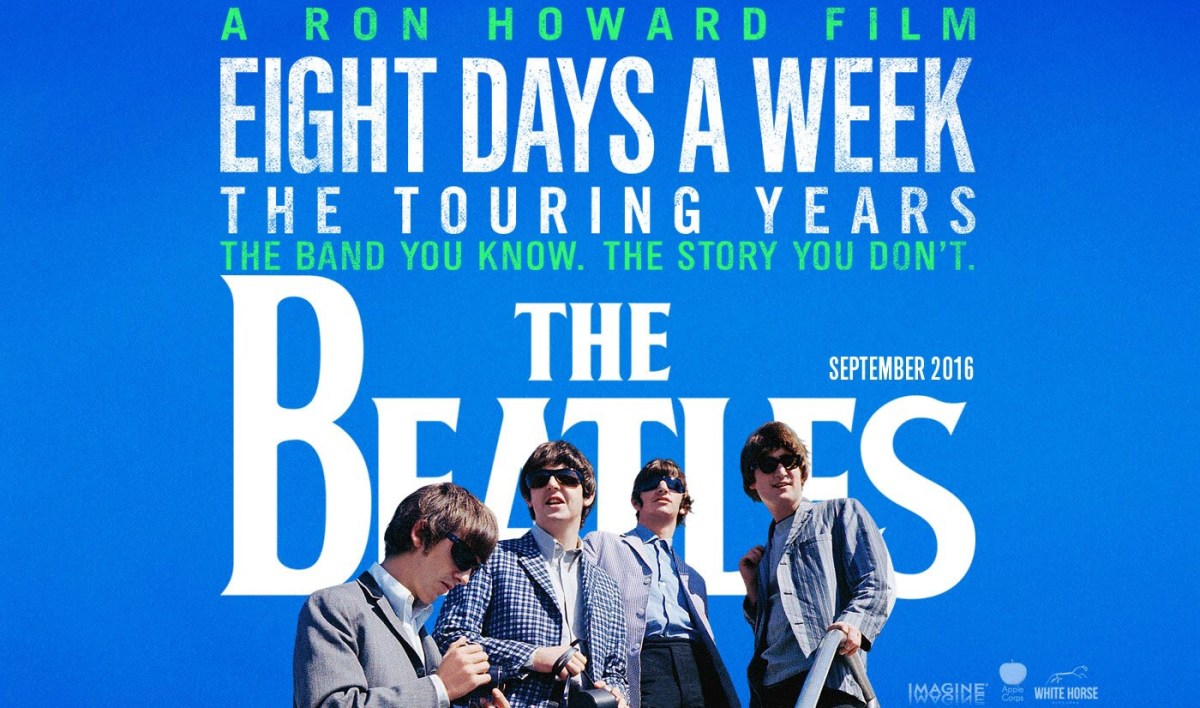
Film review – The Beatles: Eight Days a Week, The Touring Years (Ron Howard, 2016)

There is a single reason why The Beatles hitherto remain a subject largely untouched by documentarians. Quite simply, the story has been told to death. It is a well-reasoned argument that stems from the fact that a story is far more interesting if we don’t know the ending; even less so if we know the beginning, middle, end and every conversation along the way.

As a result, we have been treated to a flurry of fascinating documentary films in recent times on artists relatively unheard of to the general public: Rodriguez (Searching for Sugar Man), Anvil (Anvil! The Story of Anvil), under-celebrated back-up singers (20 Feet from Stardom); Phil Ochs (There But For Fortune). All excellent films that manage to capture the imagination of cinema-goers precisely because they tell a story as fresh as any fictional tale in the same media.

The Beatles are, however, one of the greatest bands of all time, taking over the world as clean-living heart-throbs that made radio-friendly sounds that were loved over the world. Their live performances were legendary and, at the time, revolutionary as they proved that rock bands could turn massive profits by putting in performances in large stadia.

beatleslasvegas

It’s a story that has been told many times over and it would take a brave director to try to tell it in an interesting way that didn’t feel like retreading old ground. Fortunately, the man at the helm on the clumsily titled The Beatles: Eight Days a Week – The Touring Years is the one and only Ron Howard, the genius behind the likes of Cocoon, Apollo 13, A Beautiful Mind and Frost/Nixon.

It is a truly brilliant piece of documentary film-making, managing to tell the familiar story with a flurry of individual memories that bring to life again a rise to stardom that has not and will not ever be replicated. There are wonderful talking head contributions from the likes of Howard Goodall, Dr Kitty Oliver, Sigourney Weaver (who the editors managed to pick out from the crowd footage of the 1965 Hollywood Bowl performances) and Elvis Costello. It is Whoopi Goldberg’s retelling of her mother surprising her with a ticket to the Shea Stadium performance that really stuck out and showed the positive effect they were having on both small and large scales throughout their tours.

The real stars are The Fab Four themselves, and with hours and hours of footage recorded by a press hungry for a piece of them (a point touched on in the film by Paul McCartney), we are lucky enough to be able to build up a truthful story of what was happening to a level impossible for all other artists in the charts at the time. As Eddie Izzard points out, their ability to respond to heckling in press conferences puts them all up at the same level as professional comedians.

The film is centred around their live performances rather than their time in the studio and as such it was essential the largely bootlegged sound recordings from their gigs were remastered to a usable state. Up steps Giles Martin, son of the late George Martin, to ensure everything hits the mark. Audible for the first time in such high quality, these sound recordings are evidence that despite them not being able to hear themselves or each other play they still functioned as a wholly tight musical four-piece. All that hard work out in Hamburg seemed to have paid off, then.

beatlesrooftop

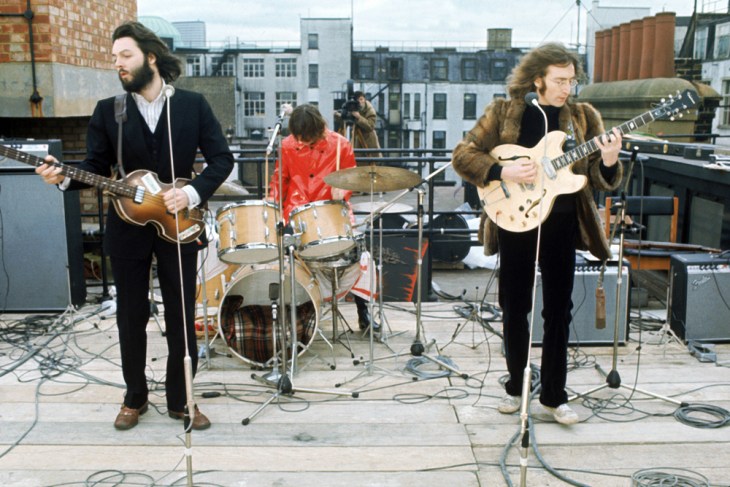
It is a shame that the film cuts off in the middle of 1966 as the band released Revolver. They wound up their US tour in California, and it was a tour they were glad to see the back of. John Lennon had to painfully respond to the “bigger than Jesus” comments, there were death threats from the Ku Klux Klan and ticket sales were in decline (a point unsurprisingly missed out of the film). As a result, whilst Sgt. Pepper’s Lonely Hearts Club Band gets partial coverage, the albums Magical Mystery Tour, The Beatles (a.k.a. The White Album), Yellow Submarine, Abbey Road and Let It Be are covered in about 30 seconds, before a welcomed clip of their Abbey Road rooftop performance rounds thing off with them revisiting their glory days just before bowing out.

The film is genuinely crying out for a sequel to do justice to these missing years and perhaps beyond, though many of this is covered by the much-celebrated Anthology series released in 1995 but sadly still awaiting a Blu-ray release.

If you’re a fan of The Beatles then put this straight on your Christmas list as it will be a perfect trip down memory lane to revisit the greatest band of all time.

Eight Days a Week is available to purchase as a special edition Blu-ray and a standard DVD.